Éxodo 24
I tnalù dwata · Toca un versículo para ver sus referencias cruzadas.
I kimò Mosis i gudamsù di Dwata
1Na lêman talù Dwata di ku Mosis, manan, “Mnagad ge dini di deg di bulul, na faginam Aron, na lwe dad ngaan lagi dunan, Nadab, Abihu, na i dad fitu falò dad tua di dad bel Israél. Di là gamu fa kel di tah, déén gamu fa di gumawagan fnangamfùyu agu, 2du ge alò i fakay fdadong di dagu. I dad to magin ge là fakay fdadong di dagu. Na i dademem dad bel Israél là fakay balù mnagad di bulul.” Én gman Dwata.
3Na di kakel Mosis di dad to, tnulenan ale i kdee gman Dwata i Amu, na i kdee dekan dale, na salngan ale tmimel, manla, “I kdee gman Amumi Dwata, én nimòmi.” 4Na sulat Mosis i kdee gman Dwata i Amu.
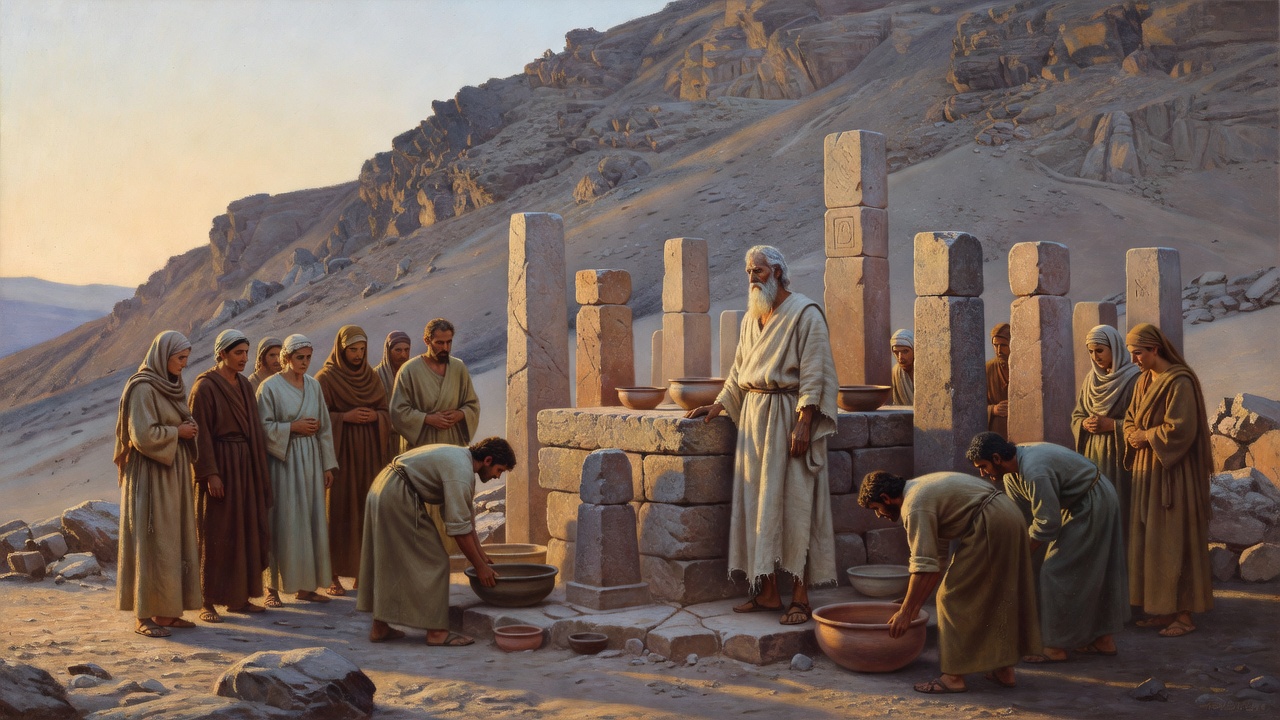
Na di too flafus di gamtadol duh, nimoan i gudamsù di gugdak i bulul, na ftadagan sfalò lwe batu déén, du gufaldam i sfalò lwe malay gumbel i dad bel Israél. 5Kafnge én, nun dad lamnok lagi dekan, du snakufla i dad dsù di Dwata i Amu, na lê nun dad baka dsùla, du ani ilè masasatu ale di Dwata. 6Nwè Mosis i kagatngà i litè i dad lmanaf, du fkahan di lam i tukung, na i dademe litè sabulan di gudamsù. 7Kafnge én, nwean i gugsulat i dad flalò Dwata dale, na bnasan di dad to. Na di kaklingela dun, manla, “Nimenmi Amumi Dwata na nimòmi i kdee flaloan gami.”
8Na nwean i tukung nun litè na sabulan di dad to. Na manan, “Litè ani i ilè nun kasfakang mgimò Amuito Dwata di gito, di kablén di gito i kdee dad flaloan ani.”
9Na kafnge én, Mosis, Aron, Nadab, Abihu, na fitu falò dad ulu di dad bel Israél, mnagad ale di bulul, 10na teenla Dwata, i Dwata fnangamfù dad bel Israél. Di dungan i blian, gambet i dalan too mneng na mlunu, salngad i satu batu dnagit safira, na too mtiu i klunun salngad klunu i langit. 11Balù teen i dad tua di dad bel Israél, Dwata, laan ale falmo. I kdeela kmaan na minum di muna i Dwata.
Lêman mnagad Mosis di bulul Sinay
12Kafnge én, talù Dwata di ku Mosis, na manan, “Mnagad ge dini di dagu, na klom dini, blégu ge i lwe bong batu kufil, i gusmulatgu i dad flalògu du tdoam di dad to.” 13Taman fatlagad Mosis na i saligan Dyaswa, na mdà ale, na mnagad Mosis di bulul Dwata. 14Di là fa mdà man Mosis di dad tua i dad bel Israél, manan, “Fatanyu gami dini kel di kasfulêmi. Gani sa Aron na Hur i dademeyu, na ku nun kasbulawyu, ale sa smafye gamu.” 15Na di knagad Mosis di bulul, too mgat i labun, na maglimun i bulul. 16Na fdanà mdà di langit, i bong kneng Dwata i Amu, satu ilè tadéén kenen di bulul. Na di kite i dad bel Israél i kneng ani salngad i lifoh too dminè di tah i bulul. Na kel di nam duh, maglimun labun i bulul. Na di gfitun duh, tamlo Dwata i Amu ku Mosis, mdà di lam i labun. 18Taman di knagad Mosis di tah i bulul, fusuk kenen di lam i labun. Na mnè kenen ditù fat falò duh na fat falò butang.
¿Sabías que…?
El pacto en el monte Sinaí
- El Diccionario Bíblico de Easton (1897) dice que el monte Sinaí, llamado también Horeb, era la región montañosa a la que los hebreos llegaron en el tercer mes después del Éxodo, donde permanecieron acampados cerca de un año. Señala que los últimos veintidós capítulos de Éxodo, todo Levítico y Números 1–11 recogen lo ocurrido durante esa estancia.Fuentes: Mount Sinai
- El SEÑOR dice a Moisés que suba con Aarón, Nadab y Abiú y setenta ancianos de Israel, pero solo Moisés debe acercarse; los demás adoran a distancia, y el pueblo no sube. Nadab era el hijo mayor de Aarón, y Abiú el segundo; el Diccionario Bíblico de Easton (1897) señala que los dos hermanos acompañaron a su padre y a los ancianos solo parte del camino montaña arriba.Fuentes: el propio texto bíblico · Aaron · Nadab · Abihu
- Moisés sube entonces más arriba con Josué, su ayudante, y deja a Aarón y a Hur con los ancianos, para que quien tuviera una disputa pudiera acudir a ellos. El Diccionario Bíblico de Easton (1897) llama a Josué siervo de Moisés, que lo acompañó parte del camino en el Sinaí, e identifica a Hur, esposo de Miriam, como el hombre asociado con Aarón al frente del pueblo mientras Moisés estaba ausente en el monte.Fuentes: el propio texto bíblico · Joshua · Hur
Notas escritas con ayuda de IA a partir de fuentes abiertas (Theographic Bible Metadata, CC BY-SA 4.0; Easton’s Bible Dictionary, dominio público) y revisadas antes de publicarse.
Créditos y licencia de esta traducción
I tnalù dwata
New Testament in Blaan, Sarangani
copyright © 1998 Wycliffe Bible Translators, Inc.
Language: Sarangani Blaan (Blaan, Sarangani)
Translation by: Wycliffe Bible Translators
Contributor: Wycliffe Bible Translators, Inc.
Copyright Information
© 1998, Wycliffe Bible Translators, Inc. All rights reserved.
This translation text is made available to you under the
terms of the Creative Commons License: Attribution-Noncommercial-No Derivative Works.
( http://creativecommons.org/licenses/by-nc-nd/3.0/ )
In addition, you have permission to port the text to different file formats, as long as you
do not change any of the text or punctuation of the Bible.
You may share, copy, distribute, transmit, and extract portions
or quotations from this work, provided that you include the above copyright
information:
You must give Attribution to the work.
You do not sell this work for a profit.
You do not make any derivative works that change any of the actual words or punctuation of the Scriptures.
Permissions beyond the scope of this license may be
available if you contact
us with your request.
The New Testament
in Blaan, Sarangani
© 1998, Wycliffe Bible Translators, Inc. All rights reserved.
This translation is made available to you under the terms of the
Creative Commons Attribution-Noncommercial-No Derivatives license 4.0.
You may share and redistribute this Bible translation or extracts from it in any format, provided that:
You include the above copyright and source information.
You do not sell this work for a profit.
You do not change any of the words or punctuation of the Scriptures.
Pictures included with Scriptures and other documents on this site are licensed just for use with those Scriptures and documents.
For other uses, please contact the respective copyright owners.
2015-03-17
Fuente: http://ebible.org/bps/ · eBible.org