Mateo 8
I Falami Kasafnè (New Testament) · Toca un versículo para ver sus referencias cruzadas.
I kafgulê Dyisas i to nun fdas mumuh
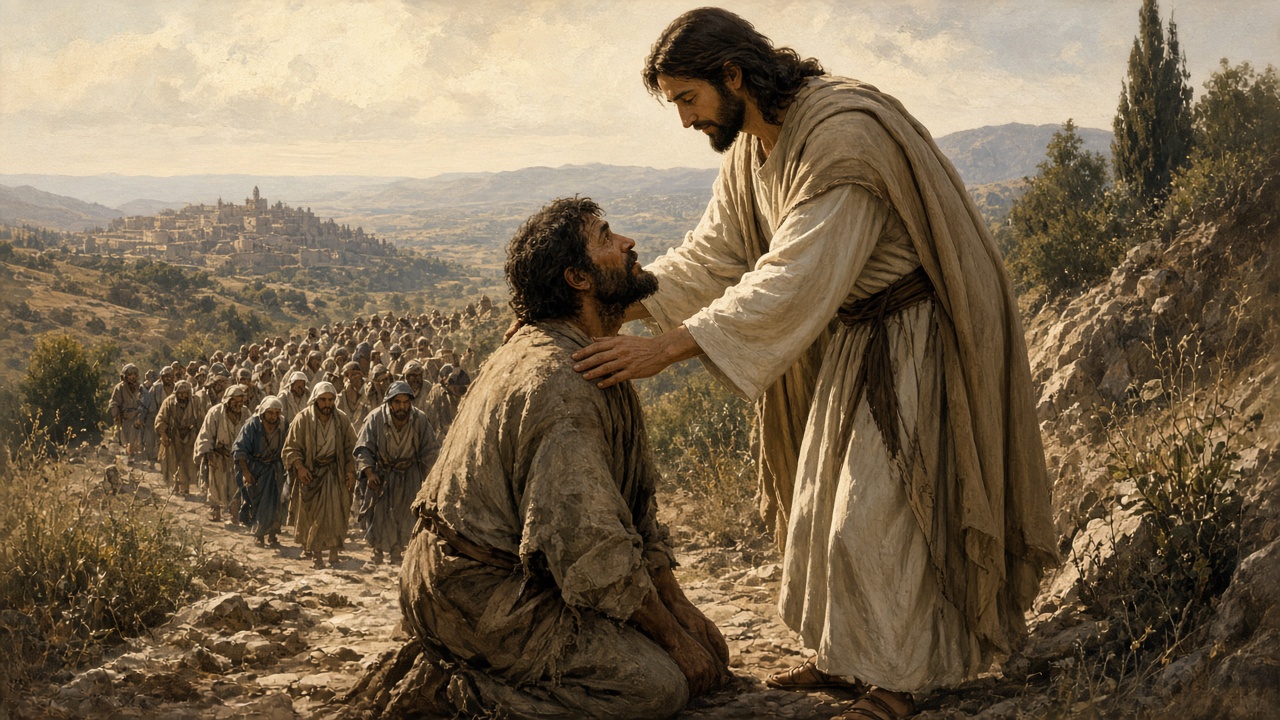
1Na kanto flasok Dyisas di bulul gutamdòan, na too dee dad to magin di kenen. 2Na nun satu lagi nun fdas mumuh salu di kenen, na lkuad di munan, manan, “Amu, gadègu gaganam agu fan-gulê ku beg ge mayè du fye too mlaneb i kulitgu.” 3Na nagot Dyisas kenen, na manan, “Mayè agu sa. Mgulê ge nan.” Na tadè mkah i fdasan mumuh ayé. 4Na fnge, dek Dyisas kenen, manan, “Nangam ti tulen ani balù simto dun. Bay mdà ge, na fitem i laweham di ganlal di kafaglut gal damsù, na nebem ditù i dsùam gambet i dek Dwata di dad sulat Mosis. I dsù nebem, yé gugmadè i kdee dad to dun na ta mgulê ge na ta mlaneb i kulitam.”
I kafgulê Dyisas i fasak satu ganlal i dad sundalu
5Na salu Dyisas di Kapernaum. Na kanto kel déé, nun satu ganlal i dad sundalu mdà di Roma samsite di ku Dyisas du mni tabeng di kenen. 6Na manan, “E Amu, là gték i fasakgu ditù di gumnè du là galyakan i lawehan, na too sasè kaflayaman.” 7Na man Dyisas di kenen, “Salu agu déé du fan-gulêgu.” 8Bay man i ganlal ayé, “E Amu, là gablà agu fafusuk ge di gumnègu. Bay lo ge talù, na fagu di talùam mgulê sa i fasakgu. 9Gadègu ani, du balù do, nun ganlal mdatah di do, na lê nun dad sundalugu mdanà di do. Ku dekgu i sundalugu magu, mdà sa kenen. Na ku man-gu di satu, ‘Gadini ge,’ na mimen sa kenen. Na balù dét fimògu di satu, yé nimòan.”
10Na kanto linge Dyisas i manan ayé, too kenen tikeng, na manan di kdee dad to magin di kenen, “Too glut i man-gu di gamu ani, là lmen-gu mite di dad to Israél i kaftoo salngad di bong kaftoo i to ani di Dwata. 11Na ani manta gamu, kadang di fulé du, nun dee dad to ise Dyu kel mdà di klamang banwe, mdà di gusut i du na di gusdafan, na kmaan ale di saféd Abraham, na Isaak, na Dyékob di Kagot Dwata di langit. 12I dad Dyu moon i mnè di langit, bay baling bat Dwata ale di lwà di gukmifuhan, na déé gumngella na gukminggat i kifanla.” 13Na kafnge ayé, lê talù Dyisas di ganlal i dad sundalu ayé, manan di kenen, “Mulê ge, du mgimò sa i ta fantoom ayé.” Na gdohò i man Dyisas du salngan di kmanan dun, tadè mgulê fasak i ganlal.
I kafgulê Dyisas i dee dad to
14Na salu Dyisas di gumnè Piter. Kanto fusuk déé, teenan i tewe Piter libun. Milè kenen du too ti minit i lawehan. 15Na fdadong Dyisas di kenen, na nagotan i sigalan. Na tadè mkah i kinitan, na mdà ayé, mték na fles mimò dale knaan.
16Na di kasdaf i du, nun dee dad to nun busaw nebela di ku Dyisas. Falwàan i dad busaw fagu di talùan na fan-gulêan i kdee dad to nun dad sahal tduk. 17Yé duenan mkel ayé du fye gdohò i man Dwata fagu di ku Isaya, “Fan-gulêan ato du nwèan i dad fdasto.”
I dad to fan magin ku Dyisas
18Na di satu du, kanto teen Dyisas i kdee dad to stifun di safédan, yé manan di dad to galan tdò, “Mdà ato mifal di lanaw.” 19Bay salu di kenen satu to gal tamdò dad uldin Dwata fagu di ku Mosis, na manan, “E Sér, magin agu di ge balù nè gusalum.” 20Bay tmimel Dyisas, manan, “I dad balos, nun gumulêla, na i dad anuk mayeng, nun fulalla. Bay do, i dnagit Ngà To, landè gumnègu, balù gumilè, landèan.” 21Na lê nun fa satu to di dad tdòan, manan ku Dyisas, “Amu, faloham agu mulê funa du lbanggu mà.” 22Bay man Dyisas di kenen, “Bayàam i to mati. Yé lambang dun i dad to sawe mati. Bay ge, fles ge magin do.”
I kngak Dyisas i nus na i lwek
23Na kafnge ayé, ta myak Dyisas di aweng, na magin dad to galan tdò. 24Na di lamla maweng, ta nkel ale too kamgis nus di talà, na ta nuléh lwek i awengla. Bay ta kudang Dyisas. 25Na i dad to galan tdò, nukatla kenen, na manla, “E Amu, tnabengam gami! Ta fan ato mlimas!” 26Na talù Dyisas, manan, “Kan ku likò gamu? Too tukay ksaligyu.” Na kafnge ayé, mték kenen, na nngakan i nus na dad lwek, na ta too mtanak i lanaw.
27Too tikeng i dad lagi ayé, na sasalek ale, manla, “Dét klasi to ani? Balù i nus na lê malbang lwek, nimenla.”
I kafgulê Dyisas i dad lwe lagi nun busaw
28Kanto kel ale Dyisas di banwe Gadara ditù di faltù i lanaw, nun smitong dun lwe lagi nun busaw. Yé gumdàla di dad ilib gulambang i dad to. Too ale labè, taman, landè to gagu di dalan ayé. 29Tadè ale mkit, manla, “E Ngà Dwata, dét i kibòam gami? Keng yé duenam salu dini du falnayamam gami balù là fa kel i bangmi maflayam.” 30Na là too mawag déé, nun dee dad sdè mateb. 31Na fakdo dad busaw, manla, “Ku falwàam gami, dekam gami fusuk di dad sdè.” 32Na man Dyisas di dale, “Mdà gamu.” Taman lamwà i dad busaw di dad lagi ayé, na fles ale fusuk di dad sdè, na mti milah i dad sdè flasok di bilil, na tatek ale di lanaw, na sdulê ale mlimas. 33Milah i dad to mifat i dad sdè ayé salu di lunsud, na tulenla i kdee na i ta mkel di dad lagi nun busaw. 34Na i kdee dad to mdà di lunsud ayé, salu ale ditù di ku Dyisas. Na kitela kenen, fakdo ale du fye tnagakan i banwela.
¿Sabías que…?
Curaciones, fe y el mar
- Capernaum, la ciudad a la que Jesús entra en este capítulo, era una ciudad de Galilea que no se menciona en el Antiguo Testamento. El Easton's Bible Dictionary (1897) dice que llegó a ser “su propia ciudad” después de que dejó Nazaret, e incluye la súplica del centurión y la curación en la casa de Pedro entre los hechos situados allí.Fuentes: Capernaum · el propio texto bíblico
- Jesús dice que muchos vendrán del oriente y del occidente para compartir el banquete con Abraham, Isaac y Jacob en el reino de los cielos. El Easton's Bible Dictionary (1897) presenta a Abraham como hijo de Taré y heredero de las promesas, a Isaac como el único hijo de Abraham con Sara, y a Jacob —también llamado Israel— como el hijo gemelo menor de Isaac y Rebeca.Fuentes: el propio texto bíblico · Abraham · Isaac · Jacob (Israel)
- Mateo presenta las curaciones de aquella noche como cumplimiento de lo dicho por medio del profeta Isaías: “Él tomó nuestras dolencias y cargó con nuestras enfermedades.” El Easton's Bible Dictionary (1897) identifica a Isaías como hijo de Amoz, que profetizó durante los reinados de Uzías, Jotam, Acaz y Ezequías.Fuentes: el propio texto bíblico · Isaiah
Notas escritas con ayuda de IA a partir de fuentes abiertas (Theographic Bible Metadata, CC BY-SA 4.0; Easton’s Bible Dictionary, dominio público) y revisadas antes de publicarse.
Lugares de este capítulo
- Gadara · Hoy: Umm Qais · 32.656, 35.679 · versículo 28
Solo aparecen lugares identificados con alta confianza (90 % o más según las fuentes académicas reunidas por OpenBible). Mapa de la época: DARE (Digital Atlas of the Roman Empire), CC BY 4.0; mapa actual: © colaboradores de OpenStreetMap; lugares: OpenBible.info (CC BY 4.0).
Créditos y licencia de esta traducción
I Falami Kasafnè (New Testament)
New Testament in Blaan, Koronadal
copyright © 1995 Wycliffe Bible Translators, Inc.
Language: Koronadal Blaan (Blaan, Koronadal)
Translation by: Wycliffe Bible Translators, Inc.
Copyright Information
© 1995, Wycliffe Bible Translators, Inc. All rights reserved.
This translation text is made available to you under the
terms of the Creative Commons License: Attribution-Noncommercial-No Derivative Works.
( http://creativecommons.org/licenses/by-nc-nd/3.0/ )
In addition, you have permission to port the text to different file formats, as long as you
do not change any of the text or punctuation of the Bible.
You may share, copy, distribute, transmit, and extract portions
or quotations from this work, provided that you include the above copyright
information:
You must give Attribution to the work.
You do not sell this work for a profit.
You do not make any derivative works that change any of the actual words or punctuation of the Scriptures.
Permissions beyond the scope of this license may be
available if you contact
us with your request.
The New Testament
in Blaan, Koronadal
© 1995, Wycliffe Bible Translators, Inc. All rights reserved.
This translation is made available to you under the terms of the
Creative Commons Attribution-Noncommercial-No Derivatives license 4.0.
You may share and redistribute this Bible translation or extracts from it in any format, provided that:
You include the above copyright and source information.
You do not sell this work for a profit.
You do not change any of the words or punctuation of the Scriptures.
Pictures included with Scriptures and other documents on this site are licensed just for use with those Scriptures and documents.
For other uses, please contact the respective copyright owners.
2014-08-06
Fuente: http://ebible.org/bpr/ · eBible.org