Hechos 8
I Falami Kasafnè (New Testament) · Toca un versículo para ver sus referencias cruzadas.
1Na nagin Sol i ayè i dad to fmati ku Stifén.
I kaflayam Sol i dad to ftoo ku Dyisas
Na di du kfatila ku Stifén, yé ta katbù i too sasè kaflayam i dad to ftoo di ku Dyisas di Dyérusalém. Taman, ta sbalét i kdeela di dad probinsya di Dyudiya na Samarya, na lo yé tagak di Dyérusalém i dad to dek Dyisas. 2Na nun dad to too mangamfù di Dwata, lbangla Stifén, na toola kenen lnanu. 3Bay too kayè Sol falmo i dad to ftoo di ku Dyisas. Nkatan fnusuk i dad gumnèla, na kanfèan i dad lagi na libun, du fablanggùan ale.
I katdò Filip di Samarya
4Na i kdee dad to ftoo i ta masbalét ayé, gatù ale di dad sahal banwe du tdòla i Tnalù Dwata. 5Na mdà Filip, salu kenen di satu syudad di Samarya, na tamdò kenen déé gablà ku Krayst. 6Na kanto linge dad to i man Filip, na teenla i dad tnikeng nimòan, toola fansye flinge di manan. 7Na dee dad busaw lamwà di dad to magin i kitla, na lê dee dad to là galyakla i lawehla, na dad kimay, na mgulê i kdeela. 8Taman, too ti lehew i dad to di syudad ayé.
Simon, i lmoos
9Na di syudad ayé, nun satu lagi mnè déé, yé dagitan Simon. Ta mlo kenen lmoos, na too tikeng i kdee dad to di Samarya du mdà di kloosan. Toon ftatel i kton di kmanan dun maltulus kenen. 10Na i kdee dad to, balù mdanà ku demen mdatah, toola fansye flinge di kenen, na yé manla, “Kenen i tulus Dwata dnagit, ‘I bong tulus.’ ” 11Ta mlo ale tikeng di kloosan, taman toola kenen falninge. 12Bay kanto ftoo dad to di tdò Filip i Fye Tulen gablà di Kagot Dwata, na i dagit Dyisas Krayst, ta fbunyag i dad lagi na dad libun. 13Na balù Simon, ta baling kenen lê ftoo di ku Dyisas na fbunyag. Na là tlagan magin di ku Filip, na too kenen tikeng mdà di dad ilè na gamtikeng nimò Filip.
14Na i dad to dek Dyisas i tagak di Dyérusalém, lingela ta dnawat i dad to di Samarya i Tnalù Dwata, taman ta dekla Piter na Dyan salu ditù. 15Na kanto ale kel ditù, ta dnasalla i dad to ftoo ayé du fye gdawatla i Mtiu Tulus. 16Ani duen i Mtiu Tulus là fa tufa di dale du lo yé gumagbunyagla di dagit i Amuto Dyisas. 17Bay fkah Piter na Dyan i dad falella di dad to ayé, na yé klola gamdawat i Mtiu Tulus.
18Na teen Simon ta gdawat dad to i Mtiu Tulus fagu di kafkah ale Piter i dad falella di dale. Na yé duenam man, kayèan ku banlén filak ale Piter, na manan dale, 19“Bléyu do i gnagan ayé du fye i kdee dad to gufkahgu falelgu, gdawatla i Mtiu Tulus.”
20Bay tmimel Piter, manan, “Mulà moon ku malmo ge gagin di filakam, du yé man nawam ku fakay bnayad i tadè blé Dwata. 21Landè alelam di nimò ani du teen Dwata là tluh i mnè di nawam. 22Nsalam i sasè mnè di nawam ani, na dmasal ge di Amu, du fye fnasinsyan ge di sasè fandamam. 23Du yé teen-gu di ge na too mafè nawam, na mbakus ge di salàam.”
24Na man Simon di dale Piter, “Begyu agu dnasal di Amu du fye là gafat di do i manyu ayé.” 25Na kafnge Piter na Dyan tamdò i Tnalù Dwata, ta mdà ale mulê ditù di Dyérusalém. Na di dalanla mulê, dee dad baryu di Samarya nagula, na tdòla i Fye tulen.
Filip na i ganlal di Ityupya
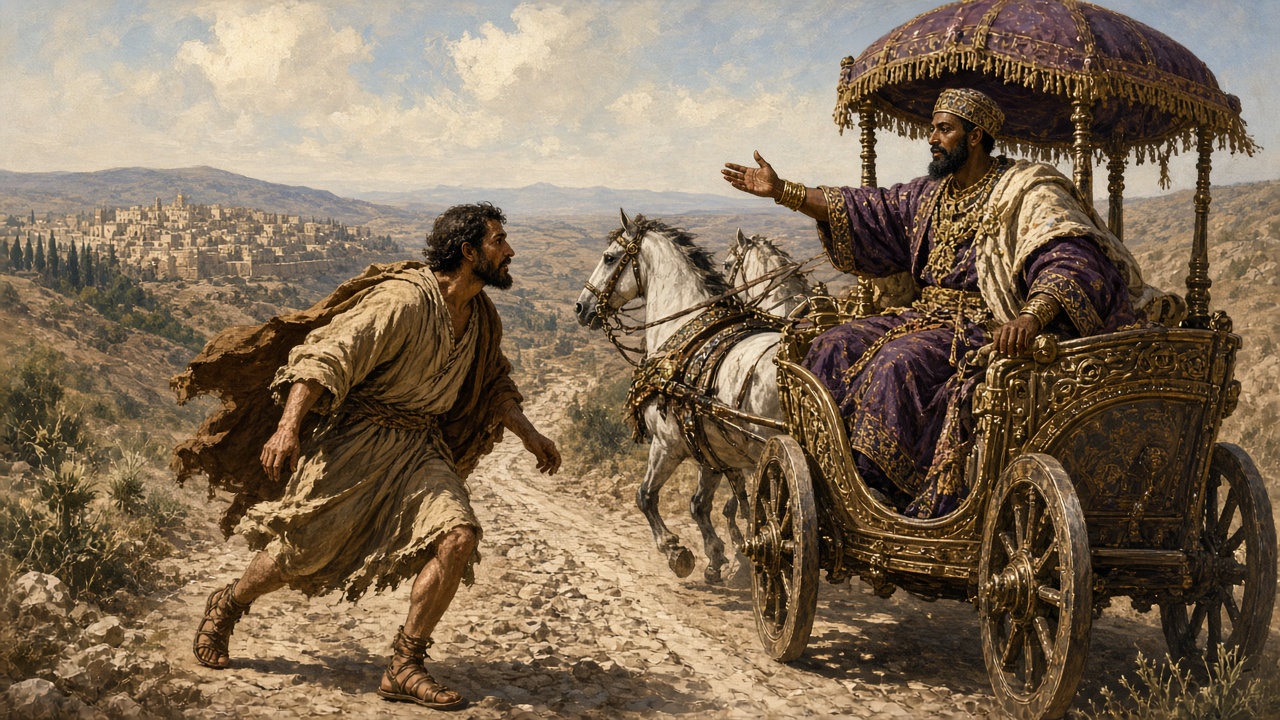
26Bay stulen satu kasaligan i Dwata di ku Filip, “Mdà ge, lalòam i dalan mdà di Dyérusalém salu di Gasa.” (Ta là too nagu i dalan ani du landè to mnè déé). 27Na yé duenam man, ta mdà Filip, na di laman magu, nun teenan satu lagi kafun mdà di Ityupya. Fdu kenen di Dyérusalém du ta mangamfù di Dwata. Na i lagi ayé, satu mdatah ganlal du nagotan i filak Kandis, dunan i harì libun di Ityupya. 28Na di kulêan, smakay kenen kalisa, na laman magu, yé nimòan bnasan i sulat Isaya, i satu tugad Dwata. 29Na man i Mtiu Tulus di ku Filip, “Fdadong ge, na saldan ge magu di kalisa ayé.” 30Taman, sadluh Filip fdadong di kalisa, na lingen kbasa i lagi ayé mdà di sulat Isaya. Na smalek Filip, manan dun, “Glabatam kè i bnasam ayé?”
31Na tmimel i ganlal ayé, manan, “Dét kibògu galmabat i bnasagu ani ku landè to faglabat dun di do?” Na ta nlakan Filip smakay sudeng di safédan. 32Na ani bnasa i ganlal ayé, manan,
“Gambet kenen i bilibili nebe du tnatê, na gambet kenen i ngà bilibili là kamwakan ku nkih i bulan, du là ti talùan.
33Toola kenen fyà, na là sa tluh i kukumla dun. Na ta landè tmulen gablà di dad belan du ta baling kenen fnati dini di tah tanà.’ ”
34Na man i ganlal, “Begam tulen do ku simto kayèan man ani, kenen kto ku demen mahal to.” 35Yé duenam man, ta tnulen Filip i ganlal ayé i Fye Tulen gablà ku Dyisas, na yé gumdàan tmulen dun di ta bnasan gine.
36Na di kafadlugla magu, ta kel ale di satu éél, na man i ganlal, “Neyem, nun sa éél dini. Nun kè gukulanggu i duen-gu là fakay fbunyag?” 37Na man Filip di kenen, “Ku mdà di nawam i kaftoom, fakayta ge bnunyag.” Na tmimel i ganlal, manan, “Hee, ftoo agu sa na Dyisas Krayst i Ngà Dwata.”
38Na kafnge ayé, fafanak ganlal i kalisa, na lwe ale Filip tufa, na fles ale di éél du bnunyag Filip kenen. 39Na kanto ale matun di tubéh, tadè nwè i Tulus Dwata Filip, na ta là teen i ganlal dun. Bay fles i ganlal di kagun, na too lehew. 40Na galì lamyalo Filip, ta kel di Asutu, na mdà déé, nkatan i kdee dad banwe kel di Sisarya tamdò i Fye Tulen.
¿Sabías que…?
El mensaje se extiende más allá de Jerusalén
- Tras la muerte de Esteban, estalló una gran persecución contra la iglesia en Jerusalén, y todos, excepto los apóstoles, fueron dispersados por Judea y Samaria. Felipe, uno de los siete y más tarde llamado el evangelista, estaba entre ellos; fue primero a Samaria, donde las multitudes atendieron a su mensaje acerca del Cristo.Fuentes: el propio texto bíblico · Phillip the Evangelist
- Antes de que llegara Felipe, Simón había asombrado por mucho tiempo a Samaria con su hechicería, y la gente lo llamaba el poder divino conocido como el Gran Poder. Creyó y fue bautizado, y luego ofreció dinero por el poder de dar el Espíritu Santo mediante la imposición de manos; la palabra simonía, que designa la compra de un cargo espiritual, deriva de su nombre.Fuentes: el propio texto bíblico · Simon the Sorcerer
- Dos caminos unían Jerusalén con Gaza; Felipe fue enviado por el que pasaba por Hebrón y por un distrito poco habitado, llamado desierto. Allí se encontró con un eunuco etíope, tesorero de Candace, reina de los etíopes, que volvía de adorar en Jerusalén y leía al profeta Isaías en su carruaje. Candace era un título que llevaban reinas sucesivas de Meroe, en la Alta Nubia, un rico centro de comercio entre África y el sur de Asia.Fuentes: el propio texto bíblico · Phillip the Evangelist · Candace
Notas escritas con ayuda de IA a partir de fuentes abiertas (Theographic Bible Metadata, CC BY-SA 4.0; Easton’s Bible Dictionary, dominio público) y revisadas antes de publicarse.
Lugares de este capítulo
- Jerusalem · 31.777, 35.234 · versículos 1, 14, 25, 26, 27
- Judea · Hoy: Judea 1 · 31.777, 35.234 · versículo 1
- Samaria · Hoy: Samaria 2 · 32.276, 35.195 · versículos 1, 5, 9, 14, 25
- Gaza · Hoy: Tell Harube · 31.504, 34.464 · versículo 26
- Ethiopia · 16.935, 33.751 · versículo 27
- Ashdod · Hoy: Tel Ashdod · 31.757, 34.658 · versículo 40
- Caesarea · Hoy: Caesarea Maritima · 32.500, 34.892 · versículo 40
Solo aparecen lugares identificados con alta confianza (90 % o más según las fuentes académicas reunidas por OpenBible). Mapa de la época: DARE (Digital Atlas of the Roman Empire), CC BY 4.0; mapa actual: © colaboradores de OpenStreetMap; lugares: OpenBible.info (CC BY 4.0).
Créditos y licencia de esta traducción
I Falami Kasafnè (New Testament)
New Testament in Blaan, Koronadal
copyright © 1995 Wycliffe Bible Translators, Inc.
Language: Koronadal Blaan (Blaan, Koronadal)
Translation by: Wycliffe Bible Translators, Inc.
Copyright Information
© 1995, Wycliffe Bible Translators, Inc. All rights reserved.
This translation text is made available to you under the
terms of the Creative Commons License: Attribution-Noncommercial-No Derivative Works.
( http://creativecommons.org/licenses/by-nc-nd/3.0/ )
In addition, you have permission to port the text to different file formats, as long as you
do not change any of the text or punctuation of the Bible.
You may share, copy, distribute, transmit, and extract portions
or quotations from this work, provided that you include the above copyright
information:
You must give Attribution to the work.
You do not sell this work for a profit.
You do not make any derivative works that change any of the actual words or punctuation of the Scriptures.
Permissions beyond the scope of this license may be
available if you contact
us with your request.
The New Testament
in Blaan, Koronadal
© 1995, Wycliffe Bible Translators, Inc. All rights reserved.
This translation is made available to you under the terms of the
Creative Commons Attribution-Noncommercial-No Derivatives license 4.0.
You may share and redistribute this Bible translation or extracts from it in any format, provided that:
You include the above copyright and source information.
You do not sell this work for a profit.
You do not change any of the words or punctuation of the Scriptures.
Pictures included with Scriptures and other documents on this site are licensed just for use with those Scriptures and documents.
For other uses, please contact the respective copyright owners.
2014-08-06
Fuente: http://ebible.org/bpr/ · eBible.org