2 Corintios 7
I Falami Kasafnè (New Testament) · Toca un versículo para ver sus referencias cruzadas.
1E dad flanekgu too mabtas, i kdee ayé slame ta fakang Dwata di gito. Taman, tooto lnaneb i ktoto, na fawag ato di kdee gamfagsik i lawehto na i fandamto. Na tooto fanye i kdee dad nimòto, du fye too ato mtiu mdà di kafèto kenen.
I klehew Pol
2Ani fnimi di gamu, tooyu beg fite i kakdoyu gami. Ta gadèyu sa, landè salàmi di gamu, na landè nimòmi gamfalmo i kaftooyu di Dwata, na landè sa lnufigmi. 3Ise ku yé duen-gu man ani ku nukumta gamu, bay too gamu mabtas di gami, salngad di ta manmi di gamu, du balù mnè ato dini di tah tanà, ku demen ta mati ato, sana kakdomi gamu. 4Toota gamu snalig, na dagta gamu. Balù di lam i kdee kaflayam ta mkel di gami, too mgal nawagu. Landè guflingen-gu i bong klehewgu.
5Balù di muna ksalumi di Masidunya, landè gutlag i klidù nawami, du too dee kaflayam gnagumi. Ta gafat di gami i katduk nawa i dad to là ftoo, na lê gafat di gami i klidù nawa gablà di dad to ftoo. 6Bay i Dwata lmala nawa i dad to mlidù, na lêan agu lnala kanto kel Titu. 7Ise ku lo i kakel Titu i gamlala do, bay lê i tulenan gami gablà di katgalyu nawan. Yé tulenan, too gamu mayè samsite gami, na ta msal gamu di sasè nimòyu, na gatlagad gamu msen do. Taman, ta too agu lehew.
8Balù mlidù gamu di kbasayu i muna sulatgu, là ti nsalgu i kfebegu dun. Bay beg blat nawagu, là mlo, du mdà di klidùyu. 9Bay ani, ta lehew agu. Ise ku yé duen-gu lehew du ta flidùgu gamu, bay du ta msal gamu mdà di klidùyu ayé. Gnamit Dwata i klidùyu ayé, taman là ti malmo gamu mdà di nimòmi. 10Du yé ulê i klidù nawa blé Dwata, matlas fandam i to gamsalà fye galwà. Na là ti msal ato ku yé ulêan. Bay yé ulê i klidù dad to nfun i banwe ani, dunan i kfati. 11Tooyu fandam i ta nimò Dwata ulê i klidùyu ayé. Ta too minit nawayu mimen, na bong ayèyu fite i katluhyu. Ta mlidù gamu di sasè nimòyu, na ta likò gamu di Dwata. Ta too gamu mayè samsite do, na nun klayù nawayu, na gatlagad gamu falmayam i là tluh nimò. Taman, i kdee nimòyu ayé fite ta landè gumaslenyu. 12Taman, ise ku yé fantadègu i to gamsalà, ku demen i to gugamsalàan. Bay yé duen-gu mimò ayé du fye fiteyu i kakdoyu gami di kanfe Dwata. 13Taman, too minit nawami.
Na ise ku lo minit nawami, bay lê gami lehew du mdà di kaflehewyu ku Titu. 14Ta toota gamu dag di ku Titu, na là ti gsal agu di kdaggu gamu. Di katdòmi gamu, lo yé tulenmi i kaglutan. Na salngad ayé, slame glut i kdee man-gu di ku Titu gablà di gamu. 15Taman, ta too midul i kakdo Titu gamu du gafaldaman i kimen-yu i manan, na i kdawatyu kenen du mdà di kafè na kafdanàyu di kenen. 16Taman, ta too agu lehew du toota gamu gsalig.
¿Sabías que…?
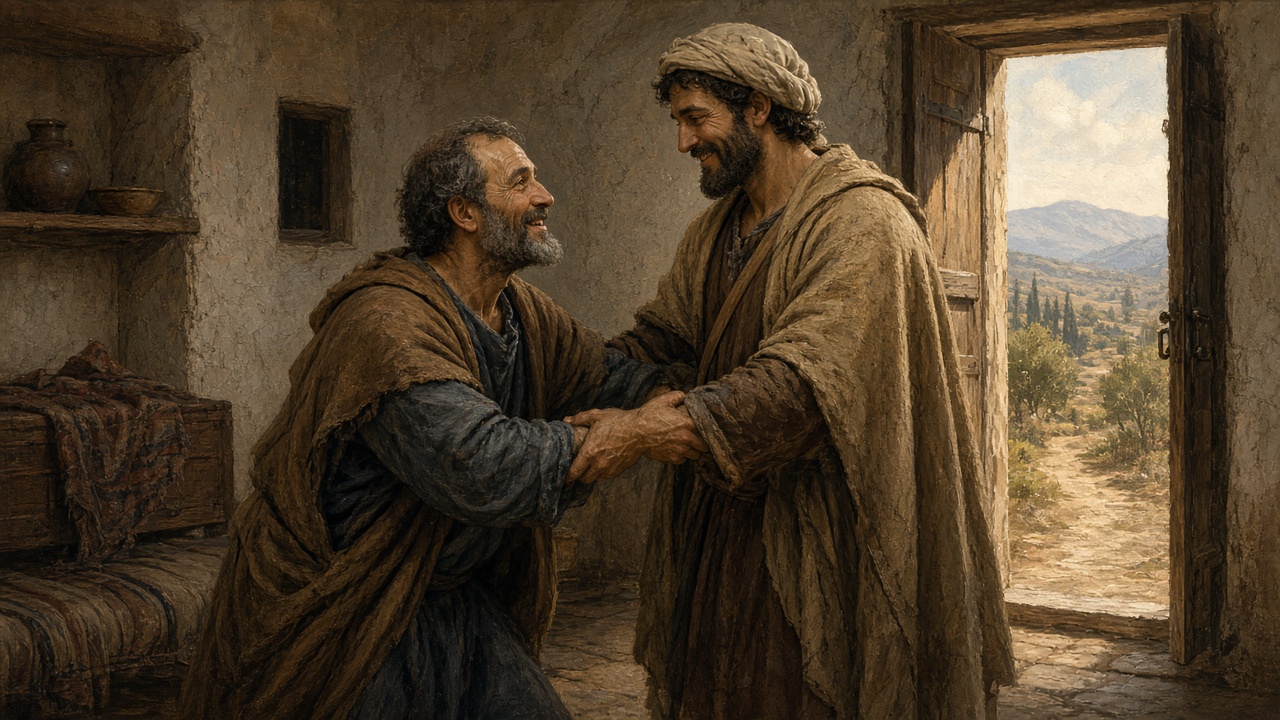
Consuelo después de una carta dolorosa
- Macedonia, donde Pablo dice que llegó sin descanso en el cuerpo —conflictos por fuera y temores por dentro—, era una provincia romana al norte de Grecia. Allí, escribe, el Dios que consuela a los abatidos lo consoló con la llegada de Tito.Fuentes: Macedonia · el propio texto bíblico
- Pablo habla de una carta que los entristeció, pero solo por poco tiempo. Ahora se alegra no porque se hayan entristecido, sino porque esa tristeza los llevó al arrepentimiento; dice que sintieron la tristeza que Dios había dispuesto, que no fueron perjudicados por él y que mostraron empeño, celo e inocencia en aquel asunto.Fuentes: el propio texto bíblico
- Un breve relato describe a Tito como compañero de Pablo, al parecer un gentil que se dedicaba sobre todo a ministrar a los gentiles. En este capítulo Pablo dice que la llegada de Tito lo consoló, que Tito contó su añoranza, su llanto y su celo, y que recibieron a Tito con temor y temblor.Fuentes: Titus · el propio texto bíblico
Notas escritas con ayuda de IA a partir de fuentes abiertas (Theographic Bible Metadata, CC BY-SA 4.0; Easton’s Bible Dictionary, dominio público) y revisadas antes de publicarse.
Lugares de este capítulo
- Macedonia · 41.600, 22.540 · versículo 5
Solo aparecen lugares identificados con alta confianza (90 % o más según las fuentes académicas reunidas por OpenBible). Mapa de la época: DARE (Digital Atlas of the Roman Empire), CC BY 4.0; mapa actual: © colaboradores de OpenStreetMap; lugares: OpenBible.info (CC BY 4.0).
Créditos y licencia de esta traducción
I Falami Kasafnè (New Testament)
New Testament in Blaan, Koronadal
copyright © 1995 Wycliffe Bible Translators, Inc.
Language: Koronadal Blaan (Blaan, Koronadal)
Translation by: Wycliffe Bible Translators, Inc.
Copyright Information
© 1995, Wycliffe Bible Translators, Inc. All rights reserved.
This translation text is made available to you under the
terms of the Creative Commons License: Attribution-Noncommercial-No Derivative Works.
( http://creativecommons.org/licenses/by-nc-nd/3.0/ )
In addition, you have permission to port the text to different file formats, as long as you
do not change any of the text or punctuation of the Bible.
You may share, copy, distribute, transmit, and extract portions
or quotations from this work, provided that you include the above copyright
information:
You must give Attribution to the work.
You do not sell this work for a profit.
You do not make any derivative works that change any of the actual words or punctuation of the Scriptures.
Permissions beyond the scope of this license may be
available if you contact
us with your request.
The New Testament
in Blaan, Koronadal
© 1995, Wycliffe Bible Translators, Inc. All rights reserved.
This translation is made available to you under the terms of the
Creative Commons Attribution-Noncommercial-No Derivatives license 4.0.
You may share and redistribute this Bible translation or extracts from it in any format, provided that:
You include the above copyright and source information.
You do not sell this work for a profit.
You do not change any of the words or punctuation of the Scriptures.
Pictures included with Scriptures and other documents on this site are licensed just for use with those Scriptures and documents.
For other uses, please contact the respective copyright owners.
2014-08-06
Fuente: http://ebible.org/bpr/ · eBible.org