Génesis 28
A Nitana Vure · Toca un versículo para ver sus referencias cruzadas.
E Iakop i Ha Lakea ne Leban
1Lakea e Isak i galea e Iakop, i gamaia, i vakukua, “Naha ni parangi na ngatavine o Kenan. 2O lakea malaviriri o Padan-Aram na robo e Mesapotamia, na tabeke e tamane kinamu, e Betuel. O bole talea vonga ne hamu e Leban, tara e tuna a ngatavine, ge girihimu. 3A Vure Tuhaka ge gamai ioe, go vakabele, go vakakupo e huriki a hamomu. 4E Bakovi Dagi ge gamai ioe turana e huriki a hamomu, i manga a hini i gamaia e Abraham hosi. Muri bara o bolea a malala, ra o made manga mosi vona ngane, ra malala a Vure i habia ne Abraham.” 5Lakea e Isak i rudua e Iakop i vano i lakea o Padan-Aram ne hana e Leban, e tune Betuel, ra hamone Aram. E Leban e kurabane Rebeka. E Rebeka e kinane Iakop rua e Esau.
6E Esau i lohoka vona ngane e Isak i gamaia e Iakop, muri i rudua i lakea o Padan-Aram ge bolea vonga e girihina. Na tahuna i gamaia i vakukua nahea ge parangi a ngatavine o Kenan. 7E Iakop i longototo e tamana e kinana, i vano i lakea o Padan-Aram. 8Pali e Esau i lohoka vona ngane e tamana i uka ma i ngaru a ngatavine o Kenan. 9Lakea, i vano i parangi vona e Mahalat, e tune Ismael e kurabane Nebaiot.
E Iakop i Vurena o Betel
10E Iakop i malaga o Bersiba, ge lakea o Haran. 11I bele vona a tabeke tara, i mahita, a vuhuna i rolo a haro. I bolea tara kedo i ru polotano na gina, i kaloho langa vona, i mahita. 12Na tahuna i mahita i vurena, i masia a nirike ni vakapesi na malala, i padoia a hunu, lakea e huriki a agelo na Vure ri puru rike vona. 13E BAKOVI DAGI i pesi polo meli vona, i ta maea, “Iau e BAKOVI DAGI, a Vure ne tubumu e Abraham, e tamamu e Isak, ga habia vomu, ne huriki a hamomu a malala o mahita vona. 14E huriki a hamomu bara ri ala kupo manga a habulo na malala. Bara mu made vona a hini i vakatubu na nirolona haro, i lakea mai a nirikena haro, a hini i sike lakea i puru lakea. E huriki a viri lobo na malala ga gamai ria, a vuhuna iau a gamai e huriki a hamomu. 15Iau ga laho turamu, ga matakari ioe na hini o lakea vona. Muri ga bole mule valai ioe koea na malala iea. I uka ma ga pe ioe ngane, bara rata taro a maka maki a taki ioe vona.”
16E Iakop i hadongo, i luhoi maea, “Muholi, e BAKOVI DAGI i made vona a hini nga, pali iau i uka ma a lohoka vona.” 17I mangenge, i ta maea, “Iau a mangenge hateka vona a tabeke iea, a vuhuna ra tabeke iea a roho na Vure, a dili dala na hunu.”
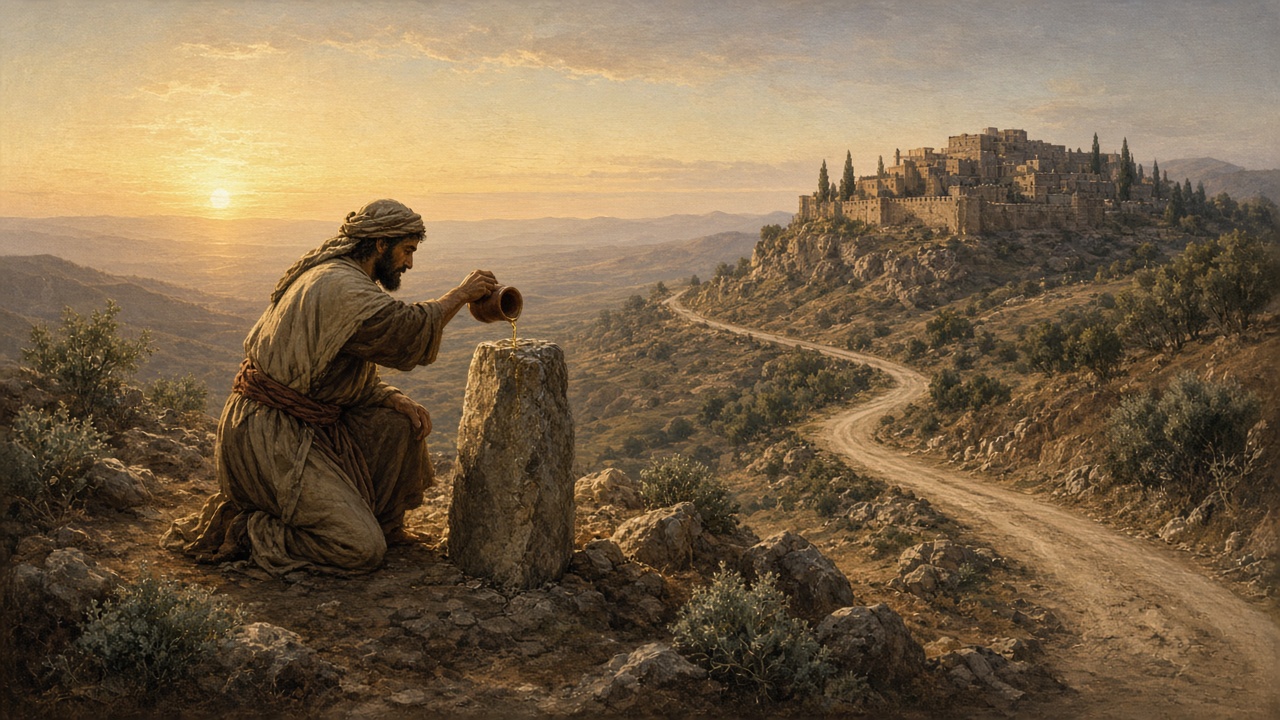
18Na hatelanga pokopoko na parava muri, e Iakop i bolea a kedo, ra i kaloho langa vona, i toto pesia ga kilakila. Muri i bolea a nibiri, i guru langea vona. 19Lakea i vunua a tanga iea e Betel. Ra tanga dagi iea, ni gale muga e Lus. 20Muri, e Iakop i ratea tara nita dagi, i ta maea, “A Vure bara i laho turagu, ge matakari iau na ni lahogu iea, ge habi a maki ni kani ga kani, a varakia ga rodo, 21muri ge bole mule iau na tabeke ne tata na nivalemu, e BAKOVI DAGI bara ia a Vure nau. 22Ra kedo iea a vakapesia i manga a kilakila ge vakasiri a hini nga ga hae a roho vomu vona. A maki i ravulu o habi nau bara habi mulea vomu a tabekena i taku.”
¿Sabías que…?
El viaje de Jacob y el sueño en Betel
- Isaac envió a Jacob desde Beerseba a Padan-aram para que tomara esposa entre las hijas de Labán, hermano de su madre Rebeca, y no entre las mujeres cananeas. Padan-aram, llamada la llanura de Aram, se considera comúnmente el distrito mesopotámico alrededor de Harán, donde vivía Labán; Harán, también llamada la ciudad de Nacor, fue donde Abraham permaneció después de salir de Ur hasta que murió su padre Taré.Fuentes: el propio texto bíblico · Paddan-aram · Haran · Laban
- El lugar donde Jacob soñó, levantó como columna la piedra que había puesto bajo su cabeza y derramó aceite sobre ella era la ciudad real cananea de Luz; él la renombró Betel. El Easton's Bible Dictionary (1897) sitúa Betel en la Palestina central, a unas diez millas al norte de Jerusalén, y señala que el nombre se dio al principio, al parecer, a un santuario en las cercanías de Luz, y no se dio a la ciudad misma hasta después de que la tribu de Efraín la conquistara.Fuentes: el propio texto bíblico · Luz · Bethel (of Palestine)
- Cuando Esaú supo que Isaac había bendecido a Jacob y le había ordenado no casarse con una mujer cananea, fue a Ismael y se casó con Mahalat, hermana de Nebaiot e hija de Ismael, hijo de Abraham, además de las esposas que ya tenía. El Easton's Bible Dictionary (1897) también la llama Basemat y señala que las tres esposas de Esaú reciben nombres distintos en la genealogía edomita de Génesis 36 de los que se dan en el relato de Génesis 26 y 28.Fuentes: el propio texto bíblico · Bashemath
Notas escritas con ayuda de IA a partir de fuentes abiertas (Theographic Bible Metadata, CC BY-SA 4.0; Easton’s Bible Dictionary, dominio público) y revisadas antes de publicarse.
Lugares de este capítulo
- Canaan · 32.767, 35.333 · versículos 1, 6, 8
- Haran · Hoy: Harran · 36.864, 39.033 · versículo 10
- Luz · Hoy: Beitin · 31.923, 35.241 · versículo 19
Solo aparecen lugares identificados con alta confianza (90 % o más según las fuentes académicas reunidas por OpenBible). Mapa de la época: DARE (Digital Atlas of the Roman Empire), CC BY 4.0; mapa actual: © colaboradores de OpenStreetMap; lugares: OpenBible.info (CC BY 4.0).
Créditos y licencia de esta traducción
A Nitana Vure
Genesis, Exodus, Leviticus, Numbers, Deuteronomy, Joshua, Ruth, Jonah, and the New Testament in the Bola language of Papua New Guinea
Sampela hap Buk Baibel long tokples Bola long Niugini
copyright © 2011 Wycliffe Bible Translators, Inc.
Language: Bola
Translation by: Wycliffe Bible Translators
This translation is made available to you under the terms of the
Creative Commons Attribution-Noncommercial-No Derivatives license 4.0.
You may share and redistribute this Bible translation or extracts from it in any format, provided that:
You include the above copyright and source information.
You do not sell this work for a profit.
You do not change any of the words or punctuation of the Scriptures.
Pictures included with Scriptures and other documents on this site are licensed just for use with those Scriptures and documents.
For other uses, please contact the respective copyright owners.
2014-12-03
Fuente: http://png.bible/bnp/ · eBible.org