Mateo 7
Deus Itaumbyry · Toca un versículo para ver sus referencias cruzadas.
Ânguy kienwentâbyra kine
1Jesus aguely:
— Ânguy kâzewentâdaundâ, Deus iwentâbyramo itoem lâpylâ. 2Âkelomoram mâundulymo ara lâpylâ ise Deus âyanmo nhuduly. Imâem mâundulymo watay, imâem lâpylâ ise Deus nhuduly. Imâemba watay, imâembalâ ise nhuduly warâ. 3Agonromo tâwentâze âmaemo, âdiempa inakanhe aitobyry wâgâ kulâ, âmaemo olâ inakanhe kuru aini. Koendonro mâkeba awârâ. Agonro âzenupialodobyry lelâ mâenkylymo, inumo odano se iwatary imâsedo pylâ mâempyra âmaemo-ro myara. 4Agonromo âzenupialodobyry etyze myguewâdylymo, inumo oday se iwatarybe awyly umelâ. 5Saguhoem wao inumo odano se iwatary etywâdaungâ, koendâ agonromo âzenupialodobyry mâentyhomoem. Koendonro emyenro wâne âmaemo, inakanhe kulâ olâ amidylymo! Saguhoem kuru wao inakanhe amidylymo imowâdaungâ. Inakanhe amidylymo mâinmopygueduomoma ise tâwâlâ agonrodo mâunrudylymo, inakanhe anipyra itoem.
6— Deus itaumbyry egatuly izepaom modo tindadyseba awyly umelâ aguehonly watay, tindadyseba inkâba, Deus itaumbyry iweniby kaxoroam samely waunlo ara kulâ. Amyguelymo watay, kaxoro ara otoguyzemo, nhâsemo warâ. Tuhu tâwâenseim pâsega nhakabehoem samely myara kulâ ise amyguehomobyry — kely Jesus.
Ize kydato Deusram kyzekane
7Jesus aguely:
— Ekadaungâ. Mâenkaduomo, emakeze lelâ âmaemo. Xuiwâtaungâ. Mâwinduomo, soenkeze lelâ âmaemo. Pyantaylâ âtâ sodo igâsedaungâ, enahungueze lelâ mawânkâ. 8Idânârâ ekanibyry modo emakeze. Xuirimpyry modo soenkeze. Âtâ sodo pyantay tygâsenibyryram enahungueze. 9Âmerymo turu nhekaduo, tuhu mâunduwâpyra âmaemo. 10Kanra âjihuyby nhekaduo, âgâu mâunduwâpyra âmaemo eoduem. 11Inakai wâne âmaemo, iwâkuru modo olâ âmerymoram mâundulymo. Kunwym kaynonroma kuru koendonro-ro; koendonro modo xuduze ekanibyry modoram!
12— Âkelomo agâ koendâ itaungâ, agâmo koendâ awyse matomo ara. Xirâ aguely mawânrâ Moisés inweniby, akaemo Deus wâgâ aguewâni modo konomedâdobyry warâ — kely Jesus.
Aguipa kulâ ise Deus eydâ atoram idâwâni modo
13Jesus aguely:
— Agui lelâ yeinwândysebaom modo tâwâlâ ize tato ara kulâ adâidyse awylymo; Deus ize ato ara adâidysebamo. Pyanta tâtaydygueim oze tâgawândyse awylymo, ânwa tâtaydygueim oze tâtâdyze awylymo warâ. Awylygue ise tâdâsenagazedoram kulâ idâlymo, Satanás eydâ atoram. Akaemo araba itaungâ. Yeinwântaungâ, pyanta tâtabigueim oze egawânni ara. 14Ton-honreim olâ awârâ ânwa tâtabigueim oze tâdâtâly, pyanta tâtabigueim oze tâzegawândyly warâ, myara lâpylâ aguipa kulâ Deus eydâ atoram idâwâni modo, tâwâlâ âjize tawyly imowâni modo, Deus ize ato ara lelâ aitaynrim modo warâ — kely Jesus.
Konokuze kulâ “Deus itaumbyry egatuim xina” kewâni modo
15Jesus aguely:
— Tonomeguelâ itaungâ, “Deus itaumbyry egatuim xina” kewâni modo agâ. Udodo kaneru xuhudugue âzetydâdyby emyenro kulâ akaemo. 16Inakanhe aidylymogue olâ ise Deus eynynonro keba awylymo mâuntulymo. Tyguyreim, uvague tâwituneba; kazainwam, figugue tâwiseba warâ. Tâwilygue lelâ mawânrâ nady modo ewitu. 17Se takyguenry, koendâ lelâ ewily, ein-hoem tuduze. Se takygueim, inakanhe lâpylâ ewily, ein-hoem nudupa. 19Se koendâ tâwisenry satâly lelâ. Peto onwanji samely-ro warâ. 20Warâ ise ânguy Deus wâgâ koendâ aguenri, ânguy konokuni warâ awyly, mâuntulymo aidyly wâgâlâ — kely Jesus.
Idânârâ inkâba ise Deus pymâem atoram tâdâtâly
21Jesus aguely:
— Deus aguehobyry ara aini modo lelâ ise Deus eydâ atoram idânri. Toenzepa kurâ domodo yam, “Pymâ, pymâ” kewâni modo, kewâdylymo kulâ olâ. Pabai kaynonro eydâ atoram nâtâwâbyramo ise, Deus aguehobyry ara anipyra awylymogue. 22Xypyry etay, “Jesus eynynonro xina” kewâtyby modo warâ ise yam aguelymo: “Pymâ, Deus itaumbyry xina egatuwâm on-honrugue. Toenzepa kadopâ modo xina egaseânmâ, toenzepa adyesenry modo warâ xina aiemâ on-honrugue” kezemo yam. 23Warâ olâ ise eyanmo auguely: “Âutuwâbyramo urâ. Ydâpa itaungâ, âmaemo inakanhe aitaynrim modo!” keze lelâ urâ — kely Jesus.
Deus aguehobyry ara lelâ aini, aguehobyry araba aini warâ
24Jesus aguely:
— Deus itaumbyry indadyly, aguehobyry ara aidyly waunlo uguondo tonomegueim, tuhu wâgâ tâty itânibyry emyenro. 25Toenzepa kopâ ihugueduo, paru inwenly. Sapezenru ton-honre kehoem âtâ onwa idâly. Mârâ âtâ olâ nihugueba, tâhugane kehoem tuhu wâgâ itâdyby awylygue.
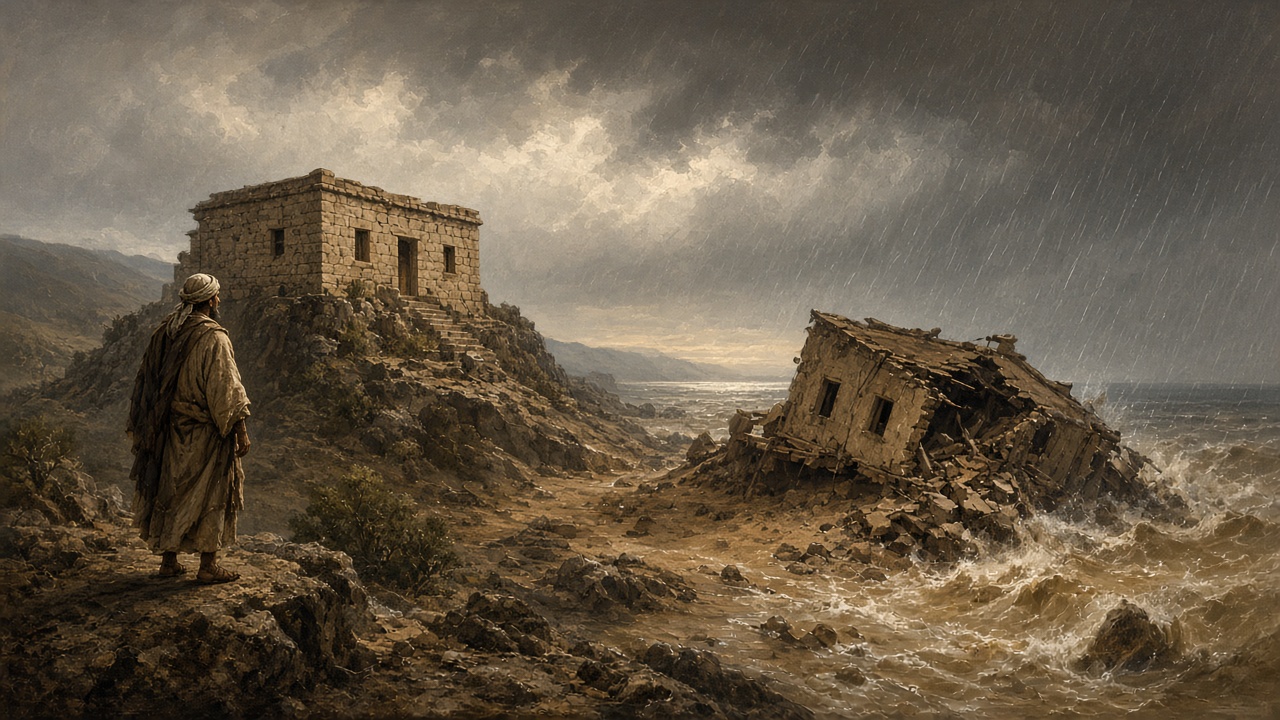
26— Deus itaumbyry idani, aguehobyry ara aniempyra olâ waunlo uguondo sagunu wâgâ tâty itâni emyenro kulâ. 27Toenzepa kopâ ihugueduo, paru inwenly. Ton-honre kehoem adapezeinly âtâ onwa. Aituo âtâ ihuguely. Idânârâ kehoem adakalaguely, tâhuganeba itâdyby awylygue — kely Jesus.
Adâkeho tutuze lelâlâ Jesus
28Jesus aguepygueduo, toenzepa myani kurâ domodo âsewânily, arâ tâzenomedâoduomo. 29Aguelymo:
— Adâkeho tutuze lelâlâ awâkâ uguondo! Ton-honruguelâ awâkâ aguely, akaemo Moisés inweniby wâgâ enomedâni modo ara inkâba — kelymo.
¿Sabías que…?
El juicio, el camino angosto y un fundamento firme
- El registro del acontecimiento fecha el inicio del Sermón del Monte en el año 28 d. C. y su duración en un día. Este capítulo termina con las multitudes asombradas de la enseñanza de Jesús, porque él enseñaba como quien tiene autoridad, y no como sus escribas.Fuentes: Sermon on the Mount · el propio texto bíblico
- Jesús advierte que el juicio que alguien pronuncia, y la medida que esa persona usa, se volverán contra ella. Describe a alguien que nota la paja en el ojo de su hermano, pero no advierte la viga en el propio, y dice que la viga debe quitarse primero.Fuentes: el propio texto bíblico
- El capítulo llama esencia de la Ley y los Profetas hacer a los demás lo que uno querría que le hicieran. Contrasta una puerta ancha y un camino espacioso que lleva a la destrucción, por el que entran muchos, con una puerta pequeña y un camino angosto que lleva a la vida, que pocos hallan, y compara oír estas palabras y ponerlas en práctica con una casa edificada sobre la roca y no sobre la arena.Fuentes: el propio texto bíblico
Notas escritas con ayuda de IA a partir de fuentes abiertas (Theographic Bible Metadata, CC BY-SA 4.0; Easton’s Bible Dictionary, dominio público) y revisadas antes de publicarse.
Créditos y licencia de esta traducción
Deus Itaumbyry
New Testament in Bakairí
copyright © 2011 Wycliffe Bible Translators, Inc.
Language: Bakairí
Translation by: Wycliffe Bible Translators, Inc.
Copyright Information
© 2011, Wycliffe Bible Translators, Inc. All rights reserved.
This translation text is made available to you under the
terms of the Creative Commons License: Attribution-Noncommercial-No Derivative Works.
( http://creativecommons.org/licenses/by-nc-nd/3.0/ )
In addition, you have permission to port the text to different file formats, as long as you
do not change any of the text or punctuation of the Bible.
You may share, copy, distribute, transmit, and extract portions
or quotations from this work, provided that you include the above copyright
information:
You must give Attribution to the work.
You do not sell this work for a profit.
You do not make any derivative works that change any of the actual words or punctuation of the Scriptures.
Permissions beyond the scope of this license may be
available if you contact
us with your request.
The New Testament
in Bakairí
© 2011, Wycliffe Bible Translators, Inc. All rights reserved.
This translation is made available to you under the terms of the
Creative Commons Attribution-Noncommercial-No Derivatives license 4.0.
You may share and redistribute this Bible translation or extracts from it in any format, provided that:
You include the above copyright and source information.
You do not sell this work for a profit.
You do not change any of the words or punctuation of the Scriptures.
Pictures included with Scriptures and other documents on this site are licensed just for use with those Scriptures and documents.
For other uses, please contact the respective copyright owners.
2014-04-23
Fuente: http://ebible.org/bkqNT/ · eBible.org