Hechos 24
KƗLӘ-MƗNDƗ KƗ SƗGƗ · Toca un versículo para ver sus referencias cruzadas.
Jɨpɨ je ɨndəi ta dɔ Pol tɨ
1NDɔ mi go tɨ, kɨ bo lə njé kɨjə nḛ məsɨ kadɨ-kare je kɨ ɓari-e nə Ananɨyasɨ re Səjare tɨ. Dɨje kɨ dani-e rəi sie əi ngatɔgɨ je taa nje najɨ ta dɔ dɨje tɨ kɨ ɓari-e nə Tərtulusɨ tɔ. Ananɨyasɨ kɨ dɨje kɨ goe tɨ kɨn awi səki Pol rɔ nje ko̰ɓe tɨ kɨ dɔnangɨ Səjare tɨ. 2Lokɨ ɓari Pol ɓa, Tərtulusɨ ɨlə ngɨrə kɨndə ta dɔe tɨ no̰o̰ nje ko̰ɓe tɨ ə nə: 3«Ḭ kɨ bo, Pəlɨsɨ, kɨ takuli, kɨ takul gosɨ ko̰ɓe ləi, kɨ takul nḛ je kɨ ɨtu gɨnde kɨ mba majɨ lə dɨje me ɓe ə, j-ɨsɨ-n kɨ lapɨya. E kɨn e majɨ kɨ jɨ gər kɨ lo je pətɨ me nḛ je tɨ pətɨ. 4Nɨngə, kadɨ j-ɨndəi kɔ tɨ ngay al, jɨ dəji kadɨ ur mbi, kɨ go me-majɨ tɨ ləi kadɨ o-n dɔ ta kɨ j-a j-əli ta je kare joo. 5J-o kadɨ dɨngəm kam e nje tujɨ ɓe. Re kɨ gangɨ-naa dan *Jɨpɨ je tɨ kɨ lo je pətɨ dɔnangɨ tɨ ne. E nje kun dɔ ɓutɨ lə dɨje kɨ Najarətɨ tɨ. 6Aw bɨtɨ kadɨ n-təl kɨ kəy lə Luwə lo kɨ to njḛ tɨ, ə j-uwe. [ 7Jɨ ndɨgɨ kadɨ jɨ gangɨ ta dɔe tɨ kɨ go ndu-kun tɨ ləje, nə nje kun dɔ asɨgar je kɨ ɓari-e nə Lɨsɨyasɨ, re ɨndə tɔgɨ taa-e-n jije tɨ. 8Nɨngə un ndune kadɨ njé kɨndə ta dɔe tɨ rəi no̰i tɨ.] Kɨn ə ɨdə-je ta ə, ḭ wa a oo kadɨ ta je kɨ j-əli dɔe tɨ kɨn e ta kɨ rɔjetɨ.» 9Jɨpɨ je ɨndəi rɔde naa tɨ kɨ Tərtulusɨ əi nə, ta je kɨ əl dɔ Pol tɨ e ta kɨ rɔjetɨ.
Pol un ta tane tɨ no̰ Pəlɨsɨ tɨ kɨ nje ko̰ɓe
10NJé ko̰ɓe ra nḛ madɨ adɨ-n ta rəbɨ Pol kadɨ əl ta. Be ə, Pol un ta tane tɨ ə nə: «M-gər kadɨ asɨ ɓal ngay ə ɨsɨ gangɨ ta me ɓe tɨ ləje ne. Nɨngə, e kɨ go taa kɨ m-taa mei ə m-a m-najɨ-n ta dɔm tɨ no̰i tɨ. 11Asɨ kadɨ ḭ wa ɨsangɨ gɨne ə a ɨgər majɨ. Kaw kɨ m-aw Jorijaləm tɨ m-ɔsɨ dɔm nangɨ no̰ Luwə tɨ kɨn, man dɔ ndɔ kɨ dɔgɨ gɨde e joo al ɓəy. 12Nɨngə, lokɨ m-aw kɨn, e gɨn kəy tɨ lə Luwə, ə se gɨn kəy kaw-naa tɨ lə *Jɨpɨ je, ə se lo madɨ tɨ kɨ rangɨ me ɓe bo tɨ no̰o̰, dəw kɨ oo-je, j-ɨsɨ jɨ najɨ-naa ta tɨ kɨ dəw madɨ, ə se oo-m m-ɨsɨ m-sulə dɨje goto. 13Taa dɨje wa kɨ ai ne kam, asi kadɨ ɔji nḛ madɨ kare dɔ ta tɨ kɨ ɨndəi dɔm tɨ kɨn, kadɨ e ta kɨ rɔjetɨ, al tɔ. 14Nɨngə, m-gər no̰i tɨ ne təkɨ, m-ɨsɨ m-ra kɨlə ɓəə lə Luwə lə bawm je. M-ra kɨlə kɨn kɨ go rəbɨ kɨ əi je kɨ ɨndəi ta dɔm tɨ kɨn, ooi kadɨ e go rəbɨ kɨ loe tɨ al. Mi m-o kadɨ nḛ je pətɨ kɨ ndu-kun lə *Mojɨ əl tae, kɨ nḛ je pətɨ kɨ njé kəl ta je kɨ ta Luwə tɨ əli tae əi nḛ je kɨ rɔjetɨ. 15M-ɨndə mem dɔ nḛ tɨ kɨn rɔ Luwə tɨ. Nɨngə əi je ka, ɨndəi mede dɔ tɨ tɔ. Pətɨ, j-ɨndə meje tɨ kadɨ dɨje kɨ njé ra nḛ kɨ dana kɨ njé ra nḛ kɨ dana al, a ḭ lo koy tɨ. 16E mbata kɨn ə, m-ɨndə tɔgɨ dɔ rɔm tɨ mba kadɨ angalm uwə-m kɨ ta no̰ Luwə tɨ al nɨm, no̰ dɨje tɨ al nɨm tɔ. 17Go ɓal je tɨ kɨ ba̰y ba̰y kɨ m-goto, m-re kɨ la kadɨ m-ra-n kɨ dɨje ləm, taa kɨ kadɨ-kare kadɨ m-adɨ Luwə tɔ. 18Lo kɨn tɨ, e Jɨpɨ je kɨ Aji tɨ, ə ɨngəi-mi m-a m-ra kujɨ nḛ ra je kɨ mba kay rɔ njay gɨn kəy tɨ lə Luwə. Lokɨ ɨngəi-mi kɨn, dɨje uwəi-naa gɨdɨm tɨ al nɨm, taa dəw ra nḛ kɨ bɨrɨri al nɨm tɔ. 19NGa nɨngə, e Jɨpɨ je kɨ Aji tɨ ka kɨn ə re a rəi no̰i tɨ ne kadɨ tə ɨndəi ta dɔm tɨ, lokɨ re awi səm kɨ ta madɨ. 20A re e be al tɔ nɨngə, njé kɨndə ta dɔm tɨ kɨ ai nḛ ka kɨn, əli ta nḛ kɨ m-tɔl ə ooi tae, lokɨ m-a-n no̰ njé gangɨ ta tɨ lə Jɨpɨ je ka kɨn adɨ j-o. 21Ta kare kɨ m-un ndum taa no̰de tɨ m-əl m-ə nə: “E kɨ mba kadɨ kɨ m-adɨ mem kadɨ njé koy je a ḭ lo koy tɨ ə m-a-n no̰si tɨ lo gangɨ ta tɨ ne”, kɨn wa ə e ta kɨ kare ba kɨ ai dɔ tɨ wa taa.»
22Pəlɨsɨ kɨ gər rəbɨ lə Kɨrɨsɨ majɨ, ɔr ndɔ kəte, nɨngə əl-de ə nə: «NDɔ kɨ Lɨsɨyasɨ kɨ nje kun dɔ asɨgar je re ə tə m-ɨndə manjɨ ta ləsi kɨn ɓəy.» 23Nɨngə adɨ ndune adɨ kɨ bo lə asɨgar je kɨ ɓu, kare kɨ nje ngəm Pol kadɨ ngəm-e dangay tɨ. Nə ke ə kadɨ ɨyə̰ Pol adɨ ɨlə rɔne, taa kadɨ ɨyə̰ ta rəbɨ adɨ dəw lie kɨ ra kɨ ge kadɨ n-ra sie ka, kadɨ ra sie tɔ.
Pol a no̰ Pəlɨsɨ tɨ əi kɨ nee Dɨrusɨl
24Asɨ ndɔ je go tɨ, Pəlɨsɨ təl rəi kɨ nene Dɨrusɨl kɨ e Jɨpɨ. Lokɨ rəi, ɨlə adɨ rəi kɨ Pol adɨ əl-e ta kɨ dɔ kadɨ-me Jəju Kɨrɨsɨ tɨ. 25Nə lokɨ Pol əl ta tḛḛ-n dɔ nḛ ra tɨ kɨ dana, kɨ kuwə rɔ gɨn tɔgɨ tɨ, kɨ ta kɨ gangɨ kɨ a re ɓa, ɓəl ra Pəlɨsɨ adɨ əl Pol ə nə: «Asɨ ngata, ə aw tə ndɔ kɨ m-ɨngə dɔkagɨlo kɨ rangɨ ə m-a m-ɓari ɓəy.» 26Nɨngə ga mene tɨ təkɨ Pol a adɨ-ne la wa, adɨ taa taa, ɓa Pol adɨ re wal sie ta. 27Ɓal man joo dɔ Pol tɨ, nɨngə Pɔrsɨyusɨ Pəsɨtusɨ ɔr to Pəlɨsɨ. Pəlɨsɨ ndɨgɨ kadɨ n-ra nḛ kɨ nəl *Jɨpɨ je adɨ ɨyə̰ Pol dangay tɨ ba.
¿Sabías que…?
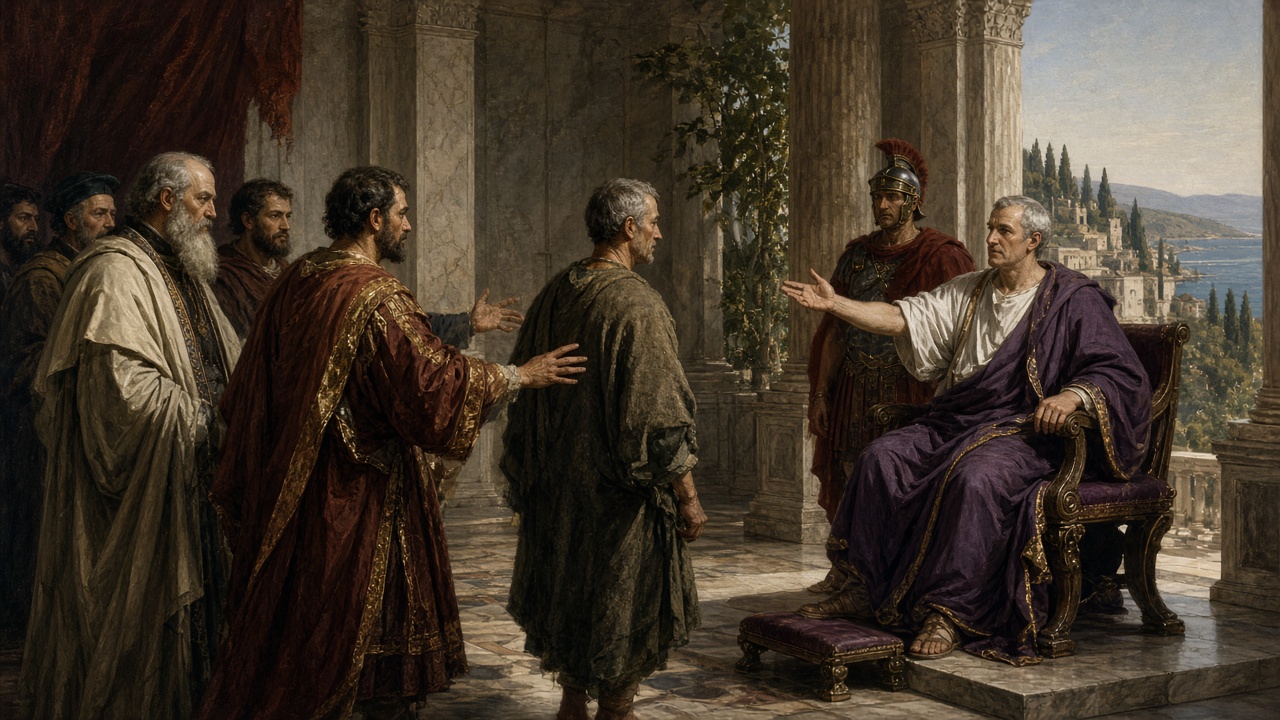
Pablo ante Félix
- El sumo sacerdote Ananías bajó con algunos ancianos y un abogado llamado Tértulo, a quien el Diccionario Bíblico de Easton describe como un abogado romano empleado por los judíos para exponer su causa contra Pablo ante Félix. Tértulo elogió al gobernador y luego dijo que Pablo era una peste que provocaba disensión entre los judíos por todo el mundo, cabecilla de la secta de los nazarenos y un hombre que había intentado profanar el templo. El diccionario relaciona ese elogio inicial con la limpieza que Félix hizo del país, al expulsar a bandidos e impostores.Fuentes: el propio texto bíblico · Tertullus · Felix
- Félix, que estaba bien informado acerca del Camino, aplazó la audiencia y mantuvo a Pablo bajo guarda, aunque le permitió cierta libertad y dejó que sus amigos atendieran sus necesidades. El relato dice que esperaba que Pablo le ofreciera un soborno y por eso lo mandaba llamar con frecuencia; el Diccionario Bíblico de Easton también afirma que al parecer esperaba un soborno y, por ello, tuvo varias entrevistas con él. Después de dos años lo sucedió Porcio Festo —el Diccionario Bíblico de Easton (1897) fecha ese nombramiento en el año 60 d. C.— y, queriendo hacer un favor a los judíos, Félix dejó a Pablo en prisión.Fuentes: el propio texto bíblico · Felix · Portius Festus
- Unos días después, Félix regresó con su esposa Drusila, que era judía, y escuchó a Pablo hablar de la fe en Cristo Jesús y de la justicia, el dominio propio y el juicio venidero; Félix se asustó y lo despidió. El Diccionario Bíblico de Easton (1897) identifica a Drusila como la tercera y la más joven hija de Herodes Agripa I y dice que Félix la indujo a dejar a su esposo, Azizus, rey de Emesa. La misma entrada dice que ella y su hijo perecieron en la erupción del monte Vesubio en el año 79 d. C.Fuentes: el propio texto bíblico · Drusilla
Notas escritas con ayuda de IA a partir de fuentes abiertas (Theographic Bible Metadata, CC BY-SA 4.0; Easton’s Bible Dictionary, dominio público) y revisadas antes de publicarse.
Lugares de este capítulo
- Caesarea · Hoy: Caesarea Maritima · 32.500, 34.892 · versículo 1
- Jerusalem · 31.777, 35.234 · versículos 11, 17
- Asia · 38.400, 28.300 · versículo 18
Solo aparecen lugares identificados con alta confianza (90 % o más según las fuentes académicas reunidas por OpenBible). Mapa de la época: DARE (Digital Atlas of the Roman Empire), CC BY 4.0; mapa actual: © colaboradores de OpenStreetMap; lugares: OpenBible.info (CC BY 4.0).
Créditos y licencia de esta traducción
KƗLӘ-MƗNDƗ KƗ SƗGƗ
New Testament in Bedjond (CD:bjv:Bedjond)
copyright © 2011 Wycliffe Bible Translators, Inc.
Language: Bedjond
Translation by: Wycliffe Bible Translators, Inc.
Copyright Information
© 2011, Wycliffe Bible Translators, Inc. All rights reserved.
This translation text is made available to you under the
terms of the Creative Commons License: Attribution-Noncommercial-No Derivative Works.
( http://creativecommons.org/licenses/by-nc-nd/3.0/ )
In addition, you have permission to port the text to different file formats, as long as you
do not change any of the text or punctuation of the Bible.
You may share, copy, distribute, transmit, and extract portions
or quotations from this work, provided that you include the above copyright
information:
You must give Attribution to the work.
You do not sell this work for a profit.
You do not make any derivative works that change any of the actual words or punctuation of the Scriptures.
Permissions beyond the scope of this license may be
available if you contact
us with your request.
The New Testament
in Bedjond
© 2011, Wycliffe Bible Translators, Inc. All rights reserved.
This translation is made available to you under the terms of the
Creative Commons Attribution-Noncommercial-No Derivatives license 4.0.
You may share and redistribute this Bible translation or extracts from it in any format, provided that:
You include the above copyright and source information.
You do not sell this work for a profit.
You do not change any of the words or punctuation of the Scriptures.
Pictures included with Scriptures and other documents on this site are licensed just for use with those Scriptures and documents.
For other uses, please contact the respective copyright owners.
2021-11-01
Fuente: http://ebible.org/bjvNT/ · eBible.org