Hechos 19
KƗLӘ-MƗNDƗ KƗ SƗGƗ · Toca un versículo para ver sus referencias cruzadas.
Pol e me ɓe tɨ kɨ Epəjɨ
1Dɔkagɨlo tɨ kɨ Apolosɨ e-n Korḛtɨ tɨ, Pol ɨndə dɔnangɨ kɨ mbal je əi tɨ kɨ dɔnangɨ Aji tɨ gangɨ, ɓa re tḛḛ Epəjɨ tɨ. Ɨngə njé ndo je lə Jəju kɨ na̰ je tɨ no̰o̰. Adɨ dəjɨ-de ə nə: 2«Lokɨ adi mesi Jəju kɨn, ɨngəi NDɨl Luwə a?» Ə təli ɨləi-e tɨ əi nə: «Jagɨ, ko ka j-o kəte kadɨ NDɨl Luwə e no̰o̰ al.» 3Pol təl dəjɨ-de ɓəy ə nə: «Batəm kɨ ban ə ɨngəi ə?» Ə əli-e əi nə: «J-ɨngə batəm lə Ja̰ Batɨsɨ.» 4Be ə, əl-de ə nə: «Oyo, Ja̰ ra batəm *Isɨrayəl je mba kadɨ tɔri ndude dɔ majal je tɨ ləde. Ə təl əl-de ɓəy kadɨ tə adi mede dəw kɨ a re gone tɨ no̰o̰, adɨ dəwe kɨn e Jəju.» 5Lokɨ ooi ta je kɨn nɨngə, adɨ rai-de batəm me tɔ Ɓaɓe Jəju tɨ. 6Be ə, Pol ɨndə jine dɔde tɨ, ə NDɨl Luwə rɨsɨ dɔde tɨ. Nɨngə ɨləi ngɨrə kadɨ əli ta kɨ ndon ta je kɨ dangɨ dangɨ nɨm, taa əli ta kɨ ta Luwə tɨ nɨm tɔ. 7Dɨngəm je pətɨ kɨ ai lo nḛ je tɨ kɨn asi dɔgɨ gɨde e joo. 8Go tɨ, asɨ nay mɨtə go-naa tɨ, Pol tḛḛ ə aw kəy kaw-naa tɨ lə *Jɨpɨ je, əl-de ta kɨ kanjɨ ɓəl. Ɨlə mbḛ ko̰ɓe lə Luwə, əl-de kɨ go rəbe, kadɨ ooi tə ta kɨ rɔjetɨ mba kadɨ taai ta kɨn tɔ. 9Nə Jɨpɨ je kɨ na̰ je dande tɨ rai me nga̰, adɨ mbati kadɨ adi mede. Əli ta kɨdii nḛ ndo lə Pol kɨ ɔjɨ go rəbɨ ta lə Ɓaɓe kɨn ta kəm kosɨ dɨje tɨ. Be ə, Pol ɨyə̰-de ə ɔtɨ aw kɨ njé ndo je me kəy ndo nḛ tɨ kɨ tɔe nə Tɨranusɨ. Nɨngə kɨ ndɔ je kare kare pətɨ, ndo-de nḛ. 10Nḛ ndo kɨn, Pol ra kɨle asɨ ɓal joo. Be ə, ra adɨ Jɨpɨ kɨ dɨje kɨ ə Jɨpɨ je al kɨ ɨsi dɔnangɨ Aji tɨ, ooi ta lə Ɓaɓe. 11Luwə ra nḛ kɔjɨ je kɨ ətɨ ɓəl kɨ takul Pol. 12Adɨ, dɨje ɔyi ta kɨbɨ kɨ kare je kɨ ta kɨbɨ lḛjɨ je kɨ jie ɔdɨ, awi ɔdi njé mo̰y je adɨ ɨngəi rɔ nga nɨm, ndɨl je kɨ majal ka ɨyə̰i-de nɨm tɔ.
13Jɨpɨ je kɨ na̰ je kɨ njé njɨyə kɨ go ɓe je, kadɨ n-tuwəi ndɨl je kɨ majal, əi je ka gei kadɨ n-ɓai tɔ Ɓaɓe Jəju dɔ dɨje tɨ kɨ əi gɨn tɔgɨ tɨ lə ndɨl je kɨ majal tɔ. Adɨ əli əi nə: «Me tɔ Jəju tɨ kɨ Pol ɨsɨ ɨlə mbḛ ta lie, m-dəjɨ səsi kadɨ ɨtḛḛi kɔ.» 14Dɨje kɨ njé ra nḛ be ka kɨn, əi sɨri. Əi ngan lə Jɨpɨ kare kɨ tɔe nə Səba. E kɨ bo lə njé kɨjə nḛ məsɨ kadɨ-kare je. 15NDɨl kɨ majal təl ɨlə-de tɨ ə nə: «M-gər Jəju, taa m-gər dəw kɨ e Pol tɔ, nə səi, səi na̰ je ə?» 16Lo kɨn tɨ, dəw kɨ ndɨl je majal ɨsi me tɨ ka kɨn ḭ ur dɔde tɨ uwə-de tɔsɔsɔ. Nɨngə ɨndə-de kɨndə kɨ dəw oo go madɨne al, adɨ tḛḛi me kəy tɨ kɨ ka̰y kɨ rɔde kare, kɨ kɨbɨ kɨ gangɨ rɔde tɨ batɨ batɨ kɨ məsɨ. 17Dɨje pətɨ kɨ ɓe bo Epəjɨ tɨ, kɨ Jɨpɨ je, naa tɨ kɨ dɨje kɨ əi Jɨpɨ je al, gəri go nḛ kɨ ra nḛ kɨn majɨ. Əi pətɨ ɓəl ra-de, adɨ ɔsi gon Ɓaɓe Jəju. 18Dɨje ngay kɨ əi njé kadɨ-me je rəi tɔri ndude, ə əli kɨlə rade je kɨ majal kɨ taga no̰ dɨje tɨ. 19NJé kɨ na̰ je dan njé ra mbəli je tɨ, rəi kɨ makɨtɨbɨ ra mbəli je ləde, kawi kɨ dɔ-naa tɨ ə ɨləi por ta kəm dɨje tɨ. Gatɨ makɨtɨbɨ je ləde kɨn asɨ sɨlə dɨbɨ kutɨ mi nja dɨbɨ kare. 20E be ə, kɨ takul tɔgɨ lə Ɓaɓe, ta lə Luwə sane lo je tɨ kɨ kəte kəte kɨ tɔgɨne tɔ. 21Go nḛ je tɨ kɨn, NDɨl Luwə ɔsɨ Pol adɨ un ndune kadɨ n-aw ɓe bo Jorijaləm tɨ. Dɔ rəbɨ kawe tɨ, ɨndə dɔnangɨ Masəduwan kɨ Akay gangɨ. Nɨngə Pol əl ə nə: «Re m-aw m-tḛḛ ɓe bo Jorijaləm tɨ ɓa, majɨ kadɨ m-aw m-o dɔnangɨ Rom tɔ.» 22Pol ɨlə kɨ njé ra sie kɨlə je joo, Tɨmote əi kɨ Erasɨ adɨ-de awi dɔnangɨ Masəduwan tɨ. Nɨngə e wa, ɨsɨ dɔnangɨ Aji tɨ ba njaba ɓəy.
Nḛ je kɨ rai nḛ Epəjɨ tɨ
23Dɔkagɨloe tɨ kɨn, ta kasɨ-naa al kɨ bo ngay ḭ dɔ rəbɨ ta tɨ lə Ɓaɓe me ɓe tɨ kɨ Epəjɨ. 24Dəw kare kɨ tɔe nə Dəmetɨrusɨ, e kɔdɨ kɨ nje ra nɨngə kasɨ je. E nje ra ngan kəy yo kɨ dəne kɨ a ɓari-e nə Artəmɨsɨ. Kɨlə kɨn ra adɨ e sotɨ kɨ njé kɨlə je lie ngay. 25Be ə, Dəmetɨrusɨ kaw kɔdɨ je kɨ dɨje pətɨ kɨ ɨsɨ kɨ dɔde taa kɨ takul kɨlə kɨn naa tɨ, ə əl-de ə nə: «Madɨm je, ɨgəri kadɨ e kɨ takul kɨlə kɨn ə, j-ɨsɨ j-ɨngəi nḛ majɨ. 26Səi je oi kɨ kəmsi taa kɨ mbɨsi tɔ, kadɨ e Epəjɨ tɨ ne par al, nə dɔnangɨ Aji tɨ ba pətɨ, ə dɨngəm kɨ tɔe nə Pol kam təl dɔ kosɨ dɨje basi. E əl-de ə nə: “Kagɨ yo je kɨ dɨje rai kɨ jide əi Luwə al.” 27E kɨlə je kɨ j-ɨsi rai kɨn par ə dɨje a ooi tə nḛ kɨ kare al, nḛ kəy lə yo kɨ dəne kɨ bo kɨ e Artəmɨsɨ kɨn ka, dɨje a ooi-e nḛ madɨ tɨ al tɔ. Lo kadɨ dɨje a əli ə nə: “Artəmɨsɨ e yo kɨ dəne kɨ bo,” goto. Artəmɨsɨ kɨ dɨje kɨ dɔnangɨ Aji tɨ kɨ ndəgɨ dɔnangɨ ba pətɨ ɔsi gone kɨn.» 28Lokɨ kɔdɨ je ooi ta je kɨn nɨngə, wongɨ rade ngay, adɨ ɨləi ngɨrə kadɨ əli ta kɨ ndude kɨ boy əi nə: «Artəmɨsɨ lə Epəjɨ je, e kɨ bo.» 29Kalangɨ ba go tɨ nɨngə, lo sɨngə sokɨto kɨ ta tate ba me ɓe bo tɨ. Dɨje ndɔri Gayusɨ əi kɨ Arɨsɨtarkɨ, dɨje kɨ Masəduwan tɨ, kɨ əi madɨ mba lə Pol je kəmde tɨ, ə ngɔdɨ tɔl-n-de kɨ ta mbalo tɨ. 30Pol ndɨgɨ mba kadɨ n-tɔjɨ rɔne kosɨ dɨje, nə njé ndo je ɔgi-e. 31Nɨngə basa madɨ Pol je madɨ kɨ əi dɨje kɨ bo kɨ dɔnangɨ Aji tɨ, ɨləi kɨlə rɔe tɨ, əli-e kadɨ aw ta mbalo tɨ al. 32Ta mbalo tɨ, nḛ kɨ to ay njay dɔ dɨje tɨ goto. Ta je kɨ ɨsɨ tḛḛ ta dɨje tɨ əi ta je kɨ dangɨ dangɨ. Nɨngə dɨje ngay dan madɨde je tɨ gəri gɨn nḛ kɨ kawi-naa al. 33Dɨje kɨ na̰ je dan kosɨ dɨje tɨ ɔri gɨn nḛ kɨ ra nḛ kɨn adɨ Aləgɨjandɨr kɨ *Jɨpɨ je ɨndəi-e tə nje kun dɔde kɨn ade oo. Aləgɨjandɨr ɨlə jine taa, dəjɨ-n dɨje mba kadɨ ai kekeke, tadɔ ge kəl ta, ɔr-n ta dɔde tɨ. 34Lokɨ gəri-e kadɨ e Jɨpɨ nɨngə, əi je pətɨ ɨləi bɨlə kɨ ndude kɨ bo asɨ ngɨrə kadɨ joo je be əi nə: «Artəmɨsɨ lə Epəjɨ je, e kɨ bo.» 35Ta tɔl ta tɨ nɨngə, nje ndo ndu-kun kɨ me ɓe bo tɨ, re ra adɨ lo to jɨjɨji, ɓəy taa əl-de ə nə: «Səi dɨje kɨ Epəjɨ tɨ, na̰ ə gər kadɨ ɓe kɨ Epəjɨ tɨ, e nje ngəm kəy lə Artəmɨsɨ kɨ e yo kɨ dəne kɨ e kɨ bo kɨn al ə, ə se na̰ ə gər kadɨ e nje ngəm mbal kɨ e bana kəme kɨ ḭ dɔra̰ tɨ osɨ kɨn al ə?» 36E kɨn e nḛ kɨ dum majɨ. Majɨ kadɨ uwəi angalsi ɨndəi nangɨ, ə ɨməri ta taa ɨrai nḛ. 37Səi je ə ɔri dɨje kam ɨrəi səde ne, nga, nḛ madɨ kɨ majal kɨ rai ɔsi ta kəy kɨn goto, taa əli ta kɨ mal dɔ yo tɨ ləje kɨ dəne Artəmɨsɨ al tɔ. 38Re Dəmetɨrusɨ əi kɨ dɨje kɨ njé ra kɨlə je ləne, ai kɨ ta kɨ dəw madɨ nɨngə, ndɔ gangɨ ta je to no̰o̰, ə majɨ kadɨ awi ooi njé gangɨ ta je. 39Re nḛ madɨ kɨ rangɨ to no̰o̰ kadɨ ɨdəji ə, ndɔ kɨ kadɨ njé kɨndə manjɨ ta je kɨn kɨ go rəbe tɨ to no̰o̰. 40Nḛ je kɨ rai nḛ ɓone kɨn, asɨ kadɨ dɨje ɨləi ta dɔje tɨ tə njé kal dɔ ndu je, tadɔ ta madɨ kɨ j-a j-əli ə j-a j-ɔrii ta dɔ je tɨ, kɨ ɔjɨ go kaw-naa lə dɨje kɨ ɓone kɨn goto. Be ə, go ta je tɨ kɨ nje ndo ndu-kun əl, tuwə dɨje adɨ sanəi-naa.
¿Sabías que…?
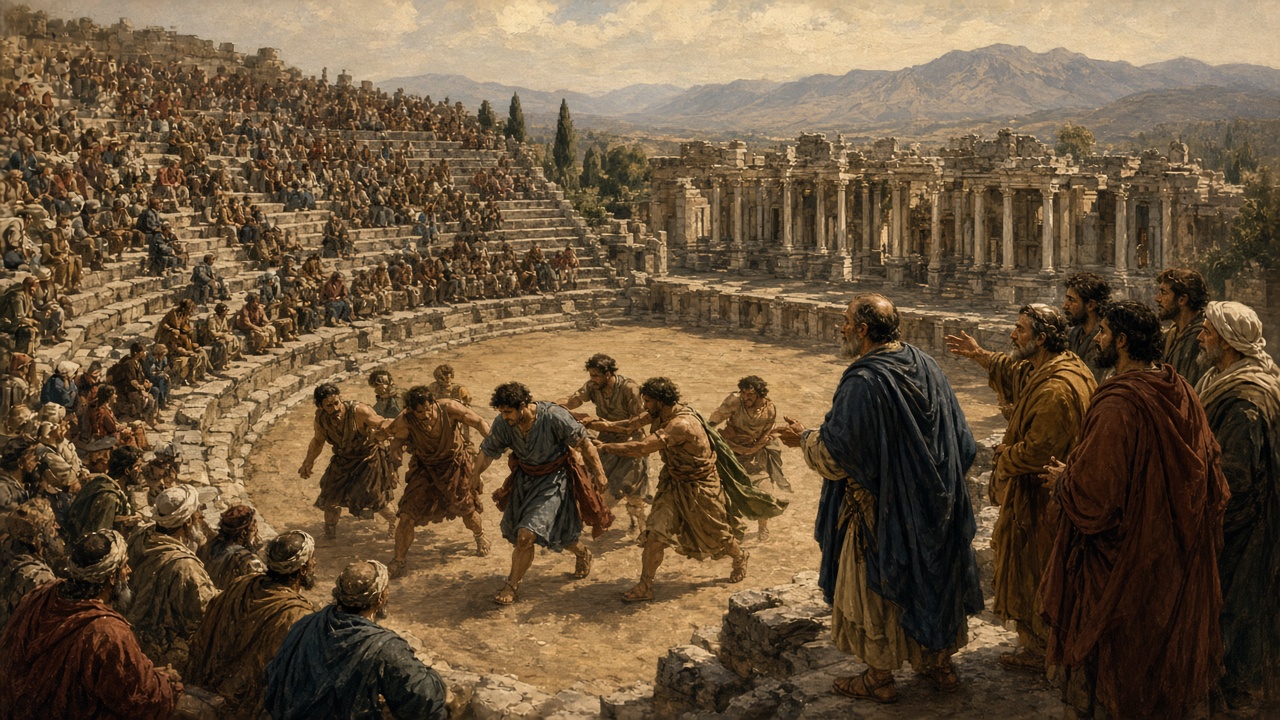
Pablo, el Camino y Artemisa en Éfeso
- Éfeso era la capital del Asia proconsular, la provincia romana que abarcaba la parte occidental de Asia Menor, y en tiempos romanos llevaba el título de primera y más grande metrópoli de Asia. La ciudad se distinguía por el templo de Artemisa, a quien los romanos llamaban Diana, construido fuera de las murallas y contado entre las siete maravillas del mundo antiguo. En el centro había una imagen antigua de la diosa, de la que se decía que había caído del cielo.Fuentes: Ephesus · Diana · Asia
- Demetrio, un platero de Éfeso, hacía santuarios de plata de Artemisa, modelos del templo o de la estatua de la diosa, que se vendían con facilidad a los visitantes llegados de toda Asia Menor. Hechos dice que ese oficio era la fuente de prosperidad de los artesanos y que Demetrio les advirtió del peligro para el negocio y para el honor del templo de Artemisa, la diosa que, según él, era adorada en toda la provincia de Asia y en el mundo entero.Fuentes: Demetrius · el propio texto bíblico
- La multitud se lanzó al teatro de Éfeso, que el Diccionario Bíblico de Easton (1897) describe como el más grande del mundo, a cielo abierto y capaz de albergar a 50.000 espectadores. Amigos de Pablo entre los jefes de Asia, ciudadanos ricos elegidos cada año para presidir los juegos y las fiestas religiosas de sus ciudades, le rogaron que no entrara. El secretario de la ciudad recordó entonces a la asamblea que Éfeso era guardiana del templo de la gran Artemisa y de su imagen, de la que se decía que había caído del cielo.Fuentes: Ephesus · Asia · el propio texto bíblico
Notas escritas con ayuda de IA a partir de fuentes abiertas (Theographic Bible Metadata, CC BY-SA 4.0; Easton’s Bible Dictionary, dominio público) y revisadas antes de publicarse.
Lugares de este capítulo
- Corinth · 37.906, 22.879 · versículo 1
- Ephesus · 37.939, 27.341 · versículos 1, 17, 23, 26, 35
- Asia · 38.400, 28.300 · versículos 10, 22, 26, 27, 31
- Achaia · 38.720, 22.540 · versículo 21
- Jerusalem · 31.777, 35.234 · versículo 21
- Macedonia · 41.600, 22.540 · versículos 21, 22, 29
- Rome · 41.892, 12.485 · versículos 21, 40
Solo aparecen lugares identificados con alta confianza (90 % o más según las fuentes académicas reunidas por OpenBible). Mapa de la época: DARE (Digital Atlas of the Roman Empire), CC BY 4.0; mapa actual: © colaboradores de OpenStreetMap; lugares: OpenBible.info (CC BY 4.0).
Créditos y licencia de esta traducción
KƗLӘ-MƗNDƗ KƗ SƗGƗ
New Testament in Bedjond (CD:bjv:Bedjond)
copyright © 2011 Wycliffe Bible Translators, Inc.
Language: Bedjond
Translation by: Wycliffe Bible Translators, Inc.
Copyright Information
© 2011, Wycliffe Bible Translators, Inc. All rights reserved.
This translation text is made available to you under the
terms of the Creative Commons License: Attribution-Noncommercial-No Derivative Works.
( http://creativecommons.org/licenses/by-nc-nd/3.0/ )
In addition, you have permission to port the text to different file formats, as long as you
do not change any of the text or punctuation of the Bible.
You may share, copy, distribute, transmit, and extract portions
or quotations from this work, provided that you include the above copyright
information:
You must give Attribution to the work.
You do not sell this work for a profit.
You do not make any derivative works that change any of the actual words or punctuation of the Scriptures.
Permissions beyond the scope of this license may be
available if you contact
us with your request.
The New Testament
in Bedjond
© 2011, Wycliffe Bible Translators, Inc. All rights reserved.
This translation is made available to you under the terms of the
Creative Commons Attribution-Noncommercial-No Derivatives license 4.0.
You may share and redistribute this Bible translation or extracts from it in any format, provided that:
You include the above copyright and source information.
You do not sell this work for a profit.
You do not change any of the words or punctuation of the Scriptures.
Pictures included with Scriptures and other documents on this site are licensed just for use with those Scriptures and documents.
For other uses, please contact the respective copyright owners.
2021-11-01
Fuente: http://ebible.org/bjvNT/ · eBible.org