Génesis 49
Sunbin-Got em Kitakamin Weng · Toca un versículo para ver sus referencias cruzadas.
Sekow Akalem Muluwel im Kaneloke em Weng te.
1Beli, Sekow e akalem muluwel ilo gaayemeko, bokoyemomele: “Yu nem mit mewso telina! Teliw kano, sow ibik em yom dim kel keloke eisneng mak bokoyemoki te.
2Nem muluwel yutaka! Yu nem mit mewso telesomi, wensaneko, yukalem kalew Isalael nem weng kale kililina!
3Uluben, nem seiw men kutaka! Nakalem kitil so tanbel kebisi ding dim bakate, ne kulo duku kokemsi te.
Ku kunum kitil melmel so auk so kunum kelewsomi, kom nenggelel im kamok kelew te.
4Kate, kom kukuw e ok wal mit telebomi, kung kung kebe emdiw kasike, ku fik kumel im kulukabiliw abin be nam kulew te. Nimtew angom? Ku kalew nem afam waneng uso kal bongguko, akalsomi, nelo inkal dunemselew kasike.
5Simeon so Elibai so, yelew yutaka! Kaso yom ibolow e yulo silikmoyemkabe kasike, kaso yu kaisuw so ganbin so kunum alew kebomi, mali kawtiw ilo yenkabiliw te.
6Feinka! Yu kaisuw kesomi, mali kunum waneng ilo sak yesiliw te. Mali em ding dim bakate, kaso yu ibolow kikinin nangnang kuw kesomi, bulmakao im kalgol okiyem kesiliw te.
Kasike, kaso yuso neso nu nam tele tele kemuw te! Feinka! Yom ibolow fukunin e ne kilisomi, nam gelewbi te.
7Kaso yukalem kaisuw so, ibolow mamtel nam so, beem kukuw bakate ne kaso yulo weng yakok mak keyemi te. Kaso yu Isalael kawtiw biim mutuk dim e sak kawin banim kunum kebokoliw te!
8Suda kutaka! Kom kawkunum kumel i kukalem wiin daokemeko, kom mit kel katin bukbuk angeko, gatak wakas angokoliw te.
Kom teing e maka im gatak el falem mokolew te.
9Ku samal asomi, waneko, kitil kesomi, kilele faku alakabe alaion tanbele atew te.
Kesomi, kunum mali mak i kom mit mewso teleko, nam kamkalfoliw te.
10Suda kutaka! Kute kamok wiin so auk so kunum kelewi, Isalael kawtiw im emisik kamok fian e diwkuw diwkuw kom muluwel dow biim mutuk kel moloke te.
Feinka! Deiw mak ding mak kabalak e, emisik kamok fian sel mak yom dim kel telei, kawin dim kaleem kawtiw alik alik i akalem weng kiliko, fein gelewemokoliw te.
11Ku kunum wiin so kisol so kunum kelew kasike, kom donki men sak wain ais em mit aluwsomelewi, ais dem so ais kon so alik alik be wanoke kate, ku kanelom sakik kelokolew te.
Nimtew angom? Kom wain ok e ban ban ok atew kele kasike, ku sak wain ok kulusomi, kukalem ilim be wain ok so gingokolew kasike.
12Mesesem eisneng angom mak nam sukum kemew kasike, wain ok wanbelew beem dulum elote kom kiin e kafing olol nam kekemsomelei, non gom wanbelew beem dulum elote kom ning e kais nam kekemkabe te.
13Sebulon, ku okmun fian sel em beleng mit mewso teinbomi, Saidon abiw mutuk fian kom bokolew em aneng awet keloke te. Kom ka bokolew beem dulum be siw selel teleko, dit kemokoliw te.
14Isakal, ku donki kitil nam atew kate, ku ibolow aimgeko, gal nam kesomi, kukalem mesesem eisneng beem mutuk dim be sak teineko, buyelemokolew te.
15Ku ibolow tei angeko, kukalem aneng kenati atebokolew kasike, kukalem em dulum elote sakik banim kesomi, bokolew te. Bomelewi, mali kawtiw im sak weng afak kunum kesomi, im ilum e kute kuw daoko, de kakamokolew te.
16Dan, ku Isalael kawtiw biim mutuk ka bomi, kukalem kunum waneng ilo kilele diwyembokolew te.
17Ku sokyan kimon atul nam atew kebomelewi, deiw beleng dim ka kel kutebokolew te. Kutebelewi, maka mak kos dim teineko, teliw tewe, ku kos yan elo ning dut kelewbokolew kasike, kos em dim teinbiliw kunum bi kawin dim elo dakalu mit telemokoliw te.”,
yangse kale. 18Yangeko, Yawe elo bokolewomele: “Yawe kutaka! Kukalem dokonem angom ding bete kuw fenbi te!”, dangeko, iti mali muluwel biilo bokoyemomele:
19“ Gat kutaka! Maka i kom aneng elo kuiaw wanen tolokoliw kate, kukati famdes angeko, ilo yenggelew uneko, ilo kuyaw yenokolew te.
20Asel, kom kawin be tugul kawin kelei, emisik kamok fian im ibolow kelebokoliw em wanin ken ati kuw yom fok fok kemoke te.
21Nafatali, ku sok tem bin koleweko, ikalem ibolow fukunin ete kuw gelewsomi, fongate kuw yako unakabiliw kut em meme atew kesomi, mesesem eisneng kenati kuw fitew kaim dim dukulokolew te.
22Yosew, ku ok beleng mewso mosomi, ais dem banban gilakabe ais bamki so atew te. Ais beem teing al keko, akalem ayet dim bakilewko, neng so neng so unokobe te.
23Maka atul nam mak teleko, on balam so kitil kesomi, kulo kenomin ganen tolokoliw kate,
24kalew Sekow em tum kitil nam emdiw Auk so Kitil so Isalael kawtiw ilo yetemalakabe Sunbin-Got be kulo fein dokokemsomi, kom teing dim kitil dukemoke kasike, kom aluwbokolew wonuk be nam beit nam kebe te.
25Feinka! Kitil dukemsomi, kilele dokokemoke Sunbin-Got be kawalik kaliwol kumel biim Kitil so Auk so Sunbin-Got ete te. Akalem ete kuw kulo katiw em so, kalak em so, alik alik beso makuw bamki so kekemsomi, kom muluwel dow ikal banso banso keyemoke te.
26Kalew nem kame kulo bakakembi bamki so weng kale sunsun alakabe amgu fian so, amgu muk muk unse unse angom beso, alik alik beelo bakilewkabe te.
Yosew, ku kawkunum kumel biim kamok keko, belewi, bamki so mesesem eisneng be kom dim elo kuw keloke te!
27Benyamin ku kut mian emdiw kesomi, samal kil kuw kebomi, ankabelew te.
Kutim ding dim bakate, ku kom maka ilo yeneko, kunil koyemsomelewi, kuinbele ding kabalak e, ku iti teleko, samal beelo boko, amen amen kuw kelewkabelew te.”,
yangse kale.
28Sekow em Kalun kel muluwel bi Isalael kawtiw im kalun kel kunum mongom bite kale. Alew Sekow e akalem muluwel ilo ikalem amen amen kesomi, bamki so weng mak duyemse kale.
Sekow em Kuanei, Dawkusiliw em Sang te.
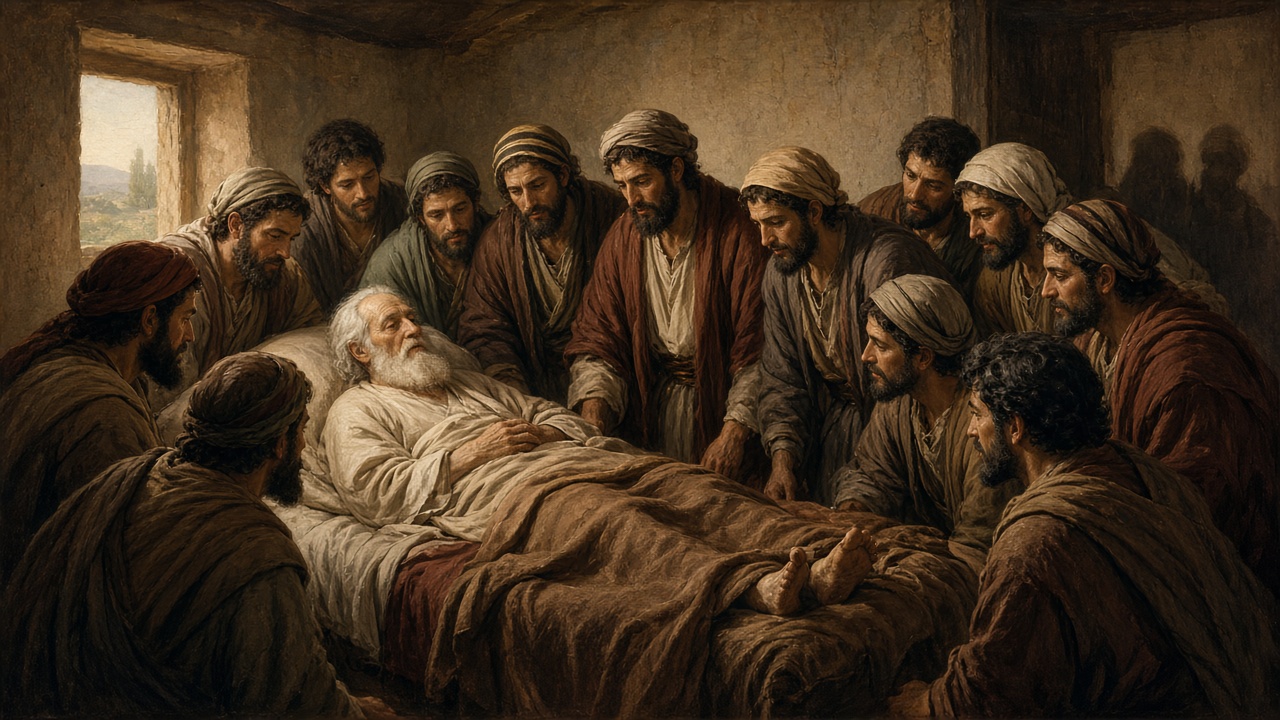
29Belei, Sekow e akalem muluwel ilo bokoyemomele: “Kame nem mewso kele ding kabalak e, nakalem awalik kumel im finik am biliw dim elo unoki te. Unii, yu nem kuanoki fom beelo kuluko, Kenan aneng fian elo nemde unoliwka! Nemde uneko, Mamele abiw em ataan tele dim em mewso dim Makfela ka kel em tum tem kel fom namkuloliwka! Tum tem beso, musun beem mewso be beso, nem awalik Abalakam e Kit kunum Efolon eso on kisol tum win so weneko, nukalem awalik kumel biim fom yemkukemin kawin kelewse te. 31Ka kel e, Abalakam so, akalem kalel Sala so, Aisak so, akalem kalel Elebeka so, nem sun waneng Elea so, alik alik biim fomkamin dim ete te. 32Sua e, nem awalik Abalakam e tum tem be so, musun beso, on kisol tum win so Kit angin iso wese te.”, yangse kale.
33Yangeko, Sekow em akalem muluwel biilo weng kitil weng be bokoyemse ding kabalak e, e akalem akalkemin dim yan danong akalsomelei, kuanesomelei, akalem finik e awalik kumel im finik am biliw dim elo unse kale.
¿Sabías que…?
Últimas bendiciones a las doce tribus de Israel
- Las palabras de Jacob juegan con el significado de los nombres de sus hijos. Judá (en hebreo Yehudah) proviene de las palabras de Lea, "Ahora alabaré" (odeh), y Jacob dice que los hermanos de Judá lo alabarán. El nombre de Dan hace eco del "Dios me ha juzgado" (dananni) de su madre Bilha; Jacob dice que Dan juzgará a su pueblo, o le hará justicia, y el Easton's Bible Dictionary (1897) sugiere que esto probablemente alude a Sansón, un juez posterior de la tribu de Dan.Fuentes: Judah (patriarch) · Dan · el propio texto bíblico
- El capítulo llama bendición a cada discurso, aunque algunos son severos. Rubén, primogénito de Jacob y Lea, cuyo nombre significa "¡He aquí un hijo!", oye que ya no sobresaldrá, porque profanó el lecho de su padre. Simeón y Leví, que se vengaron con violencia de Hamor y de los siquemitas, oyen su ira maldecida y la promesa de que serán dispersados en Jacob y esparcidos en Israel; donde la Authorized Version decía que derribaron un muro, la Revised Version dice que desjarretaron un buey, tal como este capítulo afirma que desjarretan bueyes.Fuentes: Reuben · Simeon · Levi (patriarch) · el propio texto bíblico
- Jacob pide entonces que lo sepulten con sus padres en la cueva del campo de Efrón el hitita, que Abraham compró como sepulcro de la familia. Macpela, nombre entendido como "porción" o "cueva doble", estaba en la ladera de un monte al este de Hebrón, frente a Mamre, en la tierra de Canaán. Abraham y Sara, Isaac y Rebeca, y Lea ya estaban sepultados allí.Fuentes: Machpelah · Ephron · Mamre · el propio texto bíblico
Notas escritas con ayuda de IA a partir de fuentes abiertas (Theographic Bible Metadata, CC BY-SA 4.0; Easton’s Bible Dictionary, dominio público) y revisadas antes de publicarse.
Lugares de este capítulo
- Shiloh · Hoy: Khirbet Seilun · 32.056, 35.290 · versículo 10
- Sidon · Hoy: Sandikli archaeological site in Sidon · 33.561, 35.372 · versículo 13
- Canaan · 32.767, 35.333 · versículo 30
- Machpelah · Hoy: Cave of the Patriarchs · 31.525, 35.111 · versículo 30
Solo aparecen lugares identificados con alta confianza (90 % o más según las fuentes académicas reunidas por OpenBible). Mapa de la época: DARE (Digital Atlas of the Roman Empire), CC BY 4.0; mapa actual: © colaboradores de OpenStreetMap; lugares: OpenBible.info (CC BY 4.0).
Créditos y licencia de esta traducción
Sunbin-Got em Kitakamin Weng
The New Testament and part of the Old Testament in the Bimin Language of Papua New Guinea
Nupela Testamen na sampela hap Oldpela Testamen long tokples Bimin long Niugini
Copyright © 2008 Bible Society of Papua New Guinea
Language: Bimin
Translation by: Wycliffe Bible Translators
This translation is made available to you under the terms of the
Creative Commons Attribution-No Derivatives license 4.0.
You may share and redistribute this Bible translation or extracts from it in any format, provided that:
You include the above copyright and source information.
You do not make any derivative works that change any of the actual words or punctuation of the Scriptures.
Pictures included with Scriptures and other documents on this site are licensed just for use with those Scriptures and documents.
For other uses, please contact the respective copyright owners.
2016-10-03
Fuente: http://png.bible/bhl/ · eBible.org