Génesis 16
Sunbin-Got em Kitakamin Weng · Toca un versículo para ver sus referencias cruzadas.
Kagal u Ismael elo Dukusu em Sang te.
1Beli, Abalam e Kenan aneng fian ka belei, king kel itol ase kate, em kalel Salai u kumun du kebomi, aul banim kesu kale. Kesu kasike, Salai u ukalem weng afak waneng Kagal ukalem imok Abalam elo duleweko, bokolewomelu: “Afam waneng kalu kula!”, dangsu kale. Nimtew angom? U Abalam elo bokolewomelu: “Yawe e nelo aul banim fium kenemse kasike, ku nem weng afak waneng kalu kuluko, aul duumew kano, ne beem deiw ete aul mak kuloki te!”, dangsu kasike. Kagal bu Isiw aneng fian beem waneng ke alenalu kale. Keko beli, Abalam e akalem kalel Salai um dangsu weng be kiliko, fein gelewse kale. 4Gelewsomelei, Abalam e Kagal ulo fein aul duumse kale. Duumei, Kagal u Salai um wiin e kalak da koumsu kasike, 5Salai u uneko, imok Abalam elo bokolewomelu: “Kukalem sen ete! Nakalem ete nem weng afak waneng kalu dukemsi kate kame, um aul kumun so kebu ding dim e, u nelo de mit da konembu kasike. Feinka! Yawe e kom tele nem tele num ilum be diw ateyemoke tako!”, dangsu kale. 6Dangui, Abalam e ulo yan weng mak bokoumomele: “Kom weng afak waneng nelo dunemselew kate, ku ukalem watebin waneng kebelew kasike, kom ibolow fukunin kuw geleweko, ilo beemdiw keuma!”, wangse kale. Wangei, Salai u em wangse weng be kiliko, Kagal ulo ilum fian mak duumsu kasike, Kagal u bukibuki fon unsu kale.
7Fon unsomelui, Kagal u Sul aneng unomin deiw gui uneko, aneng ais banim, kawtiw banim dim kel teleko, ka kel ok miktem mak beem mit talsu kale. Talsomelui, Yawe em Dabalakamin Finik e ulo watemeko, 8bokoumomele: “Salai um weng afak waneng Kagal kutaka! Nal ete teleko, nal unbelew a?”, wangse kale. Wangei, u yan weng mak bokolewomelu: “Nelo netebu waneng Salai ulo koumeko, fon talbi te.”, dangsu kale. 9Dangui, Yawe em Dabalakamin Finik be bokoumomele: “Ku iti Salai buum mit mewso uneko, menew kuw falit angeko, ukalem afak kuw bolewka!”, wangse kale. 10Wangeko, Yawe em Dabalakamin Finik be iti weng makso bokoumomele: “Kom muluwel dow banso kelokoliw te. Ku ki keko, im fu e nam teing bokolew te. 11Sukum ding mak kelei, kunum aul mak dukulokolew te. Aul beem wiin e Ismael dangolewka! Be, nimtew angom? Yawe e kom amemin kiliko, kom ilum be atemeko, e kulo dokokeme kasike. 12Aul be kut samal emdiw kesomi, akalem ibolow kuw gelewko, kakamoke te. Kakabomelei, em muluwel dow ikal amen, mali kawtiw ikal amen kebomeliwi, akalem nenggelel biim muluwel dow bikati maka kelew kelew kemokoliw te.”, wangse kale. 13Wangei, Kagal u Yawe em wiin e bokolomelu: “Kom wiin e ‘Eloloi’ te. Nimtew angom, nelo neteme Kamok Fian atemsi kasike!”, dangsu kale.
14Dangsu beem mongom ete kawtiw i miktem beem wiin e “Belokiloi!”, dangsiliw kale. Ok miktem be Kades abiw mutuk fian tele, Belet abiw mutuk fian tele, abiw mutuk fian alew biim mutuk kel alenale kale.
15Keko beli, afam waneng Kagal um kunum aul dukusu ding kabalak e, Abalam e aul beem wiin e “Ismael!”, dangse kale. 16Be em ding be, Abalam em itol e 86 kese kale.
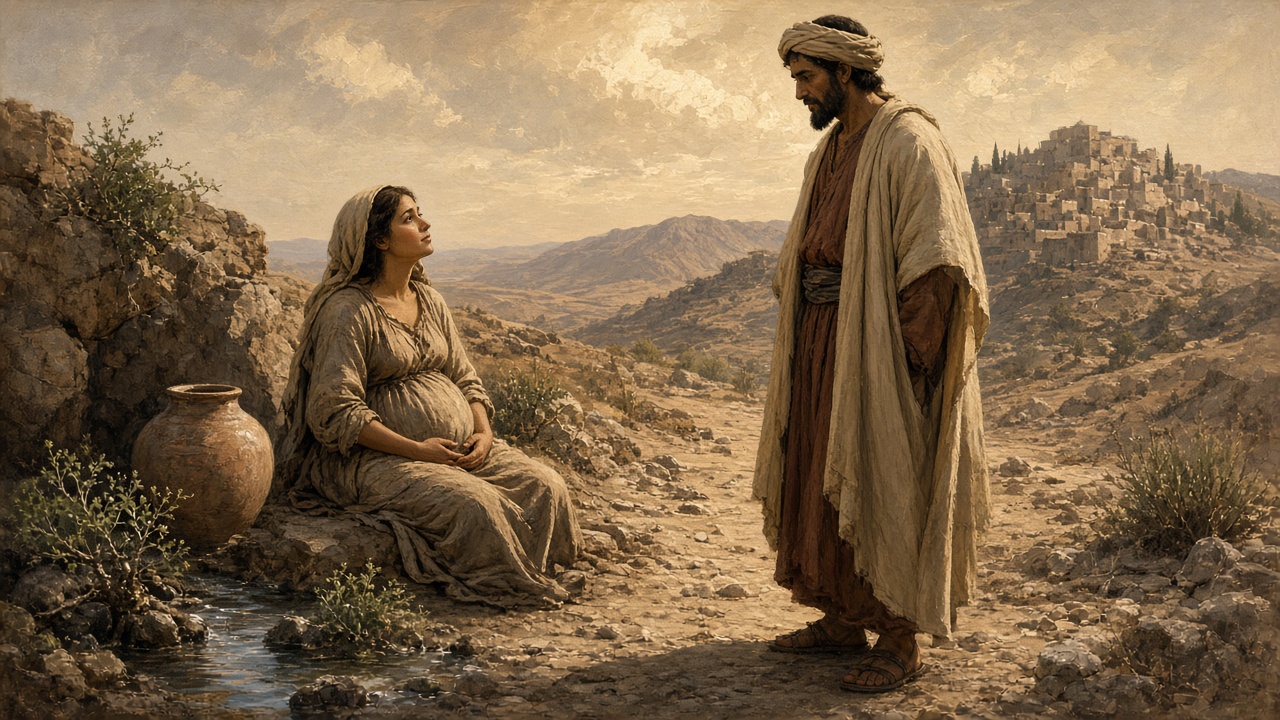
¿Sabías que…?
La huida de Agar y el nacimiento de Ismael
- Agar, sierva egipcia de Sarai, lleva un nombre que se entiende como “huida” o, según otros, “extranjera”. Después de que Abram vivió diez años en Canaán, Sarai se la entregó como esposa secundaria, con la esperanza de formar una familia por medio de ella.Fuentes: Hagar · el propio texto bíblico
- Cuando Sarai la trató con dureza, Agar huyó por el camino de Shur, a través del desierto que quedaba entre ella y Egipto, al parecer con la intención de volver con sus parientes. El ángel del Señor la encontró junto a un manantial. Shur, que significa “muro”, era un desierto en la frontera noreste de Egipto, probablemente llamado así por unas fortificaciones fronterizas que iban de Pelusio a Heliópolis.Fuentes: el propio texto bíblico · Hagar · Shur
- Agar llamó al Señor que le habló “el Dios que me ve”, y el pozo recibió el nombre de Beer-lahai-roi, “el pozo del Dios visible”, entre Cades y Bered, una ciudad en el sur de Palestina, en el desierto de Shur. Ella regresó a la tienda de Abram, e Ismael, su hijo mayor, nació en Mamre cuando Abram tenía ochenta y seis años; Abram le puso el nombre que el ángel había anunciado, porque el Señor había oído su aflicción.Fuentes: el propio texto bíblico · Hagar · Bered · Ishmael (Son of Hagar)
Notas escritas con ayuda de IA a partir de fuentes abiertas (Theographic Bible Metadata, CC BY-SA 4.0; Easton’s Bible Dictionary, dominio público) y revisadas antes de publicarse.
Lugares de este capítulo
- Canaan · 32.767, 35.333 · versículo 3
Solo aparecen lugares identificados con alta confianza (90 % o más según las fuentes académicas reunidas por OpenBible). Mapa de la época: DARE (Digital Atlas of the Roman Empire), CC BY 4.0; mapa actual: © colaboradores de OpenStreetMap; lugares: OpenBible.info (CC BY 4.0).
Créditos y licencia de esta traducción
Sunbin-Got em Kitakamin Weng
The New Testament and part of the Old Testament in the Bimin Language of Papua New Guinea
Nupela Testamen na sampela hap Oldpela Testamen long tokples Bimin long Niugini
Copyright © 2008 Bible Society of Papua New Guinea
Language: Bimin
Translation by: Wycliffe Bible Translators
This translation is made available to you under the terms of the
Creative Commons Attribution-No Derivatives license 4.0.
You may share and redistribute this Bible translation or extracts from it in any format, provided that:
You include the above copyright and source information.
You do not make any derivative works that change any of the actual words or punctuation of the Scriptures.
Pictures included with Scriptures and other documents on this site are licensed just for use with those Scriptures and documents.
For other uses, please contact the respective copyright owners.
2016-10-03
Fuente: http://png.bible/bhl/ · eBible.org