Apocalipsis 11
Iwo Surua Mua Wie Pha Bible · Toca un versículo para ver sus referencias cruzadas.
Nyi khagithek
1Chiihphado gu shii miichang phi pha jine chua pha shiie duiine mia, chiih-è yao “Wuii srane Hamangkhung-aphuii ro Jewthek misiahò nane sraibao ji chua bo, chiih-è hanyie yi ji pha misiahò shii misiasiapho shii sasab rek mage bo. 2Jishii fuang pha sibiangthek shii sasab arek rabo, nyieliieshii ithek shii ne migi-arekpho shii phijong ro, hanyie shii ne So Rajan hà habiethek shawi-è nyi habie lai luii shii dia ruii phro. 3Gu ne guro khagi yi thuloyung guii pha nyi shii ren ruii phro, chiih-è ithek ji pha itham jia è wiengnyi è sariig inaithek iliing shii Hamangkhung-aphuii ro mua yao ruii phro.” 4Khagipho nyi jine sumaro hingmuiithek nyi nane muchuangthek nyi ro, jithek ne sohnyiak pha Ithong ibi shii riu ro. 5Hanyiejia è de ithek shii saduii thoh yi pha bidiang arone, ithek ro semthek re-è bai khia srane makthek shii srobro rek ruii phro; chiih-è ji duiine hanyie magunde ithek shii saduii thoh yi pha bidiang pho ne ua ruii phro. 6Hamangkhung-aphuii ro mua yao pha ishak shii hamang shii haphie aphie yi pha bin pha riichai de ithek shii um ro. Ithek shii ne noi pha kho lakhung shii ifai hà khid muii yi pha riichai de um ro; ithek shii awaithek è khama yang pha ji shii nyamachiieng zab ichua pha mua è sohnyiak shii zuang pha riichai de um ro.
7Ithek yi ithek ro mua ji yao ched mage shii, buii ibeymuthung jine bajo jam ihiung è ithek suang shii mak rek pha wuii ruii phro. Ai ne ithek shii yang srane ithek shii ne ua muii, 8chiih-è ithek ro Ithong khi pha boh rajan pha lumuii hà ziin dun pha jihà ithek ro siu sud ruii phro. Ji pha rajan beng ne òa ne yao pha jine Sodom nane Egyph ro. 9Branthek yi zab pha sohthek, jadthek, nyuakthek, nane iiriingthek re-è ithek ro siuthek da-uom è khuyo inaithek riig srane ithek shii awieng yi phro. 10Sohnyiak pha branthek ne isa nyi iy pha ji shii ne sang ruii phro. Ithek ne sai srane awaithek chung lasenthek ren ruii phro, nyieliieshii ji pha chaigthek nyi è sohnyiak shii branthek shii bajo diig yie ro. 11Iidoh shii da-uom re-è khuyo inai shii chai-phi pha misey yi Hamangkhung-aphuii è wuiithok srane ithek shii khuddun, chiih-è ithek riu mage shii; chiih-è zab hanyie è ithek shii riig pho ne rumdun. 12Chiihphado chaigthek nyi yi hamangkhung re-è ithek shii goh gang è yao pha yoi, “Thawuii bo!” Makphothek è ithek shii riig ramuii shii ithek shii hamangkhung hà sakhamiing è dun dun. 13Ji pha ishak shii, thiihchiih ne awiedang pha sajiib sam ro, rajan suarang re-è jiarang ne mua dun ro, chiih-è itham miley branthek ne ua muii ro. Thiichiih khe pha branthek ne rum srane hamangkhung pha Hamangkhung-aphuii pha bajoboh shii chiong ro.
14Nyichiieng pha awie ne jong sha, jishii uomchiieng pha awie ne khthiie wuii ruii phro!
Milechiieng pha thu-ung
15Chiihphado mileychiieng pha hamangkhliie re-è awairo thu-ung thud mage, chiih-è thiihchiih ne hamangkhung hà boh goh, è yao, “sohkhung shii khoh pha blu ne thuh gathek ro Ithong nane Masaiya airo rey dun ro, chiih-è ai ne idang nane idang khoh ruii phro!” 16Chiihphado dukhothek ichiignawi hanyie yi Hamangkhung-aphuii moe biangthek shii dug pho ne awaithek ro mizia buzam jiing srane Hamankhung-aphuii shii misiasia ne, 17yao:
“Ithong Bohblu pha Hamangkhung-aphuii, jia hanyie um ne chiih-è hanyie ne umjong!”
Gathek ne na shii laso phi nyieliieshii na è naro bajoboh blu yie
srane khoh pha jao!
18Migi arekpho shiine lijieg zandun ro,
nyieliieshii lijieg pha naro ishak ne thog sha ro,
iy shii chua pha ishak ne thog sha ro.
Nawairo khiaothek chaigthek,
chiih-è zab nawai bran shii, zab hanyie è na shii ilab rek boh nane ìu mia pha ji shii lasen phi pha ishak thog sha ruii ro.
Hanyie è sohnyiak shii srobro rekpho shii ne srobro rek pha ishak thog sha ro!
19Hamangkhung-aphuii ro misiahò ne hamangkhung hà hongjong ro, chiih-è Shiinyie Japho ne thiisa hà doh ro. Chiihphado thiisa hàne haliao bliak ne hakhliing pha jiriak yie rone, sajiib sam ne la è haben chiih ro.
¿Sabías que…?
Los dos testigos y la gran ciudad
- Apocalipsis 11 dice que los cuerpos de los dos testigos yacerán en la calle de la gran ciudad, llamada en sentido figurado Sodoma y Egipto, donde también fue crucificado su Señor. Una entrada de diccionario explica Sodoma como ardiente, o la amurallada, una ciudad destruida por fuego del cielo a causa de la maldad de sus habitantes, una destrucción que las Escrituras recuerdan con frecuencia. Egipto, la tierra del Nilo y de las pirámides, se describe igualmente como un lugar de gran importancia en las Escrituras.Fuentes: el propio texto bíblico
- A los dos testigos se les da poder para profetizar durante mil doscientos sesenta días, vestidos de cilicio. Son los dos olivos y los dos candeleros que están delante del Señor de la tierra, y tienen poder para cerrar el cielo de modo que no llueva, para convertir las aguas en sangre y para herir la tierra con toda clase de plagas.Fuentes: el propio texto bíblico
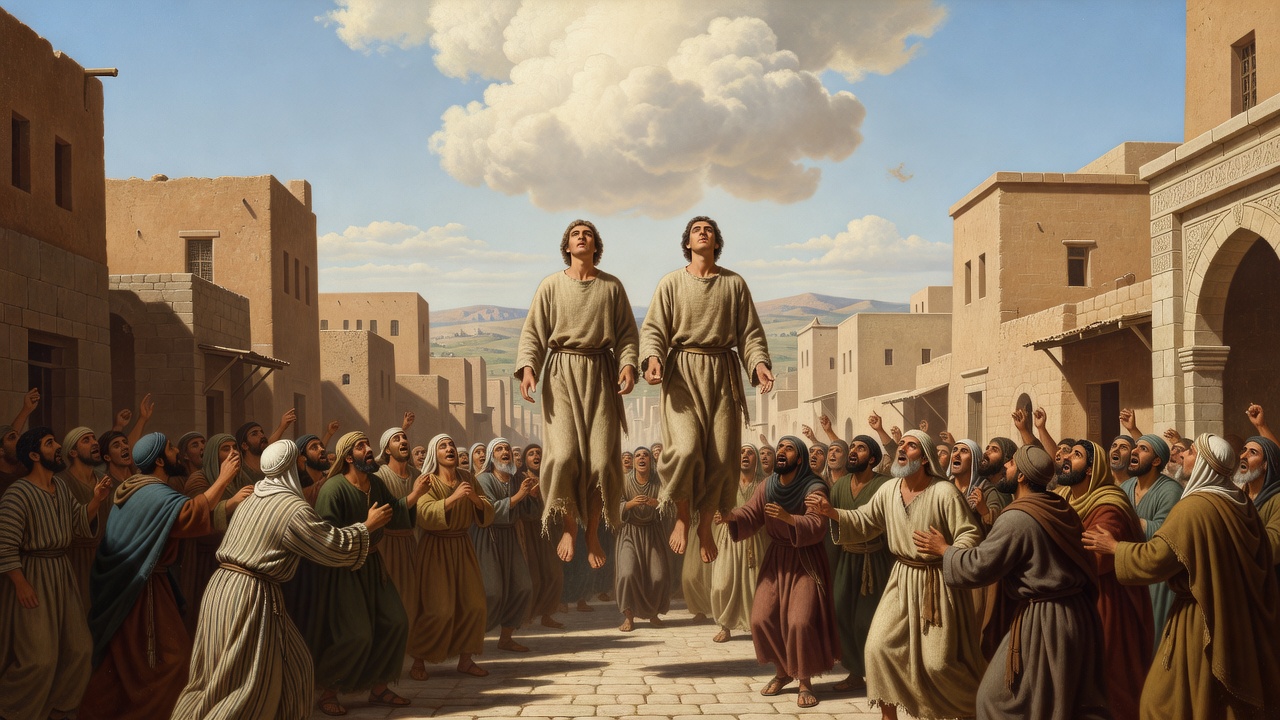
- Cuando los dos testigos terminan su testimonio, la bestia que sube del Abismo los vence y los mata. Durante tres días y medio, pueblos, tribus, lenguas y naciones ven sus cuerpos y no permiten que sean puestos en un sepulcro, mientras los habitantes de la tierra se burlan de ellos, celebran y se envían regalos, porque los dos profetas los habían atormentado. Después de eso, el aliento de vida que viene de Dios entra en ellos; se ponen de pie y suben al cielo en una nube, mientras sus enemigos los observan.Fuentes: el propio texto bíblico
Notas escritas con ayuda de IA a partir de fuentes abiertas (Theographic Bible Metadata, CC BY-SA 4.0; Easton’s Bible Dictionary, dominio público) y revisadas antes de publicarse.
Lugares de este capítulo
Solo aparecen lugares identificados con alta confianza (90 % o más según las fuentes académicas reunidas por OpenBible). Mapa de la época: DARE (Digital Atlas of the Roman Empire), CC BY 4.0; mapa actual: © colaboradores de OpenStreetMap; lugares: OpenBible.info (CC BY 4.0).
Créditos y licencia de esta traducción
Iwo Surua Mua Wie Pha Bible
The Holy Bible in the Bugun language of India, first Bible translation
copyright © 2023 The Word for the World International
Language: Kho (Bugun)
Contributor: The Word for the World Southeast Asia
The New Testament in Bugun
published as
IWO SURUA
Mua Wie Pha Bible
The Word For The World International
This translation is made available to you under the terms of the
Creative Commons Attribution license 4.0.
You may share and redistribute this Bible translation or extracts from it in any format, provided that:
You include the above copyright and source information.
If you make any changes to the text, you must indicate that you did so in a way that makes it clear that the original licensor is not necessarily endorsing your changes.
Pictures included with Scriptures and other documents on this site are licensed just for use with those Scriptures and documents.
For other uses, please contact the respective copyright owners.
Note that in addition to the rules above, revising and adapting God's Word involves a great responsibility to be true to God's Word. See Revelation 22:18-19.
2023-08-31
Fuente: http://ebible.org/bgg/ · eBible.org