Salmos 14
Bibeli Gusunɔn Gari · Toca un versículo para ver sus referencias cruzadas.
1Dɑfidin womu ɡe u wom kowobun wiruɡii kuɑ. Ge wee.
Wee nɡe mɛ ɡɑri bɑkɑsu su sɑ̃ɑ.
Su rɑ nɛɛ, Gusunɔ sɑri.
Su sɑnkire.
Su kom kɔ̃sum mɔ̀.
Sin ɡɑɡu sɑri ɡe ɡɑ ɡeɑ mɔ̀.
2Yinni Gusunɔ u tɔmbu mɛɛrimɑ sɑɑ wɔllun di,
u kɑ wɑ ɡoo ù n wɑ̃ɑ u bwisi mɔ,
u kɑ wɑ ɡoo ù n wɑ̃ɑ u nùn sɑ̃ɑmɔ.
3Adɑmɑ u wɑ, be kpurowɑ bɑ kɔ̃ɔre,
be kpurowɑ bɑ sɑnkire,
be kpurowɑ bɑ kɔ̃sɑ mɔ̀.
Bɑɑ ben turo kun ɡeɑ mɔ̀.
4Ye u wɑ mɛ, yerɑ u tii bikiɑ u nɛɛ,
kɔ̃sɑn kowo be, bɑ ǹ yɛ̃ru mɔ?
Wee bɑ nɛn tɔmbu ɡbɛnimɔ,
ben ɡoo kun mɑn sɑ̃ɑmɔ.
5Yen sɔ̃, kon de bu diiri ɡem ɡem
domi ko nɑ n wɑ̃ɑ be bɑ mɑn mɛm nɔɔwɑmmɛn suunu sɔɔ.
6Bɛɛ kɔ̃sɑn kowobu, i sɑ̃ɑrobun himbɑ sɑnkumɔ,
i bu sekuru dokemɔ.
Adɑmɑ Yinni Gusunɔ u bu kɔ̃su.
7Yinni Gusunɔ, nɑ nun kɑnɑmɔ,
ɑ de fɑɑbɑ kowo ɡoo u yɑri Siɔnin di
u Isirelibɑ, Yɑkɔbun bweseru yɑrɑ dɛsirun di,
kpɑ bɑ n wɑ̃ɑ bɔri yɛndu sɔɔ.
À n kuɑ mɛ,
ɑnnɑ ɑ nuku dobu wɑ bi bɑ koo ko mi.
¿Sabías que…?
La corrupción humana y la esperanza de Sion
- El Salmo 14 describe la negación práctica de Dios como la causa de la corrupción generalizada y del maltrato a los oprimidos, afirmando que Dios sigue siendo un refugio para los justos.Fuentes: el propio texto bíblico
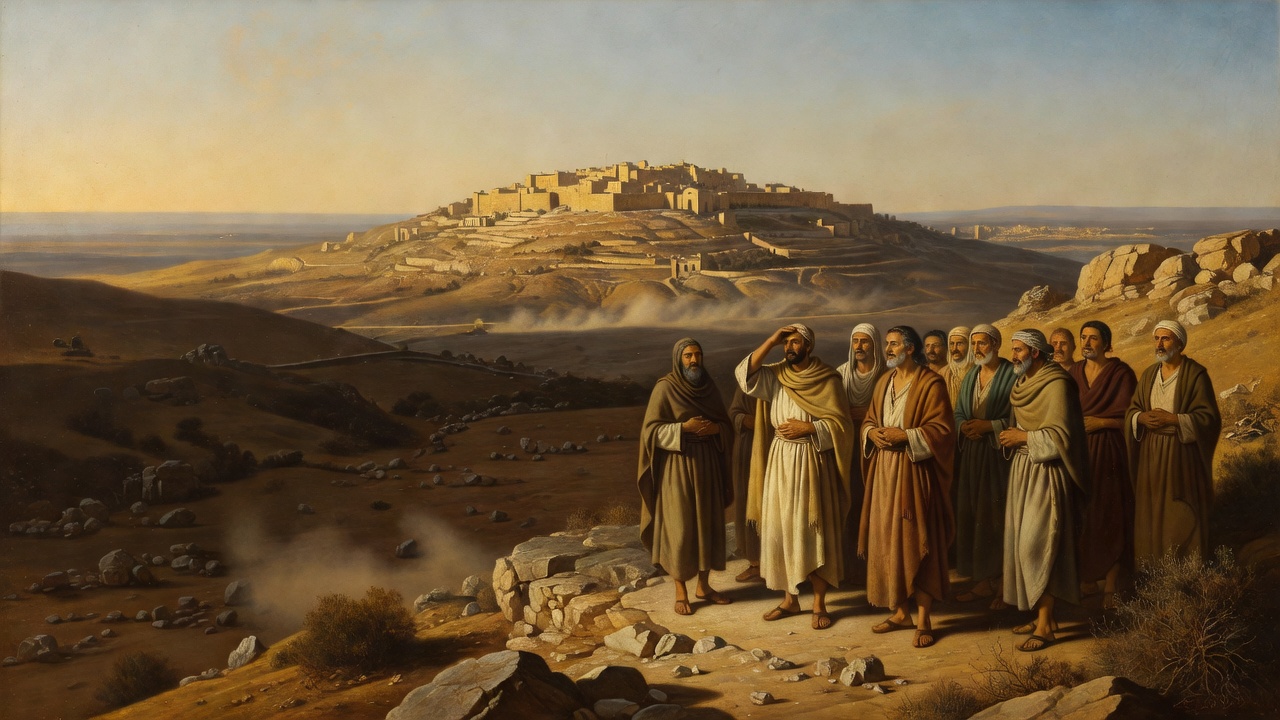
- En el versículo final, se aguarda la liberación procedente de Sion, la colina suroriental de Jerusalén donde el rey David estableció su ciudadela y ciudad real.Fuentes: Zion · el propio texto bíblico
- La mención paralela de Jacob e Israel evoca al patriarca Jacob, el segundo hijo gemelo de Isaac que también recibió el nombre de Israel, cuyos nombres pasaron a representar a toda la nación.Fuentes: Jacob (Israel) · el propio texto bíblico
Notas escritas con ayuda de IA a partir de fuentes abiertas (Theographic Bible Metadata, CC BY-SA 4.0; Easton’s Bible Dictionary, dominio público) y revisadas antes de publicarse.
Lugares de este capítulo
- Zion · Hoy: Jerusalem · 31.777, 35.234 · versículo 7
Solo aparecen lugares identificados con alta confianza (90 % o más según las fuentes académicas reunidas por OpenBible). Mapa de la época: DARE (Digital Atlas of the Roman Empire), CC BY 4.0; mapa actual: © colaboradores de OpenStreetMap; lugares: OpenBible.info (CC BY 4.0).
Créditos y licencia de esta traducción
Bibeli Gusunɔn Gari
The Holy Bible in the Baatonum language of Benin, also called the Bariba language
copyright © 2013 SIM
Language: Bariba (Baatonum)
Translation by: SIM International
Bariba, Bibeli Gusunɔn Gari
This translation, published by the UEEB/SIM au Benin, was published in 1996.
If you are interested in obtaining a printed copy, please contact the SIM at SIM, BP 15, Parakou, Benin.
This translation text is made available to you under the
terms of the Creative Commons License: Attribution-Noncommercial-No Derivative Works.
( http://creativecommons.org/licenses/by-nc-nd/3.0/ )
In addition, you have permission to port the text to different file formats, as long as you
do not change any of the text or punctuation of the Bible.
You may share, copy, distribute, transmit, and extract portions
or quotations from this work, provided that you include the above copyright
information:
You must give Attribution to the work.
You do not sell this work for a profit.
You do not make any derivative works that change any of the actual words or punctuation of the Scriptures.
Permissions beyond the scope of this license may be
available if you contact
us with your request.
This translation is made available to you under the terms of the
Creative Commons Attribution-Noncommercial-No Derivatives license 4.0.
You may share and redistribute this Bible translation or extracts from it in any format, provided that:
You include the above copyright and source information.
You do not sell this work for a profit.
You do not change any of the words or punctuation of the Scriptures.
Pictures included with Scriptures and other documents on this site are licensed just for use with those Scriptures and documents.
For other uses, please contact the respective copyright owners.
2014-09-10
Fuente: http://ebible.org/bba/ · eBible.org