Nehemías 12
Bibeli Gusunɔn Gari · Toca un versículo para ver sus referencias cruzadas.
1Yɑ̃ku kowobu kɑ Lefi be bɑ Sorobɑbɛli Sɑlɑtiɛlin bii kɑ Yosue swĩimɑ bɑ kɑ nɑ Yerusɑlɛmuɔ, berɑ Serɑyɑ kɑ Yeremi kɑ Ɛsidɑrɑsi 2kɑ Amɑriɑ kɑ Mɑluku kɑ Hɑtusi 3kɑ Sekɑniɑ kɑ Rehumu kɑ Mɛremɔtu 4kɑ Ido kɑ Ginɛtoi kɑ Abiɑ 5kɑ Miyɑmini kɑ Mɑɑdiɑ kɑ Biliɡɑ 6kɑ Semɑyɑ kɑ Yoyɑribu kɑ Yedɑyɑ 7kɑ Sɑlu kɑ Amɔku kɑ Hilikiyɑ kɑ Yedɑyɑ. Berɑ bɑ sɑ̃ɑ yɑ̃ku kowobu kɑ be bɑ bu somimɔn wiruɡibu Yosuen wɑɑti. 8Be bɑ sɑ̃ɑ Lefibɑ, berɑ Yosue kɑ Binui kɑ Kɑdimiɛli kɑ Serebiɑ kɑ Yudɑ kɑ Mɑtɑniɑ. Mɑtɑniɑ wi, kɑ win tɔmbɑ bɑ rɑ siɑrɑbun womusu ko. 9Bɑkibukiɑ kɑ Uniwɑ bɑ rɑ sɔmburu ko ben mɛro bisibu Lefi ben bɔkuɔ.
10Yosuewɑ u Yoyɑkimu mɑrɑ. Mɑ Yoyɑkimu u seewɑ u Eliɑsibu mɑrɑ. Mɑ Eliɑsibu u seewɑ u Yoyɑdɑ mɑrɑ. 11Yoyɑdɑ u mɑɑ seewɑ u Yonɑtɑm mɑrɑ. Mɑ Yonɑtɑm u seewɑ u Yɑduɑ mɑrɑ.
12Be bɑ sɑ̃ɑ yɑ̃ku kowobu Yoyɑkimun wɑɑti ye sɔɔ, bɑ kɑ sɑ̃ɑ yɛnu yɛ̃robu, berɑ Mɛrɑyɑ, Serɑyɑn bweseru sɔɔ kɑ Hɑnɑniɑ, Yeremin bweseru sɔɔ, 13kɑ Mɛsulɑmu, Ɛsidɑrɑsin bweseru sɔɔ, kɑ Yokɑnɑni, Amɑriɑn bweseru sɔɔ, 14kɑ Yonɑtɑm, Mɛlukin bweseru sɔɔ, kɑ Yosɛfu, Sebɑniɑn bweseru sɔɔ, 15kɑ Adinɑ, Hɑrimun bweseru sɔɔ, kɑ Hɛlikɑi, Mɛrɑyɔtun bweseru sɔɔ, 16kɑ Sɑkɑri, Idon bweseru sɔɔ, kɑ Mɛsulɑmu, Ginɛtonin bweseru sɔɔ, 17kɑ Sikiri, Abiɑn bweseru sɔɔ, kɑ Pilitɑi, Minyɑmini kɑ Mɔɑdiɑn bweseru sɔɔ, 18kɑ Sɑmuɑ, Biliɡɑn bweseru sɔɔ, kɑ Yonɑtɑm, Semɑyɑn bweseru sɔɔ, 19kɑ Mɑtinɑi, Yoyɑribun bweseru sɔɔ, kɑ Usi, Yedɑyɑn bweseru sɔɔ, 20kɑ Kɑlɑi, Sɑlɑin bweseru sɔɔ, kɑ Ebɛɛ, Amɔkun bweseru sɔɔ, 21kɑ Hɑsɑbiɑ, Hilikiyɑn bweseru sɔɔ, kɑ Nɛtɑnɛɛli, Yedɑyɑn bweseru sɔɔ.
22Tɔn bèn wɑɑti sɔɔ bɑ Lefi be bɑ sɑ̃ɑ yɛnu yɛ̃robu kɑ yɑ̃ku kowobun yĩsɑ yoruɑ tireru sɔɔ n kɑ dɑ Dɑrusi Pɛɛsibɑn sinɑ bokon bɑndun wɑɑti sɔɔ, berɑ Eliɑsibu kɑ Yoyɑdɑ kɑ Yokɑnɑni kɑ Yɑduɑ.
23Adɑmɑ bɑ Lefi be bɑ sɑ̃ɑ yɛnu yɛ̃robun yĩsɑ yoruɑ yerukobun ɡɑrin tireru sɔɔ sere Yokɑnɑni, Eliɑsibun biin wɑɑti sɔɔ tɔnɑ.
24Lefibɑn yɛnu yɛ̃ro beni, Hɑsɑbiɑ kɑ Serebiɑ kɑ Yosue, Kɑdimiɛlin bii, berɑ bɑ rɑ womusu ko bu kɑ Gusunɔ siɑrɑ kpɑ Lefi be bɑ tie bɑ n wurɑmɔ nɡe mɛ Dɑfidi Gusunɔn sɔm kowo u ɡeruɑ.
25Be bɑ mɑɑ sɑ̃ɑ sɑ̃ɑ yerun kɔnnɔn kɔ̃sobu, berɑ Mɑtɑniɑ kɑ Bɑkibukiɑ kɑ Abudiɑsi kɑ Mɛsulɑmu kɑ Tɑlumɔɔ kɑ Akubu. 26Be kpurowɑ bɑ wɑ̃ɑ Yoyɑkimu, Yosuen bii, Yosɑdɑkin debubun wɑɑti sɔɔ. Beyɑ bɑ mɑɑ wɑ̃ɑ Nɛɛmi wi u sɑ̃ɑ kpɑro kɑ Ɛsidɑrɑsi wi u sɑ̃ɑ yɑ̃ku kowo kɑ tire yoron wɑɑti sɔɔ.
Bɑ Yerusɑlɛmun ɡbɑ̃rɑ ten
wii ɡoberun tɔ̃ɔ bɑkɑru di
27Sɑnɑm mɛ bɑ Yerusɑlɛmun ɡbɑ̃rɑ ten wii ɡoberun tɔ̃ɔ bɑkɑru dimɔ, bɑ dɑ bɑ Lefibɑ mɛnnɑmɑ beri berikɑn di mi bɑ rɑɑ wɑ̃ɑ kpɑ bu kɑ tɔ̃ɔ te di nuku dobu sɔɔ bɑ n womusu mɔ̀ bɑ n sɛkɛtirɛnu kɑ mɔrɔkunu kɑ ɡɔ̃ɔɡenu soomɔ. 28Wom kowo be bɑ wɑ̃ɑ Yerusɑlɛmun bɑru kpɑɑnɔ kɑ be bɑ wɑ̃ɑ Nɛtofɑɔ kɑ Bɛti Giliɡɑliɔ kɑ Gebɑn bɑru kpɑɑnɔ kɑ Asimɑfɛtiɔ bɑ mɛnnɑmɑ dɔmɑ te, domi wom kowo be, bɑ tii yɛnusu kuɑwɑ Yerusɑlɛmun bɔkuɔ. 30Yɑ̃ku kowobu kɑ Lefibɑ bɑ tii dɛɛrɑsiɑ. Mɑ bɑ mɑɑ tɔmbu kɑ kɔnnɔsu kɑ ɡbɑ̃rɑru dɛɛrɑsiɑ.
31Nɛ, Nɛɛmi, nɑ derɑ Yudɑbɑn wiruɡibu bɑ yɔɔwɑ ɡbɑ̃rɑru wɔllɔ mɑ bɑ wom kowobu bɔnu kuɑ wuuru yiru. Bɔnu ɡbiikɑɑ yɑ sĩɑ yɑ dɑ nɔm ɡeu ɡiɑ ɡbɑ̃rɑrun kɔnnɔwɔ ɡe bɑ mɔ̀ Kubɑnu. 32Mɑ Hosee kɑ Yudɑbɑn wiruɡibun bɔnu bɑ wom kowo be swĩi biruɔ. 33Yen biruwɑ tɔn beni bɑ mɑɑ swĩi. Berɑ, Asɑriɑ kɑ Ɛsidɑrɑsi kɑ Mɛsulɑmu 34kɑ Yudɑ kɑ Bɛnyɑmɛɛ kɑ Semɑyɑ kɑ Yeremi 35kɑ yɑ̃ku kowobun bii be bɑ kɔbi nɛni kɑ Sɑkɑri, Yonɑtɑm bii, Semɑyɑn debubu, Mɑtɑniɑ kɑ Misee kɑ Sɑkuri kɑ Asɑfun sikɑdobu, 36kɑ sere win tɔmbu Semɑyɑ kɑ Asɑrɛli kɑ Milɑlɑi kɑ Gilɑlɑi kɑ Mɑi kɑ Nɛtɑnɛɛli kɑ Yudɑ kɑ Hɑnɑni. Tɔn be, bɑ mɔrɔkunu nɛni ni Dɑfidi Gusunɔn sɔm kowo u kuɑ. Mɑ Ɛsidɑrɑsi tire yoro u bu swɑɑ ɡbiiye. 37Ye bɑ tunumɑ kɔnnɔwɔ ɡe bɑ mɔ̀ Bwiɑ, yerɑ bɑ dɑ Dɑfidin wuun yɔɔ yerɔ mɑ bɑ yɔɔwɑ ɡɑnɑ yen wɔllɔ bɑ kɑ Dɑfidin sinɑ kpɑɑru tuke, mɑ bɑ dɑ kɔnnɔwɔ ɡe bɑ mɔ̀ Nim, sɔ̃ɔ yɑri yeru ɡiɑ.
38Wom kowobun bɔnu yiruse yɑ mɑɑ sĩɑ yɑ dɑ nɔm dwɑru ɡiɑ. Mɑ nɛ kɑ tɔn be bɑ tie sɑ bu swĩi biruɔ. Mɑ sɑ dɑ kɑ wuu kɔ̃su yee te bɑ mɔ̀ Pɛ̃ɛn dɔ̃ɔ sɔ̃ru yerun ɡɑ̃ɑrɔ sere kɑ ɡbɑ̃rɑ te tɑ yɑsun berɑ ɡiɑ 39kɑ kɔnnɔ ɡe bɑ mɔ̀ Efɑrɑimuɔ kɑ kɔnnɔwɔ ɡe bɑ sokumɔ Tɔkɔ sere kɑ kɔnnɔwɔ ɡe bɑ mɔ̀ Swɛ̃ɛ kɑ wuu kɔ̃su yee te bɑ mɔ̀ Hɑnɑnɛɛlin bɔkuɔ kɑ te bɑ mɔ̀ Mɛɑn bɔkuɔ sere kɑ kɔnnɔwɔ ɡe bɑ mɔ̀ Yɑ̃ɑnu. 40Mɑ wom kowo be kpuro bɑ dɑ bɑ yɔ̃rɑ Yinni Gusunɔn sɑ̃ɑ yerɔ. Mɑ nɛn tii nɑ yɔ̃rɑ mi kɑ siri kowo be bɑ mɑn swĩi 41kɑ yɑ̃ku kowo beni, Eliɑkimu kɑ Mɑɑseyɑ kɑ Minyɑmini kɑ Misee kɑ Elionɑi kɑ Sɑkɑri kɑ Hɑnɑniɑ be bɑ kɔbi soomɔ kpuro 42kɑ sere mɑɑ Mɑɑseyɑ kɑ Semɑyɑ kɑ Eleɑsɑɑ kɑ Usi kɑ Yokɑnɑni kɑ Mɑɑkiyɑ kɑ Elɑmu kɑ Esɛɛ. Mɑ wom kowobu bɑ womusu mɔ̀. Yisirɑyɑwɑ u bu kpɑre.
43Yen tɔ̃ɔ te, tɔmbɑ yɑ̃ku dɑbi dɑbinu kuɑ mɑ bɑ nuku dobu kuɑ. Domi Gusunɔ u bu nuku doo bɑkɑbu wɛ̃. Kurɔbu kɑ bibun tii bɑ nuku dobu kuɑ mɑ Yerusɑlɛmun di nuku dobun kuuki yi nɔɔrɑ n tomɑ.
Ye n sɑ̃ɑ yɑ̃ku kowobu
kɑ Lefibɑn bɔnu
44Yen tɔ̃ɔ te, bɑ tɔmbu ɡɔsɑ bu kɑ diɑ kɔ̃su mi bɑ rɑ kɛ̃nu kɑ dĩɑ ɡbiikinu yi kɑ sere tiɑ tiɑ ye bɑ rɑ Yinni Gusunɔ wɛ̃ ben mɔrun wɔkuru bɑɑteren wɔllɔ. Mɑ bɑ tɔn be yiire bu dĩɑ ni mwɛɛri wusun di ni bɑ koo yɑ̃ku kowobu kɑ Lefibɑ wɛ̃ nɡe mɛ woodɑ yɑ ɡeruɑ. Yudɑbɑ bɑ nuku dobu mɔ yèn sɔ̃ yɑ̃ku kowobu kɑ Lefibɑ bɑ wurɑ ben sɔmburu sɔɔ, 45bɑ Yinni Gusunɔn sɑ̃ɑ yerun woodɑ mɛm nɔɔwɑmmɛ bɑ tɔmbu dɛɛrɑsiɑmɔ. Mɛyɑ wom kowobu kɑ sɑ̃ɑ yerun kɔnnɔn kɔ̃sobu bɑ mɑɑ woodɑ ye kpuro mɛm nɔɔwɑmmɛ nɡe mɛ Dɑfidi kɑ win bii Sɑlomɔɔ bɑ ɡeruɑ. 46Domi yellu Dɑfidi kɑ Asɑfun wɑɑti wom kowobɑ wɑ̃ɑwɑ be bɑ rɑ siɑrɑbun womusu ko Yinni Gusunɔn sɔ̃. 47Sorobɑbɛli kɑ Nɛɛmin wɑɑti sɔɔ, Isirelibɑ kpuro bɑ rɑ wom kowobu kɑ sɑ̃ɑ yerun kɔnnɔn kɔ̃sobu kɑ Lefibɑ ben dĩɑnu wɛ̃wɑ tɔ̃ɔ bɑɑtere. Kpɑ Lefi be, bu mɑɑ Aronin bibun bweseru wɛ̃ ye yɑ sɑ̃ɑ beɡiɑ.
Nɛɛmi u ɡɑ̃ɑ dɑbinu kɔsɑ
¿Sabías que…?
Dedicación de la muralla y registros sacerdotales
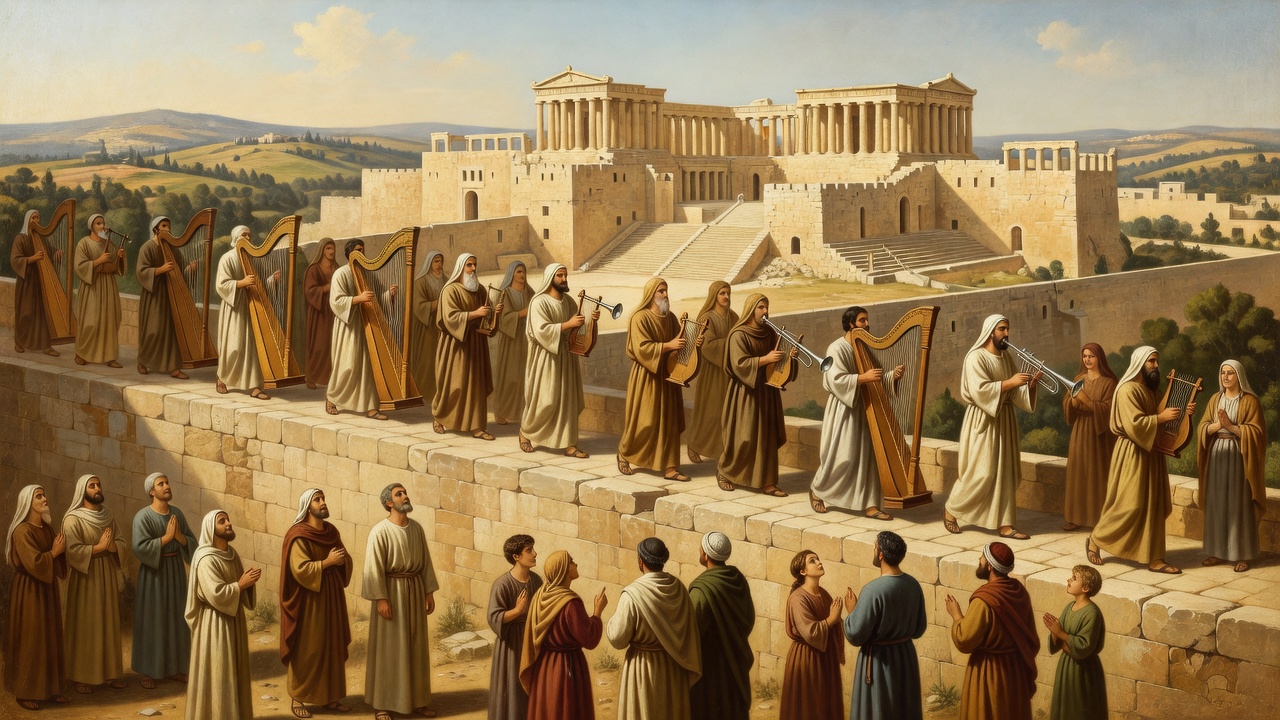
- Para la dedicación de la muralla reconstruida de Jerusalén, se reunió a los levitas y cantores de los poblados circundantes donde se habían establecido, como Bet-gilgal y los campos de Geba y Azmavet. La alabanza musical se organizó en coros alternados con instrumentos dispuestos según las normas del rey David.Fuentes: el propio texto bíblico · Beth-gilgal · Geba · Azmaveth
- La ceremonia de dedicación contó con dos grandes coros de acción de gracias que marchaban sobre lo alto de las murallas recién reparadas en direcciones opuestas. Una procesión fue encabezada por Esdras el escriba hacia la Puerta del Muladar, mientras Nehemías seguía al segundo grupo, hasta que ambos coros se encontraron en la casa de Dios.Fuentes: el propio texto bíblico · Dung Gate · Gate of the Fountain
- El capítulo conserva registros ancestrales de sacerdotes y levitas que abarcan desde el primer retorno bajo Zorobabel y el sumo sacerdote Jesúa a través de varias generaciones hasta el período persa. Estas listas documentaban la línea de los sumos sacerdotes y los jefes de familia encargados del servicio del templo y de la guardia de las puertas.Fuentes: el propio texto bíblico · Zerubbabel · Joshua · Eliashib
Notas escritas con ayuda de IA a partir de fuentes abiertas (Theographic Bible Metadata, CC BY-SA 4.0; Easton’s Bible Dictionary, dominio público) y revisadas antes de publicarse.
Lugares de este capítulo
- Jerusalem · 31.777, 35.234 · versículos 27, 28, 29, 43
- Dung Gate · Hoy: in Jerusalem · 31.777, 35.234 · versículo 31
- City of David · 31.774, 35.236 · versículo 37
- Fountain Gate · Hoy: in Jerusalem · 31.777, 35.234 · versículo 37
- Water Gate · Hoy: in Jerusalem · 31.777, 35.234 · versículo 37
- Broad Wall · 31.776, 35.232 · versículo 38
- Tower of the Ovens · Hoy: in Jerusalem · 31.777, 35.234 · versículo 38
- Ephraim Gate · Hoy: in Jerusalem · 31.777, 35.234 · versículo 39
- Fish Gate · Hoy: in Jerusalem · 31.777, 35.234 · versículo 39
- Gate of the Guard · Hoy: in Jerusalem · 31.777, 35.234 · versículo 39
- Gate of Yeshanah · Hoy: in Jerusalem · 31.777, 35.234 · versículo 39
- Sheep Gate · Hoy: in Jerusalem · 31.777, 35.234 · versículo 39
- Tower of Hananel · Hoy: Antonia Fortress · 31.780, 35.234 · versículo 39
- Tower of the Hundred · Hoy: within 500 m of the Antonia Fortress · 31.780, 35.234 · versículo 39
Solo aparecen lugares identificados con alta confianza (90 % o más según las fuentes académicas reunidas por OpenBible). Mapa de la época: DARE (Digital Atlas of the Roman Empire), CC BY 4.0; mapa actual: © colaboradores de OpenStreetMap; lugares: OpenBible.info (CC BY 4.0).
Créditos y licencia de esta traducción
Bibeli Gusunɔn Gari
The Holy Bible in the Baatonum language of Benin, also called the Bariba language
copyright © 2013 SIM
Language: Bariba (Baatonum)
Translation by: SIM International
Bariba, Bibeli Gusunɔn Gari
This translation, published by the UEEB/SIM au Benin, was published in 1996.
If you are interested in obtaining a printed copy, please contact the SIM at SIM, BP 15, Parakou, Benin.
This translation text is made available to you under the
terms of the Creative Commons License: Attribution-Noncommercial-No Derivative Works.
( http://creativecommons.org/licenses/by-nc-nd/3.0/ )
In addition, you have permission to port the text to different file formats, as long as you
do not change any of the text or punctuation of the Bible.
You may share, copy, distribute, transmit, and extract portions
or quotations from this work, provided that you include the above copyright
information:
You must give Attribution to the work.
You do not sell this work for a profit.
You do not make any derivative works that change any of the actual words or punctuation of the Scriptures.
Permissions beyond the scope of this license may be
available if you contact
us with your request.
This translation is made available to you under the terms of the
Creative Commons Attribution-Noncommercial-No Derivatives license 4.0.
You may share and redistribute this Bible translation or extracts from it in any format, provided that:
You include the above copyright and source information.
You do not sell this work for a profit.
You do not change any of the words or punctuation of the Scriptures.
Pictures included with Scriptures and other documents on this site are licensed just for use with those Scriptures and documents.
For other uses, please contact the respective copyright owners.
2014-09-10
Fuente: http://ebible.org/bba/ · eBible.org