Jeremías 28
Bibeli Gusunɔn Gari · Toca un versículo para ver sus referencias cruzadas.
1Sedesiɑsin bɑndun wɔ̃ɔ nnɛse te sɔɔ, yen suru nɔɔbuse sɔɔ, Hɑnɑniɑ, Asurin bii, wi u sɑ̃ɑ Gusunɔn sɔmɔ Gɑbɑoniɔ, u kɑ Yeremi ɡɑri kuɑ yɑ̃ku kowobu kɑ tɔmbu kpuron wuswɑɑɔ, Yinni Gusunɔn sɑ̃ɑ yerɔ. 2U nɛɛ, ɑmɛniwɑ Gusunɔ, Isirelibɑn Yinni wi u wɔllu kɑ tem mɔ u ɡeruɑ. U nɛɛ, u koo wiɡibu yɑrɑ Bɑbiloniɡibun yorun di, te tɑ sɑ̃ɑ nɡe suɡu ben wĩinɔ. 3N kɑ ko wɔ̃ɔ yiru u koo de Nɛbukɑnɛsɑɑ u kɑ wi, Yinni Gusunɔn sɑ̃ɑ yerun dendi yɑ̃ɑ ni wurɑmɑ, ni u rɑɑ ɡurɑ u kɑ dɑ Bɑbiloniɔ. 4U koo mɑɑ de Yoyɑkini, Yoyɑkimun bii, Yudɑbɑn sinɑ boko u wurɑmɑ, kɑ sere Yudɑbɑn tɔn be bɑ kɑ dɑ Bɑbiloniɔ. Domi u koo bu yɑrɑ Bɑbilonin yorun di.
5Yerɑ Yeremi u Gusunɔn sɔmɔ Hɑnɑniɑ wisɑ yɑ̃ku kowobu kɑ tɔn be bɑ wɑ̃ɑ Yinni Gusunɔn sɑ̃ɑ yeru mi kpuron wuswɑɑɔ, 6u nɛɛ, ɑmi. Gusunɔ u de yu koorɑ nɡe mɛ ɑ ɡeruɑ. Kpɑ u de tɔn be kpuro bu wurɑmɑ Bɑbilonin di kɑ Yinni Gusunɔn sɑ̃ɑ yerun dendi yɑ̃ɑ ni. 7Adɑmɑ Hɑnɑniɑ, ɑ ɡɑri yini swɑɑ dɑkio ɑ nɔ, yi nɑ ɡerumɔ wunɛn wuswɑɑɔ kɑ tɔn ben wuswɑɑɔ. 8Gusunɔn sɔmɔ be bɑ ɡbiɑ bɑ nɑ yellun di, sɑ sere nɑ, nɔni swɑ̃ɑru kɑ tɑbu kɑ bɑrɑnun ɡɑriyɑ bɑ bwese bɑkɑnu kɑ sinɑ bokobu sɔ̃ɔwɑ. 9Tɛ̃ Gusunɔn sɔmɔ ɡoo ù n seewɑ u bɔri yɛndun ɡɑri mɔ̀, ɑmɔnɑ tɔmbɑ koo kɑ tubu mɑ Gusunɔwɑ u yɛ̃ro ɡɔrimɑ, mɑ n kun mɔ ye u ɡeruɑ mi, yɑ koorɑ.
10Yerɑ Gusunɔn sɔmɔ Hɑnɑniɑ u Yeremi suɡu ye wunɑ mɑ u ye bɔɔkɑ. 11Mɑ u tɔmbu kpuro sɔ̃ɔwɑ u nɛɛ, ɑmɛniwɑ Yinni Gusunɔ u ɡeruɑ. U nɛɛ, n kɑ ko wɔ̃ɔ yiru u koo Bɑbiloniɡibun dɑm mɛ buɑ nɡe mɛ nɑ suɡu ye bɔɔkɑ.
Mɑ Yeremi u win swɑɑ mwɑ u n doonɔ.
12Sɑnɑm mɛ Hɑnɑniɑ u suɡu dɑ̃ɑ ye wunɑ Yeremin wĩirun di u bɔɔkɑ u kpɑ, yerɑ Yinni Gusunɔ u Yeremi sɔ̃ɔwɑ u nɛɛ, 13ɑ doo ɑ Hɑnɑniɑ sɔ̃ ɑ nɛɛ, u kpĩɑ u suɡu dɑ̃ɑɡiɑ ye bɔɔkɑ, ɑdɑmɑ u koo yen kɔsire wɑ ye yɑ sɑ̃ɑ sisuɡiɑ.
14Nɛ Gusunɔ, Isirelibɑn Yinni, nɛ wi nɑ wɔllu kɑ tem mɔ, nɑ nɛɛ, wee nɑ suɡu sisuɡiɑ dokemɔ bwese ni kpuron wĩinɔ, kpɑ nu kɑ Nɛbukɑnɛsɑɑ, Bɑbilonin sinɑ boko yoru diiyɑ. Bɑɑ kɑ ɡbeeku yɛɛyɔ, kon nùn ye nɔmu bɛriɑwɑ.
15Yerɑ Yeremi u Hɑnɑniɑ sɔ̃ɔwɑ u nɛɛ, ɑ swɑɑ dɑkio ɑ nɔ, Yinni Gusunɔ kun nun ɡɔre. Kɑ mɛ, ɑ dɑ ɑ tɔmbu ɡɑri weesuɡii sɔ̃ɔwɑ, mɑ bɑ yi nɑɑnɛ kuɑ. 16Yen sɔ̃, tɛ̃, wee ye Yinni Gusunɔ u ɡeruɑ. U nɛɛ, u koo nun wunɑ tem minin di, domi wunɛn ɡɑri yi derɑ tɔmbɑ nùn seesi. Kɑɑ ɡbi ɡisɔku ɡe.
17Mɑ Gusunɔn sɔmɔ Hɑnɑniɑ wi, u ɡu wɔ̃ɔ ɡen suru nɔɔbɑ yiruse sɔɔ.
Yeremi u Yudɑ be bɑ wɑ̃ɑ
Bɑbiloniɔ tireru kuɑ
¿Sabías que…?
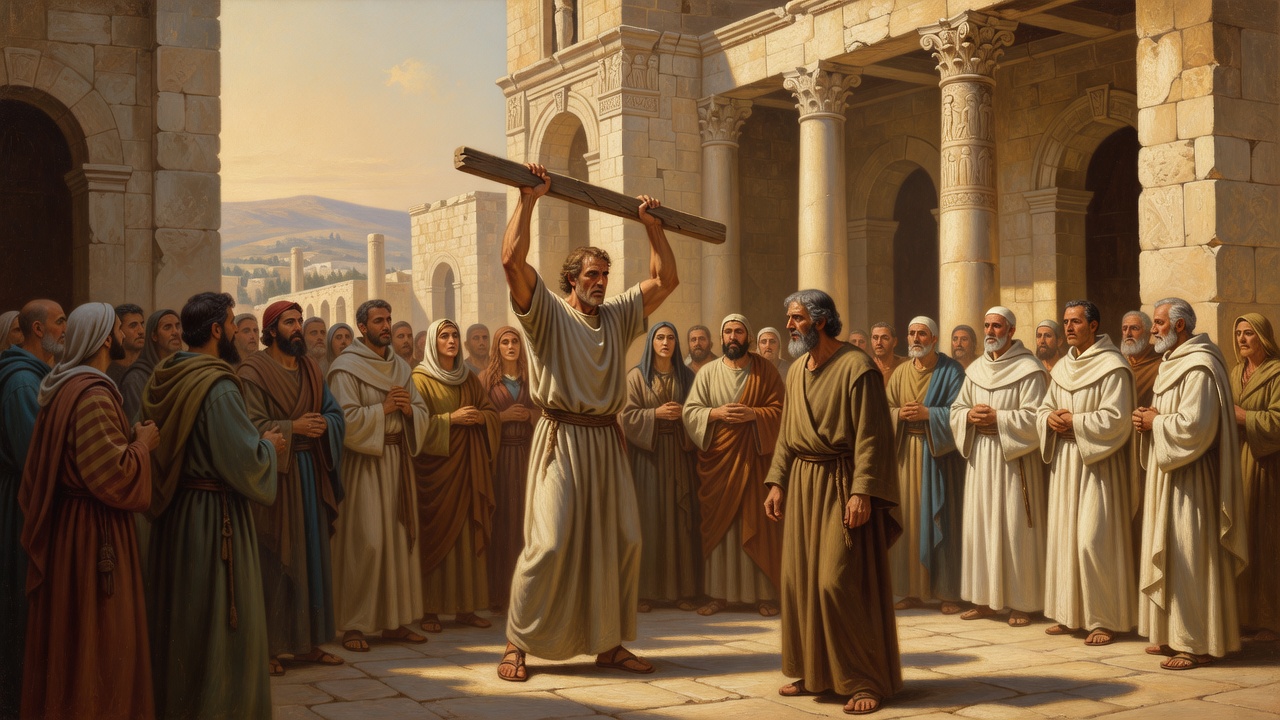
Jeremías y el falso profeta Hananías
- Hananías, hijo de Azur de la ciudad benjamita de Gabaón, confrontó públicamente a Jeremías en el templo de Jerusalén durante el cuarto año del rey Sedequías. Profetizó que, en dos años, Dios rompería el yugo de Babilonia, devolvería los utensilios del templo y traería de vuelta al rey Jeconías y a los cautivos.Fuentes: el propio texto bíblico · Gibeon · Zedekiah · Jehoiachin
- Jeremías llevaba un yugo de madera en el cuello como señal física de sumisión al rey Nabucodonosor de Babilonia. Después de que Hananías le quitó el yugo y lo quebró ante los sacerdotes y el pueblo, Dios declaró mediante Jeremías que el yugo de madera roto sería sustituido por un ineludible yugo de hierro sobre las naciones.Fuentes: el propio texto bíblico · Jeremiah · Nebuchadnezzar
- Jeremías advirtió a Hananías que el Señor no lo había enviado y que había hecho confiar al pueblo en una mentira. Por haber predicado rebelión contra Dios, se le anunció que moriría ese mismo año, y falleció dos meses después, en el séptimo mes.Fuentes: el propio texto bíblico · Hananiah · Jeremiah
Notas escritas con ayuda de IA a partir de fuentes abiertas (Theographic Bible Metadata, CC BY-SA 4.0; Easton’s Bible Dictionary, dominio público) y revisadas antes de publicarse.
Lugares de este capítulo
- Gibeon · Hoy: El Jib · 31.847, 35.183 · versículo 1
- Babylon · 32.543, 44.422 · versículos 2, 3, 4, 6, 11, 14
Solo aparecen lugares identificados con alta confianza (90 % o más según las fuentes académicas reunidas por OpenBible). Mapa de la época: DARE (Digital Atlas of the Roman Empire), CC BY 4.0; mapa actual: © colaboradores de OpenStreetMap; lugares: OpenBible.info (CC BY 4.0).
Créditos y licencia de esta traducción
Bibeli Gusunɔn Gari
The Holy Bible in the Baatonum language of Benin, also called the Bariba language
copyright © 2013 SIM
Language: Bariba (Baatonum)
Translation by: SIM International
Bariba, Bibeli Gusunɔn Gari
This translation, published by the UEEB/SIM au Benin, was published in 1996.
If you are interested in obtaining a printed copy, please contact the SIM at SIM, BP 15, Parakou, Benin.
This translation text is made available to you under the
terms of the Creative Commons License: Attribution-Noncommercial-No Derivative Works.
( http://creativecommons.org/licenses/by-nc-nd/3.0/ )
In addition, you have permission to port the text to different file formats, as long as you
do not change any of the text or punctuation of the Bible.
You may share, copy, distribute, transmit, and extract portions
or quotations from this work, provided that you include the above copyright
information:
You must give Attribution to the work.
You do not sell this work for a profit.
You do not make any derivative works that change any of the actual words or punctuation of the Scriptures.
Permissions beyond the scope of this license may be
available if you contact
us with your request.
This translation is made available to you under the terms of the
Creative Commons Attribution-Noncommercial-No Derivatives license 4.0.
You may share and redistribute this Bible translation or extracts from it in any format, provided that:
You include the above copyright and source information.
You do not sell this work for a profit.
You do not change any of the words or punctuation of the Scriptures.
Pictures included with Scriptures and other documents on this site are licensed just for use with those Scriptures and documents.
For other uses, please contact the respective copyright owners.
2014-09-10
Fuente: http://ebible.org/bba/ · eBible.org