Ezequiel 36
Bibeli Gusunɔn Gari · Toca un versículo para ver sus referencias cruzadas.
1Yinni Gusunɔ u Esekiɛli sɔ̃ɔwɑ u nɛɛ, tɔnun bii, ɑ Isirelibɑn ɡuunu nɛn ɡɑri sɔ̃ɔwɔ kpɑ nu yi swɑɑ dɑki. Mɑ Esekiɛli u kɑ ɡuu ni ɡɑri kuɑ u nɛɛ, i swɑɑ dɑkio i nɔ ye Yinni Gusunɔ u ɡeruɑ. U nɛɛ, 2wee yibɛrɛbɑ bɑ ɡerumɔ bɑ mɔ̀, ɛhɛ̃, tɛ̃ i kuɑ beɡinu. 3Yen sɔ̃, ɑmɛniwɑ wi, Yinni Gusunɔ u nɛɛ, n bɛɛ sɔ̃. U nɛɛ, u wɑ mɑ bɑ kĩɑ bu bɛɛ kpeerɑsiɑ beri berikɑ kpuro, bu bɛɛ mwɛ. Kpɑ bwese ni nu tie nu n bɛɛ mɔ. Mɛyɑ nu rɑ n bɛɛ yɛ̃ɛmɔ nu n kɑ fɑɑɡi mɔ̀ yɑm kpuro. 4Yen sɔ̃, u nɛɛ, bɛɛ ɡuunu kɑ ɡunɡunu kɑ dɑɑnu kɑ wɔwi kɑ bɑnsu kɑ wuu si bɑ deri si yibɛrɛbɑ bɑ wɔri bɑ yɑ̃nu ɡurɑ mɑ bwese ni nu kɑ su sikerenɛ nu su yɛ̃ɛmɔ, i swɑɑ dɑkio i nɔ ye u ɡerumɔ bɛɛn sɔ̃. 5Wi, Yinni Gusunɔ u ɡeruɑ u nɛɛ, kɑ nisi bɑkɑnɑ u kɑ Edɔmubɑ kpuro ɡɑri mɔ̀ kɑ bwese ni nu tie, ni nu tii win tem wɛ̃ kɑ nuku dobu kɑ win ɡɛndu mɑ nu kɑ mɛn yɑ̃nu kpuro ɡurɑ. 6Bɛɛ Isirelibɑn tem ɡuunu kɑ ɡunɡunu kɑ dɑɑnu kɑ wɔwi, wee ye u nɛɛ, n bɛɛ sɔ̃. U nɛɛ, wi wee u ɡɑri ɡerumɔ mɔru kɑ nisinun sɔ̃. Domi bwese tukunu nu bɛɛ sekuru doke. 7Yen sɔ̃nɑ u nɔmɑ yiiyɑ u bɔ̃ruɑ u nɛɛ, bwese ni nu kɑ bɛɛ sikerenɛ mi, niyɑ nu koo sekuru wɑ. 8Sɑɑ ye sɔɔ, bɛɛ ɡuunun dɑ̃nu i ko kpɑrɑ kpɑ i binu mɑ win tɔmbu Isirelibɑn sɔ̃. Domi ben wurɑmɑru tɑ turuku kuɑ kɔ. 9Wi wee u kɑ bɛɛ wɑ̃ɑ. U koo bɛɛ wuswɑɑ kisimɑ. Bɑ koo mɑɑ wuku bɛɛn temɔ bu duure. 10U koo de tɔmbu bu dɑbiɑ. Isirelibɑ kpuro bɑ koo wurɑmɑ mi, kpɑ bɑ n wɑ̃ɑ bɛɛn suunu sɔɔ. Kpɑ bu bɑnsu sɔɔ dii kpɑɑnu bɑni. 11U koo de tɔmbu kɑ yɑɑ sɑbenu bu dɑbiɑ bu kɔwɑrɑ kpɑ bu sinɑ mi nɡe yellu. Kpɑ u bu ɡeɑ kuɑ n kere ye u rɑɑ kuɑ. Sɑɑ ye sɔɔ, bɑ koo ɡiɑ mɑ wiyɑ u sɑ̃ɑ Yinni Gusunɔ. 12U koo de win tɔmbu Isirelibɑ bu sĩ bɛɛn wɔllɔ kpɑ bɑ n bɛɛ mɔ. I ko n sɑ̃ɑ ben tubi. Sɑɑ ye sɔɔ, i ǹ mɑɑ derimɔ bu ben bibu biɑ. 13Wee tɔmbɑ ɡerumɔ bɑ mɔ̀, Isirelin tem mu sɑ̃ɑ nɡe ɡbeeku yɑɑ ye yɑ yen tiin binu temmɔ. 14Yen sɔ̃nɑ i ǹ mɑɑ tɔmbu temmɔ. I ǹ bɛɛn tɔmbu kɑm koosiɑmɔ. 15U ǹ mɑɑ derimɔ i bwese tukunun wɔmɑ nɔ. Bɑ ǹ mɑɑ bɛɛ sekuru dokemɔ. Mɛyɑ i ǹ mɑɑ derimɔ bɛɛn tɔmbu bu kɑm ko. Wi, Yinni Gusunɔwɑ u yeni ɡeruɑ.
Yinni Gusunɔ
u koo Isirelibɑ mɛnnɑ
16Yinni Gusunɔ u mɑɑ ɡeruɑ u nɛɛ, 17tɔnun bii, sɑnɑm mɛ Isirelibɑ bɑ wɑ̃ɑ ben temɔ, bɑ mu disi doke ben dɑɑn sɔ̃ kɑ ben kookoosun sɔ̃. Mɑ nɑ ben kookoo si ɡɑrisi disi nɡe tɔn kurɔ wi u yɑsɑ mɔ̀. 18Yen sɔ̃nɑ nɑ bu mɔru seesi yɛm mɛ bɑ yɑri ben tem sɔɔn sɔ̃ kɑ sere bũu ni bɑ kɑ mu disi doke. 19Nɑ bu siri ben dɑɑ kɑ ben kookoosun sɔ̃. Mɑ nɑ bu yɑrinɑsiɑ bɑ wɑ̃ɑ wɑ̃ɑ bwesenu ɡɑnu sɔɔ tem tukumɔ. 20Ye bɑ wɑ̃ɑ bwese nin mi, ni bɑ tii wɛ̃, miyɑ bɑ nɛn yĩsi dɛɛrɑ te sɑnkɑ sere tɔmbɑ mɔ̀, Yinni Gusunɔn tɔmbɑ. Win tem diyɑ bɑ yɑrimɑ. 21Yen sɔ̃nɑ nɑ kĩ n nɛn yĩsi dɛɛrɑ te fɑɑbɑ ko te be, Isirelibɑ bɑ sɑnkumɔ bwesenun suunu sɔɔ mi bɑ wɑ̃ɑ. 22Yen sɔ̃, tɔnun bii, ɑ kpɑm Isirelibɑ sɔ̃ɔwɔ ɑ nɛɛ, n ǹ ben sɔ̃ nɑ yeni mɔ̀. Nɛn yĩsi dɛɛrɑ ten sɔ̃nɑ te bɑ sɑnkɑ bwesenu sɔɔ. 23Kon nɛn yĩsi bɑkɑ te bɛɛrɛ wesiɑ te bɑ sɑnkɑ bwesenun suunu sɔɔ mi. Bwese ni, nù n wɑ bɑ mɑn bɛɛrɛ wɛ̃ɛmɔ, nu koo ɡiɑ mɑ nɛnɑ nɑ sɑ̃ɑ Yinni Gusunɔ.
24Kon bu wunɑ bwese nin suunu sɔɔn di n bu mɛnnɑ n kɑ wurɑmɑ ben temɔ. 25Kon bu nim dɛɛrɑm wisi kpɑ bu dɛɛrɑ. Kon ben torɑnu kpuro wɔkɑ kpɑ n ben bũnu kpuro wunɑ n kɔ̃. 26Kon bu bwisiku kpɑɑnu kɑ ɡɔ̃ru kpɑɑsu wɛ̃. Kon ben ɡɔ̃ru si su bɔɔbu nɡe kperu wunɑ kpɑ n bu ɡɔ̃rusu wɛ̃ si su du nɡe wɑsi. 27Kon bu nɛn Hunde wɛ̃ kpɑ n de bu nɛn woodɑbɑ mɛm nɔɔwɑ bɑ n kɑ ye sɔmburu mɔ̀. 28Bɑ koo sinɑ tem mɛ nɑ ben bɑɑbɑbɑ nɔɔ mwɛɛru kuɑ sɔɔ, kpɑ bu ko nɛn tɔmbu kpɑ nɑ n mɑɑ sɑ̃ɑ ben Yinni. 29Kon bu torɑnu kpuro ɡbɑrɑ. Kon de bu dĩɑnu wɑ nu n kpɑ̃. Nɑ ǹ mɑɑ bu ɡɔ̃ɔru kpɑremɔ. 30Kon de dɑ̃nu nu mɑ, kpɑ ɡbeɑ yu dĩɑnu ko kpɑ bu ku mɑɑ sekuru wɑ ɡɔ̃ɔrun sɔ̃ bwesenu sɔɔ. 31Sɑɑ ye sɔɔrɑ bɑ koo tubu mɑ ben kookoosu kɑ ben dɑɑ yɑ ǹ wɑ̃ kpɑ bu tii tusi yen sɔ̃. 32Adɑmɑ be, Isirelibɑ bɑ n yɛ̃ mɑ n ǹ ben sɔ̃ nɑ mɔ̀ mɛ. Bu de sekuru tu bu mwɑ. Nɛ, Yinni Gusunɔwɑ nɑ yeni ɡeruɑ.
33Nɛ, Yinni Gusunɔ nɑ mɑɑ nɛɛ, dɔmɑ te kon bu dɛɛrɑsiɑ ben torɑnu kpuron di, kon de tɔmbu bu yibu wusu sɔɔ kpɑ bu ben bɑnsu seeyɑ. 34Bɑ koo mɑɑ dĩɑnu yewe tem mɛ sɔɔ, mɛ bɑ rɑɑ deri tɔmbu kpuro bu kɑ wɑ mɑ ɡɑ̃ɑnu ku rɑ kpi mi. 35Kpɑ bu nɛɛ, tem mi ɡɑ̃ɑnu ku rɑ kpi mi, wee mu kuɑ nɡe ɡbɑɑ te bɑ mɔ̀ Edɛni. Mɛn wuu si su rɑɑ bɑnsu sɑ̃ɑ su tɛ̃ tɔmbu yibɑ mɑ bɑ su ɡbɑ̃rɑnu toosi. 36Kpɑ bwese ni nu kɑ bɛɛ sikerenɛ nu ɡiɑ mɑ nɛnɑ nɑ ye bɑ rɑɑ surɑ seeyɑ, mɑ nɑ ye bɑ rɑɑ wukɑ ɡirɑ. Nɛ, Yinni Gusunɔwɑ nɑ yeni ɡeruɑ. Kon mɑɑ ye ko.
37Wee ye kon mɑɑ wure n Isirelibɑ kuɑ. Kon bu dɑbiɑsiɑ nɡe yɑ̃ɑ ɡɔ̃ɔ. 38Wuu si su rɑɑ bɑnsu sɑ̃ɑ, su koo tɔmbu yibu nɡe yɑ̃ɑ ɡɔ̃ɔ si bɑ ɡɔsɑ yɑ̃kurun sɔ̃, si bɑ rɑ kɑ nɛ Yerusɑlɛmuɔ tɔ̃ɔ bɑkɑrun sɔ̃. Sɑɑ ye sɔɔ, bɑ koo ɡiɑ mɑ nɛnɑ nɑ sɑ̃ɑ Yinni Gusunɔ. Nɛ, Yinni Gusunɔwɑ nɑ yeni ɡeruɑ.
Esekiɛli u kuku ɡbebunu wɑ
kɑ̃siru sɔɔ
¿Sabías que…?
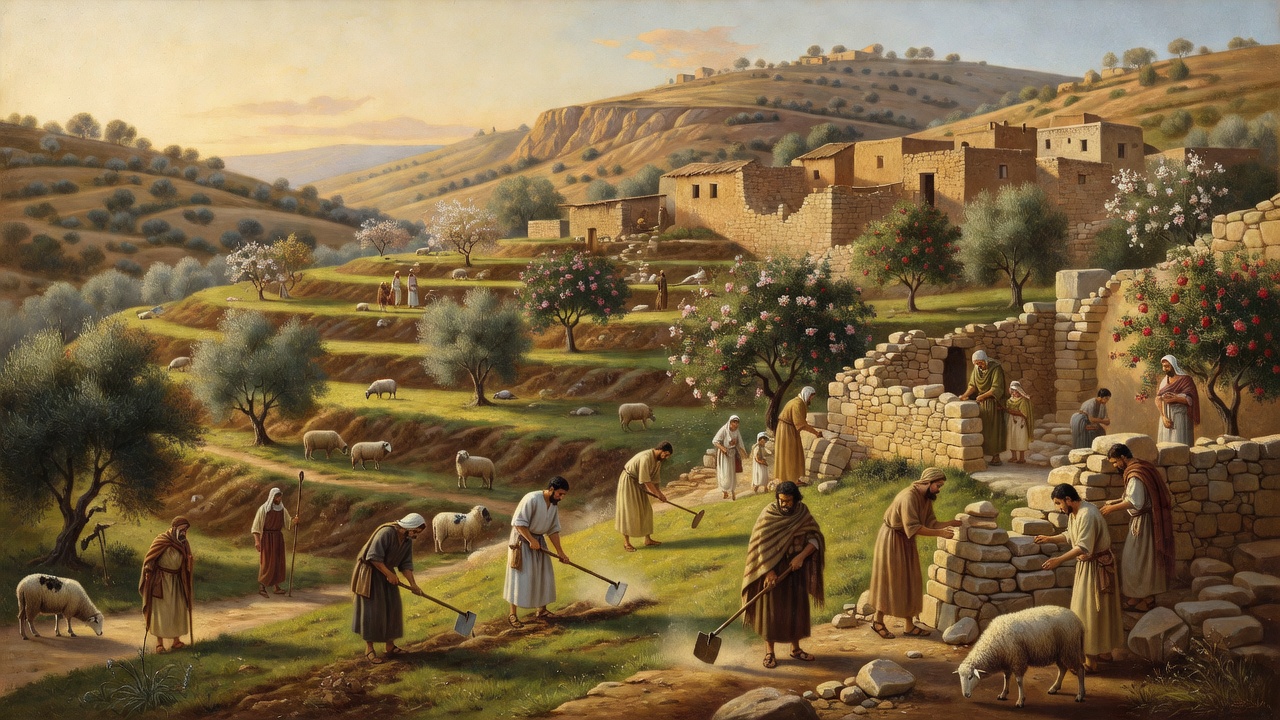
La Renovación de la Tierra y del Corazón
- Ezequiel recibe la orden de dirigirse al paisaje físico de Israel —sus montes, valles y colinas— para revertir las burlas de las naciones vecinas. La región vecina de Edom había avanzado con desprecio para apoderarse de las tierras de pastoreo desoladas durante el exilio.Fuentes: el propio texto bíblico · Edom
- El capítulo presenta la promesa de una transformación espiritual interior, en la que Dios promete purificar al pueblo con agua limpia, reemplazar su corazón de piedra por un corazón de carne y poner Su Espíritu dentro de ellos.Fuentes: el propio texto bíblico
- La restauración agrícola de la tierra desolada se compara con la fertilidad del jardín del Edén, mientras que la multitud de personas que regresa a las ciudades reconstruidas se compara con los numerosos rebaños para sacrificios reunidos en Jerusalén durante sus fiestas señaladas.Fuentes: el propio texto bíblico · Eden · Jerusalem
Notas escritas con ayuda de IA a partir de fuentes abiertas (Theographic Bible Metadata, CC BY-SA 4.0; Easton’s Bible Dictionary, dominio público) y revisadas antes de publicarse.
Lugares de este capítulo
Solo aparecen lugares identificados con alta confianza (90 % o más según las fuentes académicas reunidas por OpenBible). Mapa de la época: DARE (Digital Atlas of the Roman Empire), CC BY 4.0; mapa actual: © colaboradores de OpenStreetMap; lugares: OpenBible.info (CC BY 4.0).
Créditos y licencia de esta traducción
Bibeli Gusunɔn Gari
The Holy Bible in the Baatonum language of Benin, also called the Bariba language
copyright © 2013 SIM
Language: Bariba (Baatonum)
Translation by: SIM International
Bariba, Bibeli Gusunɔn Gari
This translation, published by the UEEB/SIM au Benin, was published in 1996.
If you are interested in obtaining a printed copy, please contact the SIM at SIM, BP 15, Parakou, Benin.
This translation text is made available to you under the
terms of the Creative Commons License: Attribution-Noncommercial-No Derivative Works.
( http://creativecommons.org/licenses/by-nc-nd/3.0/ )
In addition, you have permission to port the text to different file formats, as long as you
do not change any of the text or punctuation of the Bible.
You may share, copy, distribute, transmit, and extract portions
or quotations from this work, provided that you include the above copyright
information:
You must give Attribution to the work.
You do not sell this work for a profit.
You do not make any derivative works that change any of the actual words or punctuation of the Scriptures.
Permissions beyond the scope of this license may be
available if you contact
us with your request.
This translation is made available to you under the terms of the
Creative Commons Attribution-Noncommercial-No Derivatives license 4.0.
You may share and redistribute this Bible translation or extracts from it in any format, provided that:
You include the above copyright and source information.
You do not sell this work for a profit.
You do not change any of the words or punctuation of the Scriptures.
Pictures included with Scriptures and other documents on this site are licensed just for use with those Scriptures and documents.
For other uses, please contact the respective copyright owners.
2014-09-10
Fuente: http://ebible.org/bba/ · eBible.org