Ezequiel 17
Bibeli Gusunɔn Gari · Toca un versículo para ver sus referencias cruzadas.
1Yinni Gusunɔ u ɡeruɑ u nɛɛ, 2tɔnun bii, ɑ Isirelibɑ mɔndu kuo. 3A nɛɛ, ɑmɛniwɑ nɛ, Yinni Gusunɔ nɑ ɡeruɑ. Nɑ nɛɛ, ɡunɔ bɑkeru ɡɑrɑ wɑ̃ɑ tɑ kɑsɑ dɛ̃u mɑ tɑ sɑn bɑkɑsu mɔ si su nɔni bwese bwesekɑ mɔ. Mɑ tɑ yɔ̃ɔwɑ tɑ dɑ sere Libɑnin ɡuurun wii kpiirɔ. Mɑ tɑ dɑ tɑ dɑ̃ɑ ye bɑ mɔ̀ sɛdurun wii kpiiru wĩɑ. 4Mɑ tɑ dɑ̃ɑ ten kɑ̃ɑsɑ ye yɑ ɡunum bo wĩɑ tɑ kɑ dɑ tɑ yi tem mi bɑ rɑ tenkuru ko, wuu ɡè sɔɔ tenkubɑ bɑ wɑ̃ɑ. 5Mɑ tɑ dɑ̃ɑ kpii pɔturɑ ɡɑɑ suɑ tɑ dɑ tɑ ɡirɑ nɡe dɑ̃ɑ ye yɑ rɑ n wɑ̃ɑ nim bɔkuɔ mi tem ɡem mu wɑ̃ɑ, mi nim mu yibɑ. 6Kpii pɔturɑ ye, yɑ seewɑ yɑ kpɛ̃ɑ nɡe resɛm koru te tɑ yɑsiɑ ɑdɑmɑ tɑ ǹ ɡunu. Mɑ ten kɑ̃ɑsi yi mɛɛrɑ ɡunɔ bɑke ten berɑ ɡiɑ. Mɑ ten ɡbini yi duɑ tem mɛn sɔɔwɔ. Mɑ dɑ̃ɑ ye, yɑ ɡɔsiɑ resɛm, yɑ kpɑrɑ yɑ kɑ̃ɑsi kuɑ. 7Yen biruwɑ ɡunɔ bɑkeru ɡɑrɑ nɑ tɑ kɑsɑ dɛ̃u. Ten sɑnsu tɑɑsinɛ. Mɑ resɛm koo te, tɑ ten ɡbini kɑ ten kɑ̃ɑsi ɡɔsie ɡunɔ bɑke ten mi ɡiɑ, domi tɑ tɑmɑɑ tɑ koo nim wɑ mi ɡiɑ. 8N deemɑ tɑ rɑɑ ɡirewɑ tem ɡem sɔɔ mi nim yibɑ kpɑ tu kɑ̃ɑsi ɡeenu ko tu bii ɡeenu mɑ kpɑ tɑ n sɑ̃ɑ resɛm ɡeɑ.
9Wee ye nɛ, Yinni Gusunɔ nɑ bikiɑ. Nɑ nɛɛ, resɛm yen bweseru yɑ koo kpĩ yu kuurɑ? Gunɔ bɑke ɡbiikii te, tɑ koo wurɑ tu ye deri tɑ kun yen ɡbini wukurɑ? Tɑ koo wurɑ tɑ kun yen mɑrum ɡo, kpɑ ten kpɑrɑ kpɛm mɛ, mu ɡberɑ? Ǹ n mɛn nɑ, n ǹ mɑɑ tilɑsi tɔn dɑbinu bu nɑ bu kɑ ye wukɑ. 10Wee tɑ duurɑ, ɑdɑmɑ tɑ koo kuurɑ? Sɔ̃ɔ yɑri yerun woo ɡɑ̀ n tu bɑbɑ, tɑ ǹ koo ɡberɑ? Geemɑ tɑ koo ɡberɑ mi tɑ duurɑ.
Mɔn ten tubusiɑnu
11Yinni Gusunɔ u mɑɑ nɛɛ, 12ɑ Yudɑn mɛm nɔɔ sɑri be bikio ɑ nɛɛ, bɑ mɔn ten tubusiɑnu yɛ̃? A bu sɔ̃ɔwɔ ɑ nɛɛ, wee Bɑbilonin sinɑ boko u dɑ Yerusɑlɛmuɔ. U ben sinɑ boko mwɑ kɑ win sinɑ ɑsɑkpɔbu mɑ u kɑ bu dɑ Bɑbiloniɔ. 13Mɑ u turo ɡɔsɑ wi u sɑ̃ɑ nɡe kpii pɔturɑ sinɑ bibu sɔɔ, u kɑ nùn ɑrukɑwɑni bɔkuɑ. U nùn bɔ̃rusiɑ. Mɑ Bɑbilonin sinɑ boko wi, u ben bukurobu ɡurɑ u kɑ dɑ win temɔ. 14Kpɑ Yudɑbɑn tem mu biru wurɑ, mu ku mɑɑ kuurɑ. Kpɑ bu win ɑrukɑwɑni ye mɛm nɔɔwɑ. 15Adɑmɑ be Yudɑbɑ bɑ Bɑbilonin sinɑ boko wi seesi bɑ sɔmɔbu ɡɔrɑ Eɡibitiɔ bu kɑ dumi kɑsumɑ kɑ sere mɑɑ tɔn dɑbinu. Wi u yen bweseru kuɑ, u koo kisirɑ? Domi u ɑrukɑwɑni kusiɑ.
16Nɛ, Yinni Gusunɔ nɑ nɛɛ, sere kɑ nɛn wɑ̃ɑru, sinɑ boko wi, u koo ɡbiwɑ sunɔ wi u nùn bɑndu wɛ̃n temɔ. Domi u ǹ win nɔɔ mwɛɛru yibie. Bɑbiloni miyɑ u koo ɡbi. 17Bɑɑ Eɡibitin sunɔ ù n tɑbu kowo dɑbiru mɔ be bɑ dɑm mɔ, u ǹ kpɛ̃ u bu somi bu kɑ tii yinɑ sɑnɑm mɛ Bɑbilonin sinɑ boko u koo nɑ u wɔrusu ɡbe u tɑbu sĩɑ kpĩ u kɑ tɔn dɑbinu ɡo. 18Domi durɔ wi, u mɑɑ win nɔɔ mwɛɛru ɑtɑfiiru kuɑ, mɑ u ɑrukɑwɑni kusiɑ yè sɔɔ u rɑɑ win nɔɔ mwɛɛru doke. Yen sɔ̃, u ǹ kisirɑmɔ.
19Yen sɔ̃nɑ nɛ, Yinni Gusunɔ nɑ nɛɛ, sere kɑ nɛn wɑ̃ɑru, nɛn ɑrukɑwɑniwɑ Isirelibɑn sinɑ boko u ɑtɑfiiru kuɑ u kusiɑ. Yen sɔ̃, u koo yen ɑre wɑ. 20Kon nùn yinɑ bɛriɑ kpɑ u wɔri ye sɔɔ. Kon kɑ nùn dɑ Bɑbiloniɔ. Miyɑ kon nùn siri win nɑɑnɛ sɑri te u kuɑn sɔ̃. 21Win tɑbu kowo be bɑ koo duki su, kon bu nɑɑ swĩiwɑ n ɡo kɑ tɑkobi. Be bɑ tiɑrɑ kpɑ bu yɑrinɑ nɡe woo. Sɑɑ ye sɔɔ, bɑ koo ɡiɑ mɑ nɛnɑ nɑ yeni ɡeruɑ.
Yinni Gusunɔn nɔɔ mwɛɛru
22Amɛniwɑ nɛ, Yinni Gusunɔ nɑ ɡeruɑ. Nɑ nɛɛ, nɛn tiiwɑ kon dɑ̃ɑ kɑ̃ɑsɑ kpɛmɑ mɛɛri sɛduru yen wii kpiirɔ kpɑ n ye burɑ, kpɑ n dɑ n ye ɡirɑ ɡuuru ɡɑrun wɔllɔ te tɑ ɡunu. 23Kon ye ɡirɑwɑ ɡuuru ɡɑrun wɔllɔ te tɑ ɡunum bo Isireliɔ. Ten kɑ̃ɑsi yi koo kuurɑwɑ kpɑ tu binu mɑ tɑ n sɑ̃ɑ dɑ̃ɑ te tɑ wɑɑbu wɑ̃. Gunɔ bwese bwesekɑ yɑ koo sokuru ko ten kɑ̃ɑsi sɔɔ. Kpɑ su n kukuɑ ten sɑɑrɔ. 24Sɑɑ yerɑ dɑ̃nu kpuro nu koo ɡiɑ mɑ nɛnɑ nɑ sɑ̃ɑ Yinni Gusunɔ. Nɛnɑ nɑ rɑ dɑ̃ɑ ni nu ɡunu kɑwe, kpɑ n ni nu piiburu bo ɡunum sosi. Mɛyɑ nɑ rɑ ni nu wuru bekusu sɑ̃ɑ ɡberɑsie, kpɑ n ni nu ɡbere bɔrɔm dokeɑ. Nɛ, Yinni Gusunɔwɑ nɑ yeni ɡeruɑ. Mɛyɑ yɑ koo mɑɑ koorɑ.
Gusunɔ u rɑ bɑɑwure siriwɑ
nɡe mɛ win dɑɑ yɑ nɛ
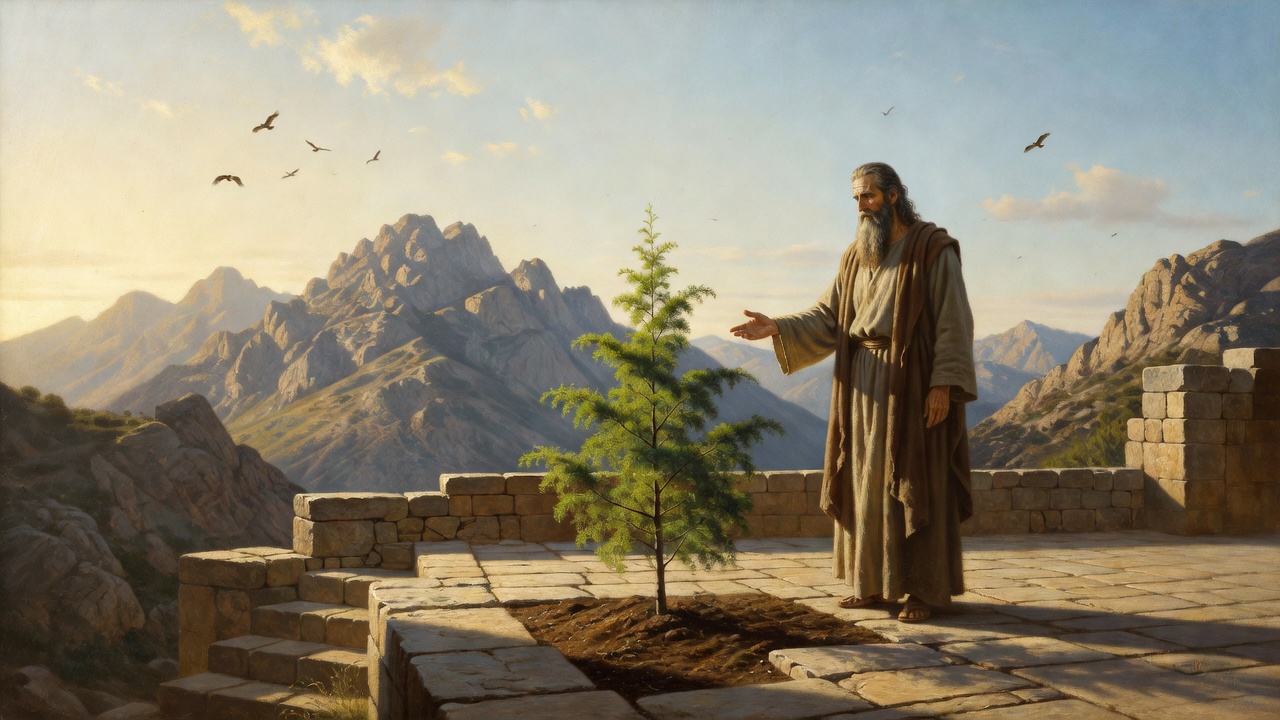
¿Sabías que…?
La parábola de las águilas y el cedro
- Ezequiel presenta una alegoría política donde la primera gran águila representa al rey de Babilonia, quien deportó a la realeza de Jerusalén e impuso a un rey vasallo mediante un pacto solemne. La segunda águila representa a Egipto y a su faraón, a quienes el monarca de Judá recurrió en busca de caballería y tropas, quebrantando su lealtad jurada.Fuentes: el propio texto bíblico · Babylon · Egypt · Pharaoh
- En el mensaje profético, romper un juramento de vasallaje contraído ante Babilonia no se consideraba solo una rebelión diplomática, sino una traición espiritual contra Dios, quien reclamaba dicho juramento como su propio pacto.Fuentes: el propio texto bíblico
- El capítulo concluye revirtiendo las intrigas políticas humanas: Dios mismo promete tomar un retoño tierno de la copa del cedro y plantarlo en las cumbres montañosas de Israel, donde crecerá como un cedro majestuoso que brindará refugio a aves de toda clase.Fuentes: el propio texto bíblico
Notas escritas con ayuda de IA a partir de fuentes abiertas (Theographic Bible Metadata, CC BY-SA 4.0; Easton’s Bible Dictionary, dominio público) y revisadas antes de publicarse.
Lugares de este capítulo
- Lebanon · 33.540, 35.584 · versículo 3
- Canaan · 32.767, 35.333 · versículo 4
- Babylon · 32.543, 44.422 · versículos 12, 14, 15, 16, 17, 20
- Jerusalem · 31.777, 35.234 · versículos 12, 17
- Egypt · 30.129, 31.308 · versículo 15
Solo aparecen lugares identificados con alta confianza (90 % o más según las fuentes académicas reunidas por OpenBible). Mapa de la época: DARE (Digital Atlas of the Roman Empire), CC BY 4.0; mapa actual: © colaboradores de OpenStreetMap; lugares: OpenBible.info (CC BY 4.0).
Créditos y licencia de esta traducción
Bibeli Gusunɔn Gari
The Holy Bible in the Baatonum language of Benin, also called the Bariba language
copyright © 2013 SIM
Language: Bariba (Baatonum)
Translation by: SIM International
Bariba, Bibeli Gusunɔn Gari
This translation, published by the UEEB/SIM au Benin, was published in 1996.
If you are interested in obtaining a printed copy, please contact the SIM at SIM, BP 15, Parakou, Benin.
This translation text is made available to you under the
terms of the Creative Commons License: Attribution-Noncommercial-No Derivative Works.
( http://creativecommons.org/licenses/by-nc-nd/3.0/ )
In addition, you have permission to port the text to different file formats, as long as you
do not change any of the text or punctuation of the Bible.
You may share, copy, distribute, transmit, and extract portions
or quotations from this work, provided that you include the above copyright
information:
You must give Attribution to the work.
You do not sell this work for a profit.
You do not make any derivative works that change any of the actual words or punctuation of the Scriptures.
Permissions beyond the scope of this license may be
available if you contact
us with your request.
This translation is made available to you under the terms of the
Creative Commons Attribution-Noncommercial-No Derivatives license 4.0.
You may share and redistribute this Bible translation or extracts from it in any format, provided that:
You include the above copyright and source information.
You do not sell this work for a profit.
You do not change any of the words or punctuation of the Scriptures.
Pictures included with Scriptures and other documents on this site are licensed just for use with those Scriptures and documents.
For other uses, please contact the respective copyright owners.
2014-09-10
Fuente: http://ebible.org/bba/ · eBible.org