Hechos 12
Bibeli Gusunɔn Gari · Toca un versículo para ver sus referencias cruzadas.
Bɑ Yɑkɔbu ɡo mɑ bɑ Piɛɛ pirisɔm doke
1Sɑnɑm mɛ sɔɔrɑ sinɑ boko wi bɑ sokumɔ Herodu, u Yesun yiɡbɛrun tɔmbu ɡɑbu nɔmɑ doke u kɑ bu nɔni sɔ̃. 2Wiyɑ derɑ bɑ Yɑkɔbu, Yohɑnun mɔɔ mwɑ bɑ ɡo kɑ tɑkobi. 3Ye u wɑ mɑ n Yuubɑ dore, u mɑɑ Piɛɛ mwɑ. N wee sɑɑ ye, pɛ̃ɛ ye bɑ ǹ seeyɑtiɑ doken tɔ̃ɔ bɑkɑrɑ. 4Ye bɑ nùn mwɑ bɑ kpɑ, bɑ nùn pirisɔm doke mɑ tɑbu kowobu wɔkurɑ nɔɔbu kɑ tiɑ bɑ nùn kɔ̃su. Bɑ bu yi nnɛ nnɛ. Herodu u ɡɔ̃ru doke u nùn siri tɔmbun wuswɑɑɔ Gɔɔ sɑrɑribun tɔ̃ɔ bɑkɑrun biru. 5Bɑ Piɛɛ nɛni pirisɔm sɔɔ, ɑdɑmɑ Yesun yiɡbɛruɡibu bɑ kɑnɑru mɔ̀ ɡem ɡem win sɔ̃ Gusunɔn mi.
Bɑ Piɛɛ yɑkiɑ
6Tɔ̃ɔ te Herodu u kĩ u nùn yɑrɑ pirisɔm di u kɑ dɑ tɔmbun mi, ten wɔ̃kuru Piɛɛ u dweeyɑ tɑbu kowobu yirun suunu sɔɔ. Bɑ nùn bɔkuɑ kɑ yɔni yiru, mɑ kɔ̃sobu ɡɑbɑ mɑɑ wɑ̃ɑ pirisɔm kɔnnɔwɔ. 7Suɑru sɔɔ Yinnin ɡɔrɑdo u kurɑmɑ mɑ pirisɔm dii te, tɑ yɑm bururɑ. Gɔrɑdo wi, u Piɛɛ so yɛ̃sɑɔ u nùn yɑmiɑ u nɛɛ, u seewo fuuku fuuku.
Mii mii yɔni yi, yi wɔrumɑ win nɔmɑn di. 8Mɑ ɡɔrɑdo u nɛɛ, ɑ wunɛn yɑberu sebuo kpɑ ɑ wunɛn sɑlubɑtɑ doke.
Piɛɛ u kuɑ mɛ, mɑ ɡɔrɑdo u kpɑm nɛɛ, ɑ wunɛn ɡɔ̃ɡɔ wukirio kpɑ ɑ mɑn swĩi.
9Piɛɛ u yɑrɑ u nùn swĩi, ɑdɑmɑ u tɑmɑɑ u dosimɔwɑ, u ǹ yɛ̃ ye ɡɔrɑdo u mɔ̀ n sɑ̃ɑwɑ ɡem. 10Bɑ pirisɔm kɔ̃so ɡbiikobu sɑrɑri kɑ yiruse, mɑ bɑ ɡɑmbo sisuɡiɑ turɑ ye yɑ wɑ̃ɑ wuun berɑ ɡiɑ. Yeyɑ yɑ kɛniɑrɑ kɑ tii mɑ bɑ yɑrɑ bɑ swɑɑ doo kɑmɛ, bɑ ɡu swĩi. Mɑ ɡɔrɑdo wi, u Piɛɛ deri suɑru sɔɔ.
11Sɑnɑm mɛ sɔɔrɑ Piɛɛ u tubɑ ye n nùn deemɑ. Mɑ u tii sɔ̃ɔwɑ u nɛɛ, tɛ̃ nɑ ɡiɑ mɑ ɡeemɑ. Yinni Gusunɔwɑ u win ɡɔrɑdo ɡɔrimɑ u kɑ mɑn yɑkiɑ Herodun nɔmɑn di, kɑ mɑɑ ye kpuron di ye Yuubɑ bɑ kĩ bu mɑn kuɑ.
12Ye ɡɑri yi, yi nùn yeeri yi kpɑ, u dɑ Mɑɑrin yɛnuɔ wi u sɑ̃ɑ Yohɑnu Mɑɑkun mɛro. Tɔn dɑbinu mɛnnɛ mi, bɑ kɑnɑru mɔ̀. 13Piɛɛ u ɡɑmbo so yɛnu kɔnnɔwɔ mɑ kurɔ sɔm kowo ɡoo wi bɑ rɑ soku Rodɑ, u dɑ u swɑɑ dɑki. 14Ye u Piɛɛn nɔɔ tubɑ nuku dobu kun dere u ɡɑmbo kɛniɛ, mɑ u dukɑ ɡɔsirɑ dirɔ u bu sɔ̃ɔwɑ mɑ Piɛɛwɑ wɑ̃ɑ kɔnnɔwɔ. 15Bɑ nùn sɔ̃ɔwɑ bɑ nɛɛ, ɑ wiirɑmɔwɑ.
Adɑmɑ u mɔ̀, kɑ ɡeemɑ ni.
Mɑ bɑ mɔ̀, win yɑrowɑ.
16N deemɑ Piɛɛ u yɔ̃ mi, u ɡɑmbo soomɔ. Ye bɑ ye kɛniɑ, bɑ nùn tubɑ, mɑ bɑ biti soorɑ. 17U bu mɑrisiɑ kɑ nɔmu, mɑ u bu tubusiɑ nɡe mɛ Yinni Gusunɔ u kɑ nùn yɑrɑ pirisɔm di. U nɛɛ, bu ɡɑri yi Yɑkɔbu sɔ̃ kɑ mɑɑ nɑɑnɛ dokeo be bɑ tie.
Yen biru u doonɑ u dɑ ɡɑm ɡiɑ.
18Yen sisiru bururu nɑndɑ bɑkɑbu wɑ̃ɑ tɑbu kowobun suunu sɔɔ. Bɑ wɔki bɑ mɔ̀, mɑnɑ Piɛɛ u doonɑ. 19Herodu u yiire bu nùn kɑsu, ɑdɑmɑ bɑ ǹ nùn wɑ. Yen sɔ̃nɑ u pirisɔm kɔ̃sobu win ɡɑri bikiɑ mɑ u woodɑ wɛ̃ bu kɑ bu dɑ bu ɡo. Yen biru Herodu u seewɑ Yudeɑn di u dɑ u sinɑ sɔ̃ɔ mɛɛru Sesɑreɔ.
Herodun ɡɔɔ
20N wee Herodu u kɑ Tiriɡibu kɑ Sidoniɡibu mɔru bɑrɑ ɡem ɡem. Yen sɔ̃nɑ tɔn be, bɑ kpɑrɑnɑ bɑ dɑ win mi sɑnnu. Gbiikɑɑ bɑ kɑ Bɑlɑtu bɔrɔnu kuɑ wi u sɑ̃ɑ sinɑ bokon yɛnun sɔm kowobun wiruɡii. Yen biru bɑ dɑ Herodun mi bu kɑ nùn suuru kɑnɑ, domi ben temɡibu bɑ ben dĩɑnu wɑɑmɔwɑ sɑɑ Herodun tem di.
21Herodu u tɔ̃ru yi te u koo bu wɑ. Ye tɔ̃ɔ te, tɑ turɑ, u win ɡurumusuru sebuɑ u sinɑ win sinɑ turɑru wɔllɔ mɑ u ɡɑri ɡerubu wɔri. 22Tɔn be, bɑ nɛɛ, Gusunɔn nɔɔwɑ mini, n ǹ tɔnuɡuu.
23Mii mii Yinnin ɡɔrɑdo u nɑ u Herodu so mɑ kɔkɔnu nɑ nu win wɑsi di mɑ u ɡu yèn sɔ̃ wi tɔnu, u Gusunɔn yiiko mwɑ.
24Sɑɑ ye sɔɔ, mɑ Gusunɔn ɡɑri yi kpɑrɑrɑmɔ yi sosimɔ.
25Ye Bɑɑnɑbɑsi kɑ Sɔɔlu bɑ ben sɔmburu kuɑ bɑ kpɑ, bɑ wurɑ Yerusɑlɛmuɔ. Mɑ bɑ Yohɑnu Mɑɑku suɑ, u kɑ bu dɑ.
¿Sabías que…?
La huida de Pedro y la muerte de Herodes
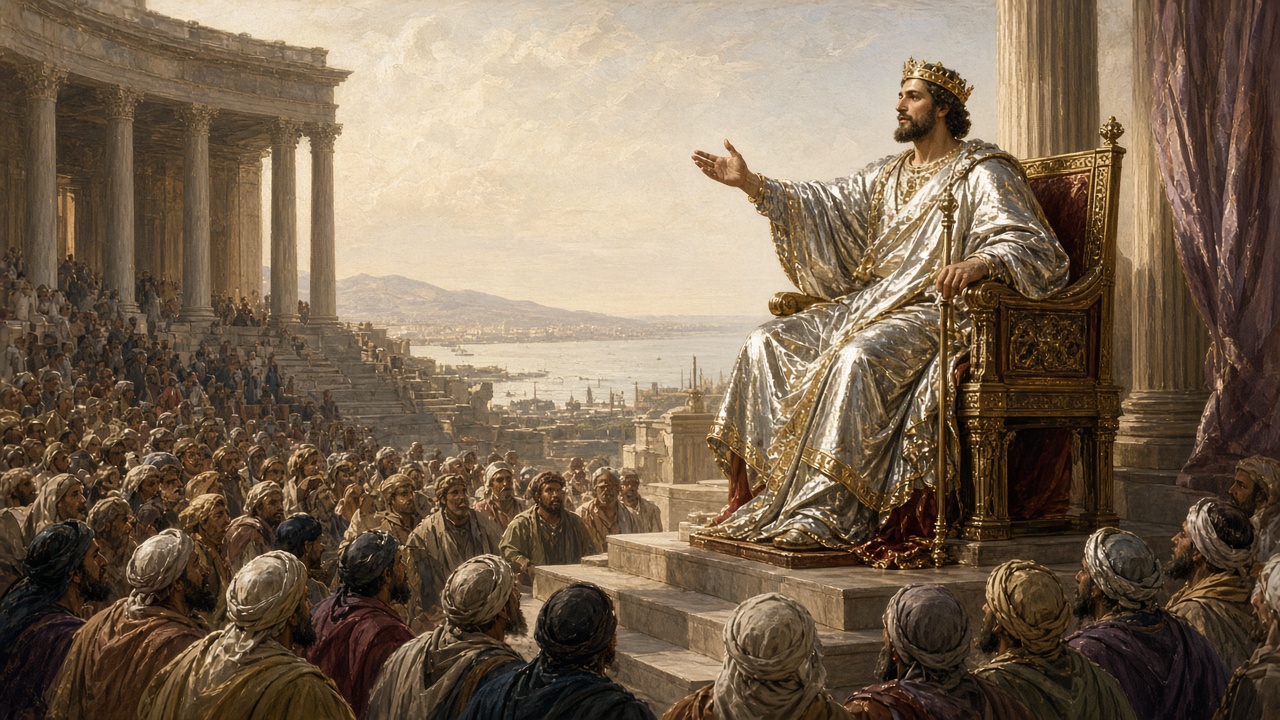
- El rey Herodes de este capítulo es Herodes Agripa I, nieto de Herodes el Grande, que con el tiempo llegó a poseer todo el reino de su abuelo y el título de rey. Hizo matar a Santiago y encarceló a Pedro. El Diccionario Bíblico de Easton (1897) dice que, en el segundo día de una fiesta en honor del emperador Claudio, Agripa apareció en el gran teatro de Cesarea con magníficas vestiduras de plata; era temprano, y los rayos del sol deslumbraban a quienes lo veían.Fuentes: Herod Agrippa I · el propio texto bíblico
- El Santiago muerto a espada era Santiago, hijo de Zebedeo, hermano del apóstolo Juan, un pescador que había trabajado como socio de Pedro. El Diccionario Bíblico de Easton (1897) lo presenta como el primero de los apóstoles en ser muerto y dice que Herodes Agripa lo hizo decapitar. El Santiago a quien Pedro pide que se avise a los creyentes es otro hombre: el mismo diccionario lo identifica como el Santiago que encabezaba la iglesia en Jerusalén.Fuentes: James (Son of Zebedee) · James (Brother of Jesus) · el propio texto bíblico
- Cuando comprendió que estaba libre, Pedro fue a la casa de María, madre de Juan Marcos, en Jerusalén, que el Diccionario Bíblico de Easton (1897) llama lugar habitual de reunión de los discípulos; mucha gente estaba reunida allí orando. La sirvienta que acudió a la puerta exterior se llamaba Rode, nombre que significa una rosa; llena de alegría al oír su voz, corrió adentro para anunciarlo y olvidó abrir la puerta. Juan, llamado también Marcos, era hijo de María —Marcos, su nombre romano, poco a poco reemplazó al nombre judío Juan— y más tarde salió de Jerusalén con Bernabé y Saulo.Fuentes: Mary (Mother of John Mark) · Rhoda · John Mark · el propio texto bíblico
Notas escritas con ayuda de IA a partir de fuentes abiertas (Theographic Bible Metadata, CC BY-SA 4.0; Easton’s Bible Dictionary, dominio público) y revisadas antes de publicarse.
Lugares de este capítulo
- Caesarea · Hoy: Caesarea Maritima · 32.500, 34.892 · versículo 19
- Judea · Hoy: Judea 1 · 31.777, 35.234 · versículo 19
- Sidon · Hoy: Sandikli archaeological site in Sidon · 33.561, 35.372 · versículo 20
- Tyre · 33.271, 35.196 · versículo 20
- Jerusalem · 31.777, 35.234 · versículo 25
Solo aparecen lugares identificados con alta confianza (90 % o más según las fuentes académicas reunidas por OpenBible). Mapa de la época: DARE (Digital Atlas of the Roman Empire), CC BY 4.0; mapa actual: © colaboradores de OpenStreetMap; lugares: OpenBible.info (CC BY 4.0).
Créditos y licencia de esta traducción
Bibeli Gusunɔn Gari
The Holy Bible in the Baatonum language of Benin, also called the Bariba language
copyright © 2013 SIM
Language: Bariba (Baatonum)
Translation by: SIM International
Bariba, Bibeli Gusunɔn Gari
This translation, published by the UEEB/SIM au Benin, was published in 1996.
If you are interested in obtaining a printed copy, please contact the SIM at SIM, BP 15, Parakou, Benin.
This translation text is made available to you under the
terms of the Creative Commons License: Attribution-Noncommercial-No Derivative Works.
( http://creativecommons.org/licenses/by-nc-nd/3.0/ )
In addition, you have permission to port the text to different file formats, as long as you
do not change any of the text or punctuation of the Bible.
You may share, copy, distribute, transmit, and extract portions
or quotations from this work, provided that you include the above copyright
information:
You must give Attribution to the work.
You do not sell this work for a profit.
You do not make any derivative works that change any of the actual words or punctuation of the Scriptures.
Permissions beyond the scope of this license may be
available if you contact
us with your request.
This translation is made available to you under the terms of the
Creative Commons Attribution-Noncommercial-No Derivatives license 4.0.
You may share and redistribute this Bible translation or extracts from it in any format, provided that:
You include the above copyright and source information.
You do not sell this work for a profit.
You do not change any of the words or punctuation of the Scriptures.
Pictures included with Scriptures and other documents on this site are licensed just for use with those Scriptures and documents.
For other uses, please contact the respective copyright owners.
2014-09-10
Fuente: http://ebible.org/bba/ · eBible.org