1 Samuel 21
Bibeli Gusunɔn Gari · Toca un versículo para ver sus referencias cruzadas.
1Yerɑ Dɑfidi u seewɑ min di, u n doonɔ. Mɑ Yonɑtɑm mɑɑ ɡɔsirɑ u dɑ wuuɔ.
Dɑfidi u Sɔɔlu dukɑ suuri
2Dɑfidi u dɑ Nɔbuɔ Akimɛlɛkin mi, wi u sɑ̃ɑ yɑ̃ku kowo. Ye Akimɛlɛki u nùn wɑ, yerɑ u nùn sennɔ nɑ kɑ bɛrum, u nùn bikiɑ u nɛɛ, mbɑ n kuɑ ɑ kɑ sĩimɔ wunɛ turo, bɑɑ tɔn turo u ǹ kɑ nun swĩi.
3Mɑ Dɑfidi u yɑ̃ku kowo wi wisɑ u nɛɛ, sunɔwɑ u mɑn sɔmburu ɡɑru yiire. U mɑɑ nɛɛ, n ku de ɡoo u n yɛ̃ yèn sɔ̃ u mɑn ɡɔrɑ. Yen sɔ̃nɑ nɑ nɛn bwɑ̃ɑbu sɔ̃ɔwɑ nɑ nɛɛ, su yinnɑ yɑm kɑsɑ. 4Tɛ̃ dĩɑ nirɑ̀ ɑ mɔ yɛnuɔ. Ǹ n pɛ̃ɛn nɑ, ɑ mɑn wɑsi nɔɔbu kɛ̃ɛmɑ, ǹ kun mɛ, ye ɑ ɡesi mɔ kpuro.
5Mɑ yɑ̃ku kowo wi, u Dɑfidi wisɑ u nɛɛ, pɛ̃ɛ ɡɑɑ sɑri mɑ n kun mɔ pɛ̃ɛ ye bɑ Yinni Gusunɔ wɛ̃, ye ɑ̀ n kɑɑ di, kɑɑ ɡinɑ tɔn kurɔ dɛsirɑri.
6Mɑ Dɑfidi u yɑ̃ku kowo wi wisɑ u nɛɛ, bɑ sun kurɔ dendibu yinɑri kɔ nɡe mɛ bɑ rɑ sun kue sɑ̀ n tɑbu dɔɔ. Kɑɑ rɑ sere ɡere ɡɔrɑ ye bɑ sun koomɑ mini? Yen sɔ̃, nɛn bwɑ̃ɑbɑ dɛɛre kɔ.
7Yerɑ yɑ̃ku kowo wi, u pɛ̃ɛ ye suɑmɑ u Dɑfidi wɛ̃, domi pɛ̃ɛ ɡɑɑ sɑri mi, mɑ n kun mɔ ye bɑ rɑɑ ɡurɑ Yinni Gusunɔn sɑ̃ɑ yerun di, mɑ bɑ swĩɑ kɔsire kuɑ.
8N deemɑ yen tɔ̃ɔ te, Sɔɔlun yɑ̃ɑ kpɑrobun wiruɡii u nɑ Yinni Gusunɔn sɑ̃ɑ yerɔ u kɑ sɑ̃ɑrun wororu ɡɑru ko. Durɔ win yĩsirɑ Dɔɛɡu. U sɑ̃ɑwɑ Edɔmu.
9Mɑ Dɑfidi u Akimɛlɛki bikiɑ u nɛɛ, ɑ ǹ yɑɑsɑ ǹ kun mɛ tɑkobi mɔ mi? Domi nɑ ǹ sɑnnɔ yɑ̃nu ɡɑnu suɑmɛ yɛnun di yèn sɔ̃ sunɔ u mɑn bɑɑsi n win ɡɔrɑ ye dɑ fuuku.
10Yerɑ Akimɛlɛki wi, u nùn wisɑ u nɛɛ, tɑkobi ɡɑɑ sɑri mɑ n kun mɔ Goliɑtiɡiɑ wi ɑ ɡo Elɑn wɔwɑɔ. Ye wee, bɑ kɑ bekuru bɔkuɑ bɑ yii yɑ̃ku kowon yɑbe tɑrɑkpen biruɔ. À n ye kĩ, ɑ suo.
Mɑ Dɑfidi nɛɛ, ɑ mɑn ye wɛ̃ɛmɑ domi ɡɑɑ rɑɑ ru mɑɑ sɑri ye yɑ ye turɑ.
Dɑfidi u wɑ̃ɑ Filisitibɑn mi
Gɑtiɔ
11Yen biru Dɑfidi u seewɑ u dukɑ yɑkurɑ Sɔɔlun sɔ̃ mɑ u dɑ u wɑ̃ɑ Akisin mi, wi u sɑ̃ɑ Gɑtin sunɔ. 12Adɑmɑ Akisin sinɑ bwɑ̃ɑbu bɑ nɛɛ, n ǹ Dɑfidi Isirelibɑn sunɔ, wiyɑ mi? Wi bɑ rɑ n tɔmɑmɔ bɑ n mɔ̀,
Sɔɔlu u rɑ nɔrɔm nɔrɔm ɡo.
Adɑmɑ Dɑfidi u rɑ nɔrɔbun subɑ wɔku wɔkubu (10.000) ɡo.
13Mɑ ɡɑri yi, yi Dɑfidi sɑ̃wɑnɑ sere u Akisin bɛrum kuɑ. 14Yerɑ u tii ɡɔsiɑ wiiro u dweebu mɔ̀ nɡe ɡɑri bɔkɔ, u seewɑ u yorumɔ wuun kɔnnɔn ɡɑmbobɑ sɔɔ. Mɑ u yɑ̃ɑtɑm wĩimɔ mu kokumɔ win toburɔ. 15Mɑ Akisi u win bwɑ̃ɑ be sɔ̃ɔwɑ u nɛɛ, bɛɛn tii i wɑ mɑ durɔ wini kun bwɑ̃ɑ do. Mbɑn sɔ̃nɑ i kɑ mɑn nùn nɑɑwɑ. 16I tɑmɑɑ nɑ ǹ wiiro wɑɑrewɑ i kɑ sere mɑn durɔ wini nɑɑwɑ u mɑn win wiirɑ kookoosu sɔ̃ɔsi? Durɔ winin bweserɑ i ko i duusiɑ nɛn dirɔ?
Dɑfidi u kuɑ
wuuru ɡɑrun wiruɡii
¿Sabías que…?
La huida de David a Nob y a Gat
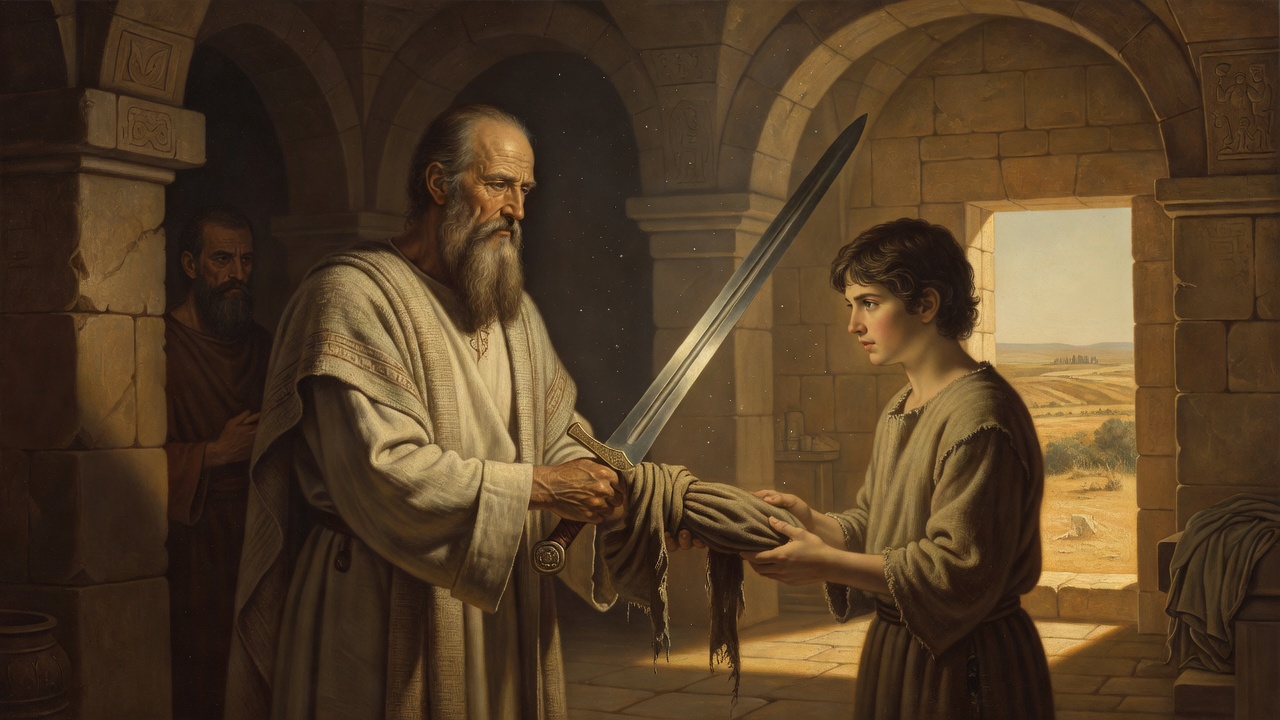
- Nob era una ciudad de sacerdotes cerca de Jerusalén donde se encontraba el tabernáculo durante el reinado de Saúl. La espada de Goliat, a quien David había vencido en el valle de Ela, se conservaba allí envuelta en un paño detrás del efod como un trofeo sagrado.Fuentes: el propio texto bíblico · Nob · Goliath
- Al recibir el pan sagrado y la espada de manos de Ahimelec en Nob, David fue observado por Doeg el edomita, el principal pastor del rey Saúl, quien se hallaba retenido delante del Señor.Fuentes: el propio texto bíblico · Doeg
- David buscó refugio en Gat, una de las cinco ciudades reales de los filisteos y lugar de origen de Goliat. Cuando los siervos del rey Aquis lo reconocieron por los cantos que celebraban sus victorias militares, David se protegió fingiendo demencia junto a las puertas de la ciudad.Fuentes: el propio texto bíblico · Achish · Gath
Notas escritas con ayuda de IA a partir de fuentes abiertas (Theographic Bible Metadata, CC BY-SA 4.0; Easton’s Bible Dictionary, dominio público) y revisadas antes de publicarse.
Lugares de este capítulo
- Valley of Elah · 31.675, 34.998 · versículo 9
Solo aparecen lugares identificados con alta confianza (90 % o más según las fuentes académicas reunidas por OpenBible). Mapa de la época: DARE (Digital Atlas of the Roman Empire), CC BY 4.0; mapa actual: © colaboradores de OpenStreetMap; lugares: OpenBible.info (CC BY 4.0).
Créditos y licencia de esta traducción
Bibeli Gusunɔn Gari
The Holy Bible in the Baatonum language of Benin, also called the Bariba language
copyright © 2013 SIM
Language: Bariba (Baatonum)
Translation by: SIM International
Bariba, Bibeli Gusunɔn Gari
This translation, published by the UEEB/SIM au Benin, was published in 1996.
If you are interested in obtaining a printed copy, please contact the SIM at SIM, BP 15, Parakou, Benin.
This translation text is made available to you under the
terms of the Creative Commons License: Attribution-Noncommercial-No Derivative Works.
( http://creativecommons.org/licenses/by-nc-nd/3.0/ )
In addition, you have permission to port the text to different file formats, as long as you
do not change any of the text or punctuation of the Bible.
You may share, copy, distribute, transmit, and extract portions
or quotations from this work, provided that you include the above copyright
information:
You must give Attribution to the work.
You do not sell this work for a profit.
You do not make any derivative works that change any of the actual words or punctuation of the Scriptures.
Permissions beyond the scope of this license may be
available if you contact
us with your request.
This translation is made available to you under the terms of the
Creative Commons Attribution-Noncommercial-No Derivatives license 4.0.
You may share and redistribute this Bible translation or extracts from it in any format, provided that:
You include the above copyright and source information.
You do not sell this work for a profit.
You do not change any of the words or punctuation of the Scriptures.
Pictures included with Scriptures and other documents on this site are licensed just for use with those Scriptures and documents.
For other uses, please contact the respective copyright owners.
2014-09-10
Fuente: http://ebible.org/bba/ · eBible.org