Jonás 2
Azərbaycan dilində Müqəddəs Kitab · Toca un versículo para ver sus referencias cruzadas.
Yunusun tövbəsi və xilası
1Yunus balığın qarnından Allahı Rəbbə dua edib dedi:
2«Əzab içində Rəbbi çağırdım,
O mənə cavab verdi.
Ölülər diyarının bağrından fəryad etdim,
Sən mənim səsimi eşitdin.
3Sən məni dərinə, dənizin qoynuna atdın,
Məni sellər sarıdı,
Sənin bütün ləpələrin və dalğaların
Üstümdən keçdi.
4Mən dedim: “Sənin gözlərinin önündən qovuldum”,
Lakin yenə Sənin müqəddəs məbədini görəcəyəm.
5Nəfəsim kəsilənə qədər məni sular bürüdü,
Məni dərinliklər aldı,
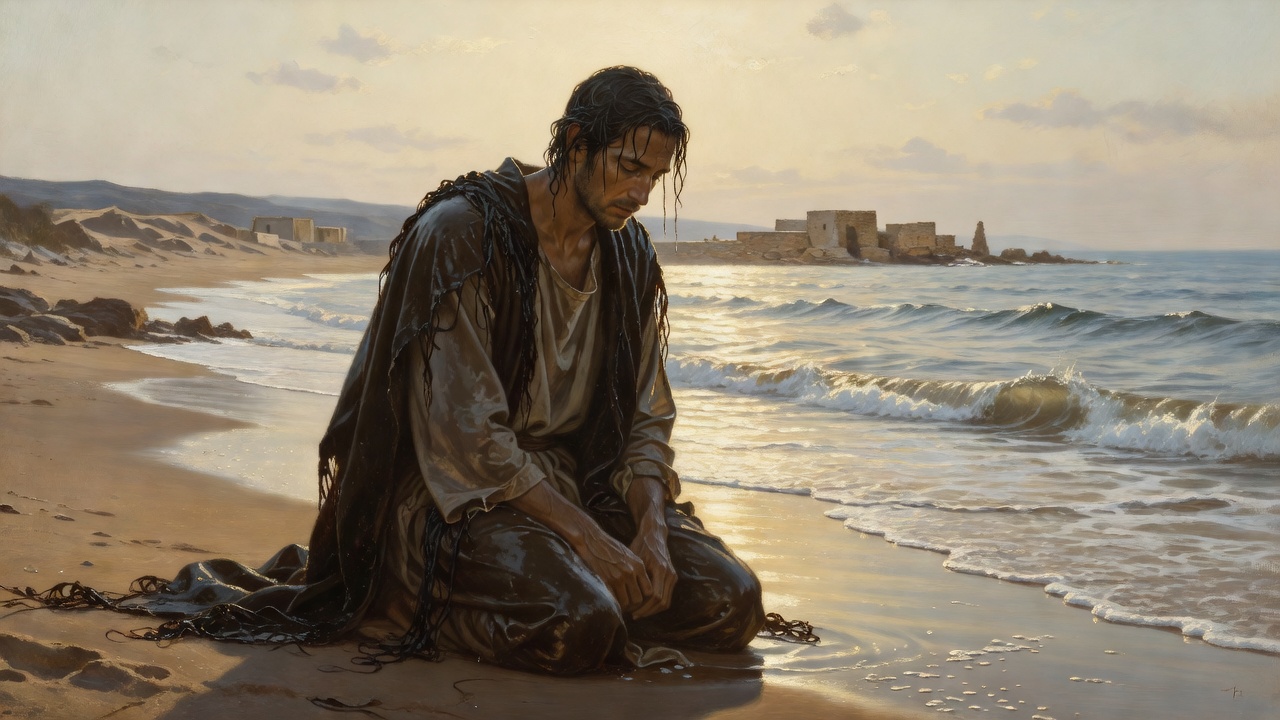
Başıma yosunlar sarıldı.
6Dağların dibinə qədər endim,
Arxamca əbədilik dünya bağlandı.
Lakin, ya Rəbb Allahım, Sən canımı dərin çuxurdan çıxartdın.
7Daxilimdə canım üzüləndə Rəbbə üz tutdum,
Mənim duam Sənə,
Sənin müqəddəs məbədinə çatdı.
8Puç olan bütlərə səcdə edənlər
Onlara verilən lütfdən imtina edərlər.
9Amma mən Sənə şükür nəğməsi ilə qurban gətirəcəyəm,
Əhdimi yerinə yetirəcəyəm.
Xilas Rəbdədir!»
10Rəbb balığa əmr etdi və balıq Yunusu ağzından quruya qaytardı.
¿Sabías que…?
La oración y liberación de Jonás
- La oración de Jonás utiliza imágenes poéticas para describir su experiencia cercana a la muerte, retratando las profundidades marinas como el 'vientre del Seol', donde descendió hasta los 'cimientos de los montes' con algas enredadas en su cabeza.Fuentes: el propio texto bíblico
- Incluso estando sumergido en las profundidades dentro del pez, Jonás dirige sus pensamientos hacia el santo templo de Dios, prometiendo cumplir sus votos y ofrecer sacrificios de alabanza.Fuentes: el propio texto bíblico
- Según los registros bíblicos, el profeta Jonás era hijo de Amitai, natural de Gat-hefer, y ejerció su ministerio durante el reinado de Jeroboam II en Israel.Fuentes: Jonah
Notas escritas con ayuda de IA a partir de fuentes abiertas (Theographic Bible Metadata, CC BY-SA 4.0; Easton’s Bible Dictionary, dominio público) y revisadas antes de publicarse.
Créditos y licencia de esta traducción
Azərbaycan dilində Müqəddəs Kitab
The Holy Bible in the Azerbaijani language, also known as the Azeri language, of Azerbaijan, Iran, Iraq, Syria, and Turkey
Copyright © 2008 Müqəddəs Kitab Sirkəti
Language: Azeri (Azerbaijani, South)
Translation by: Institute for Bible Translation
Contributor: Bible Society of Azerbaijan
This translation text is made available to you under the
terms of the Creative Commons License: Attribution-Noncommercial-No Derivative Works.
( http://creativecommons.org/licenses/by-nc-nd/3.0/ )
In addition, you have permission to port the text to different file formats, as long as you
do not change any of the text or punctuation of the Bible.
You may share, copy, distribute, transmit, and extract portions
or quotations from this work, provided that you include the above copyright
information:
You must give Attribution to the work.
You do not sell this work for a profit.
You do not make any derivative works that change any of the actual words or punctuation of the Scriptures.
Permissions beyond the scope of this license may be
available if you contact
us with your request.
This translation is made available to you under the terms of the
Creative Commons Attribution-Noncommercial-No Derivatives license 4.0.
You may share and redistribute this Bible translation or extracts from it in any format, provided that:
You include the above copyright and source information.
You do not sell this work for a profit.
You do not change any of the words or punctuation of the Scriptures.
Pictures included with Scriptures and other documents on this site are licensed just for use with those Scriptures and documents.
For other uses, please contact the respective copyright owners.
2018-11-09
Fuente: http://ebible.org/azb/ · eBible.org