Lucas 24
Manikáne O Ehwehne · Toca un versículo para ver sus referencias cruzadas.
1Ahrena ahrena wehekáh parabagúwara ahbiahipeq íó kiembogútaq mi inísónká kaweq kunkúni naneq mewera Sísa maisarórabeq pokuwe. 2Wahtotaq kutaq óna méhpeh paiqmáró ebáh móbeq kowara tagéra 3ónapipéq kibekue tagowana sene Wahnah Sísane anonka íre kowara tagowe. 4Tagéra sirupipeq iwíáh kikiruwara anotah tehró ambántánkákáq áníté ábóraragéra mitaq iriwe míóyara tagowe.
5Tagéra mi inínsónká anotah ahrééra marakóipeq káuqmunuríówara ábóraraguya anítégá sensabé, Pusa aní matorabeqme aneqsabé oga míéh ánínsábé kabaroo? 6We irigi puana mahtaq íre míéhre. We Kehrari marákórápéq míaraitaq teiátái ehwéh iwíáhue tagahro. 7Wega mitaq ména mahraréna, Sega íné wehukení úku aní ahbabáq keba móintehrara awankátaq táhpawe nubiq suehrana apahtáróráq iriwe oganúq intankéhe uraire uye.
8Uyara mi inínsónká wene ehweh siahreraq matawéra 9maisarórabeqte kouwekue airápété morá we kéró kereq mó kereqsabé moke koreríúwe. 10Mi inínsómé, apahq ínító síwíqmé Sóánawe, Mágára suwahpeqte íní wenáwíq Máhríawe, mó Máhría we Sémísine anowae. Sereq mó inínsónseqka mi ehwéh eqmaro ke teríúwara 11sega iwíáhéra, Mi inínsónká irare ehwéhmé peh múguwahgu ehwéhne éra íre aiq pútare arítówe.
12[Pítaga mi ehwéh irena pehbeheráh maisarórabeq pokue káuqmunue mitaq tagówana peh maisaró ambántámárí mitaq kowana tagéna kaurabeq kouwekue wene arupipeq iwíáh kikirue tagówe.]
Sísa kéróya ánítégá ahtapeq Sísa tagoya ehwéhne.
13Mi inínsónká maisarórabeq pokuro wehekáhmé mó weh anítégá Sarúsarama suwahpeq suera íre wahtotaq 11kírómíta Éméása suwahpeq koyehe éra 14Sísa pukú ehwehnsábé iwíáhéra iraruye. 15Mi anítégá ahtapeq nogera ehweh iraruyataq Sísaga sinehe kure moráráq nogúwe. 16Sega we tagéra sirupipeq Sísa wire íwíáh íre orahuye.
17Íre orahuyana wega sensabé, Aneq ehwéh mirareyo úwara sega mitaq kowéra sirupipeq umehúnsabe abiah máróye. 18Mó morá ání wenáwíq Kíópaga Sísansabé, Mah tanáhráq áhnte kegá Sarúsarama suwahpeq sure míahnah arebataq mirauro naneq íre ahtebahno kasenúwana 19Sísaga sensabé, Aneq mirauro naneqpo úwe.
Úwara sega wensabé, Sísa Néhsara suwahpeqte ání éhwehne éra we Manikáne ehweh irarurai aní ména págege sansánéna págegeue íwáhnorurai puaq Manikánseq ite Asiu kereqka págege aní míre atáráúne. 20Iteribo iteruwah wehwárínseq Manikáne ehweh mibeq mahbeq arítáh kéreqka subiq súáhro arito urowara awankátaq táhpawe subiq sutowe. 21Íre subiq sutotaq itega iwíáhéq, Wega ite Ísara ke kaweraitankéhe íwíáhuraune. Subiq sutotaqté ibora apahsoq kire. 22Iteruwahrah inínsónká miraonsabé áhtenéwone. Sega ahbiahipeq we maisatorabeq koragéra, 23Wene anonka mitaq íre kéhre ewe. Sega iteba kouweéwótaq mahraréra, Maisatotaq iteiyuwanka tagehtaq íópeqté áníté tagóne. Mi anítégá itensabé, We aiq oga míéhre teieye ewe. 24Minayabe mó iteruwahrah kegá koragéra mi inínsónká irarenserah tagéra pusa áníné anonka íre tagahwe uye.
25Mi anítégá mi ehwéh teawúyana Sísaga sensabé, Itewe múguwahgu iwíáhóye. Manikáne ehweh iraru kegá teié éhwéhnsábé íre apubúue aiq pútare aritoye. 26Manikáne ehweh iraru kegá mahraréra, Wehuke merirena kaweraritankeheéna Manikánka omaq ato aní ebeq anotah érue pukéna anehemé téhráhnarabeq kinkéhe uwe. Minayabe ite íre ahtebehyo? Íre ahtebehyo éna Manikáne púkuipéqté éhwéh síwáhnorúwe. 27We pukú ehwehnsábé Mósísiga sehgíóro ú ehwehnkákáq Manikáne ehweh iraru kegá sehiranu ehwéhnkákáq ebeq síwáhnoréna anehe moke mó pukúípéqté éhwéh síwáhnorue teriuwe.
28Mi anítégá pokoyeherauya ke suwahpeq wahtotaq kuyataq Sísaga mi aníté suena móbeq pokinaútaq 29sega we saiqnatera wensabé, Penkinainsabé itereq kaenéhe. Itereq kaenéhe uyana wega kowe éna nahtapeq kérirowe. 30Sega táhutahuroneheéra moráráq tútuue míówe. Sísaga páréti mewena Manikánsabe kaweróne atena páréti keqme náriuwe. 31Náriuwara sega, We Sísa wire íwíáhuyana Sísawe tabanagúwe. 32Tabanagúwara seye náhenéra, Itega ahtapeq súnaraq wega Manikáne ehweh teiena íwáhnoritaq itene irupipeq áhnte eyóyóéwéhre uye.
33Sega apubúue irigue Sarúsarama suwahpeq kouwekéra airápété morá we kéró kereq momiwíuríó kereq tagoyara 34sega mi anítéyábé, Itene Wahnah aiq pútaq iriwe oganúkire. Oganúkirana Sáímóniga aiq tagehre uwe. 35Aiq tagehre uwara mi anítégá ahtapeq kutaq irarú ehweh teríúye. Teríéra, Páréti keqme náriutaq itega, Sísa wire úye teríúye.
Sísaga ábóraragúwara we kéró kega we tago ehwéhne.
36We kéró kega mi ehwéhnsábé ehwehnutaq Sísaga seba ákáhpi seiriwe ména [sensabé, Pehwehribeq míáhro úwara] 37sega anotah ahrééra, We wahnsa wíre íwíáhuwana 38wega sensabé, Aneqsabé áhreoo? Irupipeqmé aneqsabé iwíáh kikiroo? 39Íné wíre ahtebagehboq niyahnkarankákáq nigáránkákáq tagahro. Wahnsawé íre anonkankakáq ayahnsankakaq áníne. 40[Íné wíre ahtebagehboq íné sosanoro éna wene ayahnkarankákáq aigáránkákáq sokigi ariuwe.] 41Sokigi ariuwara áhtenéra iwíáh íwíáhéra Sísa oga míonsabe íre aiq pútare atahráhuwana wega sensabé, Táhutahuq mahtaq kehro úwara 42sega tira páh áwúwana 43mewena sega tagotaq nówe.
Manikáne Awanka iteba tuinkéhe ú ehwehne.
44Sísaga we kéró keyabé, Mósísine ehwehnkakáq Manikáne ehweh iraru kegá sehiranu ehwéhnkákáq púkuipéqté ígónkónkákáq íné éhwehme aiq pútaraginawire. Menah iteba mía míaurautaq mina teiátáuge úwe. 45Teiátáuge éna Manikáne ehweh kawerue irageheéna ahtebé iwíáh aritena 46sensabé, Manikáne ehwehnka mahraréna,
Manikánka wehuke merirena kawerinieéna omaq ato anímé ebeq anotahtaq érue pukínana apahtáróráq iriwe oganúq atankéhe ire úwe.
47Sísaga mó mahraréna, Wene púkuga mó mahraréna,
Wenáwírue Manikánka kawerarítéh éhwéh ebeq Sarúsarama suwahpeq koreriera anehe mah kehiná kéhíná korerigéhe. Mi ehwéh irera sene ahbabáq súáh kéwé Manikánka kaweraritankéhe ire úwe.
48Sísaga mó mahraréna, Mi sehiránká aiq pútaragínaq tagagehe. 49Manikánka itensabé, Néniwa eqmaraníe uraire. Ínéga kieqmarahnana iteba tuinkéhe. Mahtaq iteruwahpeq méq áwénunoro. Wega iteba tuena págege aitankéhe úwe.
Manikánka Sísa íópeq tumero ehwehne.
50Sísaga we kéró ke meriqmena Sarúsarama suwahpeq suena wahtotaq Pétáni suwahpeq kiuwe. Mitaq kowéna wene ayahnkara pankeqme Manikánsabe, Mah ke kawerarito úwe. 51Kawerarito éna se suowana Manikánka we íópeq tumerowe. 52[Íópipeq móatowara tago kegá Sísansabé sirehunseraráq méra iwíáh íwíáh atera] sirupipeq anotahtaq eyoyóúwara Sarúsarama suwahpeq kouwekuwe. 53Kouwekéra Manikánsabe iwíáh íwíáh atáh náhtápéq kibekéra mitaq Manikánsabe iwíáh íwíáh ata atauwe.
¿Sabías que…?
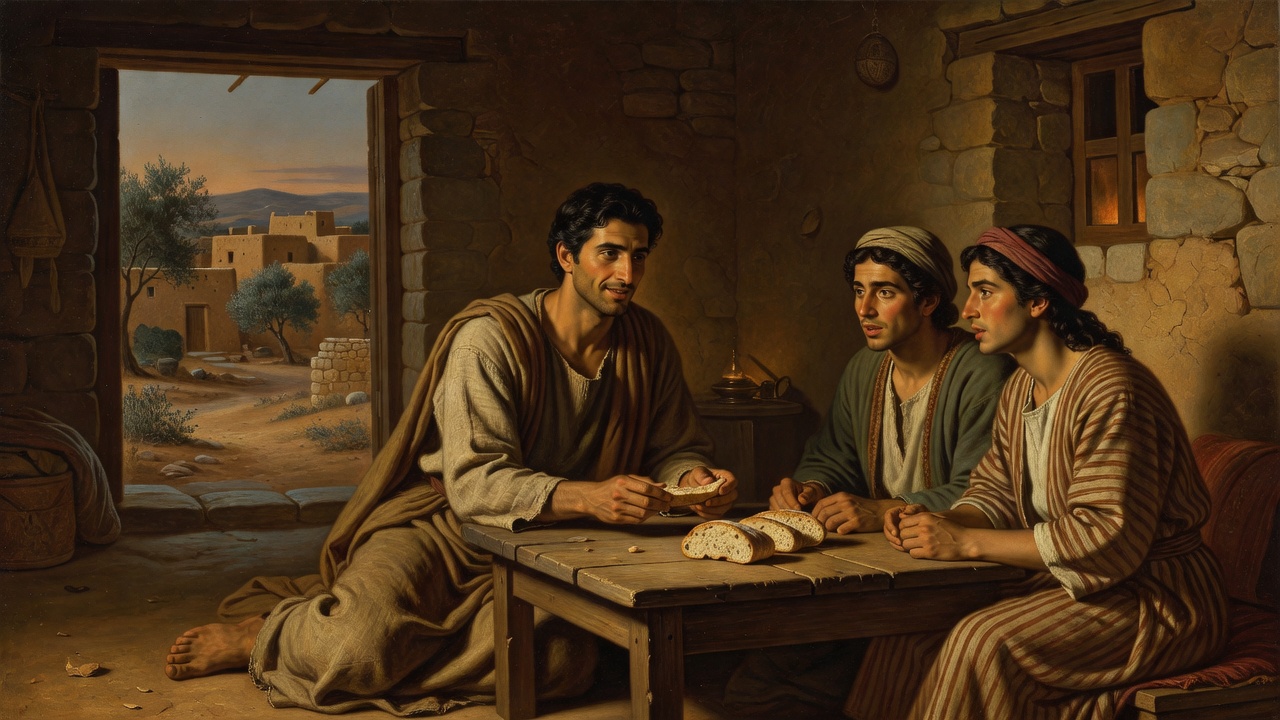
La mañana de la resurrección y el camino a Emaús
- Lucas describe Emaús como una aldea a unas siete millas de Jerusalén. El Easton's Bible Dictionary (1897) cita esa distancia como sesenta furlongs y registra dos identificaciones: el-Kubeibeh, a más de siete millas al noroeste de Jerusalén, cuyo nombre, 'pequeña cúpula', procede de los restos de una iglesia de los cruzados que aún se encuentran allí, y Khurbet Khamasa, 'las ruinas de Khamasa', a unas ocho millas al suroeste, donde también hay ruinas de los cruzados.Fuentes: Emmaus · el propio texto bíblico
- María Magdalena, Juana, María la madre de Santiago y otras mujeres que iban con ellas fueron quienes contaron a los apóstoles lo que había ocurrido en el sepulcro. María Magdalena toma su nombre de Magdala, su lugar de nacimiento, y el Easton's Bible Dictionary (1897) llama error identificarla con la mujer descrita como 'pecadora' en Lucas 7. Juana, la esposa de Chuza, administrador de Herodes Antipas, tetrarca de Galilea, era una de las mujeres que servían a Jesús, y el mismo diccionario dice que él se le apareció después de la resurrección.Fuentes: Mary Magdalene · Joanna · el propio texto bíblico
- Uno de los dos discípulos del camino se llama Cleofás, forma abreviada de Cleópatros. El Easton's Bible Dictionary (1897) dice que no se sabe nada definitivo de él y que no es seguro que fuera el Clopas de Juan 19:25 ni el Alfeo de Mateo 10:3, aunque pudo haberlo sido.Fuentes: Cleophas · el propio texto bíblico
Notas escritas con ayuda de IA a partir de fuentes abiertas (Theographic Bible Metadata, CC BY-SA 4.0; Easton’s Bible Dictionary, dominio público) y revisadas antes de publicarse.
Lugares de este capítulo
- Galilee · 32.760, 35.527 · versículo 6
- Jerusalem · 31.777, 35.234 · versículos 13, 18, 33, 47, 49, 52
- Nazareth · 32.702, 35.298 · versículo 19
Solo aparecen lugares identificados con alta confianza (90 % o más según las fuentes académicas reunidas por OpenBible). Mapa de la época: DARE (Digital Atlas of the Roman Empire), CC BY 4.0; mapa actual: © colaboradores de OpenStreetMap; lugares: OpenBible.info (CC BY 4.0).
Créditos y licencia de esta traducción
Manikáne O Ehwehne
God's New Talk: The New Testament in the Awa Language of Papua New Guinea
Nupela Testamen long tokples Awa long Niugini
copyright © 1974, 1997 Wycliffe Bible Translators, Inc.
℗ Faith Comes by Hearing
Language: Awa
Translation by: Wycliffe Bible Translators
This translation is made available to you under the terms of the
Creative Commons Attribution-Noncommercial-No Derivatives license 4.0.
You may share and redistribute this Bible translation or extracts from it in any format, provided that:
You include the above copyright and source information.
You do not sell this work for a profit.
You do not change any of the words or punctuation of the Scriptures.
Pictures included with Scriptures and other documents on this site are licensed just for use with those Scriptures and documents.
For other uses, please contact the respective copyright owners.
2013-12-11
Fuente: http://png.bible/awb/ · eBible.org