Juan 7
Manikáne O Ehwehne · Toca un versículo para ver sus referencias cruzadas.
Sísaga mó ke táhutahururabeq koragó ehwehne.
1Asiu kegá Sísa subíyehoéna wega Súría marákórápéq íre kuríá peh Kehrari marákórápéq mó ke suwahpeq mó ke suwahperue ah noguwe. 2Asiu kegá saqmaq saqmaq nahmarí pearera táhutahuru tanáhráq áhníbóránúwe. 3Wenábáqmarinká Sísansabé, Ómi are kéráh kégá arene arambehri taganehboq mahtaq sue Súría marákórápéq pokúno. 4Arega anotah aní míankehboq kopípéq arambehriinehboq ábóraq arambehriúno. Arega ótaq sansá mirainaraq mah kehiná kéhíná kosokigiúno uwe. 5Wenábáqmarinká Sísansabé íre aiq pútare ató púara mi ehwéh iraruwe.
6Sísaga sensabé, Amahnága íné anotah aní míó tánáhráq íre suríéhre. Ahriahriwe itene tanáhráre. 7Ahbabáq kehinánká itensabé suwahbehre. Sene ahbabáqsabe teriu púana ínénsabe suwahriehre. 8Iteite táhutahurorabeq pokurero. Íné anotah aní mé tanáhráq íre suríéh púana táhutahurorabeq amahnága íre pokinie 9éna Kehrari marákóráq peh mitaq míowe.
10Táhutahururabeq wenábáqmarinká kuwana Sísaga epéráhpérue mitaq suena Sarúsarama suwahpeq táhutahururabeq pokúwe. 11Sísansabé anebahréra Asiu kegá táhutahururabeq mó kebá mó kebánue kasenéra, Sísa eheq míehro éra kasenuwe. 12Míó kega Sísane sánsánsábé ehmuniq éhmúníréra mó kegá, We kaweq aní míre uwara mó kegá, Írakaumo. We péhe ání míre uwe. 13Se Asiu kené wahnahmarínsábé áhreu puara Sísa éhweh íre pahsúówe.
14Táhutahuru tanáhráq ákáhtaq parabagútaq Sísaga Manikánsabe iwíáh íwíáh atáh náhtápéqté wíráípéq kibekéna síwáhnorúwe. 15Síwáhnorúwara Asiu kegá áhtenéra mahraréra, Íre sigarue tagaríéh ání míre. Árahue ahtebia ání úkurairo uwe.
16Uwana Sísaga sensabé, Ínéga íwáhnoru ehwéhmé íre ínébataq néne iwíáhe. Mina íné eqmaq núwéh áníné íwíáh wíre. 17Ínéga íwáhnoru ehwéhmé Manikáne iwíáhbópoq peh ínébataq néne iwíáhbópoq teiúge íwíáho? Manikáne arambehriyabé arutaboiréna mirainauge íwíáhi anínká néne ehwehme íre peh ínénéne iwíáh peh Manikáne iwíáh wíre ue tagariankehe. 18Wewene ehweh síwáhnori ánínká wewensabé iwíáh íwíáhire. Eqmaq núwéh ánínsábé iwíáh íwíáh atónsábé íre péhenia peh aiq pútariahnsanuge.
19Manikánka sehgíóro ú ehweh Mósísiga naho teiu mino. Mi ehwéh ite íre íráhwe. Amahnága íné nubiq sueyabe ite aneqsabé iuwahbehro úwe. 20Úwara míó kega wensabé, Owainawanka arene arupipeq míéh púah wega inserahni iwíáhóne. Are subiq suaneheme inseréhga irareo uwe.
21Uwana Sísaga sensabé, Ahrena ahrena wehekáhtáq íné peh morá ótaq sansánunsabé ite iwíáh kikirowe. 22Mósísiga naho káriq anímáígáúné síú amurúrue sansa teiuwe. Íre Mósísiga peh iteinahbúréhga mi sansá áhwárarówe. Ite ahrena ahrena wehekáh mi sansámé mira aruqarurowe. 23Mósísiga sehgíóro ú ehweh anterúéhneho éq itega mi sansá ahrena ahrena wehekáhnkákáq mira aruqarurowe. Mira aruqarurome ínéga ahrena ahrena wehekáh wehukení kaweratáráunsabé árahinsabé abiahnsa aintaho. 24Apubúue tagéq íre kaweq iwíáhéq ehweh aintaho. Peh tábúsoqme iwíáhue tagéq irarero úwe.
Sísa inseboue kabaru ehwéhne.
25Táhmaro Sarúsarama suwahpeqte kégá kasenéra, Sega subiq suaneherao anímé mah anípo? 26Wega mahtaq ábóraq síwáhnorirara wahnah kegá peh túbáh agowe. Túbáh agonsabé mah anímé wehuke merirena kaweraritankeheéna Manikánka omaq ato aní míre íwíáhowapómo. 27Mi aní wenawahpeq aiq tagarione. Manikánka omaq ato anínká sínaraq wenawahpeq ómiga íre tagariagehe uwe.
28Uwana Manikánsabe iwíáh íwíáh atáh tápéqté mátábúrápéq Sísaga síwáhnorena anotahtaq mahraréna, Itega íné tagarione éq nánuwahpeq tagaríáhwe. Íné tutaume íre ínébataq néne iwíáhga tutauge. Íné eqmaq núwéh ání we aiq pútaq aní míéhraq itega we íre tagaríáhwe. 29We míéhrabeqte tutaugana wega íné eqmaq núwéh púana ínéga we aiq tagaríóge úwe.
30Uwara sega wene ehweh irera iwíáhéra, We táhtoranéhe uwe. Sísa pukú tanahráq íre surio púara sega peh áwé tagowe. 31Áhnte míó kega, Sísansabé aiq pútare atówe atera mahraréra, Sísaga áhnte otáq sánsá mirai puana Manikánka omaq ato anínká sínaraq wega miraína sansánká Sísaga miraurai otáq sánsá kiotaikinabo uwe.
Sísa táhtoraneheéra párísiwarí eqmaq súó ehwehne.
32Soruparíó kega Sísane arambehriyabé ehmuniq éhmúníruwara Péhrasi kegá írówe. Manikáne ehweh mibeq mahbeq arítáh kéreq Péhrasi kereqka Sísa táhtoraneheéra sene párísiwarí eqmaq súówe. 33Sísaga mahraréna, Iteba wahto tanahráq ména anehe íné eqmaq núwéh ánípá pokinie. 34Itega íné ninebahrirataqmé íre taganeheqmóe. Íné pokonarabeq ite íre kioráhowe úwe.
35Úwara Asiu kegá seye mahraréra, We eheq pokinabo? Ite anebahréq we íre tagahrahúnarabeq eheqpo? Mó nahnsó suwahpeqte Asiu kébá pokinabo? Káríki ehwéhno ke suwahpeq pokue síwáhnorinabo? 36Ite íné ninebahrirataqmé íre taganeheqmóe ire. Wega irarime íre iahtebóna ehwéhne. Íné pokonarabeq ite íre kioráhowe ire. Wega irarime íre iahtebóna ehwéhne. Mi ehwéhmé aneq ehwéhpómo uwe.
Oga mía mía aráhnónsábé éhwéhne.
37Mi tahutáhúré tanáhráq anehete wehekáh tánáhráq anotah tanáhráre. Mi wehekáh Sísaga iriwe ména anotahtaq mahraréna, Ite tahbobóínaraq ínéba sure sewe nahro. 38Ínénsabe aiq pútare aintáh kéné sirupipeq oga mía mía aráhnó tueruenawire. Manikáne ehwehnka irarinserah sirupipeq oga mía mía aráhnó tueruenawire úwe.
39Mah ehwéhnúmé Sísaga Manikáne Awansabé irarúwe. Sísaga Maniká míorabeq íre kirio púana Manikáne Awa íre eqmarowe. Sísaga iwíáhéna, Nániboba pokonaraq ínénsabe aiq pútare aintáh kébá Manikáne Awa kieqmaranie íwíáhúwe.
Sísansabé íre peh morá íwíáhunsabé éhwéhne.
40Míó kega wene ehweh irera táhmaroga mahraréra, Manikánka naho néne ehweh irarína aní eqmaraníe ú anímé we wire uwe. 41Mó kegá mahraréra, Manikánka ite meirena kaweraitankeheéna peh morá ání omaq atowe. We mi aní míre uwara mó táhmaroga mahraréra, Manikánka omaq ato aní íre Kehrari marákórápéqté ání míre. 42Manikáne ehwehnka mahraréna, Manikánka omaq ato anímé Tébíti kahnáh ání míre. We Tébítine marakórapeqté Pétáríéma suwahpeqte ání míre ire. (Buk Song 132.11; Maika 5.2)
Manikáne sehiranka aiq mahrari mino uwe.
43Sísansabé mó kegá mó iwíáhuwara mó kegá mó iwíáhuwe. 44Táhmaro kegá táhtoranéhe íwíáhéra íre táhtosa pehragowe.
Wahnah kereqka íre aiq pútare atáh éhwéhne.
45Eqmaq súó parísíwárínká Manikáne ehweh mibeq mahbeq arítáh kéreq Péhrasi kereqpa kouwekuwe. Kouwekuwara sega sensabé, Aneqsabé Sísa íre meqmeq seo uwe. 46Uwara párísiwarínká sensabé, Wega irari éhwéhnká moke mó kené ehweh kiotaikire uwe.
47Uwara Péhrasi kegá párísiwarínsábé, Itega moq wene péhe éhwéhnsábé aiq pútare ataho? 48Wahnah kereq ite Péhrasi kereqka wensabé íre aiq pútare atona wino. 49Manikáne sansá íre írátíáh kégá sebataq Sísansabé aiq pútare atáhwe. Mi ke iraipéq pokoneherao ke wóe uwe.
50Níkóríma, menah tanahráq Sísaba sú aninká we Péhrasi anínéna wenawahrah Péhrasi keyábé mahraréna, 51Manikánka sehgíóro ú ehwehnká anereiro? Wehukení pehipi ehweh ato iro? Írakaumo. Ebeqme wehukeníné ehweh ireq wene arambehri tagaríáhro. We ahbabárínaraq anehemé ehweh ato ire úwe.
52Úwara sega wensabé, Are moq Kehrari marákórápéqté ánípo? Manikáne ehweh púkuipéq kabarue tagáhno. Manikáne ehweh irare kegá Kehrari marákórápéqté íre séyéowe 53[éra sene nahtapeq abae aguwe.
¿Sabías que…?
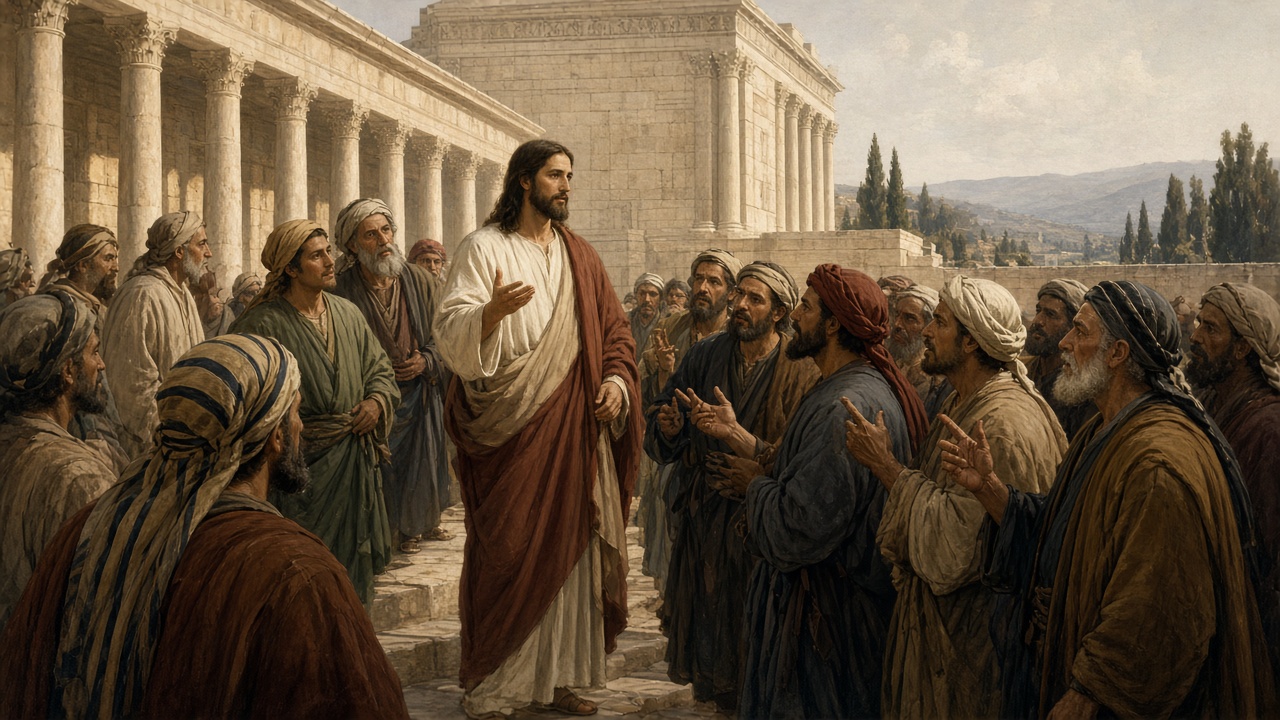
Jesús en la Fiesta de los Tabernáculos
- Al acercarse la Fiesta judía de los Tabernáculos, una fiesta de siete días, Jesús se quedó en Galilea y evitó Judea, donde buscaban matarlo. En su tiempo, Judea era la más meridional de las tres divisiones romanas de Palestina, distinta de Galilea y Samaria; después subió a la fiesta en secreto y enseñó en los atrios del templo.Fuentes: el propio texto bíblico · Feast of Tabernacles · Judea
- La multitud estaba dividida sobre el lugar de donde vendría el Cristo. Algunos decían que la Escritura lo ubica en el linaje de David y en Belén, la aldea donde vivió David, el octavo y más joven hijo de Isaí; otros objetaban que no podía venir de Galilea, una región llamada desde hacía tiempo Galilea de los gentiles, y los fariseos insistían en que ningún profeta sale de allí.Fuentes: el propio texto bíblico · David · Galilee
- Nicodemo, fariseo y miembro del Sanedrín, había ido antes a Jesús de noche. Cuando los guardias enviados a arrestar a Jesús volvieron sin él, Nicodemo protestó y preguntó si su ley condenaba a un hombre antes de oírlo y de averiguar qué había hecho.Fuentes: el propio texto bíblico · Nicodemus
Notas escritas con ayuda de IA a partir de fuentes abiertas (Theographic Bible Metadata, CC BY-SA 4.0; Easton’s Bible Dictionary, dominio público) y revisadas antes de publicarse.
Lugares de este capítulo
- Galilee · 32.760, 35.527 · versículos 1, 3, 9, 41, 52
- Judea · Hoy: Judea 1 · 31.777, 35.234 · versículos 1, 3
- Jerusalem · 31.777, 35.234 · versículo 25
- Bethlehem · 31.704, 35.208 · versículo 42
Solo aparecen lugares identificados con alta confianza (90 % o más según las fuentes académicas reunidas por OpenBible). Mapa de la época: DARE (Digital Atlas of the Roman Empire), CC BY 4.0; mapa actual: © colaboradores de OpenStreetMap; lugares: OpenBible.info (CC BY 4.0).
Créditos y licencia de esta traducción
Manikáne O Ehwehne
God's New Talk: The New Testament in the Awa Language of Papua New Guinea
Nupela Testamen long tokples Awa long Niugini
copyright © 1974, 1997 Wycliffe Bible Translators, Inc.
℗ Faith Comes by Hearing
Language: Awa
Translation by: Wycliffe Bible Translators
This translation is made available to you under the terms of the
Creative Commons Attribution-Noncommercial-No Derivatives license 4.0.
You may share and redistribute this Bible translation or extracts from it in any format, provided that:
You include the above copyright and source information.
You do not sell this work for a profit.
You do not change any of the words or punctuation of the Scriptures.
Pictures included with Scriptures and other documents on this site are licensed just for use with those Scriptures and documents.
For other uses, please contact the respective copyright owners.
2013-12-11
Fuente: http://png.bible/awb/ · eBible.org