Hechos 3
Manikáne O Ehwehne · Toca un versículo para ver sus referencias cruzadas.
Soriqnah ani kawerato ehwehne.
1Tunsorerutaq Asiu kegá púreq aruqarurotaq Pítareq Sónireq Manikánsabe iwíáh íwíáh atáh náhtápéq seyeherauye. 2Mi nah méhpeh áwíq Kaweq Mehpéhne. Mitaq soriqnah ani tútuue míowe. Wenanoga maqmarotaq soriqnah ani maqmarowe. Mó wehekáh mó wehekáhnue wene iyahnabo anímárínká meqmera mi mehpéh móata móatauwe. Nahupeq kíra keyábé ineh inehinkeheéra meqmera móátówe. 3Wega Pítareq Sónireq nahupeq kibekoyehera uyataq tagéna, Náníétao úwe.
4Náníétao úwana Pítaga we ebitáwéna wensabé, Ite tagáhno úwe. 5Úwana wega se tagéna iwíáhéna, Aneqpopoq nánigéhe íwíáhúwe. 6Iwíáhúwana Pítaga wensabé, Íné íre móneakáq ání múge. Mirainieu naneq teawiníe. Néhsara suwahpeqte ání Sísa Karáhé áwírue teawúge. Iriwe nogo atóge úwe. 7Miraréna wene púpeqte áyáhnkárátáq táhtoqme iriatowe. Iriatowana wene aiaurankakaq aigáránkákáq apubúue págege agúwe.
8Págege agúwana mi anínká suansúá keirigue nogena nahupeq kierirowe. Kierirena wega nogena ahkuagu ahkuaguéna Manikánsabe iwíáh íwíáh atowe. 9Manikánsabe iwíáh íwíáh atowara ómi nahupeq míó kega we tagéra, 10we Kaweq Mehpéhtáq tútuue ineh inehéwéh ání míre uwe. Wene aigárá kaweragúnsabe, Éhneh. Aiq kaweragire éra áhtenuwe.
Pítaga mitaq míó ke teriu ehwehne.
11Kaweragú aninká Pítareq Sónireq táhtorowara ómi tago kegá áhtenéra pehbeheráh seba suwe. Anotah wahnáh wenáwíq Sórómóni Asiu kené wahnah míotaq pearó owewéhpéhtápéq suwe. 12Suwana Pítaga tagéna sensabé, Ísara keo, we kaweraginsabé aneqsabé áhtenoo? Itewe aneqsabé ebitiaho? Ite págege aníté méta kaweratehye íwíáho? Manikánka itensabé, Kaweq aníté wóye aitéhnsábé kaweratehye íwíáho? Írakaumo. Íre itegae.
13Manikámé we Ébáráhmareh Áhísáhkireh Sékópareh itene igaqnaréhne Maniká ména wewega mah aní kaweratéhre. Áhnte kegá wene arambehri awahbeh ani Sísawe, Anotah aní míéhre atageheéna kaweratéhre. Sísa marakóipeq míaraitaq sega we subigeheéq itega táhtoqme naruo kebá meqmeq móátárówe. Wahnah aní wenáwíq Páhírátiga, Sísa íre ahbabáq ani púana pugeq auwaníe íwíáhurairaq itega ahqáho atárówe. 14Manikánsabe arutaboiri anímé kaweqtaq mía míaurai anímé itega ahqáho atárówe. Peh mó ke subiq sutai aní pugeqio urowe. 15Oganúq itahráhi aní subiq sutowe. Itega Sísa subiq sutowana Manikánka iriatáráire. Minayabe Sónireq ínéreqka itene iuranka tagéta teiuye.
16Sísansabé aiq pútare ateta wenáwírue áhrabúya puana wega mi aní kaweratéhre. We awaho ani míéhraq tagahwe. Sísansabé aiq pútare atoyanka mi aní kaweratéhraq tagahwe úwe.
17Pítaga mó mahraréna, Nánuwahraho, itereq itene wahnahmarínseqka Sísa subiq sutotaq we Manikáne ahninkáwá míéhnsábé itega íre ahtebarowe. Íre ahtebéq pehipi subiq sutowe. Minayabe aiq tagaríóge. 18Manikánka wene ehweh iraru ke iwíáh aritowara ómiga mahraréra, Manikánka omaq ato anínká pukina ínaraq anotah érinawire uwe. (Aisaia 50.6, 53.5)
19Minayabe Manikánka itene ahbabáq kaqiuwankéhboq itene ahbabáq sansa sueq wensabé áhraboro. 20Mirairataq Manikánka itene irupipeq eyoyó aitankéhe. Sísa Karáhé itene Wahnah míankeheéna Manikánka omaq atowe. 21Amahnága Sísa íópeq mía míaire. Manikánka wene ehweh iraru ke iwíáh aritowara naho mahraréra, Mókake Manikánka moke kawerinkehe uwe. Amahnága Sísa íópeq ména mi tanáhráqsábé áwénunire.
22Mósísiga itene igaqnansabe naho mahraréna,
Maniká itene Wahnahnka wene ehweh irarinkeheéna itereq míonarabeqte ání eqmarankéhe. Ínéga mirauraunserah eqmarahna anínká mirainkehe. We sínaraq irarína ehwéh moke kawerue íráhro. 23Wega irarína ehwéh íre íréhra kewé pukigehe. Manikáne animárí míéhrarabeqte kaqsuahnaraq pukigehe úwe. (Lo 18.15-19)
24Manikáne ehweh irarú ani Sáhmúériga Sísa tutai tanáhráqsábé irarúwe. Moke we anehe su anímárí, Manikáne ehweh iraru anímárínseqka moq amahnága tánáhráq, Sísa tutai tanáhráqsábé iraruwe. 25Manikáne ehweh iraru kewé itene igaqnaréh wóe. Íre peh morá itene igaqnaréhyabe iraruwe. Moke itensabéákáq iraruwe.
Manikánka itene igaqna Ébáráhmansabé naho teawena, Arenahninká mah marákó márákóípéq mó kahnáh mó kahnáhnue kaweraritankéhe teawuwe éna 26Manikánka wenahni wene arambehri awahbeh aní iriatena ebeq ite Asiu keba eqmataire. Itene ahbabáq kaqiuwankeheéna wenahni eqmataire úwe.
¿Sabías que…?
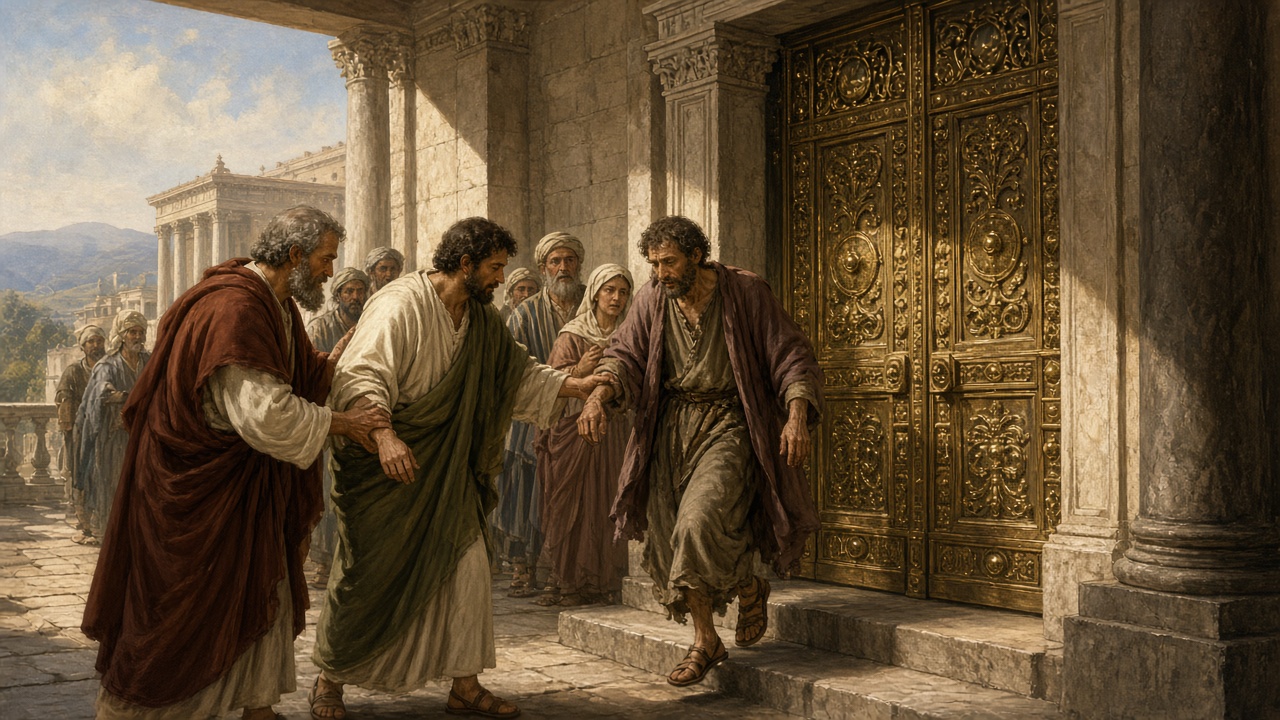
Curación y predicación en el templo
- La puerta del templo llamada Hermosa, donde cada día ponían a mendigar a un hombre cojo de nacimiento, se nombra en este capítulo. Se supone que era la puerta que iba del atrio de los gentiles al atrio de las mujeres; era maciza y estaba cubierta con placas de latón corintio.Fuentes: Beautiful Gate · el propio texto bíblico
- Después de la curación, la multitud asombrada corrió hacia Pedro y Juan en el paseo llamado Pórtico de Salomón. Era una columnata, o claustro, probablemente en el lado oriental del templo; no se menciona en relación con el primer templo, pero Josefo menciona un pórtico de ese nombre en el templo de Herodes.Fuentes: Solomon's Portico · el propio texto bíblico
- En el discurso allí, Pedro dijo que el pueblo había entregado a Jesús y lo había rechazado ante Pilato, aunque Pilato había decidido soltarlo. Una entrada de diccionario identifica a Poncio Pilato como el sexto procurador romano de Judea, del 26 al 36 d.C., con sede en Cesarea, aunque subía con frecuencia a Jerusalén; su nombre cobra especial relieve en relación con el juicio de Jesús.Fuentes: Pontius Pilate · el propio texto bíblico
Notas escritas con ayuda de IA a partir de fuentes abiertas (Theographic Bible Metadata, CC BY-SA 4.0; Easton’s Bible Dictionary, dominio público) y revisadas antes de publicarse.
Lugares de este capítulo
- Beautiful Gate · Hoy: in Jerusalem · 31.777, 35.234 · versículos 2, 10
- Nazareth · 32.702, 35.298 · versículo 6
- Solomon’s Portico · Hoy: in Jerusalem · 31.777, 35.234 · versículo 11
Solo aparecen lugares identificados con alta confianza (90 % o más según las fuentes académicas reunidas por OpenBible). Mapa de la época: DARE (Digital Atlas of the Roman Empire), CC BY 4.0; mapa actual: © colaboradores de OpenStreetMap; lugares: OpenBible.info (CC BY 4.0).
Créditos y licencia de esta traducción
Manikáne O Ehwehne
God's New Talk: The New Testament in the Awa Language of Papua New Guinea
Nupela Testamen long tokples Awa long Niugini
copyright © 1974, 1997 Wycliffe Bible Translators, Inc.
℗ Faith Comes by Hearing
Language: Awa
Translation by: Wycliffe Bible Translators
This translation is made available to you under the terms of the
Creative Commons Attribution-Noncommercial-No Derivatives license 4.0.
You may share and redistribute this Bible translation or extracts from it in any format, provided that:
You include the above copyright and source information.
You do not sell this work for a profit.
You do not change any of the words or punctuation of the Scriptures.
Pictures included with Scriptures and other documents on this site are licensed just for use with those Scriptures and documents.
For other uses, please contact the respective copyright owners.
2013-12-11
Fuente: http://png.bible/awb/ · eBible.org