Hechos 24
Manikáne O Ehwehne · Toca un versículo para ver sus referencias cruzadas.
Asiu kegá Pora ehweh ató ehwehne.
1Manikáne ehweh mibeq mahbeq arítáh kéné wahnah wenáwíq Ánáníásie. Moberíáh wéhékáh parabagútaq wereq táhmaro Asiu kené aboawah wehreqka peh morá págegeue ehweh aritahráhi aní wenáwíq Tétúra meqmera túwe. Sega Aroma kené anotah kamáhní ání Péríki Pora éhweh teawanehe úwe.
2Péríkiga, Pora meqmeq sero úwara meqmera móátówe. Móátówana Tétúraga mahraréna, Péríkio, are anotah kawéq wáhnáh ání móne. Arega wahnahnónayabé ite Asiu ke pehwehrue mía míaorahúne. Arega kawerue iwíáhónawe séhréh aitaníe é itene marakó kaweraitahne. 3Minayabe itega iwíáh íwíáh ateq kaweróne atone úwe.
4Tétúraga mó mahraréna, Áhnte ehwéh íre irarinie. Pehgáriq ehwéh teawiníboq iro. 5Ite iwíáhúnawe mah anímé ahbabáq aruqaruri aníne. Wega mah marákó márákóípéq mó ke suwahpeq mó ke suwahperue Asiu keyábé pagu pagunurairara áhnte kegá tobehéra ebehowe. Wega itene sánsá suena Néhsara suwahpeqte áníné sánsá meyáh ké wahnahnire. 6Wahnahnéna wega Manikánsabe iwíáh íwíáh atáh náhtápéq íre kawerina uraitaq itega táhtotiaraune. Itene sánsá anterutainsabé ehweh ateq parabaruanehe íwíáhuraune.
7Iwíáhuraunaraq itega Pora ehweh atanéhe uraunaraq sóntía kené wahnah wenáwíq Árísíásarehga tuera ite págegeue iubera Pora meqmera móbeq móátárówe. Árísíásaga itensabé, Pora ehweh atagéhboq anotah aní míéhrabeq pokue mitaq ehweh atáhro uraire. 8Moke ehweh atéhra ehwéhnsábé wewega teawinkéhboq kaseninanao úwe. 9Úwara moke wereq su Asíú kégá wega irarú ehwéhnsábé kowe atera mi ehwéh aiq pútaq ehwéhne atówe.
Poraga Péríkinsabé we éhweh teawu ehwehne.
10Poraga ehwehninkeheéna anotah kamáhní ánínká ayahnkaratáté saiqnówe. Saiqnówana Poraga wensabé, Itene marakórapeq arega áhnte opéq wahnahnurone. Mina tagaríónsábé pahsuqme teawiníe. 11Ínéga Sarúsarama suwahpeq Manikánsabe iwíáh íwíáh atanieéna kowíaraugana peh airápété téhtaré wéhékáh parabaguraire. Mó kegá mi ehwéh aiq pútaq ehwéhne teawigéhboq kaseninanao. 12Mi ke suwahpeq íné íre ehwehéna mó ke íre pagu pagunurauge. Manikánsabe iwíáh íwíáh atáh náhúpéqkákáq Asiu kené momiwí nahtápéqkákáq máhpeqkakáq peh túbáh agurauge. 13Sega ehweh aintáhnsábé íre sokigi aintahráhowe.
14Pahsuqme teawiníboq írátíahno. Sega Sísane sánsámé íre suwahbeh puara áwáhnáh sánsáne ewe. Mi sansámé ínéga sehgíúge. Miraunsabé itereq itene igaqnaréhreqne Manikánsabe iwíáh íwíáh atóge. Mósísine ehwehnkakáq Manikáne ehweh iraru kené ehwehnkakáqsábé aiq pútare arítóge. 15Mókake Manikánka moke pusa kéwé kaweq kereq ahbabáq kereq iriritankéhe. Ehweh aintáh kéreq ínéreqka minayabe iwíáhue áwénunúne. 16Íné kaweqtaq méyabe nuwahbehre. Manikánseq ómi wehukéreqsabé íné íre ahbabárarítónsábé nirupipeq eyoyóire úwe.
17Poraga mó mahraréna, Táhmaro opéq nahnso kené marakórapeq ména nánuwahrahba seuwekurauge. Tabonah Asiu ke móne nárinieéna seuwekéna Manikánsabe iwíáh íwíáhue nawinieéna seuwekurauge. 18Itega sosueq mirauraunaraq sega Manikánsabe iwíáh íwíáh atáh náhtápéq ite tagarowe. Íre áhnte ke ínéba míarowana pehwehribeq míaraugara 19Esia marákórápéqté Asiu kegá tagarowe. Tagarowana ínéga ahbabárurautaq tahirí sega aneqsabé areba íre séra ehweh aintáh iripo?
20Ínéga kaunsíri ke ehwéh teríátáugara areba suro kegá írátíarowe. Ahbabárurautaq tahirí sega teawé irino. 21Se momiwíurorabeq peh morá éhwéh iraruraunsabé sega, Íné ahbabáruraire íwíáhurowamo. Mi tanáhráq ínéga anotah ehwéhnue mahraréna, Manikánka pusa ké iriritankéhe. Ínéga mira íwíáhunsabé ibora itega ehweh aintáhwe urauge úwe.
22Úwana Péríkiga irena Sísansabé aiq pútare atáh kéné sánsá ahtebonsabé, Pehitare aritowe. Pehitare aritena sensabé, Anotah sontíá kéné wahnah aní Árísíásaga mahtaq tuinaraq itene koti ehwéhnsábé iwíáhue teiníe úwe. 23Teiníe éna wene kíápéténinsabé, Pora kawerue wahnahnato. Pehwehrue wahnahnúno. Wene iyahnabo anímárínká séhréh ataneheéra ménsámehnsánkakaq túírataq íre ahqáho arito úwe.
Pora téhtaré ópéq karábúsiipéq mío ehwéhne.
24Táhmaro mó wehekáh parabagúwana Péríkiga wene ahre wenáwíq Tárúsíra meqmena súwe. Wene ahre Asiu iní míowe. Wega, Pora meqme súno atowana móatowana Poraga Sísansabé aiq pútare ate ehwéh teriuwe. 25Poraga kaweqtaq méyabewé tabasíwe méyabewé Manikánka mókake ómi kehinánsábé ehweh aritahnayabéwé irarúwe. Irarútaq Péríkiga áhre agéna mahraréna, Pehitare. Amahnága pokúno. Mókake ahwimi íre kahnaraq mó áhrabinie úwe.
26Péríkiga iwíáhéna, Pugeq auwahnana Poraga móne náninabomo íwíáhúwe. Mira íwíáhúnsabé wega mó wehekáh mó wehekáhnue Pora meqme súno atowana Pora weba súwe. Wereq Porareqka ehwehnaruqaruruye.
27Asiu kegá wensabé kaweróne atageheéna Péríkiga Pora íre pugeq auwowana peh téhtaré ópéq karábúsiipéq míowe. Mi tanáhráq parabagúwana mó anínká Péríkine wahnah árámbéhrí meyowe. Mi aní wenáwíqtare Pósíúsa Pésátae.
¿Sabías que…?
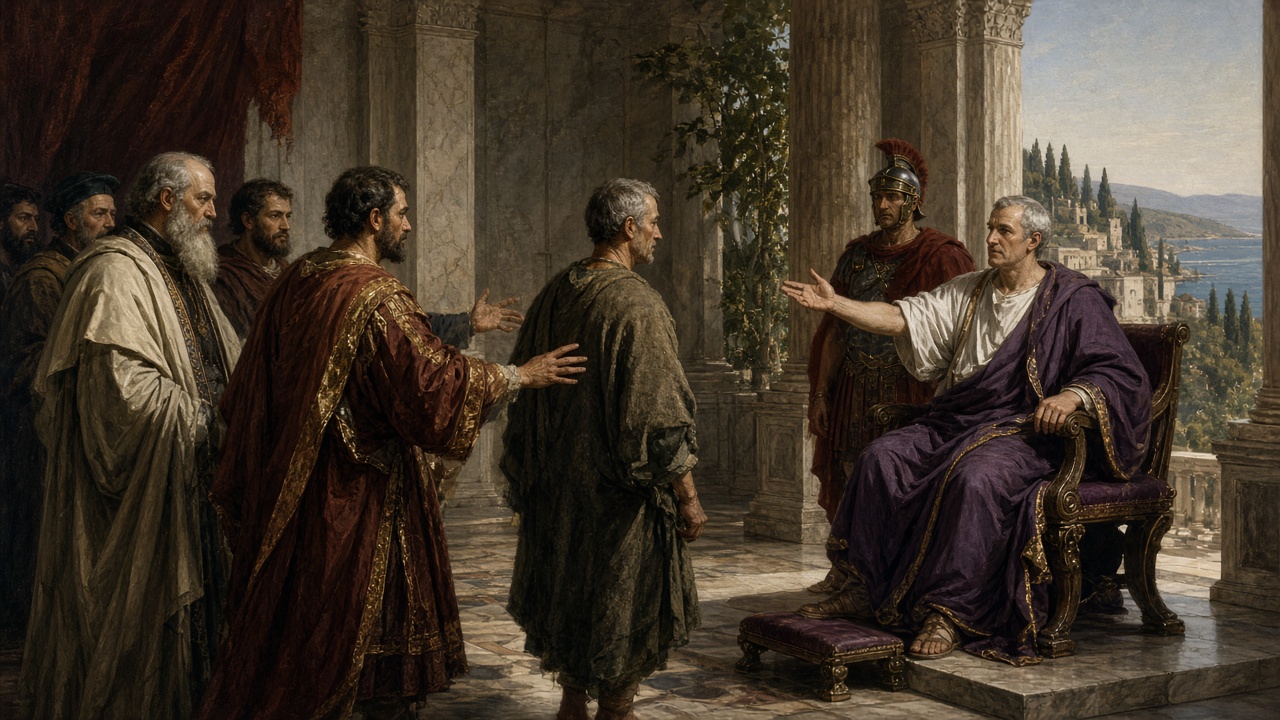
Pablo ante Félix
- El sumo sacerdote Ananías bajó con algunos ancianos y un abogado llamado Tértulo, a quien el Diccionario Bíblico de Easton describe como un abogado romano empleado por los judíos para exponer su causa contra Pablo ante Félix. Tértulo elogió al gobernador y luego dijo que Pablo era una peste que provocaba disensión entre los judíos por todo el mundo, cabecilla de la secta de los nazarenos y un hombre que había intentado profanar el templo. El diccionario relaciona ese elogio inicial con la limpieza que Félix hizo del país, al expulsar a bandidos e impostores.Fuentes: el propio texto bíblico · Tertullus · Felix
- Félix, que estaba bien informado acerca del Camino, aplazó la audiencia y mantuvo a Pablo bajo guarda, aunque le permitió cierta libertad y dejó que sus amigos atendieran sus necesidades. El relato dice que esperaba que Pablo le ofreciera un soborno y por eso lo mandaba llamar con frecuencia; el Diccionario Bíblico de Easton también afirma que al parecer esperaba un soborno y, por ello, tuvo varias entrevistas con él. Después de dos años lo sucedió Porcio Festo —el Diccionario Bíblico de Easton (1897) fecha ese nombramiento en el año 60 d. C.— y, queriendo hacer un favor a los judíos, Félix dejó a Pablo en prisión.Fuentes: el propio texto bíblico · Felix · Portius Festus
- Unos días después, Félix regresó con su esposa Drusila, que era judía, y escuchó a Pablo hablar de la fe en Cristo Jesús y de la justicia, el dominio propio y el juicio venidero; Félix se asustó y lo despidió. El Diccionario Bíblico de Easton (1897) identifica a Drusila como la tercera y la más joven hija de Herodes Agripa I y dice que Félix la indujo a dejar a su esposo, Azizus, rey de Emesa. La misma entrada dice que ella y su hijo perecieron en la erupción del monte Vesubio en el año 79 d. C.Fuentes: el propio texto bíblico · Drusilla
Notas escritas con ayuda de IA a partir de fuentes abiertas (Theographic Bible Metadata, CC BY-SA 4.0; Easton’s Bible Dictionary, dominio público) y revisadas antes de publicarse.
Lugares de este capítulo
- Caesarea · Hoy: Caesarea Maritima · 32.500, 34.892 · versículo 1
- Jerusalem · 31.777, 35.234 · versículos 11, 17
- Asia · 38.400, 28.300 · versículo 18
Solo aparecen lugares identificados con alta confianza (90 % o más según las fuentes académicas reunidas por OpenBible). Mapa de la época: DARE (Digital Atlas of the Roman Empire), CC BY 4.0; mapa actual: © colaboradores de OpenStreetMap; lugares: OpenBible.info (CC BY 4.0).
Créditos y licencia de esta traducción
Manikáne O Ehwehne
God's New Talk: The New Testament in the Awa Language of Papua New Guinea
Nupela Testamen long tokples Awa long Niugini
copyright © 1974, 1997 Wycliffe Bible Translators, Inc.
℗ Faith Comes by Hearing
Language: Awa
Translation by: Wycliffe Bible Translators
This translation is made available to you under the terms of the
Creative Commons Attribution-Noncommercial-No Derivatives license 4.0.
You may share and redistribute this Bible translation or extracts from it in any format, provided that:
You include the above copyright and source information.
You do not sell this work for a profit.
You do not change any of the words or punctuation of the Scriptures.
Pictures included with Scriptures and other documents on this site are licensed just for use with those Scriptures and documents.
For other uses, please contact the respective copyright owners.
2013-12-11
Fuente: http://png.bible/awb/ · eBible.org