Mateo 8
Hɨm Yaaim Me God · Toca un versículo para ver sus referencias cruzadas.
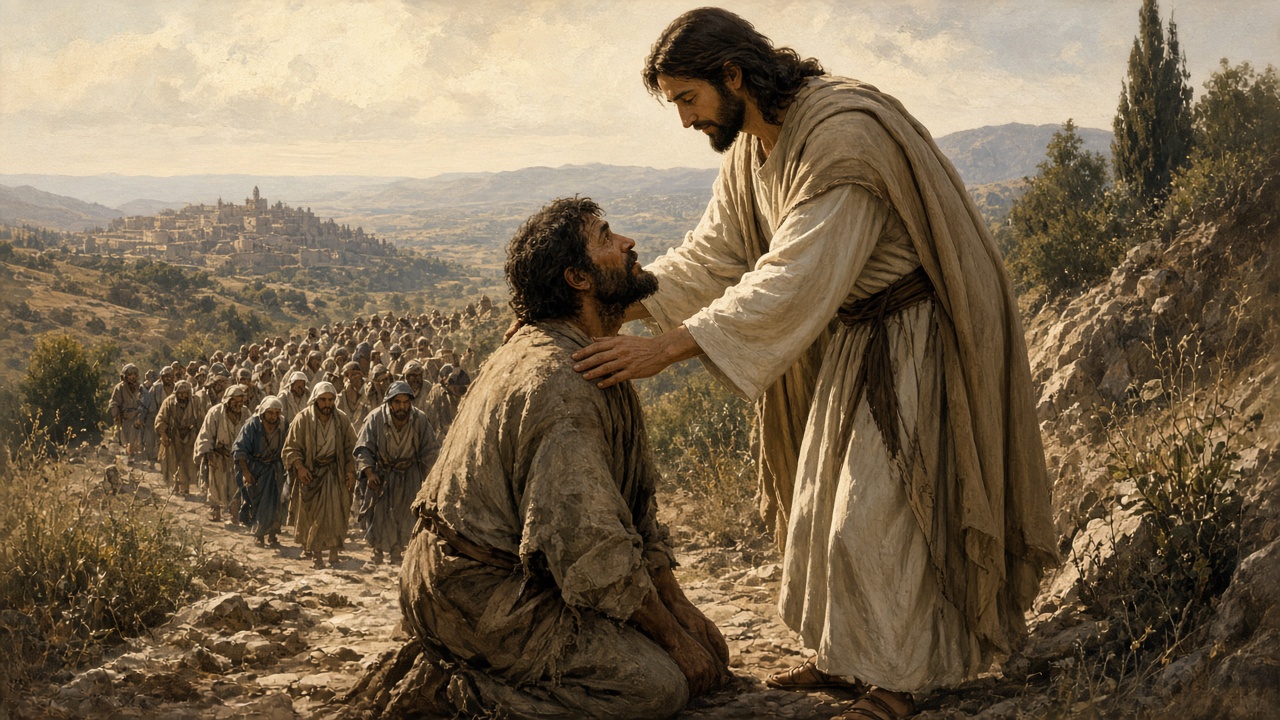
Jisas kɨkaap mɨtɨk enuk lepro mau yɨnk kɨrak hɨrak kɨre yaaik
1Jisas kɨnaaiwɨr mɨniu (o neiyɨp) kekiuwe kan kesiyen, te mɨt yapɨrwe nisesik. 2Hɨrak kekiuwe ken kesiyen, mɨtɨk kerek enuk lepro mau yɨnk kɨrak ek kan kɨrek kewen ninɨp kau menep hɨt mɨrak, hɨrak han kitet hɨrak iuwe, hɨrak ketpɨwek kar ik: “Kai Iuwe, ti han kit ti ekepa hi are yaaik.” 3Hɨrak katɨp epei au, Jisas kesiuwe his metenenik hɨrak katɨp, “Hi han kai ekepit ti ere yaaik.” Hɨrak katɨp epei au, wasenum mɨtɨk enuk lepro mewik hɨrak kɨre yaaik. 4Hɨrak kɨre yaaik, Jisas ketpɨwek, “Ti ap eno etɨp mɨt han menmen hi herekyutem au emɨt! Ti eno wɨnak ke God eteikɨn mɨt pris yɨnk kit ewepwar menmen mar ke hɨm me Moses mau tɨwei metput ti hɨrakem. Ti hɨrɨak menmen im te hɨr nanɨrtei God kekepit ti hɨre yaaik.”
Jisas kɨkaap wok mɨtɨk ke mɨtɨk iuwe ke ami
5Maain Jisas ken kiun wit Kapaneam, mɨtɨk iuwe ke ami ke wit Rom kewenyipɨrek kitɨwekhi hɨm iuwe kar ik: 6“Kai Iuwe, mɨtɨk kɨrɨak menmen mai hɨrak kɨnap kɨwaai wɨnak eik. His hɨt mɨrak epei au maa meit, yɨnk kɨrak kekek wɨsenum.” 7Jisas kewenhi ketpɨwek, “Hi tewen anen akepik te hɨrak kakre yaaik.”
8Te mɨtɨk iuwe ke ami ketpɨwek, “Mɨtɨk Iuwe, hi ap yaaik te ti enen enɨk wɨnak kai. Ti atɨp hɨm weinɨk kerekek te menmen enum mamnopɨn mamkeipɨn mɨtɨk kerek kɨrɨak menmen mai hɨrak ekre yaaik. 9Hi hises hɨm me mɨtɨk hak hɨrak kinɨna hɨrak iuwe naanmɨprau. Te hi hɨrekes naanmɨpre mɨt nai hi hinɨni. Te hi hatɨp mɨtɨk keiyak kiutɨp: ‘Ti eno,’ hɨrak kakno. Hi hatɨp keiyak: ‘Ti enen,’ hɨrak kaknen. Te hi atɨp mɨtɨk kerek kɨrɨak menmen mai em: ‘Ti erɨak menmen eim,’ te hɨrak kɨrɨakem. Hi hertei ti atɨp hɨm mit ehɨrp in, hɨrak kakre yaaik.” 10Jisas kemtau hɨm kerek mɨtɨk ik ek ketpim, hɨrak han kekrit kekrit keriuwerem. Te hɨrak katɨp mɨt miyapɨr kerek nisesik, “Hi ap nɨpaa hɨr mɨtɨk kei ke Isrel katɨp hɨm mar im kises God werek werek kar hɨrak kisesik au. Hɨrak kiutɨp kerekek.”
11Jisas wen katɨp: “Hi hetpi werek. Mɨt miyapɨr yapɨrwe nanɨnen nanrer wit wit nanises hɨm mai werek te hɨr nanu yeno nanɨm menmen nantike Ebraham, Aisak, tetike Jekop nanu nanɨt wit kerek God kewiyen. 12Te mɨt miyapɨr kerek nɨpaa miyerer nɨr ninen hɨr ne Isrel hɨr ap nanisɨsa au, te maain God kakɨpɨri nanɨno wit enuk toto te hɨr nankɨt nanine han enuk nanɨneknen yehes mɨr nanu en.”
13Jisas ketpor epei au, hɨrak katɨp mɨtɨk iuwe ke ami ke Rom kerek kinɨn naanmɨpre mɨt han en, “Ti eno. Menmen mamnen mamɨr ke ti han kitet hɨram mamnen.” Hɨrak katɨp epei au, waswas wok mɨtɨk kɨrak hɨrak kɨre yaaik.
Jisas kɨkaap Pita mɨte pɨrak miye pɨre
14Maain Jisas kan wɨnak ke Pita eik, hɨrak kɨr Pita maam pɨrak kerek wine mɨte pɨrak hɨre wɨwaai yeno wɨnap yɨnk sisi. 15Jisas ken ketenen his mɨre, te hɨre wɨnap yɨnk sisi epei au, hɨre wɨre yaaip. Te hɨre wekrit wɨrɨak menmen me Jisas kakɨm.
Jisas kɨkaap mɨt miyapɨr yapɨrwe
16Maain hɨnkewɨ, hɨr mɨt han neithis mɨt miyapɨr yapɨrwe kerek herwe enum mau mekre han kɨr, hɨr neriyei nan nɨr Jisas. Hɨrak kepɨr herwe enum im kriuwe hɨm hɨrak ketpim, hɨrak kɨkaap mɨt miyapɨr kerek nɨnap te hɨr nɨre yaain hɨr nanu werek. 17Hɨrak kɨrɨak menmen im te hɨm nɨpaa God katɨp Aisaia kewisɨm mau tɨwei hɨram nepei man. Hɨm im matɨp mar im: “Hɨrak kepɨr menmen enum merekyei haiu mɨnap en te haiu mɨre yaain.”
Hɨm me mɨtɨk hanhan kakises Jisas
18In ek Jisas kɨr mɨt miyapɨr yapɨrwe nisesik neweiknɨwek te hɨrak katɨp mɨt nɨrak, “Haiu mɨt han emno wan pɨnak ein emnaaiwɨr mɨt in.” 19Hɨrak ketpor epei au, mɨtɨk hak ke skraip kerek ninɨn nertei hɨm me Moses natɨp mɨt em, hɨrak katɨp Jisas, “Hi apɨno wit kerek ti epnoriyen.” 20Jisas ketpɨwek, “Miyak ke niu hɨram mɨwaai mekre nu herkip. Hore hɨram mime yaank mau niu. Te hi Mɨtɨk ke wit ke Mɨtɨk Iuwe ap wɨnak kei kepu te hi eno ewaai ekrerek. Hi ap ewetut menmen au. Ti henmak te ti hanhan ehisɨsa?” 21Mɨtɨk disaipel hak katɨp Jisas, “Mɨtɨk Iuwe, ti ewisa hi ehinɨn ano ewis haai kai kerek kaki kakɨkre hei, te hi pɨke anen eisesit.” 22Te Jisas ketpɨwek, “Au ti ehisɨsa. Mɨt kerek ap nises hɨm mai hɨr enwisɨk kakɨkre hei.”
Jisas katɨp te nɨme iuwe kerek mɨniu hɨram maa (o matɨn) meit
23Hɨrak katɨp epei au, Jisas kehɨn kɨniu ken kekre bot. Mɨt disaipel nɨrak hɨr nisesik. 24Hɨr nau nekre bot epei au, hɨr nerekir wan. Te yuwerep mɨniu mɨrɨak wan sɨr mɨniu mɨsawɨn bot, te Jisas hɨrak kɨwaai. 25Hɨrak kɨwaai hɨr nan nekotɨtek netpɨwek, “Mɨtɨk Iuwe ekepei! Bot epei kaknatɨn kakɨkre tɨpar kakno tɨ eik te haiu mami.” 26Jisas ketpor, “Yenmak te yi yɨnapen? Yi mɨt ap han kitet menmen yaaim mai iuwe au a?” Hɨrak ketpor epei au te hɨrak kekrit katɨp kewen yuwerep te wasenum nɨme metike wan tɨpar mehɨhe mɨwaai meit. 27Te mɨt neperper natɨpan, “Hɨrak mɨtɨk ik ek hɨrak kɨre keimɨn te nɨme metike wan memtau hɨm mɨrak te hɨrak katɨp yuwerep metike nɨme te hɨram mewɨre mɨwaai meit?”
Jisas kɨkaap mɨtɨkɨt wik kepɨr herwe enum mekre han kɨrakɨt
28Jisas ken kiun wan pɨnak ein, hɨrak tɨ ke mɨt ne wit Gadara. Hɨrak kiun ein, mɨtɨkɨt wik herwe enum mau mekreret kenipet hɨrakɨt tau tekre herwe hei te hɨrakɨt tan tewenyɨpɨr Jisas. Hɨrakɨt enukɨt tetaritari han ken sip tɨrɨak enum te mɨt miyapɨr nɨnaain hɨrakɨt tatnɨp te hɨr ap nanitet yayiwe kerek hɨrakɨt tewi en taau. Hɨrakɨt tewenyipɨrek hɨrakɨt 29tɨnap tenɨne tar ik: “Nɨkan ke God, kenmak te ti han heraiwaank. Wɨ ap epei man wen au te ti han arekyei menmen enum hepɨrei mamno wit enuk kerek menmen mamwep!” 30Sak ham yapɨrwe maam menmen meit yanɨmɨn kike eik, 31te herwe enum mitehi Jisas, “Ti ehɨpɨrei, te eriuwetei emno emɨkre sak yapɨrwe eim e.” 32Jisas ketpor, “Yi eino.” Te hɨram menke mɨrɨr men mekre sak, te sak yapɨrwe keremem metaritari mɨrɨr men menke matɨn mɨniu (o neiyɨp) kerekek ere men mekre wan iuwe eik, tɨpar mekiuwe hɨm yipɨr mɨram hɨram maam tɨpar maa meit.
33Epei au, mɨt kerek naanmɨpre sak em nɨrɨr nen wit iuwe nen natɨp mɨt han netpor menmen epei man metike menmen me mɨtɨkɨt wiketeret nɨpaa herwe mersɨset. 34Hɨr netpor epei au, mɨt miyapɨr ne wit iuwe nan nanwen yipɨr Jisas. Hɨr nɨrek hɨr nɨneinɨk te hɨr nitɨwekhi hɨm iuwe eknaaiwɨr wit kɨr, te hɨrak ekno wit hak.
¿Sabías que…?
Curaciones, fe y el mar
- Capernaum, la ciudad a la que Jesús entra en este capítulo, era una ciudad de Galilea que no se menciona en el Antiguo Testamento. El Easton's Bible Dictionary (1897) dice que llegó a ser “su propia ciudad” después de que dejó Nazaret, e incluye la súplica del centurión y la curación en la casa de Pedro entre los hechos situados allí.Fuentes: Capernaum · el propio texto bíblico
- Jesús dice que muchos vendrán del oriente y del occidente para compartir el banquete con Abraham, Isaac y Jacob en el reino de los cielos. El Easton's Bible Dictionary (1897) presenta a Abraham como hijo de Taré y heredero de las promesas, a Isaac como el único hijo de Abraham con Sara, y a Jacob —también llamado Israel— como el hijo gemelo menor de Isaac y Rebeca.Fuentes: el propio texto bíblico · Abraham · Isaac · Jacob (Israel)
- Mateo presenta las curaciones de aquella noche como cumplimiento de lo dicho por medio del profeta Isaías: “Él tomó nuestras dolencias y cargó con nuestras enfermedades.” El Easton's Bible Dictionary (1897) identifica a Isaías como hijo de Amoz, que profetizó durante los reinados de Uzías, Jotam, Acaz y Ezequías.Fuentes: el propio texto bíblico · Isaiah
Notas escritas con ayuda de IA a partir de fuentes abiertas (Theographic Bible Metadata, CC BY-SA 4.0; Easton’s Bible Dictionary, dominio público) y revisadas antes de publicarse.
Lugares de este capítulo
- Gadara · Hoy: Umm Qais · 32.656, 35.679 · versículo 28
Solo aparecen lugares identificados con alta confianza (90 % o más según las fuentes académicas reunidas por OpenBible). Mapa de la época: DARE (Digital Atlas of the Roman Empire), CC BY 4.0; mapa actual: © colaboradores de OpenStreetMap; lugares: OpenBible.info (CC BY 4.0).
Créditos y licencia de esta traducción
Hɨm Yaaim Me God
The New Testament in the Au language of Papua New Guinea
Nupela Testamen long tokples Au long Niugini
copyright © 1992 Wycliffe Bible Translators, Inc.
Language: Au
Translation by: Wycliffe Bible Translators
This translation is made available to you under the terms of the
Creative Commons Attribution-Noncommercial-No Derivatives license 4.0.
You may share and redistribute this Bible translation or extracts from it in any format, provided that:
You include the above copyright and source information.
You do not sell this work for a profit.
You do not change any of the words or punctuation of the Scriptures.
Pictures included with Scriptures and other documents on this site are licensed just for use with those Scriptures and documents.
For other uses, please contact the respective copyright owners.
2014-12-03
Fuente: http://png.bible/avt/ · eBible.org