Juan 17
Hɨm Yaaim Me God · Toca un versículo para ver sus referencias cruzadas.
Jisas kitehi God kakɨkaap mɨt nɨrak nisesik
1Jisas katɨp menmen im epei au, hɨrak kɨkɨamnaan katɨp kar ik: “Haai, wɨ epei man. Ti ewenɨpi niuk mai, hi Nɨkan kit heriuwe menmen ti herekyewem, te hi ewenɨpi niuk mit. 2Ti epei heweto hɨm mit ti atɨp hɨram yaaim werek, te hi ewet mɨt miyapɨr ne tɨ hewetɨr hɨmɨn yaaik te hɨr nanu werek tipmain tipmain enum eik. 3Mɨt nertei ti, ti God kiutɨp kerekek, ti etikewa hi Jisas Krais, Mɨtɨk kerek ti heriuweta hi han, hɨr enɨrteiyawɨr enisɨsawɨr. Neriuwe menmen im hɨr nisesim, hɨram mamkepi hɨr nanu werek tipmain tipmain enum eik. 4Hi heteikɨn mɨt miyapɨr niuk mit iuwe heit tɨ ik e. Hi epei hɨrɨak menmen ti ehimɨtanem hi hɨrɨakem. 5Haai, ti pɨke eweto niuk mai iuwe kerek nɨpaa tɨ kepu wen au, hi hetenenim hau hetikewit.
6“Hi epei hewepyapɨr hatɨp mɨt kerek ti ewetori ne tɨ ik e, hetpor ti hɨre mekam. Hɨr mɨt nit te ti ewetori hɨr epei nises hɨm mi. 7In ek hɨr nertei menmen yapɨrwe hi hɨrɨakem, nɨpaa ti ewetewem hi hɨrɨakem. 8Hi epei hetpor hɨm nɨpaa ti etpewem, te hɨr nisesim. Hɨr nertei ti heriuweta hi heke wit kit hekuwe han in.
9“Hi hituthi ti ekaap mɨt in. Hi ap hituthi ti ekaap mɨt nises menmen me tɨ au. Hi hituthi ti ekaap mɨt kerek ti ewetori hentar hɨr mɨt nit. 10Menmen yapɨrwe hi hetenenim hɨram mit. Menmen yapɨrwe ti hetenenim hɨram mai. Mɨt nanɨrtei niuk mai iuwe nentar menmen mɨt nai in nɨrɨakem. 11In ek, hi anen arit. Maain hi ap hahu tɨ ik, te hɨr nanu tɨ ik e. Haai Kai Yaaik, ti naanmampror eriuwe niuk mit iuwe, niuk im kerek nɨpaa ti ewetewem, te mɨt in nantikewit nankiyan han kiutɨp nar ke ti etikewa hawɨr wekiyakɨt han kiutɨp. 12Wɨ kerek hi hau hetikeri hi naanempror heriuwe menmen iuwe mit. Hɨr yapɨrwe nepu werek te kiutɨpen au kerek hɨrak kakɨwaank hɨrekes, te hɨm mit kerek mɨt hɨr newisɨm mau tɨwei mamnen mamɨr ke nɨpaa mɨt newisɨm. 13In ek hi enen arit. In ek hi hatɨp hɨm im hi hau tɨ te hɨr nemtau hɨm hi hetputem hɨr nanɨt han yaaik kai iuwe kaku kakɨkri. 14Hi epei hetpor hɨm ti etpewem. Mɨt miyapɨr nau tɨ hɨr nɨneini nentar mɨt in hɨr ap nises menmen me tɨ nar ke hi ap hisesim. 15Hi ap hituthi ti etorhis hɨr nɨnaaiwɨr tɨ ik ek au. Hi hituthi te ti naanempror, te mɨtɨk enuk Seten ap kakɨwaanki. 16Hɨr ap nises menmen me tɨ mɨt nisesim nar ke hi ap hisesim au. 17Ti ehimɨteni hɨr mɨt nit neriuwe hɨm yaaim mit hi etporem. Hɨm mit hɨram yaaim. 18Hi heriuweti nen mɨt miyapɨr ne tɨ nɨrɨak menmen mai nɨre nɨpaa ti heriuweta hi hen mɨt miyapɨr ne tɨ hɨrɨak menmen mit. 19Hi hehimɨtan hɨrekes hi ewetut yɨnk kai hi hahi, te hɨr mɨt ti ehimɨteni hɨr nisesit werek werek neriuwe hɨm yaaim mit hi etporem.
20“Hi hituthi me mɨt in keriyen au. Hi hituthi ti akaap mɨt miyapɨr nanises hɨm mit nanɨntar hɨm hɨr mɨt in nanɨtporem te hɨr nanɨmtewem. 21Haai, hi hanhan hɨr yapɨrwe nankiyan nanu han kiutɨp, nar ke ti etikewa hawɨr wekiyakɨt wau han kiutɨp. Hi hanhan hɨr han kiutɨp nanisɨsawɨr te mɨt miyapɨr nau tɨ nanɨrtei ti heriuweta hi han in. 22Hi epei ewetɨr niuk mai iuwe kerek nɨpaa ti ewetewem, te hɨr enu han kiutɨp nanɨr ke ti etikewa hawɨr wekiyakɨt wau han kiutɨp. 23Hi hahu ekre han kɨr har ke ti hau ekre han kai, te hɨr nekiyan nanu han kiutɨp te mɨt miyapɨr ne tɨ nanɨrtei ti heriuweta hi han tɨ ik. Ti hanhan heriuweri har ke ti hanhan heriuwa.
24“Haai, ti epei heweto mɨt in hɨr nai. Hi hanhan hɨr nanɨnen nanu nantikewa nanu wit kerek maain hi hahu en, te hɨr nanɨrtei niuk mai iuwe. Niuk mai iuwe im me wɨ ti hɨrɨak tɨ wen au, ti hanhan heriuwa ti ewetewem. 25Haai Kai Yaaik. Mɨt ne tɨ ap nerteiyit nisesit werek werek au. Hi kerekek. Mɨt in hɨr nertei ti heriuweta hi han. 26Hi epei hetpor me ti, hi wen etporem te ti hanhani har ke ti hanhana, hi ehu ekre han kɨr.”
¿Sabías que…?
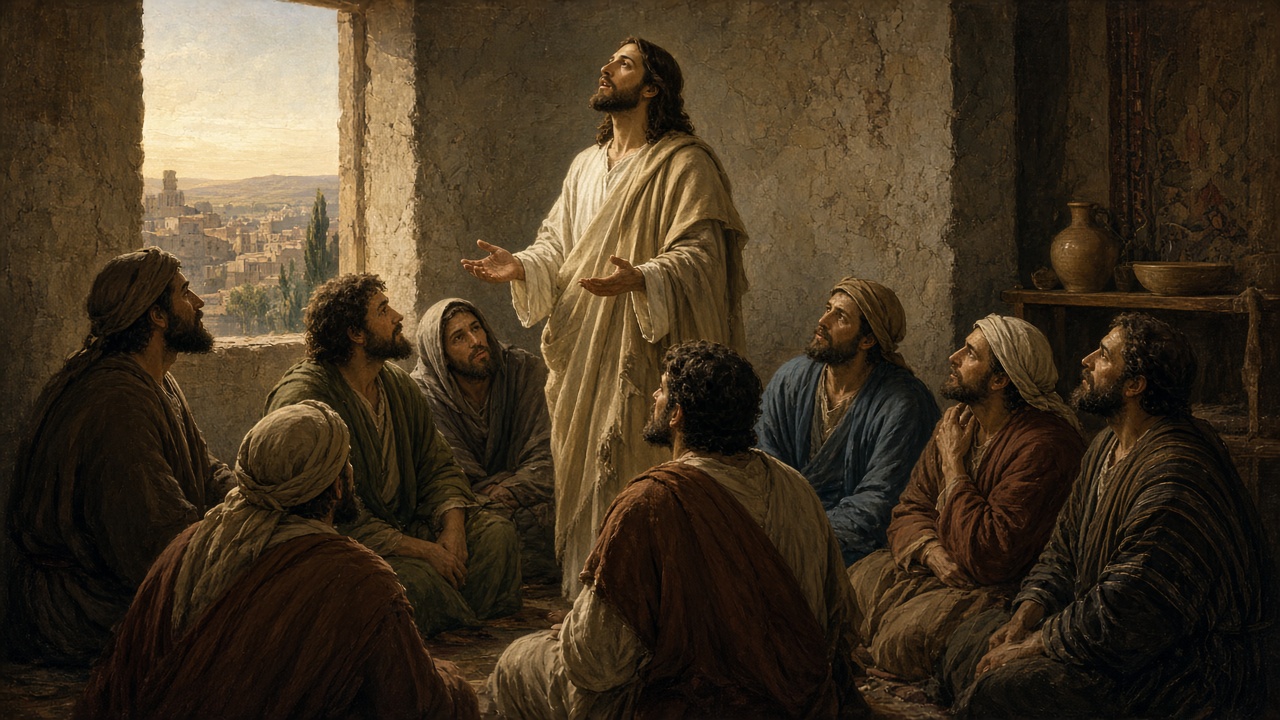
Juan 17: ha llegado la hora
- La oración comienza cuando Jesús, después de haber dicho estas cosas, alza los ojos al cielo y dice que ha llegado la hora. Se asocia con el Discurso del Aposento Alto, indicado como un día, y con la Semana Santa, indicada como ocho días.Fuentes: el propio texto bíblico · Upper Room Discourse · Holy Week
- Aquí la vida eterna es conocer al único Dios verdadero y a Jesucristo, a quien el Padre envió. Jesús también habla de la gloria que tenía con el Padre antes de que existiera el mundo y del amor del Padre por él antes de la fundación del mundo.Fuentes: el propio texto bíblico
- Ora por quienes el Padre le dio del mundo, los que han guardado la palabra, y también por quienes creerán por medio del mensaje de ellos, pidiendo que sean uno. No pide que sean sacados del mundo, sino que sean guardados del maligno y santificados por la verdad, que identifica como la palabra del Padre.Fuentes: el propio texto bíblico
Notas escritas con ayuda de IA a partir de fuentes abiertas (Theographic Bible Metadata, CC BY-SA 4.0; Easton’s Bible Dictionary, dominio público) y revisadas antes de publicarse.
Créditos y licencia de esta traducción
Hɨm Yaaim Me God
The New Testament in the Au language of Papua New Guinea
Nupela Testamen long tokples Au long Niugini
copyright © 1992 Wycliffe Bible Translators, Inc.
Language: Au
Translation by: Wycliffe Bible Translators
This translation is made available to you under the terms of the
Creative Commons Attribution-Noncommercial-No Derivatives license 4.0.
You may share and redistribute this Bible translation or extracts from it in any format, provided that:
You include the above copyright and source information.
You do not sell this work for a profit.
You do not change any of the words or punctuation of the Scriptures.
Pictures included with Scriptures and other documents on this site are licensed just for use with those Scriptures and documents.
For other uses, please contact the respective copyright owners.
2014-12-03
Fuente: http://png.bible/avt/ · eBible.org