Ezequiel 33
Buk Baibel long Anuki · Toca un versículo para ver sus referencias cruzadas.
God, Igikel ikabiguba da kighukighu tomoyina
7God iwonegu bo, “Tam wawaya wota, tagu akabigubam da dam Isrel kamone kadi kighukighu tomoyina, na awaki anisisiyeni na kuwaiyana bi yagu wonawiiyoyowa na kikatayidi. 8Raghanina anakararumaghatara da wawaya kawakeekeena inarabobo bi gekunikatayi da yana yawa inawamiri bi inamake, na touna yana tamumu kiiravine inarabobo, bi gegha da tagu aro anaverem basuna tam kubera na irabobo. 9Bi meboda kunikatayi da yana bera iyawamiri bi inasinighii, na touna yana tamumu kiiravine inarobobo, bi tamna yawa kunakabi.”
¿Sabías que…?
El Atalaya y la Caída de Jerusalén
- En la antigüedad, un atalaya apostado sobre el muro de la ciudad debía tocar el cuerno de carnero para advertir a los habitantes del avance enemigo. Ezequiel fue designado como un atalaya espiritual para Israel, con el encargo de advertir al pueblo a fin de que cada individuo fuera responsable ante Dios por sus decisiones.Fuentes: el propio texto bíblico
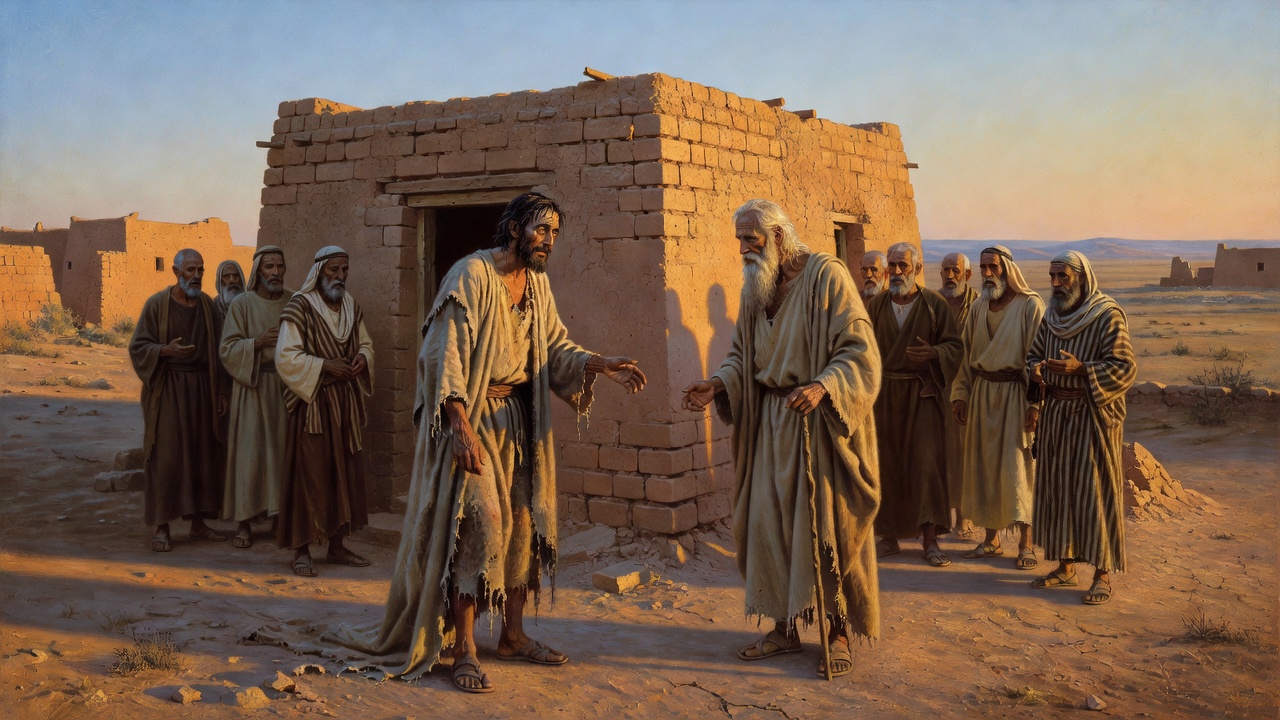
- En el duodécimo año del exilio babilónico, un fugitivo llegó desde Jerusalén con la noticia de que la ciudad había caído. La noche previa a la llegada del mensajero, Dios levantó la mudez de Ezequiel, permitiéndole hablar con libertad una vez más ante la comunidad de desterrados.Fuentes: el propio texto bíblico · Jerusalem
- Los sobrevivientes que habitaban entre las ruinas en la tierra de Israel reclamaban el derecho a la tierra apelando a Abraham, alegando que si un solo hombre la heredó, ellos, siendo muchos, con mayor razón la poseerían. Ezequiel refutó que su idolatría persistente, derramamiento de sangre e injusticia los descalificaban para conservarla.Fuentes: el propio texto bíblico · Abraham
Notas escritas con ayuda de IA a partir de fuentes abiertas (Theographic Bible Metadata, CC BY-SA 4.0; Easton’s Bible Dictionary, dominio público) y revisadas antes de publicarse.
Lugares de este capítulo
- Jerusalem · 31.777, 35.234 · versículo 21
Solo aparecen lugares identificados con alta confianza (90 % o más según las fuentes académicas reunidas por OpenBible). Mapa de la época: DARE (Digital Atlas of the Roman Empire), CC BY 4.0; mapa actual: © colaboradores de OpenStreetMap; lugares: OpenBible.info (CC BY 4.0).
Créditos y licencia de esta traducción
Buk Baibel long Anuki
Portions of the Holy Bible in the Anuki language of Papua New Guinea
Buk Baibel long tokples Anuki long Niugini
copyright © 2010-2016 Wycliffe Bible Translators, Inc.
Language: Anuki
Translation by: Wycliffe Bible Translators
This translation is made available to you under the terms of the
Creative Commons Attribution-Noncommercial-No Derivatives license 4.0.
You may share and redistribute this Bible translation or extracts from it in any format, provided that:
You include the above copyright and source information.
You do not sell this work for a profit.
You do not change any of the words or punctuation of the Scriptures.
Pictures included with Scriptures and other documents on this site are licensed just for use with those Scriptures and documents.
For other uses, please contact the respective copyright owners.
2014-06-02
Fuente: http://png.bible/aui/ · eBible.org