1 Tesalonicenses 3
Yù bilin ni Namarò nga meyannung kâ Apu Kesu Kiristu: Yù bagu nga tarátu ni Namarò sù ira nga mangikatalà kâ Apu Kesu Kiristu · Toca un versículo para ver sus referencias cruzadas.
Paddok ni Pablo kâ Timotio ta Mattúllun sù ira taga Tessalonika
1Á gapu ta arám mi ngin meyattam yù daddam mi nikayu, ta arám mi ammu nu kunnasi kayu, á sikami duá kâ Silas, ninonò mi ta mabattáng kami lâ ta Atenas, 2tapè dobam mi ta gián naw si Timotio, nga wagi tam nga masserbi kâ Namarò, nga mangilayalayâ gapay sù napiá nga dámak nga meyannung kâ Apu Kesu Kiristu. Á yáyù nga jinok mi laguk si Timotio, nga umay manabarang nikayu, tapè mepasigaggà yù ángngikatalà naw kâ Apu, 3ánna arán naw likuránán yù napiá nga panguruk naw megapu sù panigirigâ da nikayu nayù ira ari manguruk. Ta ammu naw gemma ta máwák nga attamát tam yù jigâ nga umay nittam. 4Á paggiám mi paga nikayu, kinagi mi nikayu ta umay yù jigâ nga máwák nga attamát tam. Á masingan naw ta nesimmu ngin yù kunnian nga kinagi mi ngaw nikayu. 5Á pakarámak ku sù karigirigâ naw, arák ku meyattam yù burung ku nikayu. Á yáyù nga jinok ku si Timotio, ta en na kayu tullúnán, tapè ammù sangaw nu kunnasi yù ángnguruk naw. Ta maburungà, marakè melogò kayu, á likuránán naw yù napiá nga ángnguruk naw, megapu ta pamarubá na nikayu ni Satanas. Á nu kunnian, kengá lâ nakuan yù bannák mi nga mangituddu nikayu.
Yù Istorián ni Timotio kâ Pablo
6Á kunangane, limibbekin si Timotio nga naggapu sù gián naw, á napiá yù iniparámak na nga meyannung nikayu. Kinagi na ta napasigaggà yù ángngikatalà naw kâ Apu Kesu ánna napiá yù pakkaká-iddù naw. Á kinagi na gapay ta sigídá manononò naw kami, ánna karagatán naw kami masingan gapay nga kunnay sù pakkaragâ mi nga makasingan nikayu.
7Á wáwwagi, mássiki nu nepallà yù burung mi nikayu ánna aru yù inattamám mi nga jigâ, á mabannáyán kami gapu ta pakarámak mi ta napiá lâ yù panguruk naw. 8Á napálappawánin yù nonò mi gapu ta ammu mi ngin ta napasigaggà yù ángngikatalà naw kâ Apu Kesu. 9Á ari kami makabalabálà kâ Namarò sù nepallà nga pagayáyâ mi ta arubáng na megapu nikayu. 10Á sigídá kami makimi-imállà ta ággaw ánna gabi, ta makkakásingan ittam, ánna ajjan yù awayyá mi nga mangabbák nikayu, tapè mapasigaggà paga yù ángnguruk naw.
11Á parè bì ta anugutad da kami di Namarò nga Yáma tam ánna si Apu Kesu Kiristu, tapè makatúllun kami nikayu sangaw. 12Á parè bì gapay ta pappanatan ni Namarò yù pakkaká-iddù naw ánna yù pangiddù naw gapay sù ira ngámin nga tatolay, nga kunnay ta ángngiddù mi nikayu. 13Á ta kunnian, parè bì ta pasikanan ni Apu Namarò yù nonò naw, tapè talákkurugan naw nga palurotan yù napiá nga ipakuá na nikayu, ánna pareku nga napiá yù nonò naw, nga awán ta nakaliwatán naw ta arubáng ni Namarò nga Yáma tam, sangaw nu mattoli si Apu Kesu nga mepulù kuna yù ira ngámin nga tatole na.
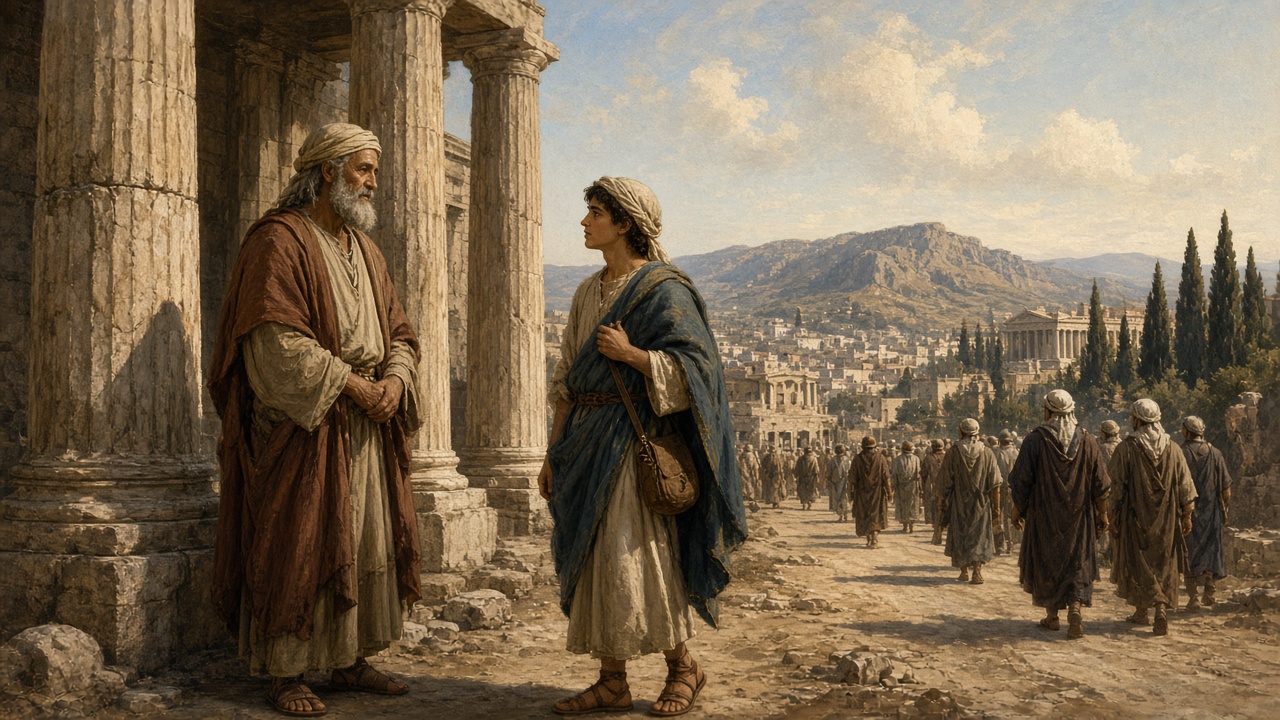
¿Sabías que…?
Enviado desde Atenas para fortalecer la fe
- Estaban dispuestos a quedarse solos en Atenas para que Timoteo fuera enviado a fortalecer a los tesalonicenses. Atenas, capital del Ática, era la ciudad más célebre del mundo antiguo y un centro de la literatura y el arte griegos; Pablo la visitó en su segundo viaje misionero.Fuentes: el propio texto bíblico · Athens
- Timoteo, cuyo nombre significa "honrar a Dios", era un joven discípulo y compañero de Pablo en muchos viajes. Aquí se lo llama hermano y colaborador de Dios en el evangelio de Cristo, enviado para animarlos en la fe, de modo que las pruebas no los sacudieran, y después regresó con buenas noticias de su fe y de su amor.Fuentes: el propio texto bíblico · Timotheus
Notas escritas con ayuda de IA a partir de fuentes abiertas (Theographic Bible Metadata, CC BY-SA 4.0; Easton’s Bible Dictionary, dominio público) y revisadas antes de publicarse.
Lugares de este capítulo
- Athens · 37.972, 23.727 · versículo 1
Solo aparecen lugares identificados con alta confianza (90 % o más según las fuentes académicas reunidas por OpenBible). Mapa de la época: DARE (Digital Atlas of the Roman Empire), CC BY 4.0; mapa actual: © colaboradores de OpenStreetMap; lugares: OpenBible.info (CC BY 4.0).
Créditos y licencia de esta traducción
Yù bilin ni Namarò nga meyannung kâ Apu Kesu Kiristu: Yù bagu nga tarátu ni Namarò sù ira nga mangikatalà kâ Apu Kesu Kiristu
New Testament in Atta, Pamplona
copyright © 1996 Wycliffe Bible Translators, Inc.
Language: Pamplona Atta (Atta, Pamplona)
Translation by: Wycliffe Bible Translators, Inc.
Copyright Information
© 1996, Wycliffe Bible Translators, Inc. All rights reserved.
This translation text is made available to you under the
terms of the Creative Commons License: Attribution-Noncommercial-No Derivative Works.
( http://creativecommons.org/licenses/by-nc-nd/3.0/ )
In addition, you have permission to port the text to different file formats, as long as you
do not change any of the text or punctuation of the Bible.
You may share, copy, distribute, transmit, and extract portions
or quotations from this work, provided that you include the above copyright
information:
You must give Attribution to the work.
You do not sell this work for a profit.
You do not make any derivative works that change any of the actual words or punctuation of the Scriptures.
Permissions beyond the scope of this license may be
available if you contact
us with your request.
The New Testament
in Atta, Pamplona
© 1996, Wycliffe Bible Translators, Inc. All rights reserved.
This translation is made available to you under the terms of the
Creative Commons Attribution-Noncommercial-No Derivatives license 4.0.
You may share and redistribute this Bible translation or extracts from it in any format, provided that:
You include the above copyright and source information.
You do not sell this work for a profit.
You do not change any of the words or punctuation of the Scriptures.
Pictures included with Scriptures and other documents on this site are licensed just for use with those Scriptures and documents.
For other uses, please contact the respective copyright owners.
2014-08-06
Fuente: http://ebible.org/att/ · eBible.org