1 Corintios 15
Ebe-No-Pfuasẹ Ishobọ Onogbọ · Toca un versículo para ver sus referencias cruzadas.
Irọte eghuli guale oyi iKirisiti
1Mena mhia nono ni mhi yele ẹ le inyọghuo, ingme usomhi onete ni mhi rọ tse abọ yẹ ẹ ni a miesuọ, ni irudunga oyẹ ẹ o migha nga egbegbọ. 2Oni usomhi onete ona a rọ tsumhi ẹ, ini a da mu emini mhi rọ tse abọ yẹ ẹ mhuẹ toto. Ini ọa khi ighọ, eri a miesuọ shi afuẹ.
3Abi mhi li te ekẹ mie oni usomhi ni o lolo mu ẹloe, ighọ mhi li gue ọli ye ẹ. Usomhi khi,
iKirisiti ọ ghu-a
to olamhẹ eyawa
abi a li kẹkẹ ọli
shi Ebe-no-pfuasẹ. 4Khi a rọli tọ,
a rọte eghuli guise ọli le
ẹlẹ nuzi-esẹ,
abi Ebe-no-pfuasẹ o ngme.
5Ọ ri egbọli khasẹ iPita,
ọ tigbe ri egbọli khasẹ eni ogbava.
6Ọ tigbe ri egbọli khasẹ,
ẹgbọ ni e miesuọ ni e bu dọsẹ
ẹgbọ egbhuẹ uye ali ishe (500),
ni e la asheghuo utoghuo,
ni o khia khi ebubu wẹ
e kie la agbọ,
eghuo ọ e she ghua.
7Ọ tigbe ri egbọli khasẹ iJemhisi,
neni ọ tigbe gbo
ri egbọli khasẹ ighiusomhi na kẹẹ nya.
8Ikpukhokho ọ, ọ li ri egbọli khasẹ mhẹ abi ọmọ ni a bia shi ẹghẹghẹ ni aa kha bia li shi. 9Irari khi mhẹmhẹ mhi ga kpọkẹ na ighiusomhi na kẹẹ enekpọle nya a. Mhi aa fẹ fu tẹ ni a lu aghiusomhi na kẹẹ, itobọ khi mhi mu okhọli vule shi igbaa oyi eni e mie iJesu iKirisiti suọ oyi Ẹshinẹgba ọ. 10Ama okhale ni mhia futẹ ni Ẹshinẹgba ọ li na mhẹ o rẹmhẹ khi emini mhi khi. Ali khi okhale ni ọ li na mhẹ ọa li opfu-a. Ini a ke gbo riẹlẹ ọli bino, mhi she ga rọshẹka gbe akanya dọsẹ wẹ nya. Ama ọa khi mhẹmhẹ mhi dobẹ gbe ọli, ama okhale oyi Ẹshinẹgba ni o la mhẹ egbe a gbe akanya lọ. 11Itobọ ighọ, ini o khia khi wẹwẹ e tsabọ oni usomhi, okekhi obọ oyẹmhẹ o te bhale o, ungmemhi oghuo anye kie ga rọ ọ tse abọ, ni o khi emini a mie shi.
Irọte eghuli guale oyi eni eghua
12Usomhi oyanye na. A she rọte eghuli guise iKirisiti le. Elọ o ke zẹ khi eghuo ẹ e rọ liẹ khi iteghuli guale oyi eni e ghu-a ọa la ọ shọ? 13Ini irọte eghuli guise eni e ghu-a le ọa la ọ, oghọ khi aa guise iKirisiti le. 14Ini o khia khi aa rọte eghuli guise iKirisiti le lọ, itsabọ oyawa, afuẹ o kha khi, ighọ li khi irudunga oyawa. 15Ọa khi ighọ tsẹ, eni e pfi ọtsẹlẹ kie ẹgbhọli ma Ẹshinẹgba anye kha khi. Irari khi anye she kpẹ pfi ọtsẹlẹ guele na Ẹshinẹgba khi ọ rọte eghuli guise iKirisiti le. Ini o khia khi igẹsikia o kha khi lọ khi aa ya guise eni e ghu-a le lọ, eri o kha rọkhasẹ khi ọa guise iKirisiti le. 16Irari khi ini aa ya guise eni e ghu-a le, aa li guise iKirisiti le o li khi eghọ. 17Ini o khia khi aa guise iKirisiti le, irudunga oyẹẹ ọa kha mhuẹ emini o kha li na ẹ. Ẹẹ a kha kiẹ la okhẹna ipfẹzọmu shi olamhẹ eyẹẹ. 18Oghọ li khia khi, eni e ghuloa ni e mie iKirisiti suọ khi eri e li li opfu-a. 19Ini o khia khi agbọ ana tsẹ, irudushi ni awa mhuẹ na iKirisiti o pfo shi lọ, awa a opfu o kha bie gbẹ nẹ nya.
20Egbegbi ingme ni o la ọ khi, a she rọte eghuli guise iKirisiti le, ni o ri awa mie shi ọ khi a ya gbo guise eni e ghu-a le. 21Irari khi abi eghuli o rọte obọ oyi ọgbọ ọtuọghuo bhale ikhi Adamu, ighọ irọte eghuli guise le o li rọte obọ oyi ọgbọ ọtuọghuo bhale ikhi iKirisiti. 22Irari khi abi ẹgbọkpa e li rọte obọ oyi Adamu ghu-a, ighọ a li ya rọte eghuli guise ọgbọkpa le, rọte obọ oyi iKirisiti. 23Ama a ya guise ọgbọgbọ le abi o li tẹ ọli, iKirisiti ọ khi ọni ododẹ, ọ kha nyenẹ egbe bhale, a tigbe li guise eni e mie oli suọ le. 24Isheghọ ọzukhomhi agbọ o bhale, ini iKirisiti ọ mu ekpabọ ayẹmhẹ nya ọ le, ali eni e mhuẹ afu ali itoto nya, ọ tigbe rue oni omhẹsẹ nya na Ẹshinẹgba ita. 25Irari khi iKirisiti ọ ya ke mhẹsẹ ramhi ni Ẹshinẹgba ọ rọ ya ri ebe ọli nya kpọkẹ ẹkoawẹ eyọli. 26Ọbe ni ọ ya kpukhokho mu ọ le khi, eghuli. 27Irari khi Ebe-no-pfuasẹ o ngme ọli khi “Ẹshinẹgba ọ ri emhikpa kpọkẹ ẹkoawẹ eyọli.” Onana o rọli khasẹ gbo khi aa li ri Ẹshinẹgba ma ọ rọ kpọkẹ na iKirisiti, ikhi lọli ni ọ ri emhikpa kpọkẹ ẹkoawẹ eyi iKirisiti. 28Itobọ khi ini a da ri emhikpa shi omhẹsẹ oyi iKirisiti se, ẹghẹghẹ aghọ lọli ọyọli ni ọ khi omiọli, o ri egbọli kpọkẹ na Ẹshinẹgba, ọni ọ ri emhikpa kpọkẹ na li. Ẹshinẹgba ọ mhẹsẹ ẹ shi emhi nya.
29Elọ zẹ ni ẹgbọ e rọ ọ batazi na ẹgbọ ni e she ghu-a? Ini aa ya guise eni e ghua le, elọ o zẹ ni a rọọ batazi shi na wẹ? 30Elọ o zẹ ni anye rọ ri agbọ oyanye ẹ shi okhẹna ẹghẹghẹ kpa? 31Anye ẹ la okhẹna eghuli ogbẹlẹkpa! Ititiegbe ni mhi ri itobọ oyẹ ẹ titi, irari emini iJesu iKirisiti ọyawa ọ riẹlẹ na ẹ, o rẹmhẹ ngme ona. 32Elọ a dabi khi o khi eleli oyẹmhẹ ni mhi rọ nu inyagbemhi ebe, ikhi emọse eghọ na ẹoli Efesọsi khọli? Ini aa ya guise eni e ghua le bhale agbọ,
Awa bie ke le awa a da,
irari khi awa ya ghu-a akọ.
33Khi zẹ ni a sẹsẹ wasẹ-a. “Ikugbe ẹgbọ ebe ọ, o ma yese egbegbi angeli-a.” 34Nyenẹ egbe bhale ẹgbhali eyẹ, a tiegbe olamhẹ le. Eghuo ẹ e la ọ ni ẹa lẹsẹ Ẹshinẹgba. Ni o ri omama mu ẹ, mhi rọ ngme ona.
Idiegbe ni a rọte eghuli guise le
35Ama ọgbọ ọ dobẹ ya mhila ogbọ, “Sẹẹ a liẹ guise eni e ghu-a le bhale agbọ? Idiegbe onabi onoghuo e ke ya mhọli?” 36Yẹyẹ ọyẹghẹ! Waa lẹsẹ khi emini a rọ kọ ọa ya zẹ ini ọa li kpẹ ghua? 37Ini a ri ukpamhi ọakpa kọ, ọa ke ẹ zẹ ukpamhi ngẹ, ama ughẹghẹ ọli o ke zẹ ngale. 38Ẹshinẹgba ọ ri idiegbe ẹ na ikpamhi abi o ghọle ọli shi, ikpamhi emhi nya e mhọli idiegbe oyẹwẹ. 39Idiegbe oyi emhi nya ẹa li abeghuo. Ẹgbọ e mhọli idiegbe oghuo, elamhakọ e mhọli idiegbe olese, ipfeli ali ifẹlẹ e mhọli idiegbe eyẹwẹ. 40Emhi ọdọda e la idane, emhi ọdọda e li la ekẹkhẹ. Otse oyi emhi na idane, o khi oghuo, otse ni o la emini e la ekẹkhẹ o khi ọda. 41Ovọ o mhọli otse oyọli ọda kẹ, uki o mhọli otse olese, ikpẹtata e mhọli otse olese ọda. Eni ikpẹtata e gbo somhọtse dọsẹ egbe. 42Ighọ o ya li ini a guise eni e ghu-a le. Idiegbe ni a rọ tọ, eni ẹ kẹa e khi ni a rọ tọ. Ama eri a guise ọli le ni ọa ke ya kẹa ghue. 43Ini a rọli tọ, o yemhi osue, ọa mhuẹ itoto, ama ini a guise ọli le o somhotse-a, o mhuẹ itoto. 44Ini a rọli tọ, o khi idiegbe ni a mẹ alo gbugbugbu. Ini a guise ọli le, o khi idiegbe ayẹmhẹ.
Ini idiegbe ni a mẹ alo gbugbugbu o la ọ, idiegbe elemhi ayẹmhẹ o li la ọ. 45Abi a li kẹkẹ ọli khi, “Ọmọse onododẹ Adamu, eri a ma li ọgbọ ni ọ mhọli ayẹmhẹ.” Ama khi Adamu ni o kpe ukhokho, ayẹmhẹ ni ọ ri agbọ a na ọgbọ ọ khi. 46Ọa khi idiegbe ayẹmhẹ o kpẹ bhale, ama oni a mẹ alo gbugbugbu, neni a mẹ oyi ayẹmhẹ. 47Adamu, ọmọse ọnododẹ, itutu ena ekẹ a rọ ma li, Adamu ọnuzava iloghie o te tiemhile. 48Eni e khi eyi ekẹ, eri e li abi eni a ri itutu eyi ekẹ ma, eni e khi eyi iloghie eri e li abi eni e rọte iloghie bhale. 49Ẹzẹzẹ abi awa li ri irọkhọkhọ oyi ọmọse ni a ri ekẹ ma sọ, ighọ awa gbo li ya ri irọkhọkhọ oyi ọmọse ni ọ rọte idane bhale sọ.
50Mhi gue ona yẹ ẹ inyọghuo khi, emhi idiegbe ali emhi ọlia ẹa ya lo Eghiele oyi Ẹshinẹgba. U kẹ-liẹ khi eri idiegbe ni ọọ kẹ-a, o ke ya mhọli okemhi shi oni iloghie ni ọa ya kẹa. 51A ri esọ shi egbegbingme osheli ona. Awa nya awa aa ya ghua, ama ini akala ni o kpukhokho o de, a ya mu awa mela-a, bia, 52elemhi ikoko alo khueghie-a, ini oni akala ni o kpukhokho o de. Irari khi akala o ya de, eni e ghu-a e ya ri idiegbe ni ọa ya kẹa guale, a ya mu wẹ mela-a. 53Irari khi idiegbe ni ọọ kẹ-a o mema ya ri idiegbe ni ọa ya kẹ sọ, oni ọọ ghu o ri idiegbe ni ọa ya ghu sọ. 54Isheghọ, ini idiegbe ni ọọ kẹ-a o ri idiegbe ni ọa ya kẹ sọ se, ni idiegbe ni ọọ ghu o rọ ri idiegbe ni ọa ya ghu sọ se, ungmemhi ni ebe o ngme o bhale ya tsẹ ni ọ li khi,
“A she to eghuli luẹ
elemhi imuọle.”
55“Eghuli o, ighe imuọle
ni u ke dobẹ ya mu ọ le mena?
Eghuli o! Ighe ekpabọ eyẹ mena?”
56Olamhẹ o ri ekpabọ na utamhi oyi eghuli ẹ ta, ni o rọ kuali utse, olamhẹ o rọte ushi mhọli ekpabọ. 57Ama awa kphẹmhi na Ẹshinẹgba ni ọ ri imuọle na awa rọte obọ oyi iJesu iKirisiti Ọnọmhuẹ ọyawa.
58Irarighọ, inyọghuo a migha gbaa. A gbe akanya oyi Ọnọmhuẹ oyi ẹ ke je odalo, abi a rọ lẹsẹ khi akanya ni u da gbe na Ọnọmhuẹ khi ọa khi afuẹ.
¿Sabías que…?
La resurrección de los muertos
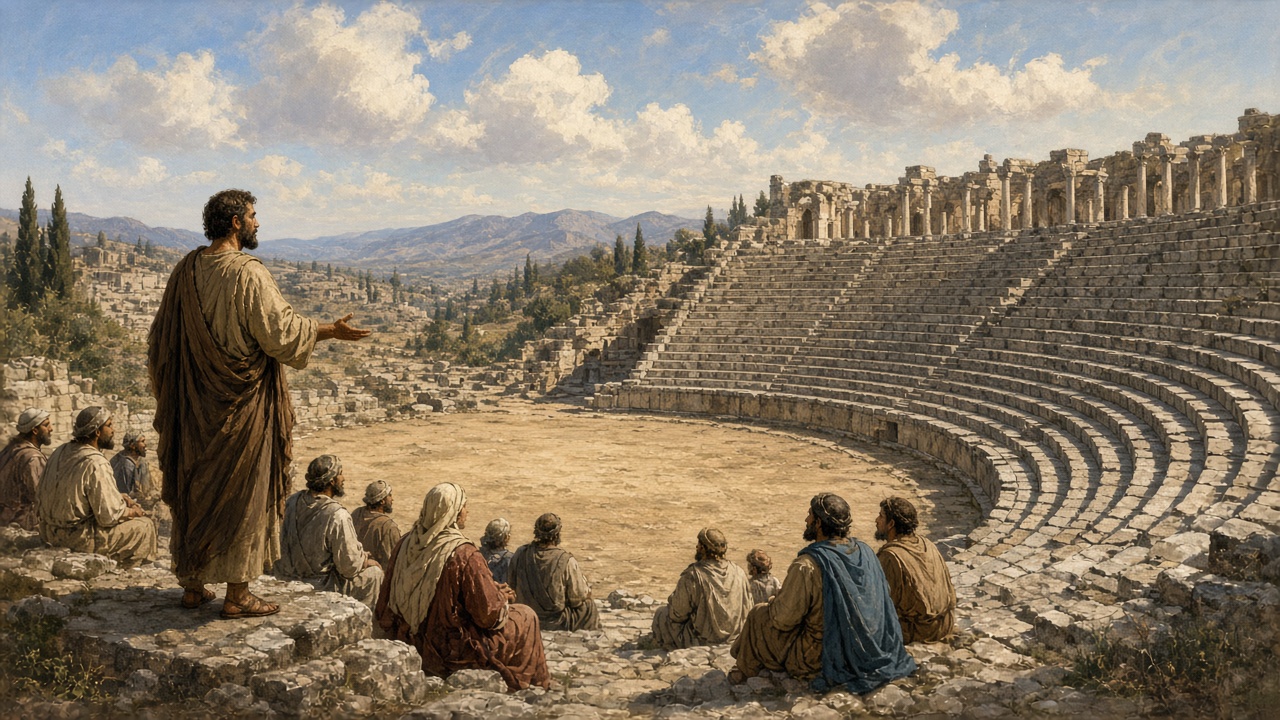
- Cuando este capítulo pregunta qué se ganó al luchar con fieras en Éfeso, nombra una ciudad que el Easton's Bible Dictionary llama capital del Asia proconsular, conocida por un teatro a cielo abierto —el más grande del mundo, capaz de albergar a 50.000 espectadores— donde se presentaban luchas de fieras y de hombres contra fieras.Fuentes: Ephesus · el propio texto bíblico
- El Easton's Bible Dictionary explica que Adán, palabra babilónica que significa rojo y el nombre común de hombre en hebreo y en asirio, fue el primer hombre, formado del polvo de la tierra, y por eso recibió ese nombre. Este capítulo retoma esa imagen: la muerte vino por medio de un hombre, el primer hombre era del polvo, y el último Adán es espíritu vivificante.Fuentes: Adam · el propio texto bíblico
- El Easton's Bible Dictionary (1897) identifica al Jacobo a quien Cristo se apareció después de la resurrección, como registra este capítulo, como hermano o pariente cercano de Jesús, también llamado Jacobo el Menor, y dice que después encabezó la iglesia en Jerusalén.Fuentes: James (Brother of Jesus) · el propio texto bíblico
Notas escritas con ayuda de IA a partir de fuentes abiertas (Theographic Bible Metadata, CC BY-SA 4.0; Easton’s Bible Dictionary, dominio público) y revisadas antes de publicarse.
Lugares de este capítulo
- Ephesus · 37.939, 27.341 · versículo 32
Solo aparecen lugares identificados con alta confianza (90 % o más según las fuentes académicas reunidas por OpenBible). Mapa de la época: DARE (Digital Atlas of the Roman Empire), CC BY 4.0; mapa actual: © colaboradores de OpenStreetMap; lugares: OpenBible.info (CC BY 4.0).
Créditos y licencia de esta traducción
Ebe-No-Pfuasẹ Ishobọ Onogbọ
New Testament in Ivbie North-Okpela-Arhe (NI:atg:Ivbie North-Okpela-Arhe)
copyright © 2012 Wycliffe Bible Translators, Inc.
Language: Ivbie North-Okpela-Arhe
Translation by: Wycliffe Bible Translators, Inc.
Copyright Information
© 2012, Wycliffe Bible Translators, Inc. All rights reserved.
This translation text is made available to you under the
terms of the Creative Commons License: Attribution-Noncommercial-No Derivative Works.
( http://creativecommons.org/licenses/by-nc-nd/3.0/ )
In addition, you have permission to port the text to different file formats, as long as you
do not change any of the text or punctuation of the Bible.
You may share, copy, distribute, transmit, and extract portions
or quotations from this work, provided that you include the above copyright
information:
You must give Attribution to the work.
You do not sell this work for a profit.
You do not make any derivative works that change any of the actual words or punctuation of the Scriptures.
Permissions beyond the scope of this license may be
available if you contact
us with your request.
Printed book ISBN 9789789194797
The New Testament
in Ivbie North-Okpela-Arhe
© 2012, Wycliffe Bible Translators, Inc. All rights reserved.
This translation is made available to you under the terms of the
Creative Commons Attribution-Noncommercial-No Derivatives license 4.0.
You may share and redistribute this Bible translation or extracts from it in any format, provided that:
You include the above copyright and source information.
You do not sell this work for a profit.
You do not change any of the words or punctuation of the Scriptures.
Pictures included with Scriptures and other documents on this site are licensed just for use with those Scriptures and documents.
For other uses, please contact the respective copyright owners.
2019-08-09
Fuente: http://ebible.org/atgNT/ · eBible.org