Jonás 2
Cishingini Agwara Kambari [asg] · Toca un versículo para ver sus referencias cruzadas.
Avasa a Yunana
1Ɗa Yunana u yaꞋin kavasa a kubana u Vuzavaguɗu Ka̱shile ka̱ ni a̱yi punu a̱ ka̱tsuma̱ ka kadan. 2U danai, <<N ɗeke ta̱ Vuzavaguɗu a̱ ka̱tsuma̱ ka atakaci ka̱ va̱ ɗa ta na wu ushuki mu. Punu ubuta̱ u na a̱kpisa̱ a̱ tsu da̱sa̱ngu punu asaun. ɗa n la̱nsa̱i uɓa̱nki, ɗa ta na vu panakai mu. 3Vu vakangi mu a mala mu uga̱vi, ɗe ɗaka vu mala, ɗa kurara ku mini ku pura̱i mu, ɗa kpamu aɓau a kanzai mu a laꞋi utsura u va̱. 4Ɗa n danai, <Vuzavaguɗu vu loko mu ta̱ a̱ ashi a̱ nu, ko n nannai dem m buwa ta̱ o kudoku me ke ene A̱Ꞌisa̱ a gbayin a ciɗa a̱ nu. 5Mini ma ɗikai mu adanshi mi ta̱ a kuɗika wuma u va̱, mala ma palai mu ra̱ka̱, kajanu kpamu ka palai mu gbende ali n kaci dem. 6N liɓai a mala ra̱ka̱-ra̱ka̱ ali ɗa n cinai akpanlai, a̱ ɓa̱ya̱ngi mu a̱ ubuta̱ u kuyongo wa̱ a̱kpisa̱. Ama avu Vuzavaguɗu Ka̱shile ka̱ va, vu uta̱ka̱i mu punu a kpenle ku nanlo n wuma. 7Ana me enei adanshi wuma u va̱ wi ta̱ a kukasa, ɗa n ciɓai n Vuzavaguɗu, avasa a̱ va̱ kpamu a banai wa̱ nu ɗe a A̱Ꞌisa̱ a ciɗa. 8Aza a na̱ o tsu tono a̱ma̱li a gbani a̱ shirikpa̱ka̱i ucigi u Vuzavaguɗu u na wi babu uteku kucina̱. 9Ama mpa n vishipa vu kucikpa wu vu ɗa n kuyaꞋanka wu ka̱ta̱ n neke wu kuneꞋe ka akucina ku na n yaꞋankai nu. Wishi a̱ ubuta̱ u Vuzavaguɗu ɗa wi a̱ kuta̱.>> 10Ɗa Vuzavaguɗu u danai kadan ka shama Yunana a̱ ka̱kina̱ ka mala.
¿Sabías que…?
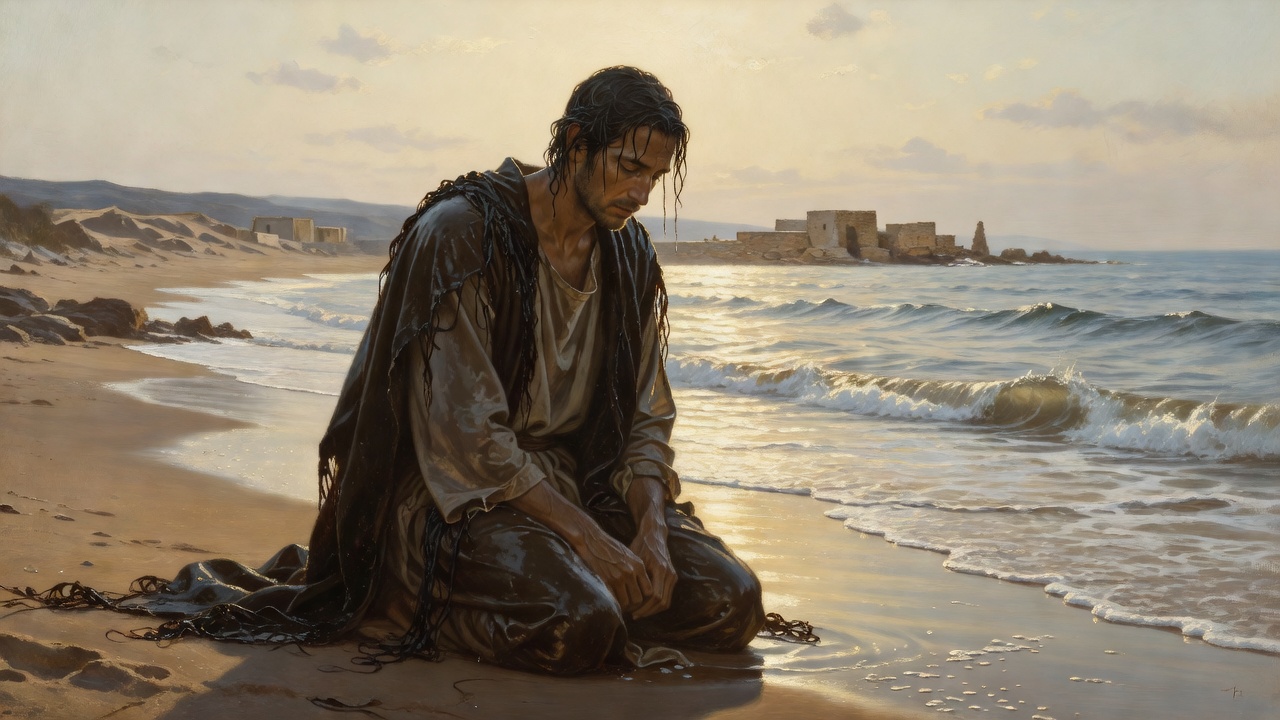
La oración y liberación de Jonás
- La oración de Jonás utiliza imágenes poéticas para describir su experiencia cercana a la muerte, retratando las profundidades marinas como el 'vientre del Seol', donde descendió hasta los 'cimientos de los montes' con algas enredadas en su cabeza.Fuentes: el propio texto bíblico
- Incluso estando sumergido en las profundidades dentro del pez, Jonás dirige sus pensamientos hacia el santo templo de Dios, prometiendo cumplir sus votos y ofrecer sacrificios de alabanza.Fuentes: el propio texto bíblico
- Según los registros bíblicos, el profeta Jonás era hijo de Amitai, natural de Gat-hefer, y ejerció su ministerio durante el reinado de Jeroboam II en Israel.Fuentes: Jonah
Notas escritas con ayuda de IA a partir de fuentes abiertas (Theographic Bible Metadata, CC BY-SA 4.0; Easton’s Bible Dictionary, dominio público) y revisadas antes de publicarse.
Créditos y licencia de esta traducción
Cishingini Agwara Kambari [asg]
Cishingini: Cishingini Agwara Kambari [asg] (Bible)
copyright © 2025 Language Development and Translation Initiative (LDTI)
Language: (Cishingini)
Contributor: The Seed Company
This translation is made available to you under the terms of the
Creative Commons Attribution Share-Alike license 4.0.
You have permission to share and redistribute this Bible translation in any format and to make reasonable revisions and adaptations of this translation, provided that:
You include the above copyright and source information.
If you make any changes to the text, you must indicate that you did so in a way that makes it clear that the original licensor is not necessarily endorsing your changes.
If you redistribute this text, you must distribute your contributions under the same license as the original.
Pictures included with Scriptures and other documents on this site are licensed just for use with those Scriptures and documents.
For other uses, please contact the respective copyright owners.
Note that in addition to the rules above, revising and adapting God's Word involves a great responsibility to be true to God's Word. See Revelation 22:18-19.
2025-07-09
Fuente: http://ebible.org/asg/ · eBible.org