Génesis 50
Cishingini Agwara Kambari [asg] · Toca un versículo para ver sus referencias cruzadas.
1Isufu u yikpa̱i e keven ki ikyamba ye esheku ɗa wo oɓongi kaꞋa ɗa u ka̱na̱i ma̱shi. 2Ɗa Isufu u yaꞋin kadanshi n aza ulinga wa̱ a̱guma̱ a lapula keven ke esheku, ta lo ka kushama. 3Ɗa keven ka ka yaꞋin ayin amangere (40), adama a na ta a̱guma̱ aza a Masar a̱ kusa̱nka̱ ili kushama i nannai. Ɗa a yaꞋin kpalu ku ni ali ayin amangatatsunkupa (70).
4A ayin a na ayin a̱ ma̱shi a shanai, ɗa Isufu u danai kpaꞋa ku mogono ma FiriꞋauna, <<YaꞋankai mu ili i singai i nampa i danaka mu FiriꞋauna adama e esheku a̱ va̱. 5<Kafu esheku a̱ va̱ a̱ kuwa̱ u folono mu ta̱ n yaꞋanka yi uzuwakpani, mi ta̱ a kubana kuciɗa̱ngu yi a kasaun ka na u foɓusoi na ɗe a iɗika i KanaꞋana. Mi ta̱ ufolu u nu ka̱sukpa̱ mu m bana n ciɗa̱ngu esheku a̱ va̱ ka̱ta̱ m bono.> >>
6Ɗa mogono mu ushuki, <<Wala vu bana vi ciɗa̱ngu eshevu tsu na vi yaꞋankai ni uzuwakpani.>>
7Ɗa Isufu u lazai adama a na u bana u ciɗa̱ngu esheku. Ayin a na u banai ɗa aza a̱ gba̱ra̱-gba̱ra̱ a FiriꞋauna m Masar o soki ni, 8n aza a kpaꞋa a̱ ni n aza ni dem a bansai. Sai muku n kuzuwa ku le ku ɗa a̱ ka̱sukpa̱i ɗe o Goshen. 9Aza o yoku a kumbai keke va anaka, aza o yoku odoku ɗa a banai ɗe koɓolo, uma n a̱bunda̱i ɗa a banai.
10Ana a yawai a ulanga u kulapa utalu u Ata a kasana n Kuyene ku Urudu ɗa a̱ shika̱i lo ka̱u. Ɗa a yaꞋin lo ayin e cindere a kuyaꞋan kpalu ke esheku a̱ Isufu. 11A ayin a na aza a KanaꞋana e enei tsu na a yaꞋin kpalu ka a̱ ubuta̱ u kulapa utalu u Ata, ɗa a danai, <<Kpalu ku nampa ku suɗukpa ta̱ ka̱u a̱ ubuta̱ wa aza a Masar.>> Adama a nannai ɗa e neꞋi kula ku ubuta̱ wa, Ebelu-mizarim, ɗaɗa kpalu ka aza a Masar. Ta ɗe wi a upashi u Urudu.
12Ɗa muku n ali n Yakubu n yaꞋankai esheku e le i na u danai le a yaꞋan 13A ɗikai keven ki ikyamba ka̱ ni ɗa a̱ ciɗa̱ngi kaꞋa a ubuta̱ wa asaun a Makapele a kasana ka Mamure a̱ ka̱ba̱nga̱ ka̱ ka̱ciɗa̱ ka na Ibirahi u tsulai a ekiye a Ifirayimu vuza va aza a Hitiya 14Ana Isufu u kotsoi ka̱ciɗa̱ ke esheku ɗa u lazai o kubono a Masar n aza a̱ ni dem n aza a na o tonoi ni a kubana a̱ ubuta̱ u ka̱ciɗa̱ wa.
Isufu u vaꞋanki a̱ɗu a̱ aza a̱ ni
15Ana esheku e le a̱ kuwa̱i, ɗa Isufu nu nkoshi n ni n danai, <<Gogo na Isufu u dana baci yaꞋan u tsupa kawuya ka na ci yaꞋankai ni?>> 16Ɗa a̱ suꞋuki Isufu n kadanshi a danai, <<Kafu esheku a̱ tsu a̱ kuwa̱ u dana ta̱, 17ci ece wu, <Cinukpa n unushi u na aza a̱ nu a yaꞋankai nu tsu na cau a takacikai nu.> Gogo na reme ka̱ɗu cinukpaka tsu unushi u na a̱ tsu agbashi a̱ Ka̱shile ke eshevu ci yaꞋankai nu.>> Isufu u shika̱i ka̱u ana u panai kadanshi ka nampa. 18Ɗa aza a̱ ni a banai ɗa a̱ kuɗa̱ngi kelime ka̱ ni ɗa a danai, <<A̱ tsu ɗa na kelime ka̱ nu agbashi a̱ nu.>>
19Ama ɗa Isufu u danai, <<Panai wovon ba! Mpa Ka̱shile kaꞋa? 20Ko a na i sheshekei mu kawuya, ama Ka̱shile ko bonoko ta̱ kaꞋa ka singai, adama a na wi isa wuma wa aza a̱bunda̱i a na yi e kene anana. 21Adama a nannai ka̱ta̱ i pana wovon ba. Mi ta̱ a kinda ɗa̱ m muku n ɗa̱,>>
Ukpa̱ u Isufu
22Ta ɗe Isufu m kpaꞋa ke esheku o yongoi a Masar. Isufu u yaꞋan ta̱ a̱ya̱ amangatawun n kupa (110) aduniyan. 23U yongo ta̱ ali ɗa we enei muku mi Ifirayimu m muku mu ntsukaya n ni. U yongo ta̱ n wuma ali ɗa wi isai muku m Makiri m Manasa u woꞋi le e ekiye a̱ ni.
24Ɗa Isufu u danai aza a̱ ni, <<Mi ta̱ ɗevu n ukpa̱, ama Ka̱shile ki ta̱ a kinda ɗa̱ ka̱ta̱ wu uta̱ka̱ ɗa̱ a iɗika i nampa, ka̱ta̱ u banka ɗa̱ a iɗika i na u yaꞋankai Ibirahi n Ishaku n Yakubu uzuwakpani.>> 25Ɗa Isufu u zuwai aza a̱ ni a yaꞋanka yi akucina. <<Ayin a na baci Ka̱shile ka̱ ta̱wa̱i wa̱ ɗa̱ yi ta̱ a̱ kupura̱ etele a̱ va̱ i walaka.>>
26Ɗa Isufu u kuwa̱i a Masar. Wi ta̱ n a̱ya̱ amangatawun n kupa (110). Ɗa a̱ tsungi keven ka̱ Isufu a̱guma̱ a na a̱ kusa̱nka̱ kushama, ɗa a zuwa kaꞋa akpati vu kuzuwa keven.
¿Sabías que…?
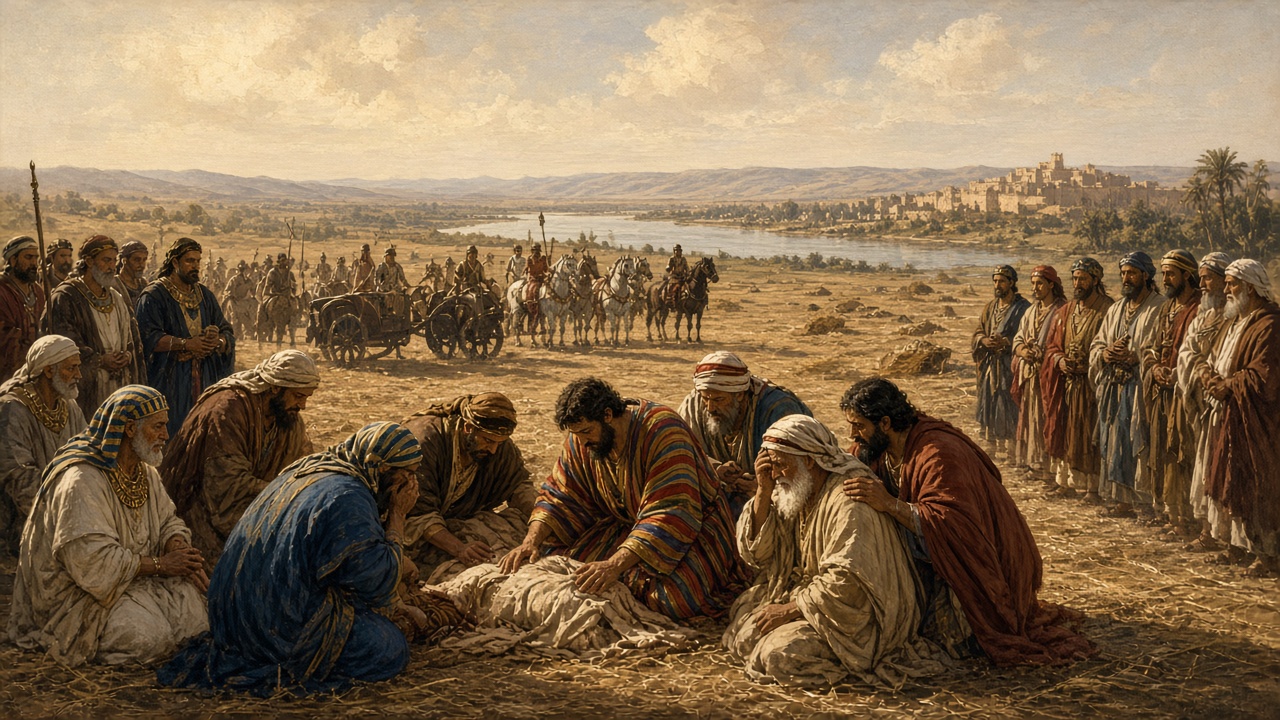
El entierro de Jacob y la muerte de José
- La era de Atad, donde la comitiva se lamentó a gritos durante siete días al otro lado del Jordán, toma su nombre de una palabra que significa espino cerval. Los cananeos que vieron el duelo llamaron al lugar Abel-mizraim, 'prado de Egipto' o 'duelo de Egipto'. El Diccionario Bíblico de Easton sitúa Abel-mizraim al oeste del Jordán y dice que su ubicación es desconocida, mientras describe Atad como probablemente cercano a Hebrón.Fuentes: el propio texto bíblico
- Los hijos de Jacob lo sepultaron en la cueva de Macpela, en el campo cerca de Mamre, el sitio de entierro que Abraham había comprado a Efrón el hitita. El Diccionario Bíblico de Easton identifica a Efrón como hijo de Zohar y registra el precio de cuatrocientos siclos de plata.Fuentes: el propio texto bíblico
- José permaneció en Egipto y vivió hasta los ciento diez años, lo suficiente para ver a los hijos de Efraín hasta la tercera generación. Los hijos de Maquir, hijo de Manasés, fueron criados sobre las rodillas de José —frase que la Revised Version inglesa traduce como 'nacidos sobre las rodillas de José' y que el Diccionario Bíblico de Easton explica como una adopción desde el nacimiento. Él dijo a sus hermanos que Dios los haría subir a la tierra prometida a Abraham, Isaac y Jacob, e hizo jurar a los hijos de Israel que subirían sus huesos desde Egipto; cuando murió, lo embalsamaron y lo pusieron en un ataúd allí.Fuentes: el propio texto bíblico
Notas escritas con ayuda de IA a partir de fuentes abiertas (Theographic Bible Metadata, CC BY-SA 4.0; Easton’s Bible Dictionary, dominio público) y revisadas antes de publicarse.
Lugares de este capítulo
- Canaan · 32.767, 35.333 · versículos 5, 13
- Egypt · 30.129, 31.308 · versículos 7, 14, 22, 24, 26
- Goshen · Hoy: Goshen 1 · 30.799, 31.834 · versículo 8
- Atad · Hoy: near the mouth of the Jordan River · 31.915, 35.530 · versículos 10, 11
- Jordan · Hoy: Jordan River · 31.761, 35.558 · versículos 10, 11
- Machpelah · Hoy: Cave of the Patriarchs · 31.525, 35.111 · versículo 13
Solo aparecen lugares identificados con alta confianza (90 % o más según las fuentes académicas reunidas por OpenBible). Mapa de la época: DARE (Digital Atlas of the Roman Empire), CC BY 4.0; mapa actual: © colaboradores de OpenStreetMap; lugares: OpenBible.info (CC BY 4.0).
Créditos y licencia de esta traducción
Cishingini Agwara Kambari [asg]
Cishingini: Cishingini Agwara Kambari [asg] (Bible)
copyright © 2025 Language Development and Translation Initiative (LDTI)
Language: (Cishingini)
Contributor: The Seed Company
This translation is made available to you under the terms of the
Creative Commons Attribution Share-Alike license 4.0.
You have permission to share and redistribute this Bible translation in any format and to make reasonable revisions and adaptations of this translation, provided that:
You include the above copyright and source information.
If you make any changes to the text, you must indicate that you did so in a way that makes it clear that the original licensor is not necessarily endorsing your changes.
If you redistribute this text, you must distribute your contributions under the same license as the original.
Pictures included with Scriptures and other documents on this site are licensed just for use with those Scriptures and documents.
For other uses, please contact the respective copyright owners.
Note that in addition to the rules above, revising and adapting God's Word involves a great responsibility to be true to God's Word. See Revelation 22:18-19.
2025-07-09
Fuente: http://ebible.org/asg/ · eBible.org