Apocalipsis 11
Ŋwɛ menomenyɛɛ́ mekɛ́ · Toca un versículo para ver sus referencias cruzadas.
Ɛsɔwɔ atɔ bɔɔ́ ɛkpávé apeá
1Unó bina ukogé, áchyɛɛ́ me meto ɛwé ámɛge unó wyɛɛ́. Ne Ɛsɔwɔ ajɔɔ́ ne me aké, “Chó mɛɛ́ ɛcha upɛ wa ne geluɔ́gé upɛ. Pa ntó bɔɔ́ abi ánógé me wyɛ. 2Yɛ́mbɔ, ɔmɛge fɔ́ dachi ɛcha upɛ wa, lyaá ji néndé me nlyaá ji mbaá bɔɔ́ abi álá ápɔ́ bɔɔ́ Jus, nnó ágbaré gefwage bwɔ́ né melɔ ukpea wa né bɔ ámfaá usa upea meso ɛpea. 3Ne ntɔme nyɛ bɔɔ́ ba apeá abi ágaregé mekomejɔɔ́ Ɛsɔwɔ, nchyɛge nyɛ ɛbwɔ́ uto mangaré bɔɔ́ genó ɛyi me mpyɛ nyɛ. Ne ágaregé nyɛ geji, áfyɛɛ́ mandeé nekwi né ndɔ dɛle meso usaá ufya ne ɛlɛɛ́.”
4Bɔɔ́ bina apeá ne álu ɛké unɔɔ́ Olif upeá ne álú ntó ɛké uluɔ matúlékaŋ upea ɛbi utɛne né mbɛ ushu Ɛsɔwɔ Ata muú ágbáregé gefwa mme. 5Ne mbɔgé muú amuagé mampyɛ ɛbwɔ́ genó gebo, mewɛ ɛtanege ɛbwɔ́ né meno ɛsɔɔ́ muú mawame ɛbwɔ́ yimbɔ, mbɔntó ne bɔɔ́ abi amuame mampyɛ ɛbwɔ́ genó gebo, ábɔɔ́ mamgboó. 6Ɛbwɔ́ áwyaá uto magbaré manaá nnó ákwegé fɔ́ né gébé ɛyigé ɛbwɔ́ ágaregé mekomejɔɔ́ Ɛsɔwɔ. Áwyaá ntó uto mambwɔlé manyi ála manoó manoó. Ne áwyaá ntó uto mantɔ mameé ufɔ ufɔɔ́ áchwɔ́ fa mme ndɛre ɛbwɔ́ ákɛlege.
7Anerege mangaré mekomejɔɔ́ Ɛsɔwɔ, menya mebo ayi atané né gepyɛɛ́ ɛyi geláge pɔ́ ne kwyakwya achwɔ́ mmyɛ nyɛ ne ɛbwɔ́ apwɔ, awá ɛbwɔ́. 8Ne uŋkwɔ bwɔ́ ulaá nyɛ né metɔɔ́ melɔɔ́, mélɔ́ kpaá ɛwémbɔ mbaá ayi asɛlé nya Ata sé áwɔme nya né gekwa. Ne mabɔ ami ákuú melɔ ɛwéna né neka ɛlé Sodom yɛ́ nnó Ijip. 9Ufɔɔ́ ufɔɔ́ bɔɔ́ yɛ́ndé ntoó, ufɔɔ́ ufɔɔ́ mejɔɔ́ ne malɔ mme mako átane áchwɔ́ɔ ágɛne uŋkwɔ bwɔ́ né ndɔ ɛlɛɛ́ ne geba, ákamegé fɔ́ nnó muú ánií ubi. 10Matɔɔ́ ágɔɔ́ nyɛ bɔɔ́ mme meko ndɛre bɔɔ́ bina ápea ágbóo, ne ápyɛɛ́ nyɛ ɛpaá gétúgé negbóné bwɔ́, áwɛlé atɛ mako néndé mekomejɔɔ́ Ɛsɔwɔ ayi bɔɔ́ bina ágaré ápyɛɛ́ bɔɔ́ mme áwú ubalé dɔɔ́. 11Yɛ́mbɔ ndɔ yina ɛlɛɛ́ ne geba ɛkogé, Ɛsɔwɔ atɔmé gejulé ɛyi gechyɛge geŋwá gekpɛ uŋkwɔ bɔɔ́ bina né mmyɛ ákwilé tɛ́né. Ákwilégé mbɔ bɔɔ́ ako abi ábɔɔ́ ágɛné ɛbwɔ́ ɛfɔ ɛkwɔ ɛbwɔ́ né matɔɔ́ dɔɔ́. 12Ne bɔɔ́ bina ápeá, áwú meko muú fɔ ndɛre ákuú ɛbwɔ́ keŋké né mfaánebuú, aké, “Kwɔgé déchwɔ́ wena.” Ne ndɛre bɔɔ́ mawáme bwɔ́ ápɛlé, ɛbwɔ́ ákwɔ áfɛ́ né mfaánebuú né mmu gekó. 13Wyɛ né gébé ɛyigémbɔ, mme ányígé ne ɛshyɛ tegetege ákáré melɔ ɛwémbɔ né malú afya, ne upú ɛbi úlú né melu ɛma ukwe ne mmyɛ muú ayi ágboó álú dɛle bɔɔ́ akénéama. Bɔɔ́ abi álá, ɛfɔ ɛkwɔ ɛbwɔ́ matɔɔ́ ánógé Ɛsɔwɔ muú ɔlú né mfaánebuú.
14Neŋáne ɛfwyale ɛniné negbée maŋáne apeá nekoó, wúgé ɛniné negbeé álɛɛ́ nechwɔɔ́.
Ɛkiɛ́nné Ɛsɔwɔ ɛwé ɛgbeé makiɛ́nné akénéama ɛfɔme mbá wuú
15Ne ɛkiɛ́nné Ɛsɔwɔ ɛwé ɛgbeé akénéama ɛfɔ́mégé mbá wúu, nwú meko makiɛ́nné Ɛsɔwɔ ndɛre ájɔ́gé keŋké áké, “Ata Ɛsɔwɔ sé ne muú wuú ayi ji ajyaá nnó ábɛ́ mempoó se awyaá uto mangbaré gefwa fa mme nana. Ne Ɛsɔwɔ ágbáregé gefwa tɛ kwyakwya ne kwyakwya.” 16Ájɔɔ́gé mbɔ, ákpakpa bimbɔ, ɛsaá meso ɛni abi ájwɔlé mfaá uluɔ gefwage bwɔ́ né mbɛ ushu Ɛsɔwɔ ákwe mashu mme né mbɛ ushu Ɛsɔwɔ áfɛɛ́ Ɛsɔwɔ, 17áké, “Ata Ɛsɔwɔ, wɔ Muú Ɔpwɔɔ́ amu, wɔ muú ɔlu ne ɔbɔ ɔlú, ɛsé déchyɛgé wɔ matame néndé ɔlɛré gekpɛ́kpɛ́gé uto bi wɔ ɔwyaá ne ɔlɔ mangbaré gefwa jyɛɛ́ fa mme. 18Ne bɔɔ́ abi abɔ álá ápɔ fɔ́ Jus, ɛbwɔ́ ábɔɔ́ metɔɔ́ usɔɔ́ ne wɔ dɔɔ́. Yɛ́mbɔ gébégé ɛyigé wɔ ɔlɛrégé metɔɔ́ usɔɔ́ wyɛ gekwɔné. Ne gébé gekwɔné ɛyigé wɔ ɔsɔɔ́ mpa bɔɔ́ abi ágbóo. Gébé ntó gekwɔné ɛyigé wɔ ɔchyɛgé nsa mbaá bɔɔ́ utɔɔ́ byɛɛ́, bɔɔ́ ɛkpávé Ɛsɔwɔ ne bɔɔ́ ako abi áfɔɔ́ wɔ, abi aŋea gemɛ ne abi álá aŋea wɔ́. Ne gébé gekwɔné ɛyigé wɔ ɔwane bɔɔ́ abi áwáne bɔɔ́ ako abi áwáné bɔɔ́ fa mme yina.”
19Áfɛɛ́ge Ɛsɔwɔ mbɔ, gepúgé Ɛsɔwɔ né mfaánebuú génene. Ne mengɛ́ mekwaá menomenyɛɛ́ ɛwé ɛtɛné mbaá menomenyɛɛ́ ɛwé Ɛsɔwɔ anyɛɛ́ ne bɔɔ́ bií ndɛre ɛlú né mmu gepúgé Ɛsɔwɔ ɛyigémbɔ. Ne ngɛ́ ndɛre gasama akɛlé mamama, nefe nénya gbaŋgbaŋ, mbaá áwyale mme anyií tegetege, ne makaŋkoma akwene gejame.
¿Sabías que…?
Los dos testigos y la gran ciudad
- Apocalipsis 11 dice que los cuerpos de los dos testigos yacerán en la calle de la gran ciudad, llamada en sentido figurado Sodoma y Egipto, donde también fue crucificado su Señor. Una entrada de diccionario explica Sodoma como ardiente, o la amurallada, una ciudad destruida por fuego del cielo a causa de la maldad de sus habitantes, una destrucción que las Escrituras recuerdan con frecuencia. Egipto, la tierra del Nilo y de las pirámides, se describe igualmente como un lugar de gran importancia en las Escrituras.Fuentes: el propio texto bíblico
- A los dos testigos se les da poder para profetizar durante mil doscientos sesenta días, vestidos de cilicio. Son los dos olivos y los dos candeleros que están delante del Señor de la tierra, y tienen poder para cerrar el cielo de modo que no llueva, para convertir las aguas en sangre y para herir la tierra con toda clase de plagas.Fuentes: el propio texto bíblico
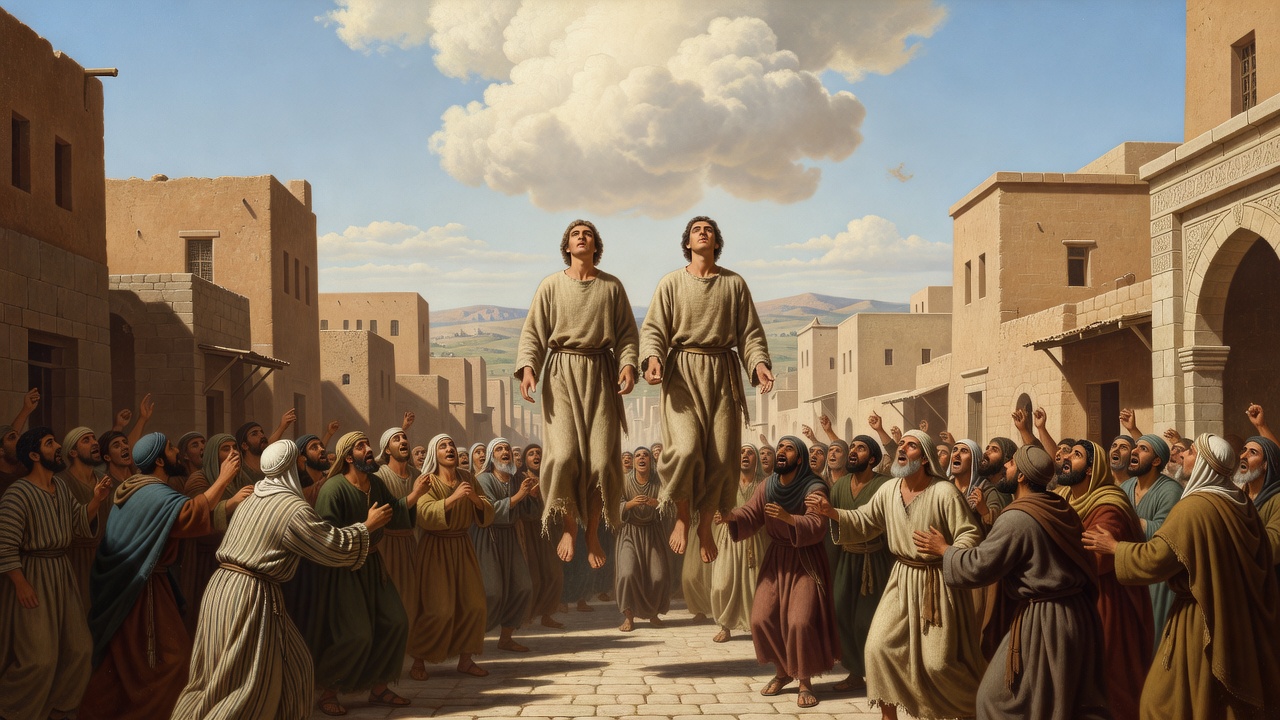
- Cuando los dos testigos terminan su testimonio, la bestia que sube del Abismo los vence y los mata. Durante tres días y medio, pueblos, tribus, lenguas y naciones ven sus cuerpos y no permiten que sean puestos en un sepulcro, mientras los habitantes de la tierra se burlan de ellos, celebran y se envían regalos, porque los dos profetas los habían atormentado. Después de eso, el aliento de vida que viene de Dios entra en ellos; se ponen de pie y suben al cielo en una nube, mientras sus enemigos los observan.Fuentes: el propio texto bíblico
Notas escritas con ayuda de IA a partir de fuentes abiertas (Theographic Bible Metadata, CC BY-SA 4.0; Easton’s Bible Dictionary, dominio público) y revisadas antes de publicarse.
Lugares de este capítulo
Solo aparecen lugares identificados con alta confianza (90 % o más según las fuentes académicas reunidas por OpenBible). Mapa de la época: DARE (Digital Atlas of the Roman Empire), CC BY 4.0; mapa actual: © colaboradores de OpenStreetMap; lugares: OpenBible.info (CC BY 4.0).
Créditos y licencia de esta traducción
Ŋwɛ menomenyɛɛ́ mekɛ́
New Testament in Denya (CM:anv:Denya)
copyright © 2010 Wycliffe Bible Translators, Inc.
Language: Denya
Translation by: Wycliffe Bible Translators, Inc.
Copyright Information
© 2010, Wycliffe Bible Translators, Inc. All rights reserved.
This translation text is made available to you under the
terms of the Creative Commons License: Attribution-Noncommercial-No Derivative Works.
( http://creativecommons.org/licenses/by-nc-nd/3.0/ )
In addition, you have permission to port the text to different file formats, as long as you
do not change any of the text or punctuation of the Bible.
You may share, copy, distribute, transmit, and extract portions
or quotations from this work, provided that you include the above copyright
information:
You must give Attribution to the work.
You do not sell this work for a profit.
You do not make any derivative works that change any of the actual words or punctuation of the Scriptures.
Permissions beyond the scope of this license may be
available if you contact
us with your request.
The New Testament
in Denya
© 2010, Wycliffe Bible Translators, Inc. All rights reserved.
This translation is made available to you under the terms of the
Creative Commons Attribution-Noncommercial-No Derivatives license 4.0.
You may share and redistribute this Bible translation or extracts from it in any format, provided that:
You include the above copyright and source information.
You do not sell this work for a profit.
You do not change any of the words or punctuation of the Scriptures.
Pictures included with Scriptures and other documents on this site are licensed just for use with those Scriptures and documents.
For other uses, please contact the respective copyright owners.
2024-02-11
Fuente: http://ebible.org/anvNT/ · eBible.org