Hechos 24
Ŋwɛ menomenyɛɛ́ mekɛ́ · Toca un versículo para ver sus referencias cruzadas.
Fɛlis apɛ mechɔ Pɔl
1Ndɔ ɛta ɛkoógé, Ananya ayi ɛtukpɛ ampyɛ upɛ Ɛsɔwɔ ne ákpakpa bifɔ áchwɔ́ né Kaisaria ne Tɛtulɔs muú yi akaáge mabɛ́ bɔɔ́ Rom. 2Ákúgé Pɔl akpɛ mmu, ne Tɛtulɔs alɔ mangaré gyɛ́ yi Pɔl apyɛ́ aké,
“Ata Fɛlis ɔpyɛ bɔɔ́ ɛsé ábɔ́ nesɔ né gejamégé gébé gétúgé ɔgbaré ɛbwɔ́ cháŋéné. Ne gejamégé unó bi wɔ ɔkwɔré, wɔ ɔpyɛ melɔ ɛse ɛnené. 3Ne ɛsé desɛ mechɔ ɛwé ne metɔɔ́ megɔ́mégɔ́ ne bɔɔ́ áfɛge yɛndé mbaá gébé geko. 4Nkɛ́légé fɔ́ manchɔ wɔ gébé yɛ́mbɔ nnɛne wɔ mmyɛ nnó ɔwuú mechɔ́ ɛwé me nkɛlege manjɔɔ́. 5Ɛsé degɛ́ nnó mende yina alu muú ɛfwyale, akɛne malɔmalɔ apyɛ bɔɔ́ Jus ako ádorege makpo ne atɛ. Alu ntó menɔ mbɛ né mbaá bɔɔ́ bi ákuú ɛbwɔ́ nnó ɛkwɔ Nasarɛn.
6“Abɔ́ akɛlege ntó mamfyɛ deba né ɛcha upɛ Ɛsɔwɔ ne depyɛne ji [Ɛsé debɔ́ delu mampa mpa wuú nkane ɛbɛ́ sé ɛlu, 7yɛ́mbɔ Lysia menɔ muú bɔɔ́ bee achwɔ́ fɔɔ́ ji né amu sé, 8ne aké dechwɔ́ depa mpa Pɔl né mbɛ ushu wyɛ.] Ɔgigé mende yina, ɔwuú nyɛ unó uko ɛbi ɛsé dejɔge mbɔ nnó apyɛ.” 9Tɛtulus ajɔgé mbɔ, bɔɔ́ Jus ako abɔ álú ɛfɛɛ́ ákame nnó ɛlú wáwálé.
Pɔl aŋmɛ́né mmyɛ jií né mbɛ ushu Fɛlis
10Ne gɔmena yimbɔ afu Pɔl ɛbwɔ nnó ajɔɔ́, Pɔl alɔ yɛ manjɔɔ́ aké, “Nkaá nnó ɔpa mɛ́ mpa né melɔ ɛwé ne gejamégé aŋmɛ́, ne metɔɔ́ ɛgɔ́ɔ me maŋmɛné mmyɛ ya né mbɛ ushu wyɛ. 11Mbɔgé ɔgigé, ɔwuú nyɛ nnó ndɔ ɛlu dangbeé ɛfyaneɛpea ɛyi mbɔ njyɛ né Jɛrosalɛ manogé Ɛsɔwɔ. 12Ne bɔɔ́ Jus agɛ́ yɛ me nyɛɛ́gé mbeé ne muú fɔ né ɛcha upɛ Ɛsɔwɔ wɔ́, ne ágɛ́ yɛ me mpyɛge bɔɔ́ Jus adorege makpo ne atɛ né macha mmyɛmenɛne yɛ né melu fɔ́ né melɔ wɔ́. 13Ɛbwɔ́ ákagé lɛre fɔ́ nnó genó ɛyige ɛbwɔ́ áké mpyɛ gelú wáwálé. 14Ne nkamé genó gema ɛyige ɛbwɔ́ áké, ‘Nnoge Ɛsɔwɔ ayi ukwene antɛ sé né meti ɛwé ɛbwɔ́ áké ɛ́lɔ́mé fɔ́. Yɛ́mbɔ nkamé lé unó uko ɛbi mabɛ́ Mosis ajɔɔ́ ne ɛbi bɔɔ́ ɛkpavé Ɛsɔwɔ ásámé.’ 15Ne nwya umɛɛ́ wyɛ nkane ɛbwɔ́ ntó awya nnó Ɛsɔwɔ apyɛ nyɛ yɛ́ndémuú akwile né negbo yɛ apyɛ galɔ́gálɔ́, yɛ apyɛ gabo. 16Ne nmuame yɛndégébé nnó metɔɔ́ wa ɛ́bɛ́ pópó né mbɛ ushu Ɛsɔwɔ ne mbɛ ushu akwaá 17Ɛbɛ́lé mɛ́ dɔɔ́ ayi mbɔ nla jyɛ né Jɛrosalɛ wɔ́ ne mfɛ́ nana ne nka mampoó bɔɔ́ Jus ne mampyɛ ntó upɛ mbaá Ɛsɔwɔ. 18Gɛ́ genó ɛyi gepyɛ me njyɛ né ɛcha upɛ Ɛsɔwɔ mbɔ ne ɛbwɔ́ ágɛné me wyɛ. Mbɔ́ nnerege mampyɛ upɛ bimbɔ nnó nshwɔ́né mmyɛ ya, gejamégé bɔɔ́ abɔ́ ápɔ́ ne me, ne yɛ ɛfwyale ɛtane wɔ́. Ne bɔɔ́ bi abɔ ágɛné me ɛ́lé bɔɔ́ Jus abi átané né gebagé mewaá Ɛsya. 19Mbɔgé ɛbwɔ́ ábɔ́ ágɛ́ nnó mpyɛ gyɛ, mbɔ áchwɔ́ gáre né mbɛ ushu wyɛ. 20Ɛlá pɔ mbɔ wɔ́, bɔɔ́ bina ágaré gyɛ ayi ɛbwɔ́ agɛné gébégé ákpakpa melɔ ápɛlé mechɔ wa. 21Ɛsé ne ɛbwɔ́ debɔ́ debɔ ɛfwyale wyɛ né genó gema. Ɛlé genó ɛyi mbɔ njɔɔ́ né metɔɔ́ metɔɔ́ ɛbwɔ́ nké, ‘Mbɔ́ mpa ne ɛnyú fina gétúgé mfyɛ metɔɔ́ nnó muú agbogé akwilege nyɛ né negbo.’”
22Fɛlis awuúgé mbɔ, depɔ ɛtire na deko, ndɛre akaá mɛ́ meti ɛwé Jisɔs cháŋéné, agbɛ́ mechɔ ɛwémbɔ aké, “Lysia menɔ muú bɔɔ́ bee achwɔgé ne nsɔ́ mpa yina.” 23Ne agaré muú kpaá bɔɔ́ bee ama nnó ábámé Pɔl yɛ́mbɔ álya ji ábɛ́ shushu ne alyage ntó ajeé bií áchwɔ́ áchyɛge ji unó bi uli ji. Achɔ gébé ne mpa Pɔl né aŋmɛ́ apea.
24Ɛ́bɛlegé Fɛlis ne mendée wuú Drusila áchwɔ gɛ́ Pɔl. Mendée wuú abɔ́ alu muú Jus. Ɛbwɔ́ ákuú ji ne álɔ manwú ndɛre ji agárege ɛbwɔ́ nkane muú akage fyɛ metɔɔ́ ne Kras Jisɔs. 25Ne agaré nkane muú akage bɛ cho ne nkane muú abɔ́ mangbaré mmyɛ ji né bií mpa Ɛsɔwɔ ɛbi uchwɔɔ́ nyɛ. Fɛlis awuúge mbɔ, ɛfɔɔ́ ɛkwɔ́ ji metɔɔ́ aké, “Cho kpɛ́, ngɛgé gébé mmage kuú nyɛ wɔ.” 26Ajɔɔ́ mbɔ, afɛrege nnó Pɔl achyɛge nyɛ ji ŋka. Né getú ɛyina akuú Pɔl yɛndégébé ado abya ne ji.
27Ɛpyɛ wyɛmbɔ kpaá aŋmɛ́ apea ákoó. Gébégé áchyɛ Pɔshɔs Fɛstos geluɔ́gé Fɛlis, Fɛlis alya Pɔl né denɔ ɛlé akɛlege mampyɛ matɔɔ́ agɔɔ́ bɔɔ́ Jus.
¿Sabías que…?
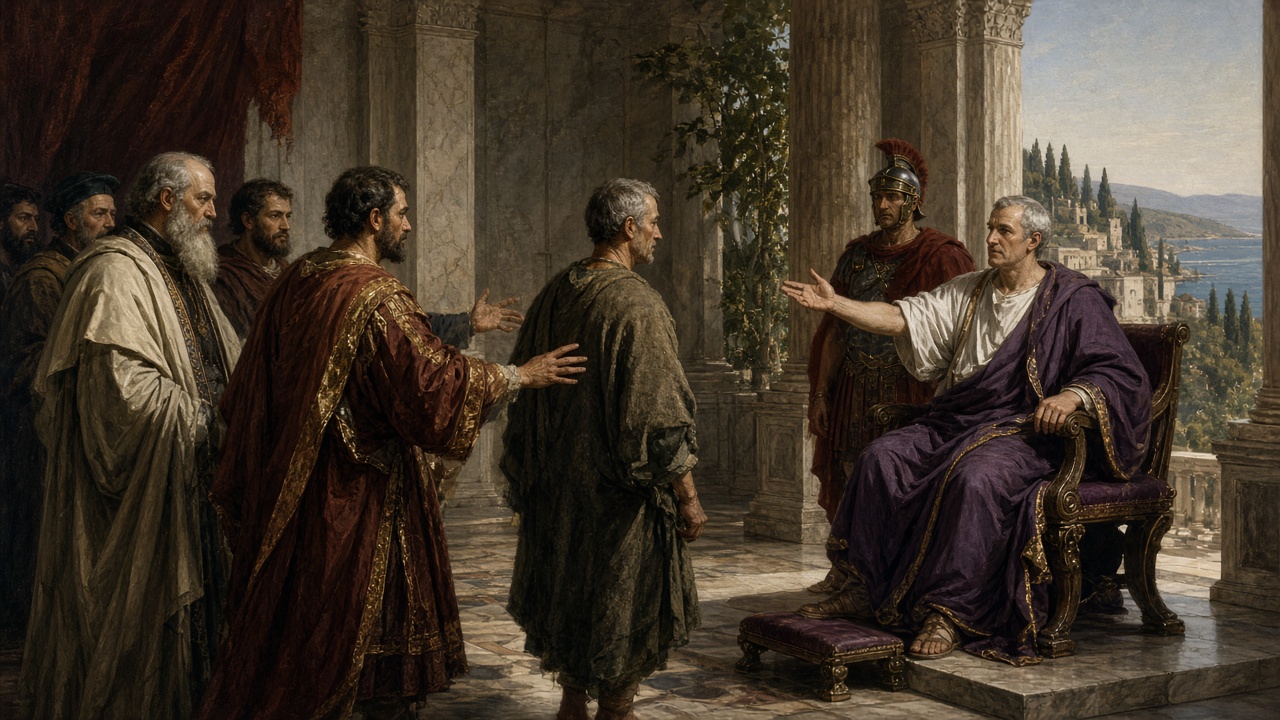
Pablo ante Félix
- El sumo sacerdote Ananías bajó con algunos ancianos y un abogado llamado Tértulo, a quien el Diccionario Bíblico de Easton describe como un abogado romano empleado por los judíos para exponer su causa contra Pablo ante Félix. Tértulo elogió al gobernador y luego dijo que Pablo era una peste que provocaba disensión entre los judíos por todo el mundo, cabecilla de la secta de los nazarenos y un hombre que había intentado profanar el templo. El diccionario relaciona ese elogio inicial con la limpieza que Félix hizo del país, al expulsar a bandidos e impostores.Fuentes: el propio texto bíblico · Tertullus · Felix
- Félix, que estaba bien informado acerca del Camino, aplazó la audiencia y mantuvo a Pablo bajo guarda, aunque le permitió cierta libertad y dejó que sus amigos atendieran sus necesidades. El relato dice que esperaba que Pablo le ofreciera un soborno y por eso lo mandaba llamar con frecuencia; el Diccionario Bíblico de Easton también afirma que al parecer esperaba un soborno y, por ello, tuvo varias entrevistas con él. Después de dos años lo sucedió Porcio Festo —el Diccionario Bíblico de Easton (1897) fecha ese nombramiento en el año 60 d. C.— y, queriendo hacer un favor a los judíos, Félix dejó a Pablo en prisión.Fuentes: el propio texto bíblico · Felix · Portius Festus
- Unos días después, Félix regresó con su esposa Drusila, que era judía, y escuchó a Pablo hablar de la fe en Cristo Jesús y de la justicia, el dominio propio y el juicio venidero; Félix se asustó y lo despidió. El Diccionario Bíblico de Easton (1897) identifica a Drusila como la tercera y la más joven hija de Herodes Agripa I y dice que Félix la indujo a dejar a su esposo, Azizus, rey de Emesa. La misma entrada dice que ella y su hijo perecieron en la erupción del monte Vesubio en el año 79 d. C.Fuentes: el propio texto bíblico · Drusilla
Notas escritas con ayuda de IA a partir de fuentes abiertas (Theographic Bible Metadata, CC BY-SA 4.0; Easton’s Bible Dictionary, dominio público) y revisadas antes de publicarse.
Lugares de este capítulo
- Caesarea · Hoy: Caesarea Maritima · 32.500, 34.892 · versículo 1
- Jerusalem · 31.777, 35.234 · versículos 11, 17
- Asia · 38.400, 28.300 · versículo 18
Solo aparecen lugares identificados con alta confianza (90 % o más según las fuentes académicas reunidas por OpenBible). Mapa de la época: DARE (Digital Atlas of the Roman Empire), CC BY 4.0; mapa actual: © colaboradores de OpenStreetMap; lugares: OpenBible.info (CC BY 4.0).
Créditos y licencia de esta traducción
Ŋwɛ menomenyɛɛ́ mekɛ́
New Testament in Denya (CM:anv:Denya)
copyright © 2010 Wycliffe Bible Translators, Inc.
Language: Denya
Translation by: Wycliffe Bible Translators, Inc.
Copyright Information
© 2010, Wycliffe Bible Translators, Inc. All rights reserved.
This translation text is made available to you under the
terms of the Creative Commons License: Attribution-Noncommercial-No Derivative Works.
( http://creativecommons.org/licenses/by-nc-nd/3.0/ )
In addition, you have permission to port the text to different file formats, as long as you
do not change any of the text or punctuation of the Bible.
You may share, copy, distribute, transmit, and extract portions
or quotations from this work, provided that you include the above copyright
information:
You must give Attribution to the work.
You do not sell this work for a profit.
You do not make any derivative works that change any of the actual words or punctuation of the Scriptures.
Permissions beyond the scope of this license may be
available if you contact
us with your request.
The New Testament
in Denya
© 2010, Wycliffe Bible Translators, Inc. All rights reserved.
This translation is made available to you under the terms of the
Creative Commons Attribution-Noncommercial-No Derivatives license 4.0.
You may share and redistribute this Bible translation or extracts from it in any format, provided that:
You include the above copyright and source information.
You do not sell this work for a profit.
You do not change any of the words or punctuation of the Scriptures.
Pictures included with Scriptures and other documents on this site are licensed just for use with those Scriptures and documents.
For other uses, please contact the respective copyright owners.
2024-02-11
Fuente: http://ebible.org/anvNT/ · eBible.org