Hechos 20
Ŋwɛ menomenyɛɛ́ mekɛ́ · Toca un versículo para ver sus referencias cruzadas.
Pɔl ama jyɛ né Masedonia ne Akaya (Gresse)
1Ɛfwyale ɛwémbɔ ɛbyɛgé, ɛbɛlégé mboó ndɔ, Pɔl akuú bɔɔ́ Jisɔs achyɛ ɛbwɔ́ majyɛ, atamé ɛbwɔ́ ne alyá afɛ́ né gebagé mewaá Masedonia. 2Akɛne né geba ɛyigémbɔ geko afyɛ́ɛ bɔɔ́ Jisɔs ɛshyɛ ne ájyɛ́ né gebagé mewaá Gresse. 3Akwɔ́négé ɛwu, abɛlé amfaá alɛɛ́. Ne nkane abɔ alu mankpɛ ɛ́kpe ajyɛ né gebagé mewaá Siriya, awu nnó bɔɔ́ Jus ásɔ́ mala manwá ji. Ɛfɛɛ́ ne ajya mankéré meso, ne akoóge ne ɛgbɛ Masedonia akéré meso. 4Ndɛre ajyɛ bɔɔ́ abi álu gelua ne ji ɛle Sopata maá Pyrhɔs ayi atané melɔ Bɛroa; Aristakɔs ne Sɛkundɔs abi átané melɔ Tɛssalonika ne Gayɔs ayi atané melɔ Debe, Timɔti, Tikikɔs ne Trɔfimɔs abi átané gebagé mewaá Ɛsya. 5Ɛbwɔ́ abɔgé mbɛ, ákwɔ́négé né Truus ágií ɛsé. Ɛse dela né Filipi. Ne gébégé ɛpaá brɛd ayi alá muale ɛkoógé, 6ɛse dekpɛ ɛ́kpe né Filipi mankwɔlé ɛbwɔ́. Ɛsé dekɛ nnyinnyi né ndɔ ɛta. Débanégé ɛbwɔ́ né melɔ Truus, debɛlé ɛfɛɛ́ uwyaá kpogele.
Kwya kwya nekɛne Pɔl né Truus mangɛ bɔɔ́ Jisɔs
7Bií mbɛ né uwyaá ukwɔnege, ɛse ne ɛchomele bɔɔ́ Jisɔs déjwɔlé melu ɛma manyɛ menyɛɛ́ gejeé. Ndɛre Pɔl alu manjyɛ dondo, alɔ mangaré mekomejɔɔ́ Ɛsɔwɔ, ne ashií garégé garégé kpaá tɛ metɔɔ́ utuú. 8Ábɔ́ álwɛ́ gejamégé mawɛ né maá gepu né mfaá ɛyɔŋ mbaá ayi ɛsé debɔ́ déchome. 9Gesagé muú ayi akuú ji Yutikɔs abɔ́ ajwɔlé né maá menombí. Ndɛre Pɔl agarege mekomejɔɔ́ Ɛsɔwɔ ajyɛ mbɛ, maá yimbɔ alɔ mambɛlé gejya. Abɛlé kpaá aloó mfaá maŋɔ́ɔ ɛyɔŋ alɛɛ́ akwé mme. Áké ájyɛ bwɛ ji, agbo mɛ́. 10Pɔl akwɔlé ɛbwɔ́ ajyɛ fyále gesagé muú yimbɔ mme ne aké ne abi atɛné, “Deligé sé, agbó wɔ́, alu mebɛ!” 11Ne Pɔl akéré mfaá ɛyɔŋ anyɛɛ́ge menyɛɛ́ gejeé, ama lɔ mangaré mekomejɔɔ́ Ɛsɔwɔ kpaá tɛ bií ujya ne ale ajyɛ. 12Ɛwyagé ɛbwɔ́ ágbaré gesagé muú yimbɔ áfɛ́ ne ji mmu mebɛ ne matɔɔ́ bwɔ́ ákwené.
Pɔl atané melɔ Truus afɛ́ né melɔ Miletus
13Ɛsé ako abi dekɛne ne Pɔl, dejyɛ kpɛ́ ɛ́kpe, defɛ́ né melɔ Asos gétúgé Pɔl abɔ́ agaré ɛsɛ́ nnó debɔ mbɛ, ji akɛne mewaá mewaá abané ɛsé ɛwu. 14Ábánégé ɛsé né Assɔs, ɛse desɛ ji dekpɛ ɛ́kpe defɛ né melɔ Mitylɛn. 15Bií ujyagé ɛsé dema kpɛ́ ɛ́kpe dekɛ nnyinnyi dekwɔné kwɔ́kwɔ́lé ne Kiɔs ne dékɛne wyɛ dejyɛ. Bií ujyagé dékwɔné né Samɔs. Bií ɛbi fɔ ujyagé ɛsé dékɛ dekwɔné Miletus. 16Ɛsé debɔ́ dékɛné mbɔ, dekoó Ɛfɛsɔs koóge getúgé Pɔl abɔ akɛlege nnó dejyɛ wáwá, déchɔ́ge sé gébé né Ɛsya nnó ji akwɔ́né Jɛrosalɛ nsa nnó bií ɛpaá Pɛntikos ukwɔne.
Pɔl achyɛ majyɛɛ́ mbaá ákpakpa bɔɔ́ Ɛchomele Jisɔs né Ɛfɛsɔs
17Ndɛre dekwɔné Miletus, Pɔl alɔ meko né Ɛfɛsɔs nnó ágaré ákpakpa ɛchomele bɔɔ́ Jisɔs nnó áchwɔ́ ábané ji ɛfɛɛ́. 18Ɛbwɔ́ áchwɔge, alɔ manjɔɔ́ ne ɛbwɔ́ aké, “Ɛnyú dekaá nkane ɛsé delu mɛ́ chóncho, lɔ né bií mbɛ ɛbi nkwɔne né mme Ɛsya kpaá tɛ fi. 19Mbɔ mpyɛ utɔɔ́ ba nkane maá defwɛ Ɛsɔwɔ ne mpɔ́ fɔ́ ne nepa, nlu ne gejamégé manse né amɛ. Ngɛ́ ntó gekpɛ́kpɛ́gé ɛfwyale ne gébé gefɔ́ nlu ne manse né amɛ gétúgé gekpɛ́kpɛ́gé ɛfwyale ɛwé bɔɔ́ Jus achyɛge me. 20Ɛnyú dekaá nkane mbɔ ngarege ɛnyu mekomejɔɔ́ Ɛsɔwɔ ne nkɛne upú, upú nlɛrege ɛnyú ne mbi fɔ geno ɛyige gekage póo ɛnyú wɔ́. 21Wyɛ meko wu ama ne mbɔ́ ngaré bɔɔ́ Jus ne bɔɔ́ Grek nnó ábɔ́ manlyá gabo, akéré mbaá Ɛsɔwɔ ne áfyɛ matɔɔ́ ne Ata Jisɔs Kras ɛsé. 22Ne nana njyɛ né Jɛrosalɛ nkane Mendoó Ukpea ɛgaré me ne nkaá fɔ́ genó ɛyi gepyɛ nyɛ me ɛwu wɔ́. 23Genó ɛyigé nkaá gelu nnó yɛndé melɔ ɛwé nkwɔnégé, Mendoó Ukpea ɛgarege me nnó áchyɛge nyɛ me ɛfwyale ne áfyɛ nyɛ me denɔ né Jɛrosalɛ. 24Yɛ́mbɔ nsɛ yɛ gemɛ ya nnó nlu muú wɔ́, nkɛlege le manéré utɔɔ́ ɛbi Ata Jisɔs afyɛ me amu nnó ngaré abya melɔ́mélɔ́ nkane Ɛsɔwɔ alɛré bɔɔ́ galɔ́gálɔ́ nnó ɛbwɔ́ ápó.
25“Ne mbɔ nkɛne metɔɔ́ metɔɔ́ ɛnyú ngarege nkane gefwage Ɛsɔwɔ gelu, ne nkaá nnó ɛnyú degɛné sé me. 26Gɔge me ngaré ɛnyú nana nnó muú alagé meso, anogé né ɛgbɛ ɛwé Ɛsɔwɔ, ji mbɔɔ́ ne akaá, me mpɔ́ wyɛ. 27Mbɔ ngaré mɛ ɛnyú yɛndé genó ɛyigé Ɛsɔwɔ akɛlege mampyɛ ne mbi fɔ́ yɛ genó gema wɔ́. 28Delagé meso. Bage gemɛ nyú ne bɔɔ́ Ɛsɔwɔ abi Mendoó Ukpea ɛfyɛ ɛnyú né amu. Pɛge ɛbwɔ́ wyɛ nkane membamé magɔŋme ápɛle magɔŋme jií, tege nnó Ɛsɔwɔ akwɔ mɛ gewugé ɛchomelé bɔɔ́ Jisɔs ne manoó maá wuú nnó ábɛ́ bɔɔ́ bií. 29Njɔge mbɔ nendé nkaá nnó ntigé nyɛ meso, ukwala utanege nyɛ dafyɛ uchwɔ́ báne ɛnyú ne uchwɔge ulyágé fɔ́ magɔŋme yina. 30Ne bɔɔ́ fɔ átanege nyɛ ntó metɔɔ́ metɔɔ́ nyú nnó abwɔlé bɔɔ́ Jisɔs akwɔlé ɛbwɔ́. 31Sɛ́ge gébé détégé nkane mbɔ́ nchyɛge yɛ́ndémuú majyɛ́ né aŋmɛ́ alɛɛ́ utuú ne ŋwɔmese ne manse.
32“Ne náná ayi áfyɛɛ́ ɛnyú né amu Ɛsɔwɔ, nchyɛge ɛnyú majyɛ́ nnó dewuge le mekomejɔɔ́ wuú ayi álɛrege nkane ápyɛ ɛnyú debɔɔ́ nyɛ ɛshyɛ, ne debɔ nyɛ ntó mejé ɛwé Ɛsɔwɔ ábelé mbaá bɔɔ́ bií ako. Ɛnyú dekaá nkane geŋwá ya gelu. 33Ɛnyú dekaá nkane mbɔ nlu ne ɛnyú, nnɛrege fɔ́ mwɔle né ŋka muú yɛ mandeé jií. 34Mbɔ mpyɛ utɔɔ́ ne amu ya ne ɛse ne bɔɔ́ ba degɛ́ne geno ɛyige dekɛlege. 35Unó uko ɛbi mbɔ mpyɛ ulɛré nnó muú abɔ́ mampyɛ utɔɔ́ ne amu jií nnó apoó bɔɔ́ bi álá pɔ́ ne ɛshyɛ. Tege ntó nkane Ata Jisɔs abɔ́ ajɔɔ́ nnó, ‘Méjé ɛlu ne muú yi achyɛge ɛchyɛ ɛpwɔ́ muú yi agile nnó áchyɛgé ji chyɛge.’”
36Ne Pɔl anerege manjɔɔ́ unó bi, ɛbwɔ́ ako ató mano mme, anɛmmyɛ. 37Ne ɛbwɔ́ ako alɔ manli, átyaá ji ne átamé ji nnó akɛ́ pere! 38Ɛbwɔ́ ábɔ́ ásomege dɔɔ́ gétúgé Pɔl abɔ aké, Ɛbwɔ́ ámágé gɛ́ sé ji ne ɛbwɔ́ ájyɛ tí ji ákwɔné né mbaá ayi akpɛ́ne ɛ́kpe.
¿Sabías que…?
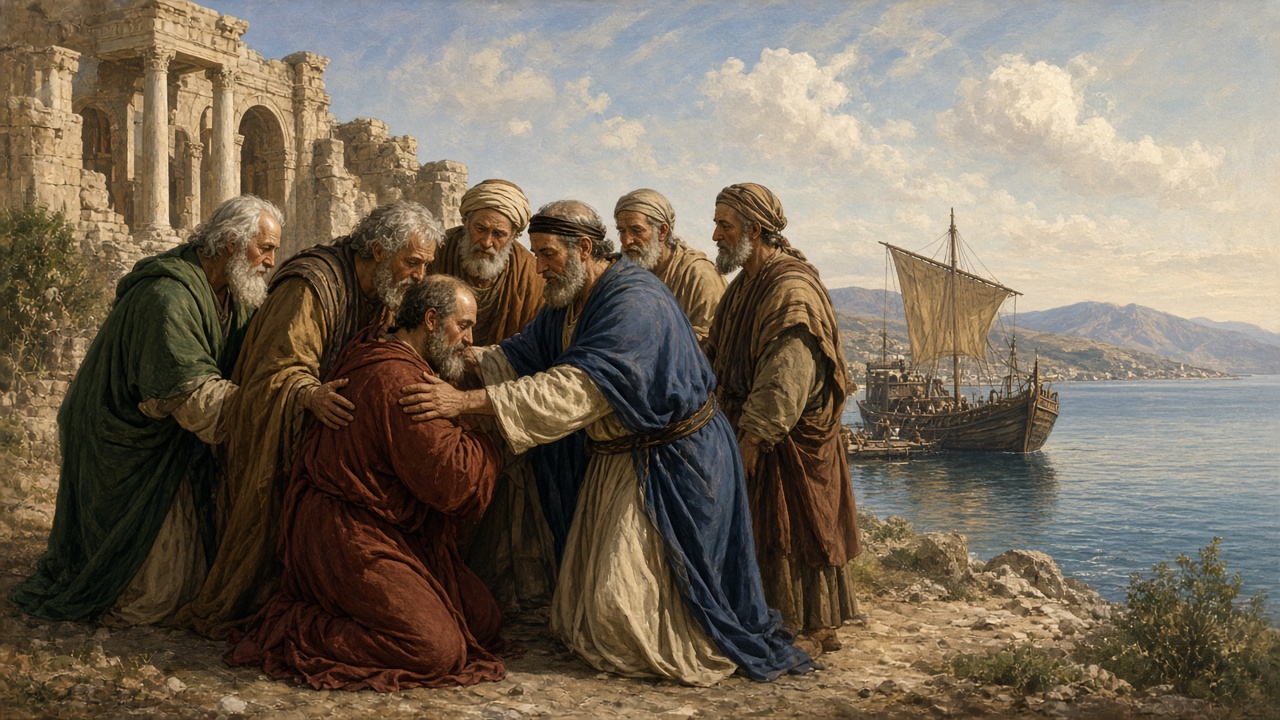
Despedida camino a Jerusalén
- Al salir de Troas, Pablo envió a sus compañeros por delante en el barco y caminó hasta Assos por el camino romano. Assos era un puerto de la Asia proconsular, en Misia, en la costa norte del golfo de Adramitio; el trayecto a pie era de unas 20 millas, el de mar de unas 30, y la isla de Lesbos quedaba a unas 7 millas de la costa.Fuentes: el propio texto bíblico · Assos
- Pablo pasó de largo frente a Éfeso para no demorarse en la provincia de Asia —la provincia romana del oeste de Asia Menor, cuya capital era Éfeso—, porque esperaba, si era posible, llegar a Jerusalén para el día de Pentecostés. Se detuvo en Mileto, un puerto y la antigua capital de Jonia, a unas 36 millas al sur de Éfeso, y mandó llamar a los ancianos de la iglesia de Éfeso.Fuentes: el propio texto bíblico · Asia · Miletus
- Siete hombres viajaban con él: Sópater de Berea, Aristarco y Segundo de Tesalónica, Gayo de Derbe, Timoteo, y Tíquico y Trófimo de Asia. Aristarco, de Tesalónica, más tarde compartió el encarcelamiento de Pablo en Roma, y Trófimo, efesio, lo acompañó en esta parte del viaje y estuvo con él en Jerusalén.Fuentes: el propio texto bíblico · Aristarchus · Trophimus
Notas escritas con ayuda de IA a partir de fuentes abiertas (Theographic Bible Metadata, CC BY-SA 4.0; Easton’s Bible Dictionary, dominio público) y revisadas antes de publicarse.
Lugares de este capítulo
- Macedonia · 41.600, 22.540 · versículos 1, 3, 6
- Greece · 37.972, 23.727 · versículo 2
- Syria · Hoy: Syria 2 · 33.511, 36.306 · versículo 3
- Asia · 38.400, 28.300 · versículos 4, 16, 18
- Berea · Hoy: Veria · 40.518, 22.200 · versículo 4
- Thessalonica · Hoy: Thessaloniki · 40.638, 22.946 · versículo 4
- Troas · Hoy: Alexandria Troas · 39.752, 26.159 · versículos 5, 6
- Philippi · 41.012, 24.285 · versículo 6
- Assos · 39.491, 26.337 · versículos 13, 14
- Mitylene · Hoy: ancient theater at Mitylene · 39.110, 26.547 · versículo 14
- Chios · 38.373, 26.137 · versículo 15
- Miletus · 37.531, 27.276 · versículos 15, 17
- Samos · 37.750, 26.833 · versículo 15
- Trogyllium · Hoy: Cape Mycale · 37.659, 27.003 · versículo 15
- Ephesus · 37.939, 27.341 · versículos 16, 17
- Jerusalem · 31.777, 35.234 · versículos 16, 22
Solo aparecen lugares identificados con alta confianza (90 % o más según las fuentes académicas reunidas por OpenBible). Mapa de la época: DARE (Digital Atlas of the Roman Empire), CC BY 4.0; mapa actual: © colaboradores de OpenStreetMap; lugares: OpenBible.info (CC BY 4.0).
Créditos y licencia de esta traducción
Ŋwɛ menomenyɛɛ́ mekɛ́
New Testament in Denya (CM:anv:Denya)
copyright © 2010 Wycliffe Bible Translators, Inc.
Language: Denya
Translation by: Wycliffe Bible Translators, Inc.
Copyright Information
© 2010, Wycliffe Bible Translators, Inc. All rights reserved.
This translation text is made available to you under the
terms of the Creative Commons License: Attribution-Noncommercial-No Derivative Works.
( http://creativecommons.org/licenses/by-nc-nd/3.0/ )
In addition, you have permission to port the text to different file formats, as long as you
do not change any of the text or punctuation of the Bible.
You may share, copy, distribute, transmit, and extract portions
or quotations from this work, provided that you include the above copyright
information:
You must give Attribution to the work.
You do not sell this work for a profit.
You do not make any derivative works that change any of the actual words or punctuation of the Scriptures.
Permissions beyond the scope of this license may be
available if you contact
us with your request.
The New Testament
in Denya
© 2010, Wycliffe Bible Translators, Inc. All rights reserved.
This translation is made available to you under the terms of the
Creative Commons Attribution-Noncommercial-No Derivatives license 4.0.
You may share and redistribute this Bible translation or extracts from it in any format, provided that:
You include the above copyright and source information.
You do not sell this work for a profit.
You do not change any of the words or punctuation of the Scriptures.
Pictures included with Scriptures and other documents on this site are licensed just for use with those Scriptures and documents.
For other uses, please contact the respective copyright owners.
2024-02-11
Fuente: http://ebible.org/anvNT/ · eBible.org