1 Timoteo 4
Ŋwɛ menomenyɛɛ́ mekɛ́ · Toca un versículo para ver sus referencias cruzadas.
Sɛge gébé ne ánlɛre gebyɔ
1Nana, Mendoó Ɛsɔwɔ ɛgarege gbɔgɔnɔ nnó meso gébé bɔɔ́ bifɔ ályage nyɛ depɔré abya melɔ́mélɔ́. Ákwɔlege nyɛ lé mandoó gebyɔ ne unó bi aló nchyɛ álɛrege. 2Bɔɔ́ abifɔ ásɛlé nyɛ unó bina álɛregé ɛké ɛbwɔ́ ágarege unó bi úlú wáwálé, yɛ́mbɔ ɛbwɔ́ ambɔɔ́ ákaá nnó ɛlé gebyɔ. Ndɛre ɛbwɔ́ ápyɛmbɔ, matɔɔ́ bwɔ́ ákwe kénde, ákágé sé genó ɛyi gelú gyɛɛ́ ne ɛyi gelú chó. 3Ɛbwɔ́ agarege nnó bɔɔ́ ábagé fɔ́ neba, ne nnó ányɛ́ge fɔ́ ufɔɔ́ menyɛɛ́ ɛbifɔ ɛbi Ɛsɔwɔ akwyɛɛ́ nnó bɔɔ́ áchyɛge ji matame ányɛgé ndɛre ákamé ne ji ne ákage wáwálé ayi atome ne ji. 4Yɛ́nde genó ɛyigé Ɛsɔwɔ akwyɛɛ́ gelɔ, muú ashyage fɔ́ genó mbɔgé aké ásɛlé geji achyɛge matame mbaá Ɛsɔwɔ. 5Néndé mekomejɔɔ́ Ɛsɔwɔ ne mmyɛmenɛne ápyɛ́ geji gela pópó.
Bɛ maá utɔɔ́ melɔ́mélɔ́ mbaá Kras
6Ne mbɔgé ɔgaregé áŋmɛ unó bina, ɔbɛɛ́ nyɛ maá utɔɔ́ melɔ́mélɔ́ mbaá Kras Jisɔs ne ɔbɔɔ́ nsa né depɔré Jisɔs ɛtiré delu mmu abya melɔ́mélɔ́ ayi alɛre wɔ ɔkwɔlegé. 7Ɔfyɛgé fɔ́ mekpó mandoge ukeŋkene abya abi ála pogé fɔ́ bɔɔ́ ákwɔlege Ɛsɔwɔ. Pyɛ menyammyɛ wyɛ awúgé ne mampyɛge unó bi Ɛsɔwɔ akɛlege. 8Muú aké apyɛɛ́ menyammyɛ wuú abɛnege nnó apyɛge metu ɛlɔme, yɛ́mbɔ muú aké apyɛ menyammyɛ wuú abɛnege né mampyɛ genó ɛyigé Ɛsɔwɔ akɛlege, ɛlɔme ɛpwɔɔ́ nénde abɛɛ́ ne nsa né geŋwá ɛyigé nana ne ɛyi gechwɔ́ meso gébé.
9Genó ɛyigé njɔɔ́ mbɔ gelú wáwálé ne yɛ́ndémuú anɛre metɔɔ́ wyɛɛ́. 10Gɛ ula bi ɛsé démmyɛ dépyɛ utɔɔ́ ne ɛshyɛ mbɔ. Ɛsé dénɛré metɔɔ́ ne Ɛsɔwɔ muú álu mebɛ. Ji ne alu Menchyɛ́ geŋwá mbaá ɛsé ako, chacha bɔɔ́ abi ákamé ne ji.
11Gɛ́ unó bi ɔbɔɔ́ manlɛre na ne fyɛ ɛshyɛ nnó ápyɛge ubi. 12Ɛkágé ɔpyɛ genó ɛyigé bɔɔ́ ásɛlé wɔ fuú né dembane tyɛ, lɛré lé gepɔ gelɔ́gélɔ́ mbaá bɔɔ́ ako abi áfyɛɛ́ metɔɔ́ ne Ɛsɔwɔ, né mejɔɔ́ wyɛ, né geŋwá jyɛ, né gejeé ɛyigé ɔbɔɔ́ ne bɔɔ́, né metɔɔ́ ɛwé ɔfyɛɛ́ ne Ɛsɔwɔ, ne né metɔɔ́ wyɛ ɛwé ɛlú pópó. 13Chyɛɛ́ gébé jyɛɛ́ ɔkúgé mekomejɔɔ́ Ɛsɔwɔ né ɛchomele bɔɔ́ Ɛsɔwɔ, ɔfyɛge bɔɔ́ ɛshyɛ ne ɔlɛre ɛbwɔ́ mekomejɔɔ́ kpaá tɛ me nchwɔɔ́. 14Ɛkamegé ɔfeé mekpo né ɛchyɛ ɛwé wɔ ɔwyaá. Ɛsɔwɔ achyɛɛ́ wɔ ɛchyɛ ɛwémbɔ gébégé ɛkwɔ bɔɔ́ kpakpa ɛchomele Ɛsɔwɔ ánɛre wɔ amu mmyɛ. Ɛsɔwɔ apyɛɛ́ ɛbwɔ́ ágaré ɛchyɛ ɛwé Ɛsɔwɔ achyɛ wɔ.
15Chyɛ gemɛ jyɛ ɔpyɛgé unó bina yɛ́ndégébé nnó bɔɔ́ ágɛne nkane utɔɔ́ byɛ uwɛne. 16Sɛ́ gébé ne geŋwá jyɛ ne unó bi wɔ ɔlɛrege. Pyɛge wyɛ unó bina nénde ɔke ɔpyɛ mbɔ ɔwenegé nyɛ gemɛ jyɛ ne ɛyigé bɔɔ́ bií áwuú wɔ.
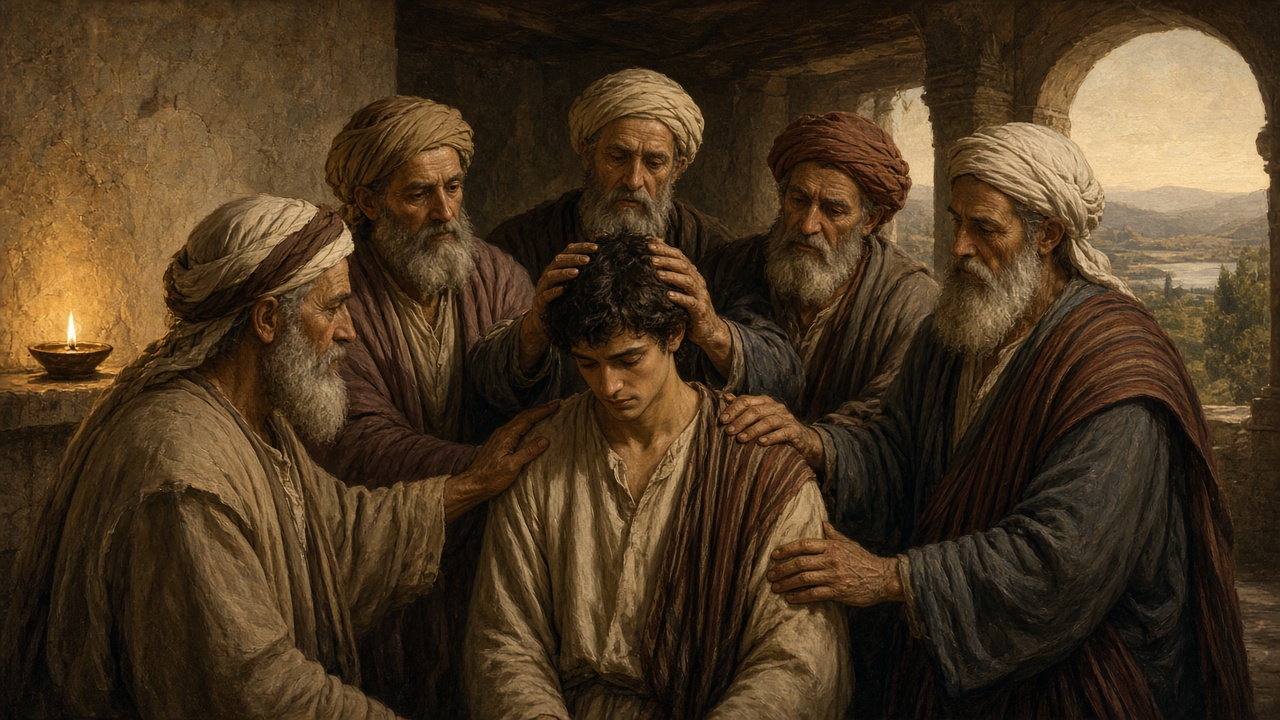
¿Sabías que…?
Falsa enseñanza y entrenamiento en la piedad
- El capítulo dice que el Espíritu declara expresamente que, en tiempos posteriores, algunos abandonarán la fe para seguir espíritus engañosos y enseñanzas de demonios. Estarán influidos por la hipocresía de mentirosos, cuya conciencia ha sido cauterizada con un hierro candente, y prohibirán el matrimonio y exigirán abstenerse de ciertos alimentos.Fuentes: el propio texto bíblico
- La carta responde a esas exigencias diciendo que Dios creó esos alimentos para que los reciban con acción de gracias quienes creen y conocen la verdad. Toda creación de Dios es buena, y nada de lo que se recibe con acción de gracias debe rechazarse, porque es santificado por la palabra de Dios y la oración.Fuentes: el propio texto bíblico
- El autor exhorta al joven a quien se dirige a no dejar que nadie menosprecie su juventud, sino a ser ejemplo en el habla, en la conducta, en el amor, en la fe y en la pureza. Hasta que el autor llegue, debe dedicarse a la lectura pública de las Escrituras, a la exhortación y a la enseñanza, y no descuidar el don que le fue dado mediante profecía, cuando los ancianos le impusieron las manos. El ejercicio físico, añade la carta, tiene un valor limitado, mientras que la piedad es valiosa en todo sentido y encierra promesa para la vida presente y para la venidera, un dicho que la carta llama digno de confianza y de plena aceptación.Fuentes: el propio texto bíblico
Notas escritas con ayuda de IA a partir de fuentes abiertas (Theographic Bible Metadata, CC BY-SA 4.0; Easton’s Bible Dictionary, dominio público) y revisadas antes de publicarse.
Créditos y licencia de esta traducción
Ŋwɛ menomenyɛɛ́ mekɛ́
New Testament in Denya (CM:anv:Denya)
copyright © 2010 Wycliffe Bible Translators, Inc.
Language: Denya
Translation by: Wycliffe Bible Translators, Inc.
Copyright Information
© 2010, Wycliffe Bible Translators, Inc. All rights reserved.
This translation text is made available to you under the
terms of the Creative Commons License: Attribution-Noncommercial-No Derivative Works.
( http://creativecommons.org/licenses/by-nc-nd/3.0/ )
In addition, you have permission to port the text to different file formats, as long as you
do not change any of the text or punctuation of the Bible.
You may share, copy, distribute, transmit, and extract portions
or quotations from this work, provided that you include the above copyright
information:
You must give Attribution to the work.
You do not sell this work for a profit.
You do not make any derivative works that change any of the actual words or punctuation of the Scriptures.
Permissions beyond the scope of this license may be
available if you contact
us with your request.
The New Testament
in Denya
© 2010, Wycliffe Bible Translators, Inc. All rights reserved.
This translation is made available to you under the terms of the
Creative Commons Attribution-Noncommercial-No Derivatives license 4.0.
You may share and redistribute this Bible translation or extracts from it in any format, provided that:
You include the above copyright and source information.
You do not sell this work for a profit.
You do not change any of the words or punctuation of the Scriptures.
Pictures included with Scriptures and other documents on this site are licensed just for use with those Scriptures and documents.
For other uses, please contact the respective copyright owners.
2024-02-11
Fuente: http://ebible.org/anvNT/ · eBible.org