1 Timoteo 2
Jesucristo oy oa’pak: Kenda Jesucristoa; monigka’uyatenok; Diostaj mo’manopo’yarea’ika’ne · Toca un versículo para ver sus referencias cruzadas.
Konig eʼtionaʼpak Pabloa oʼmanmadikaʼuyate.
1Huakkuru huakkaʼ ijpakpo ijmanay. Yanʼmationaʼpakikaʼ ijmanay. Ayaʼ aratbuttaj “yamatinepahuiʼpo,” “yabatihuapokikaʼ, Dios” “dakiti, Dios” monʼmationaʼpakikaʼ. 2Gobierno huairia oroʼomeytaj huadiayhueʼ moʼe̱ʼpo, kenpaʼti oroʼomey ʼuruda a̱ʼe̱ya̱ʼpo, oroʼomeya̱ aʼmanopoʼnoeyayaʼpo, Diosenyoʼda aʼkikayaʼpo, huadak aʼkikayaʼpo, gobierno huakhuairitaj monʼmationaʼpakikaʼ kenpaʼti ayaʼ huairitada monʼmationaʼpakikaʼ. 3Ken konig eʼmationaʼpakikaʼ huadakda o̱ʼe̱. Diosa kenda oʼpak. Diosa oroʼen huamanopoʼyareaʼeri o̱ʼe̱po kenda oʼpak. 4Ayaʼtada eʼmanopoʼyareaʼtaʼ oʼpak kenpaʼti buttida huaʼa Jesucristotaj ayaʼda eknopo̱e̱ʼtaʼ boʼtipakikaʼne. 5Diosyoʼda huadakda o̱ʼi̱kaʼ. Jesucristo nogbokerektida o̱ʼe̱po, huamanopoʼnoeya̱ʼeri o̱ʼe̱po keʼnayoʼda Diostaj manopoʼnoeyaʼdik moʼe̱ne. 6Ken Jesucristo huabokerek o̱ʼe̱po ayaʼtada dakhueaʼ eʼkaʼ aʼbakkahueayaʼpo kenpaʼti castiga eʼkaʼtaj aʼbatiokayaʼpo oʼpakpo moʼnigbueyʼuyate. Kenokaʼ Diosa oʼpakdepo kenda moknopo̱e̱a̱ʼuy. 7Kenda aʼmanbatiaʼpakyaʼpo Diosa bektieʼeaʼuyne kenpaʼti meʼtaʼmonaʼuyne. Nog aratbutte Diosa meʼtaʼmonaʼuyne. Nog aratbut kanoknopo̱e̱ʼpo Jesucristotaj buttida huaʼa yamanmadikaʼ menaʼuyne. Jesucristotaj yoknopo̱e̱po buttida ijjay. Da ahueʼ i̱jje̱y.
8Konige̱po meyo̱piʼ aratbut o̱gkupopakpo Diostaj aʼbatadiʼkeayaʼpo o̱gkupopakpo huabokerek yanʼtionaʼpakikaʼ. ʼUrunopoʼda konig dakhueaʼ kikahueʼ ya̱ʼnepo yanʼtionaʼpakikaʼ. Kenpaʼti huadiayhueʼ ya̱ʼnepo, maboyhueʼ ya̱ʼnepo Diostaj yanʼtionaʼpakikaʼ, kenda ijpakpo ijjay. 9Kenpaʼti ettoneʼ huaknopo̱e̱ʼeriere e̱gkupopakyaʼ dakaʼ kanotikeʼpo, sueʼda huadak yudtaj kanotikeʼpo. ʼUru yudtaj huabokereka meʼnontiahuayyeʼpo othueʼ kaʼnikeʼ. Diosen o̱ʼnenok huadaknanada kanʼkikeʼpo. ʼUruaʼnanada huakuhuij a̱ʼe̱ya̱ʼpo ijhueʼda kumore̱tkadhuahuikahueʼ kaʼneʼ. Kenpaʼti siro oro huakaʼ kenpaʼti sakbij huakkaʼtenanada e̱e̱ʼtada kenpaʼti yudtaj huakkaʼtenanada e̱e̱ʼtada othueʼ kaʼnikeʼpo ijjay. 11O̱gkupopakpo ettoneʼ soataʼ kaʼneʼpo huadak huaʼataj dakaʼ kanʼpe̱e̱ʼpo huaknopo̱e̱ʼeri huairitaj kanʼnigpe̱e̱ʼ. 12E̱gkupopakte ettoneʼa̱ huabokerektaj manmadikahueʼ kaʼneʼ. Konig huairia manahueʼ kaʼneʼ. Utakaʼ kaʼneʼ. Ijjay. 13Konige̱po huakkuruda Adántaj oʼkaʼuyate Diosa. Taʼpotaʼ Evataj oʼkaʼuyate. 14Totoʼa da enaʼte Adán dakhueaʼ kahueʼ o̱ʼu̱yate. Totoʼa da enaʼte ettoneʼnayo oʼnigpe̱e̱po dakhueaʼ oʼkaʼuyate. Diostaj nigpe̱e̱hueʼ o̱ʼe̱po dakhueaʼ oʼkaʼuyate. 15Ettoneʼ Diostaj oʼnoknopo̱e̱po onsiʼpopakpo Diosen durugda o̱ʼneonhuahuikaʼapo. Nogomeytaj diʼ o̱ʼnepo, Diosen dakaʼ o̱gkikaʼpo, dakaʼ onʼnopo̱e̱po dakaʼ o̱gkikaʼpo, Diostaj dakaʼ oʼnoknoponhuahuikaʼpo Diosere durugda o̱ʼneonhuahuikaʼapo.
¿Sabías que…?
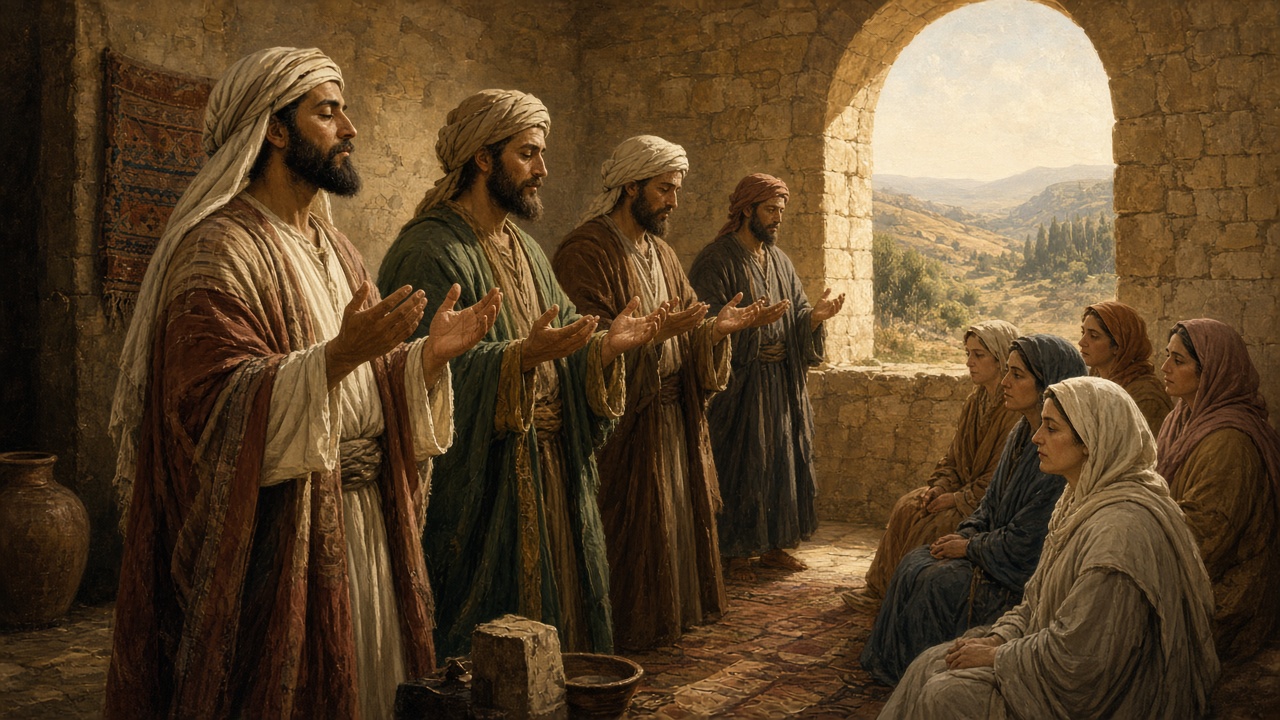
Oración, adoración modesta y Adán y Eva
- Este capítulo exhorta a que se ofrezcan peticiones, oraciones, intercesiones y acciones de gracias por todas las personas, incluidos los reyes y todos los que están en autoridad, para que los creyentes puedan llevar una vida tranquila y sosegada, con toda piedad y dignidad. También dice que hay un solo Dios y un solo mediador entre Dios y los hombres, el hombre Cristo Jesús, que se entregó como rescate por todos.Fuentes: el propio texto bíblico
- Cuando la carta dice que Adán fue formado primero, y después Eva, apela al primer hombre del Génesis. El Easton's Bible Dictionary (1897) explica que Adán es una palabra babilónica que significa 'rojo', el nombre genérico de hombre, con el mismo sentido en hebreo y en asirio, y que fue formado del polvo de la tierra.Fuentes: el propio texto bíblico · Adam
- La carta dice que no fue Adán quien fue engañado, sino la mujer, que fue engañada y cayó en transgresión. El Easton's Bible Dictionary (1897) dice que Eva significa 'vida' o 'viviente', el nombre que Adán dio a su esposa, y que el relato de su creación se encuentra en Génesis 2:21-22.Fuentes: el propio texto bíblico · Eve
Notas escritas con ayuda de IA a partir de fuentes abiertas (Theographic Bible Metadata, CC BY-SA 4.0; Easton’s Bible Dictionary, dominio público) y revisadas antes de publicarse.
Créditos y licencia de esta traducción
Jesucristo oy oa’pak: Kenda Jesucristoa; monigka’uyatenok; Diostaj mo’manopo’yarea’ika’ne
New Testament in Amarakaeri (PE:amr:Amarakaeri)
copyright © 2008 Wycliffe Bible Translators, Inc.
Language: Amarakaeri
Translation by: Wycliffe Bible Translators, Inc.
Amarakaeri [amr], Peru
Copyright Information
© 2008, Wycliffe Bible Translators, Inc. All rights reserved.
This translation text is made available to you under the
terms of the Creative Commons License: Attribution-Noncommercial-No Derivative Works.
( http://creativecommons.org/licenses/by-nc-nd/3.0/ )
In addition, you have permission to port the text to different file formats, as long as you
do not change any of the text or punctuation of the Bible.
You may share, copy, distribute, transmit, and extract portions
or quotations from this work, provided that you include the above copyright
information:
You must give Attribution to the work.
You do not sell this work for a profit.
You do not make any derivative works that change any of the actual words or punctuation of the Scriptures.
Permissions beyond the scope of this license may be
available if you contact
us with your request.
The New Testament
in Amarakaeri
© 2008, Wycliffe Bible Translators, Inc. All rights reserved.
This translation is made available to you under the terms of the
Creative Commons Attribution-Noncommercial-No Derivatives license 4.0.
You may share and redistribute this Bible translation or extracts from it in any format, provided that:
You include the above copyright and source information.
You do not sell this work for a profit.
You do not change any of the words or punctuation of the Scriptures.
Pictures included with Scriptures and other documents on this site are licensed just for use with those Scriptures and documents.
For other uses, please contact the respective copyright owners.
2024-02-11
Fuente: http://ebible.org/amrNT/ · eBible.org