Mateo 8
Bro Nkifrarhu Mrokfot · Toca un versículo para ver sus referencias cruzadas.
Jisasr lepra dbohneft yaket yimar yak marnyamo yuhat
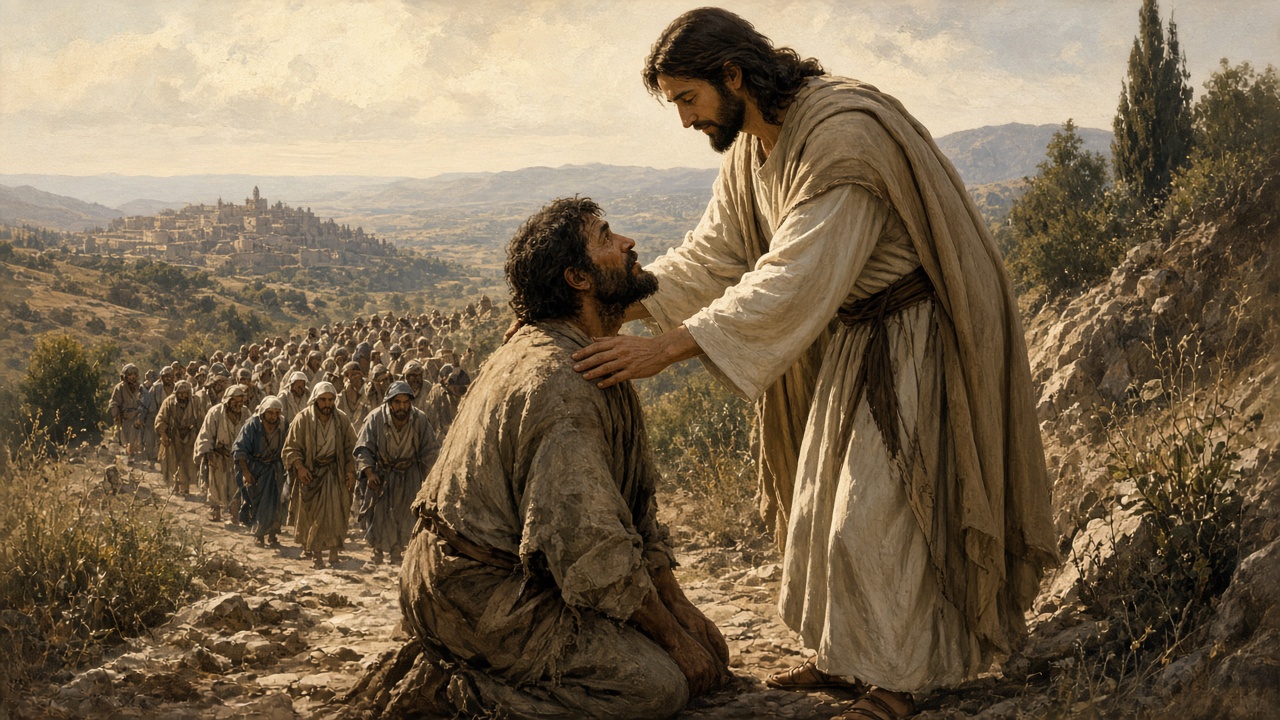
1Jisasr yura kminysoft wuhtanyhato yawihnamohat, yonmari yima rifhur fak hik hawihnamomr. 2Wom lepra dbohneft yaket yimar Jisasrpno bangu mtabokmehato kfo naku memorr, “Broye, ndar na hatohwa dbohneft yak thurahnt, to be thu troh tanyrahta.” 3Jisasr inji wanyhato nd leprayet yimarn tirt rihtahato kfo memor, “Uwa, na yibonwa.” Inji kfoni hanyhato nd dbohneft kfo memort, “Wathu trohnr.” Inji kfomotr, nd dbohneft yudbat thu trohmotr. 4Thu troh tanymottr Jisasr kfo memorr, “Ni nda dbohneft thu troh tanyhat, mirahn tfit womm akfo nuhasanm. Mosesrhu boririfhut yak hikkfot. Yimam lepra dbohneft yaketm marnyanimoahat inji namoum. Nd hun gifam prisrpno myak nuhasnimoamn, tarioh mthamoum. Nd tarioh mtha yiharn prism ndt htihato kfo memoum, ‘Nd yimarhu dbohneft bi thu troh tanymotr.’ Ni nd yuhat yak hikkfot.”
Soldiaroh keptenrhu hingrna yimarhu dbohneft Jisasr yak marnyamo yuhat
5Jisasr taun Kaperneamt yimor. Nd taunt tohetrn Romroh 100 soldiaroh keptenr yihato Jisasrpno be nnhuhato mkfo memor, 6“Nungothet Jisase, nanhu hingrna yimar dbohna bebhato kunys hwitr. Bi minysaf hmbreyetrn nhai sinyahato rhukfot. Thatipt ke shuwotr. Ndnatn be hwe hasiwur.” 7Inji kfo pthamotr Jisasr kfo memorr, “Nhai mrokfom. Yirhoyann dbohneft yak thuhiruhanr.” 8Nd soldiaroh keptenr tfit kfo memorr, “Bro yimaye, mirahn nanhu kunys anea. Na nhai dborioh yimayann nanhu kunys nieruha. Be inji nndo tohhato be wakfokahtn, nanhu hingrna yimar marnyanirahr. 9Na to wom bro tohak ofisar tohekwatr na rorhu yinhitn watohwa. Tfit nann wom tohak yimaya tohwa. Nann kakitohwanm tfit wom ami rifhur. Nd ami rifhur nann yakitohhato wom soldiar kfo kanga, nd soldiar anjur, nd soldiar kitr. Kfo kanga, nd soldiar aniar, nd soldiar niewur. Nanhu hingrna yimar kfiwanr, tamohroh hingrnaneft, nd hingrneft hingrnewurt.” 10Jisasr nd yimarhu mrokfefm wanyhato tuha mrokfo duhatr rhumor. Tfit kekutnihato nd ror hik hanymo yimam kfo memorm, “Barenko, nd yimar nndo wom kmi thofer. Nd mrokfot kfiwatr, nanhu yima yuhur duka kanga, Isrerkort nhai wom yimar htikahanr o wanykahanr kfo mekahra, ‘Be inji nndo tohhato wakfokahtn dbohnet yimar marnyanirahr.’ Nhai. Nhai ndhtet duket yimar htikaha.
11Kfiwanko, boknambok kantriroh yimam mano mano sinyarahm. Marr yuwa muhwa kantriroh yimam sinyarahm, yo marr yohnita kantriroh yimam sinyarahm. Sinyaruhamn, Abraham, Aisak, Jekofrompno rpat rhu yerahmt nd hefenrhu kingdomkfot htaruha yemro burwat. 12To nd barkof Bro Nkifrar bi kfo hta memo, ‘Ndar yimamn nanhu kingdomkfot rhurahm,’ to nd bi kfo htayuk yimamn tfit toh kekuthato yak thu wurasohrahr. Nhai rorhu yufat rhuruhatm. Yak tuhafruhatrm bro kspitat tohrahm. Bro kspitat tohhato tau nknekrahm.”
13Be nd 100 soldiaroh tohak keptenr, Jisasr kfo memorr, “Wanju kunyko. Wanjukahnn htirahnr ninhu hingrna yimarhu dbohneft ninhu dukef yuhat rhu hikraht.” Be nd hingrna yimarhu dbohneft, be yudbat teh tmbhakmot.
Jisasr Pitarhu matohemt yak marnyamo yuhat
14Be tfit yihato Pitarhu kunysn mfnahmor. Mfnahhato fknenimor. Fknenihato rim htimort Pitarhu matohemt kkah dbohnett hwemot. 15Be rotpno yihom rhuhato tirt fakitohmort. Be inji yakitohmotrt nd dbohneft thu troh tanymott. Be nd mett yudbat marnyani hanyhato sinyamotn yeshrim hta mskahemotm.
Jisasr bok met yindarim yak marnyamo yuhat
16Krifta hanymot, bok yimam hany hanymomm kmi yarh fknayet yimam. Hne hnamoatmm Jisasr mrokfot tumourt nd metm o yindarim hatohmoa kmi yarhm fnahni hanymoum. Yo nd dbohna mifetm, rom nhaf yak marnyaf hanymoatrm marnyani hanymoum. 17Jisasr nd namo neft, to profet Aisaiar kfongotmo mrokfotn ror namo neft fak hikmot. Bingot profet Aisaiar kfo memor,
“Turn nmoh dbohnefm yak thumormn nndo tumorm.” Ais 53.4
Jisasrhu hik yuhat
18Jisasr yonmari yima rifhur toh dbu hmbremoatmr kekutnihato turhu disaiperm kfo memorm, “Tek bari mkuko ainyom.” 19Nd yima rifinyrn tohmor nkifra boririfhuthu tisar. Yauyaknihato Jisasr rim kfo memorr, “Tisa, ni kmi kmi yi htfas thombat na hikhne hakuruhann.” 20Jisasr kfo memor, “Kmbru fkohm, rom hwe skitetem, rom bbmuhmn tohwom. Nungam, rom miyuhtamn o wusmn hwitm. Nikmoh Bro Najomrpar be tu nhai ror wom hwe rhu mskayuk tkitt.” 21Tfit wom disaiperr sinyahato kfo memorr, “Bro Nungothete, nanhu yifemr yinohtr, afo rorhu yopt yiruha.” 22Inji kfomotr, Jisasr kfo memorr, “Noheh yimam, rom tum anayop hanym. Ni wania wahikna.”
Jisasr kfohato wifort minoh hmbremo yuhat
23Jisasr bot mikmbremor. Turhu disaiperm htiyaf hanyhato rom rpat mikmbremom. 24Mikmbrehato rihir hanymom. Buha bari dany yuhatn rim hir hanyhato Jisasr hwemor. Hweyetrn, bro wifort sinyamot. Wifort sinyahato tek barit fifrtuhato yonmari burifhum sinyamom. Burifhum sinyahato rom yimo bot burifhut bi tas finjaknimott. 25Be yudbat Jisasr frthamomr. Frtha hanyhato kfo hany memomr, “Broye, nome href finji newanom? Nom href yohnitnom!” 26Jisasr sinyahato kfo memorm, “Niko ndar wiforti burifhut kakrmitko? To nikmoh dukefme fitha yitam? Ka nhai mikahko, ‘Tor ror rpat nienom, nhai yakrmiruhatnom?’ Nikmoh dukefm ka nhai be mfro nann niakahmko?” Be inji kfoni hanyhato nd wiforti burifhut sinya hasomof, ror mrokfot tumort be wufakmof. Wifort tone tmbhomot, tekt be minoh hmbremot. 27Nd bot rhuyukm inji htihato tuha mrokfo duhatm rhumom. Memom, “Ndarr tamohtet yimarn wiforti burifhut wany yakiohato minoh hmbrif?”
Hus yimafhu kmi yarhm, Jisasr yak thumo yuhat
28Jisasr Galili mkuko yi tohwa Gadararoh bbinysofko rim dbkafmor. Ndharn kmi yarh fknayet hus yimaf yihato Jisasr mfnahmofr. Nd hus yimaf be yima gum htamoa tahi bakuny mkumn toh htfasmouf. Kmi yarhm tuhagrhamoatmf mfro namburmoatf yimam nhai nd yimaf tohmoa yihota yuhat yirmoam. 29Nd yimaf hatohwa kmi yarhm Jisasr mhtihato kfo tau naku memom, “Bro Nkifrarhu Yone, nome finji newannom? Nmoh huhra krt kanjo frhabtothato krhopa yak yihar tor yuhre riyorhwor. Bi frohm memomn, ‘Asha wanietwa?’” 30Fohm rom wuri kkof ke wussohmoum. 31Nd yimaf hatohwa kmi yarhm Jisasr kfo naku ttiwon memomr, “Jisase, ni kangn ayak tuhafoyanm, wayak hatohafokahtnnom ndar yimaf htany thombat ndur tohwa foh rifhumn tfit fknihato tohrahnom.”
32Jisasr nd kmi yarhm kfo memorm, “Wafnahniko.” Be inji kfo tkrurmotrm, rom nd hus yimaf thu troh tanyhato tfit fohmn fknenimom. Be fohmn fknenihato thu hafunanimotmm, nd fohm kmi kihahir yuhat mitarhotnihato tek baritn mitayif wurasoh bugamom.
33Nd fohm hatohmoa yimam inji htihato fakrmemom. Yakrmenihato taunko yimom. Yihato taunthu yimam kfo nuhas bugamomm rom htimo nefm. Yo nd kmi yarh fknayet yimarhu mrokfom kfo hik bugamofm. 34Be nd taunthu yimam Jisasrpno yihato kfo tkrurmomr nd taunthu htanyhato tfit womha yinyeft.
¿Sabías que…?
Curaciones, fe y el mar
- Capernaum, la ciudad a la que Jesús entra en este capítulo, era una ciudad de Galilea que no se menciona en el Antiguo Testamento. El Easton's Bible Dictionary (1897) dice que llegó a ser “su propia ciudad” después de que dejó Nazaret, e incluye la súplica del centurión y la curación en la casa de Pedro entre los hechos situados allí.Fuentes: Capernaum · el propio texto bíblico
- Jesús dice que muchos vendrán del oriente y del occidente para compartir el banquete con Abraham, Isaac y Jacob en el reino de los cielos. El Easton's Bible Dictionary (1897) presenta a Abraham como hijo de Taré y heredero de las promesas, a Isaac como el único hijo de Abraham con Sara, y a Jacob —también llamado Israel— como el hijo gemelo menor de Isaac y Rebeca.Fuentes: el propio texto bíblico · Abraham · Isaac · Jacob (Israel)
- Mateo presenta las curaciones de aquella noche como cumplimiento de lo dicho por medio del profeta Isaías: “Él tomó nuestras dolencias y cargó con nuestras enfermedades.” El Easton's Bible Dictionary (1897) identifica a Isaías como hijo de Amoz, que profetizó durante los reinados de Uzías, Jotam, Acaz y Ezequías.Fuentes: el propio texto bíblico · Isaiah
Notas escritas con ayuda de IA a partir de fuentes abiertas (Theographic Bible Metadata, CC BY-SA 4.0; Easton’s Bible Dictionary, dominio público) y revisadas antes de publicarse.
Lugares de este capítulo
- Gadara · Hoy: Umm Qais · 32.656, 35.679 · versículo 28
Solo aparecen lugares identificados con alta confianza (90 % o más según las fuentes académicas reunidas por OpenBible). Mapa de la época: DARE (Digital Atlas of the Roman Empire), CC BY 4.0; mapa actual: © colaboradores de OpenStreetMap; lugares: OpenBible.info (CC BY 4.0).
Créditos y licencia de esta traducción
Bro Nkifrarhu Mrokfot
The New Testament in the Alamblak language of Papua New Guinea
Nupela Testamen long tokples Alamblak long Niugini
copyright © 2003, 2004 Wycliffe Bible Translators, Inc.
Language: Alamblak
This translation is made available to you under the terms of the
Creative Commons Attribution-Noncommercial-No Derivatives license 4.0.
You may share and redistribute this Bible translation or extracts from it in any format, provided that:
You include the above copyright and source information.
You do not sell this work for a profit.
You do not change any of the words or punctuation of the Scriptures.
Pictures included with Scriptures and other documents on this site are licensed just for use with those Scriptures and documents.
For other uses, please contact the respective copyright owners.
2011-07-22
Fuente: http://png.bible/amp/ · eBible.org