Lucas 3
Amo New Testament · Toca un versículo para ver sus referencias cruzadas.
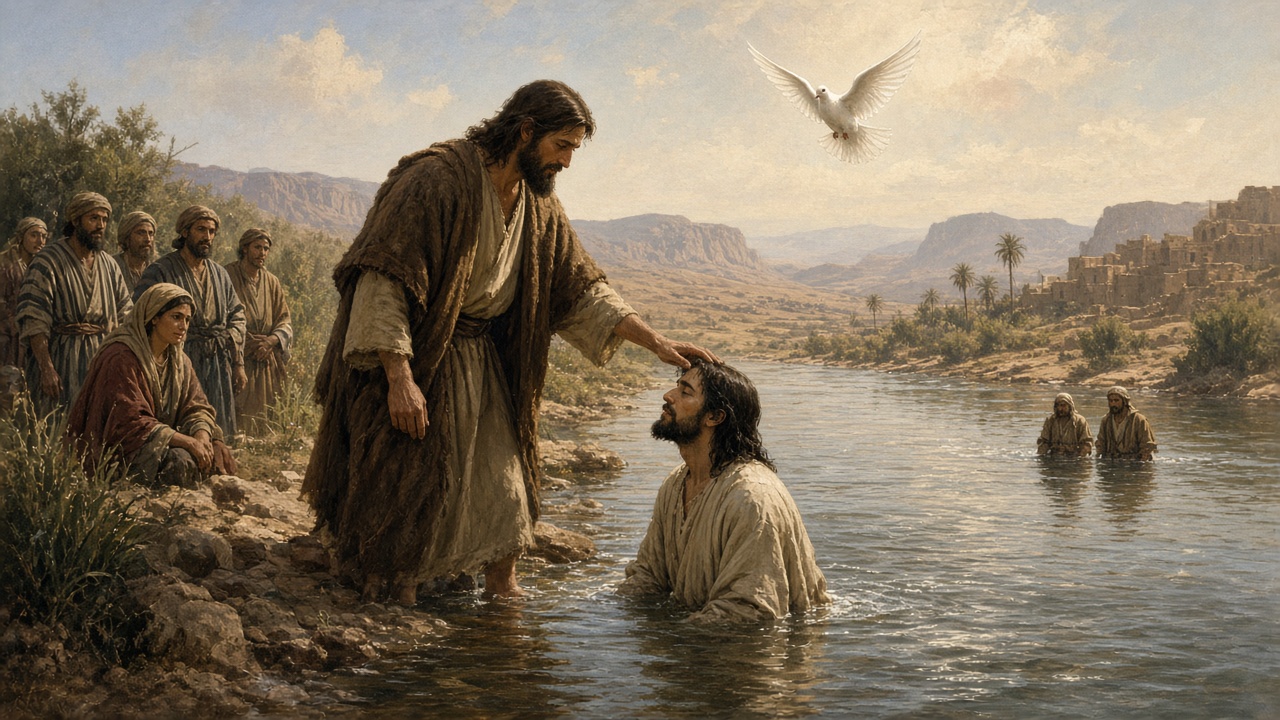
1Nanya likus likure nin natowun kube na ugo Tiberius Kaisar, ame Bilatus Ba-bunti wa di ugomna Nyahudiya, Hiridus wadi unan bunu gwamnna in Galili, gwana me Filibus wadi unan bunu kipin ituriya nin Tarakunitis, Lisaniyas wadi unan bunu gwamna Abiliya, 2nin kubi na Annas wadi kumalami kudya nin Kayafas, uliru Kutelle da kitin Yohanna, usaun Zakariya, nanya kusho. 3A wa cinu akeu nigberi naa na ni wadi ngau kurawa urdun, a wadin wazin shintinu nmyen nin foo na acara udu uwesu kulapi. 4Nafo na inna yertin nanya kufa ligbulang Ishaya unan liru nin nuu Kutelle, “Li wai nmong din yicu nanya kusho, 'Kelen libau Kutelle, kelen tikoot mene ti so dert. 5Vat awu ima kulu anin, vat atala nin naparan ima toltinu ana nin vat, tibau ti ginlang ima nakpu tinin, tibau ti nanzan ima kelu tinin lau. 6Vat anit ma yenu utucu Kutelle.'” 7Yohanna woro ligozin na nite ale na iwa ccinu uda kiti me ada shintu nani nanya mmyen, “Anung kuewunu fiyii timung, nghani na kpada minu icun kiti finana nayi to na tidin cinu? 8Nutunon nono nanga na nibatina ufubu, na iwa cizin ugbondilu nanya mine ba, “Tidin Ibrahim ucif bite,' bara na ina belen munu au Kutelle wa sa a nutuno Ibrahim ku nono tutung unuzu natala alele. 9Nene imalu tii kidowo tilin kuce bara nani vat kuca ko na kunutuno kumat kucine ba wase ikowo kunin i ta ulaku.” 10Amon nanya ligozie teringhe imoro, “Iyanghari ti ma nin ti.” 11A kawa a woro nnani, “Umong wa di nin nalutuk aba, ana ule na a salimung, ule na asi nin nimonli a su nani.” 12Among anan sessun gandu da ida shintin nani nmyen, i woroghe, “'Unan yiru, inghanghri ti ma ti?” 13A woro nani, “Na ima seru ikurfung ikata ile imong na ina beling minu. 14Among a soja da tiringhe, i woro, “Arike fa? Tiba tizighari?” Aworo nani, “Na iwa seru ikurfun kifin mmong nin likara ba. Na iwa vura umong ba teren kibinai nin imung na idin bizu minu.” 15Nene na anite wa din ncaa ndak Yesu, kogha wadin kpilzule sa Yohanna re Kristi. 16Yohanna kawa a woro nani vat, “Bara meng idin shintu munu nanya myen, umong din cinu ulenge na akafini nin likara, na meng bafin inbunku tii nakpatak mye ba, ama shintu munu nanya Ruhu Ulau nin laa. 17Kupark mye di nanya nacara mye na ama kyeliu uaalkama a gutun insoronghe ayiru iyole atii filai ama juju insoronghe nin la ule na iwa se ibico ba.” 18Nin mong ugbaru udia tutung, abele anite ulilrun nlai. 19Yohanna kpada Hiridus ku kitin yerun nwaii mbene mye Hirudiya, nin vat nadu ananzang Hiridus na ana su. 20Bara nan Hiridus kuru a ti nlong lidu tinanzang a mati i tursu Yohanna ilu nanya kilari lican. 21Nene kubi da, na Yohanna wa shintu anit vat nanya nmyen, a shintino Yesu ku wang na awa din nlira kitene kani puno. 22Uruhu Kutelle tulu kitene mye nafo kuwulung, liwui nuzu kitene kani, “Fere gono nayi ning udin puzi ayi.” 23Yesu liti mye, kube na awa cizin udursuzue awa di nin nallus akut atat. Awa di usaun Yusufu, usaun Heli, 24usaun Mathat, usaun Nlawi, usaun Melchi, usaun Jannai, usaun Yusufu, 25usaun Matatiyas, usaun Amos, usaun Nnahum, usaun Hasli, usaun Nayjaya, 26usaun Maatha, usaun Mattathiya, usaun Shimi, usaun Yuseka, nin saun Joda, 27usaun Yohanna, usaun Risa, usaun Zurbabila, usaun Shaaltiya, usaun Niri, 28usaun Malki, usaun Addi, usaun Kusana, usaun Almodama, Usaun Iri, 29usaun Yosi, usaun Aliazara, usaun Yorina, usaun Mattahata, usaun Lami, 30usaun Simion, usaun Yahuda, usaun Yusufu, usaun Yonana, usaun Aliyakima, 31usaun Malaya, usaun Mainana, usaun Mattahata, usaun Nattana, Usaun Dawuda, 32Usaun Yassa, usaun Obida, usaun Buaza, Usaun Salmona, usaun Nahashuma, 33usaun Aminasaba, usaun Arana, usaun Hasruna, usaun Harisa, usaun Peres, usaun Yahuda, 34Usaun Yakubu, Usaun Ishaku, Usaun Ibrahim, usaun Taraha, Usaun Nahura 35usaun SAruja, usaun Rauwa, usaun Palaju, usaun Aberu, usaun Shalahu, 36Usaun kinana, usaun Arfakshada, usaun Samana, usaun Nuhu, usaun Lamaka, 37usaun Matushalaha, usaun Anuhu, usaun Jarada, usaun Mahalailu, usaun Kanana, 38Usaun Anosha, usaun Shittu, usaun Adamu, Gono Kutelle.
¿Sabías que…?
Juan el Bautista prepara el camino
- Lucas sitúa la predicación de Juan en el año decimoquinto de Tiberio César, hijastro de Augusto, quien lo sucedió en el año 14 d. C. y murió en el 37 d. C. El Diccionario Bíblico de Easton (1897) señala que Juan comenzó su ministerio público en ese año, y que Poncio Pilato, el sexto procurador romano de Judea del 26 al 36 d. C., mantuvo su sede en Cesarea durante un período que abarcó los ministerios de Juan y de Jesús. Herodes Antipas, hijo de Herodes, era entonces tetrarca de Galilea.Fuentes: el propio texto bíblico · Tiberius · Pontius Pilate · Herod Antipas
- El capítulo sitúa estos acontecimientos durante el sumo sacerdocio de Anás y de Caifás. El Diccionario Bíblico de Easton (1897) registra que Anás fue sumo sacerdote del año 7 al 14 d. C. y fue depuesto por el procurador romano, y que Caifás, que se había casado con la hija de Anás, fue elevado a ese cargo en el año 25 d. C. La misma entrada sugiere que los judíos aún podían considerar a Anás el sumo sacerdote legítimo, pues la ley de Moisés mantenía el cargo de por vida, y que probablemente servía junto a Caifás como presidente del sanedrín o como adjunto del sumo sacerdote.Fuentes: el propio texto bíblico · Annas
- Juan, hijo de Zacarías, era de linaje sacerdotal: su padre era sacerdote del turno de Abías, y su madre, Elisabet, pertenecía a las hijas de Aarón. El Diccionario Bíblico de Easton (1897) señala que la misión de Juan fue objeto de profecía, incluida la voz que clama en el desierto en Isaías, y que su nacimiento ocurrió seis meses antes del de Jesús. En este capítulo predica un bautismo de arrepentimiento por toda la región alrededor del Jordán, y el tetrarca Herodes después lo encarcela, luego de que Juan lo reprende por causa de Herodías.Fuentes: el propio texto bíblico · John the Baptist
Notas escritas con ayuda de IA a partir de fuentes abiertas (Theographic Bible Metadata, CC BY-SA 4.0; Easton’s Bible Dictionary, dominio público) y revisadas antes de publicarse.
Lugares de este capítulo
- Abilene · 33.627, 36.106 · versículo 1
- Galilee · 32.760, 35.527 · versículos 1, 19
- Ituraea · 33.400, 35.850 · versículo 1
- Judea · Hoy: Judea 1 · 31.777, 35.234 · versículo 1
- Trachonitis · Hoy: Lajat · 32.969, 36.455 · versículo 1
- Jordan · Hoy: Jordan River · 31.761, 35.558 · versículo 3
Solo aparecen lugares identificados con alta confianza (90 % o más según las fuentes académicas reunidas por OpenBible). Mapa de la época: DARE (Digital Atlas of the Roman Empire), CC BY 4.0; mapa actual: © colaboradores de OpenStreetMap; lugares: OpenBible.info (CC BY 4.0).
Créditos y licencia de esta traducción
Amo New Testament
The New Testament in the Amo language of Nigeria
copyright © 2020 Door43 World Missions Community
Language: Timap (Amo)
Translation by: AFenlason, ALHASSAN SUDA, Chrispher Ishaya, James, Kawusu David, Pungs Makarios, Zephaniah A. Isau, tab04-nig, tab12-nig
This translation is made available to you under the terms of the
Creative Commons Attribution Share-Alike license 4.0.
You have permission to share and redistribute this Bible translation in any format and to make reasonable revisions and adaptations of this translation, provided that:
You include the above copyright and source information.
If you make any changes to the text, you must indicate that you did so in a way that makes it clear that the original licensor is not necessarily endorsing your changes.
If you redistribute this text, you must distribute your contributions under the same license as the original.
Pictures included with Scriptures and other documents on this site are licensed just for use with those Scriptures and documents.
For other uses, please contact the respective copyright owners.
Note that in addition to the rules above, revising and adapting God's Word involves a great responsibility to be true to God's Word. See Revelation 22:18-19.
2020-07-06
Fuente: http://ebible.org/amo/ · eBible.org