Juan 17
Amo New Testament · Toca un versículo para ver sus referencias cruzadas.
1Meng Yesu nbelle ilenge imone, a ghantina iyizi me kitene Kutelle aworo, “Ucif, kube nda; ta Usaunfe gongong- 2nafo na una nighe tigo kitene nanan tilai vat, bara anan na alenge na una nige ulai nsa ligang. 3Ulai un saligaghere ulele: inan yininfi, fere cas Kutelle kidegen, a ame ulenge na una tuu, Yesu Kristi. 4Meng ntafi gongong in yie, na nna kulo katwa ka na unani nsu. 5Nene, Ucif, tye ngogong umunu litife wang nin nimus ngongon mongo na nwa dimun ninfi a uyie dutu sa ukye. 6Nna durso lissafe kiti nanit alenge na una ni nanyan yii. Inung anit fere, umini na ni inung, inani din dortu ulirufe. 7Nene inung yiru vat nimon ile na una nii, inan nuzu kitifere, 8uliru fe na una nii, nna ni nani uliru une. Ina seru tining, inani na yinin kidegenere nna dak unuzu kitife, inani na yinin fere na tuyi. 9Ndi nani nlira, na ndi su uyii nlira ba, ama inung alenge na unayi, inung anit fere. 10Vat nimon ilenge na idi inang, in fere, imongfe inanghari. Meng ta gongon nanya ni ning. 11Na meng du nanya nyie ba, ama inung anit ane di nanya nyie. Meng din cinu udak kitife. Ucif ulau mino nani nanya lissafe inung alenge na una nii, inan so unit urum, nafo na arik di urume. 12Kube na nwa di nan ghinu, nwa ceo nani nanya lissa fe alenge na uwa nii; nwa kesse nani, na unit urum na wolu ba, se ame gonon nnanu, bara ulirufe nan se ukulu. 13Nene ndincinu udak kitife; ama ndin bellu ile imone nanya nyi, bara ayiabo mine nan se ukulu nati mine. 14Nna ninani ulirufe, uyi na nari inung, bara na inung anan yieri ba, nafo na meng kunan yiere ba. 15Na ndi nlira ukala nani nanya inyieba ama u kesse nani nin nanan naburi asirne. 16Na inung anan yiere ba, nafo na meng kunan yieri ba. 17Kusu wesse nani nin kidegen, ulirufe kidegenghari. 18Una tuyi nanya nyii, meng uni na tuu nani nanya yie. 19Bara inung, meng na wesse litinighe, inung atimine wang nan se uwessu nanya kidegene. 20Na bara alele cas ndin su nlira ba, umunu alenge vat na ima yinnu unuzun liru mine. 21Bara inan so arume vat, nafo nafe Ucif, udi nanya ning, a meng yita nanyafe. Ndin lira inung wang yita nanya bite uyie nan yinna fere na tuyi. 22Ngongonghe na una nii, nna nii nani unin, inung wang nan yita urum, nafo na arike di arum- 23Meng nanya mine, a fe nanya ning, inan se ukulu nanyan warume; bara uyie nan yinno fere na tuyi, umini dinin su mine nafo na udinin su ninghe. 24Ucif, aleli na una nii wang. Ndin piziru inung yita nan mi kiti kanga na nduku, inan yene ngongong nighe, mongo na uwa nii: bara udi nin su nighe a i ditu sa ucizinun kye in yii. 25Ucif katwa kacine, na uyii yirufi ba, ama meng yirufi, inung alele yiru fere na tuyi. 26Nna durso nani lissafe, tutung nba ti nani iyinin bara usuwe na udi mun nan yita nati mine, meng wang nan yita nanya mine.”
¿Sabías que…?
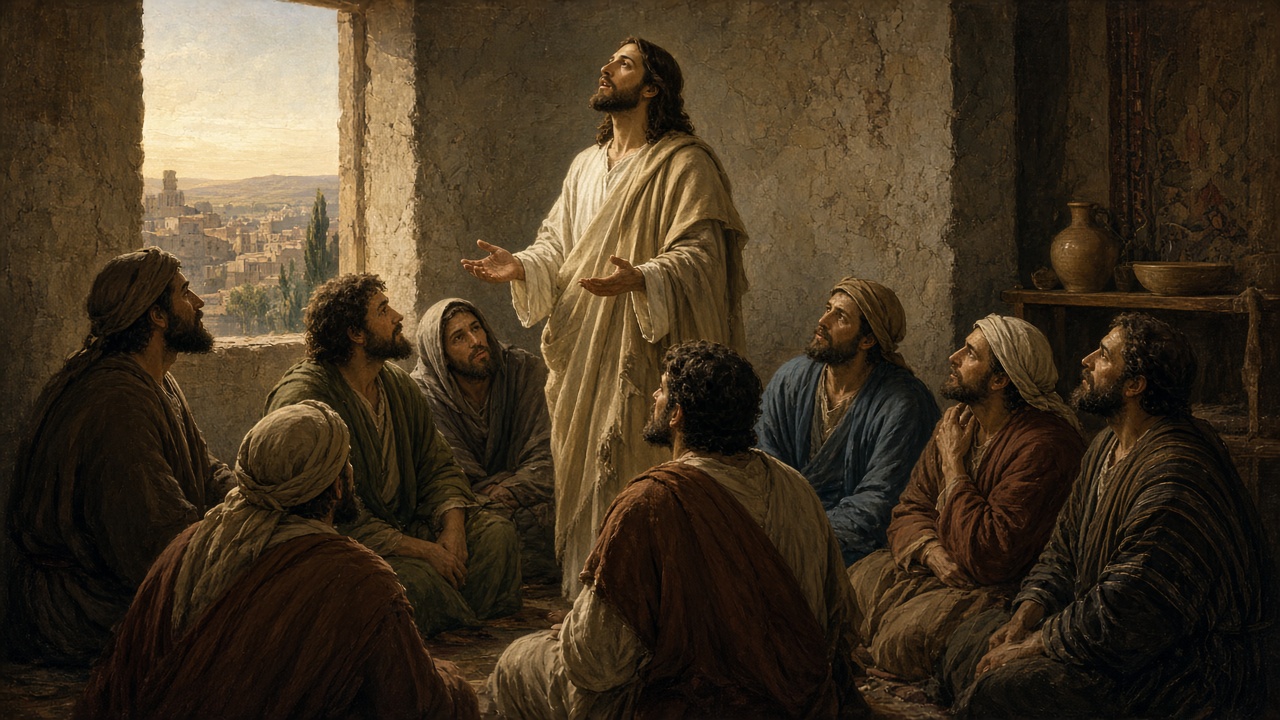
Juan 17: ha llegado la hora
- La oración comienza cuando Jesús, después de haber dicho estas cosas, alza los ojos al cielo y dice que ha llegado la hora. Se asocia con el Discurso del Aposento Alto, indicado como un día, y con la Semana Santa, indicada como ocho días.Fuentes: el propio texto bíblico · Upper Room Discourse · Holy Week
- Aquí la vida eterna es conocer al único Dios verdadero y a Jesucristo, a quien el Padre envió. Jesús también habla de la gloria que tenía con el Padre antes de que existiera el mundo y del amor del Padre por él antes de la fundación del mundo.Fuentes: el propio texto bíblico
- Ora por quienes el Padre le dio del mundo, los que han guardado la palabra, y también por quienes creerán por medio del mensaje de ellos, pidiendo que sean uno. No pide que sean sacados del mundo, sino que sean guardados del maligno y santificados por la verdad, que identifica como la palabra del Padre.Fuentes: el propio texto bíblico
Notas escritas con ayuda de IA a partir de fuentes abiertas (Theographic Bible Metadata, CC BY-SA 4.0; Easton’s Bible Dictionary, dominio público) y revisadas antes de publicarse.
Créditos y licencia de esta traducción
Amo New Testament
The New Testament in the Amo language of Nigeria
copyright © 2020 Door43 World Missions Community
Language: Timap (Amo)
Translation by: AFenlason, ALHASSAN SUDA, Chrispher Ishaya, James, Kawusu David, Pungs Makarios, Zephaniah A. Isau, tab04-nig, tab12-nig
This translation is made available to you under the terms of the
Creative Commons Attribution Share-Alike license 4.0.
You have permission to share and redistribute this Bible translation in any format and to make reasonable revisions and adaptations of this translation, provided that:
You include the above copyright and source information.
If you make any changes to the text, you must indicate that you did so in a way that makes it clear that the original licensor is not necessarily endorsing your changes.
If you redistribute this text, you must distribute your contributions under the same license as the original.
Pictures included with Scriptures and other documents on this site are licensed just for use with those Scriptures and documents.
For other uses, please contact the respective copyright owners.
Note that in addition to the rules above, revising and adapting God's Word involves a great responsibility to be true to God's Word. See Revelation 22:18-19.
2020-07-06
Fuente: http://ebible.org/amo/ · eBible.org