Gálatas 6
Haalin Mallano · Toca un versículo para ver sus referencias cruzadas.
Wodi Waa Waasa Baskenam Wonin Baskayno
1Imbanaanato, eedi kalaa seesonsa iinte ki dahaysaka ye haapidianna, yedi manpasinka dahayna eena ogodettsin waadadhea eam lemmakkoka maasee. Yaar pir ogodettsinka hanin taysadhoamadettsi mete hasaam gishaa. 2Yesa iira waa waasa baskenam ki baske; yin hayada Kiristoossa yigginam yeda toole. 3Eedi hayyear waani eendara kinin sagea yer qolma “Inta sagine” hamayse ki qaabina yiam kida tayse. 4Ko dahaannaar eedi wul yisa waadimanam marmarayse ki shede. Ogosa budonte yiam waani eenbesana yeekinsate shedota dayma, yisa meteka yinin erimen yerinam kida haape. 5Harrna hambhidianna, eedi wul yinnon baskenam koda baske.
6Barjosa upsinam timmirea ea payyan yerin wulam kiam dhettseabesana ki kashime.
7Yeam dhaddhiseebhode; Barjo bagadhehe. Eedi yinin yiithonam koda buure. 8Waan yinnonam wozisota yiithea waanka dembhinam kida buure; Manpas Gazanam wozisota yiithea Manpaskalanka rooro wul lay dehen sadanam kida buure. 9Qaabe wonin hayenam garma wonin wocchimbhenna, kosa wodanka koam wonin buurenna, payya waadimanam hayana wo boosimabhoode. 10Ta keeda waadadhana goyti haapidi wo hanna een wulna, kalon Barjodar woylamin qajaynasa oonin eenana payyan waadimanam wo haye.
Macchin Kiilimeno
11Ta hamin dahaana gembha pidallaka koam isa aanka yena inin thaaponam shedee. 12Mayante payya maatayse haapadhana zagayna eena yesa qaamanaam yenin taxadhoadettsi yeam keda kantise; ogoam kenin hayayno Kiristoos masqalinsa oytaydha kedar yeskoamadettsi hamaysene. 13Kedi yesa waanka erimana hamayse yesa qaamanam yenin taxadhoadettsi keda zage; qaaman taxadhaanaar Musesa yigginam toolehe. 14Intaar wosa Imbaa Yesus Kiristoos masqalinkalanka ab inin erimea yer ikalanka ko pegadhe. Ko masqalinka peeno kono ikalanka, intaar peen kokala dembhika edimadhendettsi edimidine. 15Haali pijadhi maatintano koda poote; qaamanaam taxadhabee taxadha garabe pootehe. 16Bhocchin ogoka entsadhayna wulbee Barjo eedi maataana Israveel eenabena payyamobee garintobe kena ko dee.
17Isa waandar dohoono madano Yesussa waadima eedi inin dohonam konin dhehenna, ta keeda kaara os eedi hayyear iam ko galshabhoode!
18Imbanaanato, wosa Imbaa Yesus Kiristoossa sunin imintono yembesana ko dee; amiin.
¿Sabías que…?
Cargas, la cosecha y la cruz
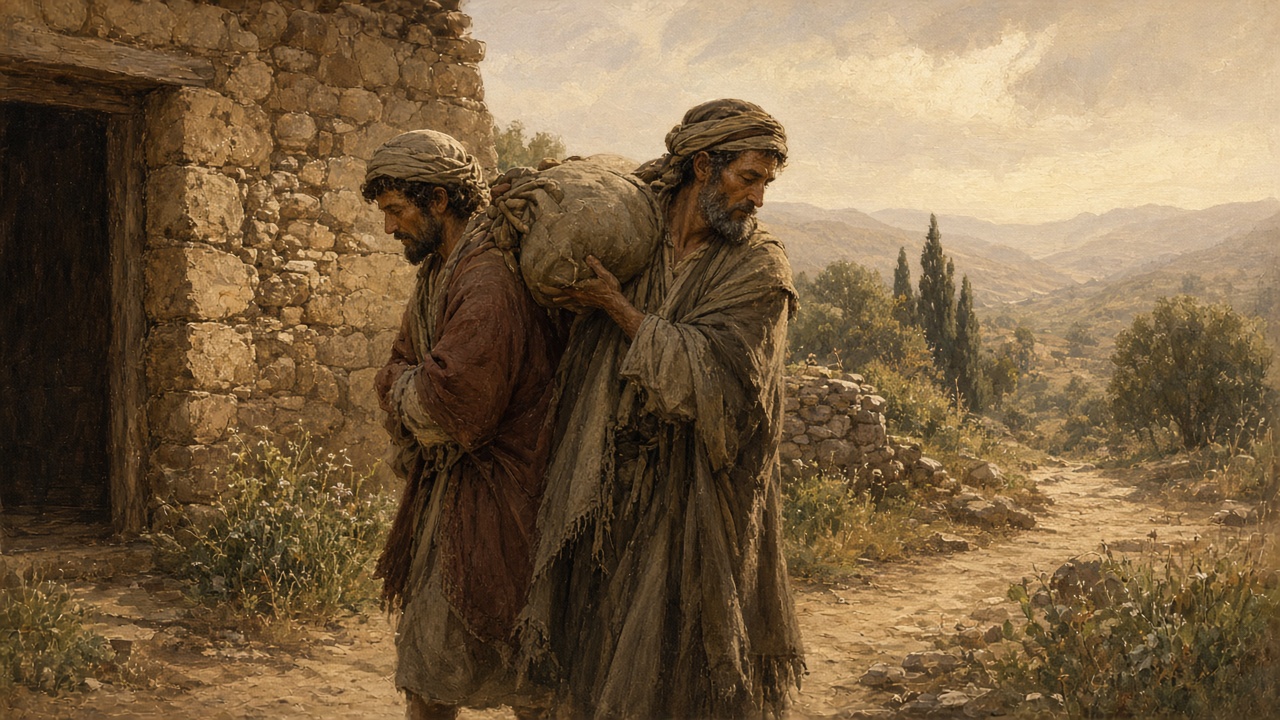
- El capítulo pone dos deberes uno al lado del otro. Los que son espirituales deben restaurar con mansedumbre a quien sea sorprendido en una transgresión y llevar las cargas unos de otros, lo que la carta llama cumplir la ley de Cristo. Cada uno, sin embargo, debe examinar su propia obra y llevar su propia carga, en lugar de creerse algo cuando no es nada y gloriarse por comparación con otra persona.Fuentes: el propio texto bíblico
- El autor usa la imagen de la siembra y la cosecha: Dios no se deja burlar, y cada uno cosecha lo que siembra. Quien siembra para agradar a la carne, de la carne cosecha destrucción; quien siembra para agradar al Espíritu, del Espíritu cosecha vida eterna. Se exhorta a los lectores a no cansarse de hacer el bien, pues a su debido tiempo cosecharán si no desisten, y a hacer el bien a todos, especialmente a la familia de la fe.Fuentes: el propio texto bíblico
- El autor llama la atención sobre las letras grandes que está usando al escribir de su propia mano. Dice que algunos intentan imponer la circuncisión para causar una buena impresión exterior, evitar la persecución por la cruz de Cristo y gloriarse en la carne de otros, aunque los circuncidados ni siquiera cumplen la ley. Pide no gloriarse jamás excepto en la cruz de nuestro Señor Jesucristo, afirma que ni la circuncisión ni la incircuncisión significan nada y que lo que importa es una nueva creación, y declara que lleva en su cuerpo las marcas de Jesús.Fuentes: el propio texto bíblico
Notas escritas con ayuda de IA a partir de fuentes abiertas (Theographic Bible Metadata, CC BY-SA 4.0; Easton’s Bible Dictionary, dominio público) y revisadas antes de publicarse.
Créditos y licencia de esta traducción
Haalin Mallano
The New Testament in the Banna language of Ethiopia
copyright © 2014 SIM International
Language: Banna (Hamer-Banna)
Translation by: SIM
This translation text is made available to you under the
terms of the Creative Commons License: Attribution-Noncommercial-No Derivative Works.
( http://creativecommons.org/licenses/by-nc-nd/3.0/ )
In addition, you have permission to port the text to different file formats, as long as you
do not change any of the text or punctuation of the Bible.
You may share, copy, distribute, transmit, and extract portions
or quotations from this work, provided that you include the above copyright
information:
You must give Attribution to the work.
You do not sell this work for a profit.
You do not make any derivative works that change any of the actual words or punctuation of the Scriptures.
Permissions beyond the scope of this license may be
available if you contact
us with your request.
This translation is made available to you under the terms of the
Creative Commons Attribution-Noncommercial-No Derivatives license 4.0.
You may share and redistribute this Bible translation or extracts from it in any format, provided that:
You include the above copyright and source information.
You do not sell this work for a profit.
You do not change any of the words or punctuation of the Scriptures.
Pictures included with Scriptures and other documents on this site are licensed just for use with those Scriptures and documents.
For other uses, please contact the respective copyright owners.
2014-10-15
Fuente: http://ebible.org/amf/ · eBible.org