Rut 2
Yi Antiw Bible / Yi Ac'aj Testament · Toca un versículo para ver sus referencias cruzadas.
Yi bene'n Rut tan molche'n wi' cebada
1At tzun jun xonl yi k'ajtzun Elimelec yi chmilbe'n Noemí yi na bi'aj Booz. I' jun yaj yi at wi'nin k'ej. Nin chin ric nin i'.
2At tzun jun k'ej nin tal Rut tetz yi tlib:
—Na', tak'u' ama'l swetz tan imbene'n tan xo'n wi'ak cojbil. Ko pe' at jun aj je'sanl cosech yil tak' ama'l swetz tan inxome'n nin wutz coc tan molche'n yi e'chk wi' cebada yi na cyaj cyen wi cojbil.
—Quilo'k bin wal, stzun yi tlib bantz tetz.
3Bene'n tzun Rut tan xo'n wi'ak cojbil. Nintzun ak'lij ama'ltz tetz tan molche'n yi e'chk wi' cebada yi cyaj cyen wi cojbil cyak'un yi e' aj je'sanl cosech. Noj quen cu'n tzuntz yi cho'n tpone'n le cojbil Booz, jun xonl k'ajtzun Elimelec.
4I tzun bantz cho'n tzun tzaje'n Booz le tnum Belén tan quilwe'n yi e' tetz mos. Yi topone'n scye'j nintzun taltz scyetz:
—Koj tzaj Kataj banl tzitibaj.
—Ncha'tz teru' ta', koj tzaj Kataj banl tibaju', che'ch yi e' mos bantz tetz Booz.
5Bene'n tzun jakol Booz tetz yi caporal:
—¿Na' tzun scyetz i' yi jun xna'ne'j yi na tzan tan molche'n yi e'chk wi' cebada?
6—I'tz jun xna'n aj Moab. Cho'n xomij i' te'j Noemí yi cyule'n tzone'j. 7Nin ja jak i' ama'l swetz tan xome'n tzaj wutz chicoc yi e' mos tan molche'n e'chk wi' cebada. Ja baj cu'n yi jalajix k'ej ta'n tan ẍchamle'n. Ana' chan cunin ja uje' jun tal rat, stzun yi caporal bantz tetz Booz.
8Nintzun ben tlol Booztz tetz Rut:
—Aẍ jun c'oloj witz'un, qui na waj yil cẍben tan ẍchamle'n cebada swutz junt ama'l. Ma na ncye'n tu'stz tzone'j scye'j e' inmos. 9Xomen nintu'tz wutz chicoc. Na ja wal scyetz yi ja wak' ama'l tzatz. Kol saj saktzi' tzawe'j at a' le cu'lbil, ba'n tzajoy cu'n. Nin ba'n cẍuc'a' te yi cyetz chic'a', stzun Booz bantz tetz Rut.
10Cwe'n tzun mejlok Rut nin aj cu'n wutz plaj wuxtx'otx' tan ẍchajle'n yi c'ulutxumil i'.
—¿Mbi tzuntz na taltzaju' yi xtxolbila'tz swetz? Chum balaj nin ilu' swe'j ta', wech in tu' awer nak ẍchixo'lu', chij Rut bantz tetz.
11Bene'n tzun tlol Booz tetz Rut:
—Ja wi't wit cyakil yi abalajil yi maban te awulib jetz yi quime'n yi awuchmil. Ncha'tz ja wit yi ja chicyaj cyen awilol yi e' ataj. Ncha'tz ja wit yi ja chicyaj cyen awilol yi atnumil tan awule'n skaxo'l, wech na ncha'tz o' ketz, o' awer nak tane'n tzawutz. 12Lok koj tzaj Kataj Ryos yi banl tzawibaj tan yi banl awalma'. Ntin cu'n Kataj yi kaRyosil yi o' xonl Israel, yi jun kale majakwit ẍch'eybil a'tz, tz'ak'on banl i' tzawibaj tan cyakil cu'n yi e'chk takle'n yi ja bnix awa'n, stzun Booz bantz.
13—Chumbalaj nin ilu' swe'j. Yi yolu' na xcye' tan inmayse'n. Na pe nin sk'il njilonu' swetz. Wech na siquier ink jun mosu', stzun Rut bantz.
14I tzun yi topone'n oril tan wa'a'n, saje'n tzun ẍchakol Booz yi Rut. Nintzun taltz tetz:
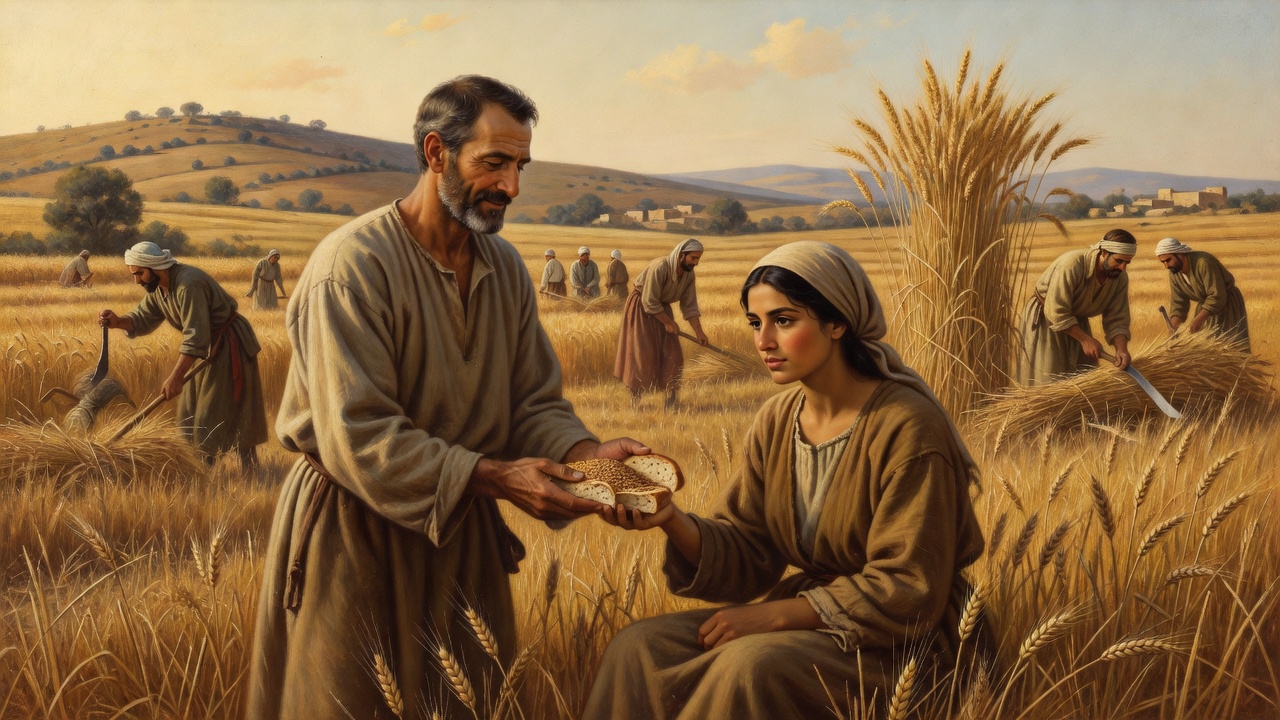
—Or awetz witz'un, banaj jun awa'. Je jun piẍ pame'j, bajse'n. Ba'n tzamu' cu'n tul yi mu'ẍ binagre'j.
Nintzun c'ole' cu'n Rut-tz ẍchixo'l yi e' mos. Ma Booz nin ben tk'ol i' jun txob cebada yi woyi'nt tetz. Wan cunin Rut jalen yi noje'n yi c'u'l, poro ilenin sowrin yi wa'. 15Te yi bene'nt i' tan ẍchamle'n cebada nintzun cawun Booz scyetz yi e' mos. I tzun taltz:
—Ak'wok ama'l tetz tan toque'n tan molche'n xo'lak e'chk boc'ojt yi molijt, nin quil tzimak wok wutz i'. 16Ncha'tz ba'n lcyaj cyen jujun bakaj cebada ita'n wuxtx'otx' xo'lak yi jujun boc'oja'tz yi ja wi't c'alxij, tan toque'n i' tan molche'n. Quil tzimakwok wutz, stzun Booz.
17Baj cu'n tzun k'ejtz tan Rut tan ẍchamle'n e'chk wi' cebada wutz yi cojbil Booz jalen cu'n yi toque'n akale'n. Nintzun octz tan bujle'n yi cebada yi molxij ta'n. Molxij lo' e'ch cob arow wutz cebada ta'n. 18Yi taje'n tzaj nin aj tzaj tcy'al i' yi wutz cebada yi molxij ta'n. Ninin ben i' tan ẍchajle'n tetz yi tlib. Yi wi't ẍchajol nintzun je tzaj tcy'al i' yi sowril yi wa', nin ben tk'oltz tetz yi tlib.
19—¿Na' ncẍa'ke't jalu'? ¿Na' nmolxe't yi jun c'oloj cebada awa'ne'j? Koj tzaj Kataj banl tibaj yi juna'tz yi mmo'c tan awuch'eye'n, stzun yi tlib bantz tetz.
—Yi taw yi ama'l kale nxna'ke't tan molche'n cebada, i'tz tetz ta' Booz, stzun Rut tetz Noemí.
20Nintzun tal Noemí tetz:
—Koj tzaj Kataj banl tibaj ta' Booz, na chumbalaj nin i' mban ske'j, chi banak Ryos scye'j k'ajtzun alma'. Xonl k'ajtzun wuchmil yi ta' Booza'tz, nin i' jun yi tajwe'n tan toque'n tan kacolpe'n tk'ab yi sotzal c'u'lal, stzun Noemí bantz.
21—Ncha'tz ja tal i' swetz: “Ba'n cxom nin wutz chicoc yi e' inmos tan molche'n yi wi' cebada jalen cu'n yil baje'n yi cosech.”
22—Ba'n aẍ jun c'oloj wal, qui cẍbisun, ba'n cẍben. Cya'l cẍa'j nint wi junt cojbil, bantz cya'l cẍyajontz, stzun Noemí bantz.
23Ya'tz nintzun ban Rut-tz. Cho'n tzun ta'te'n i'-tz tan molche'n yi wutz cebadaja'tz ẍchixo'l yi e' mos Booz, jalen cu'n yi baje'n yi cosech tetz cebada tu triw. Ej nin cho'n najewe'n Rut-tz te yi tlib.
¿Sabías que…?
Rut espiga en los campos de Booz
- Belén estaba situada en la región montañosa de Judá, y los valles fértiles al este servían como campos agrícolas donde Rut recogía las espigas de cebada que dejaban los segadores.Fuentes: Bethlehem · Ruth · el propio texto bíblico
- Booz era un terrateniente próspero en Belén, perteneciente al clan del difunto esposo de Noemí, Elimelec, lo que lo convertía en un pariente cercano y redentor de la familia.Fuentes: Boaz · Elimelech · el propio texto bíblico
- Aunque Rut era una extranjera procedente de Moab, Booz le ofreció una hospitalidad y protección especiales, compartiendo con ella grano tostado y agua, y ordenando a sus trabajadores que no la molestaran debido a su lealtad hacia Noemí.Fuentes: Ruth · el propio texto bíblico
Notas escritas con ayuda de IA a partir de fuentes abiertas (Theographic Bible Metadata, CC BY-SA 4.0; Easton’s Bible Dictionary, dominio público) y revisadas antes de publicarse.
Lugares de este capítulo
Solo aparecen lugares identificados con alta confianza (90 % o más según las fuentes académicas reunidas por OpenBible). Mapa de la época: DARE (Digital Atlas of the Roman Empire), CC BY 4.0; mapa actual: © colaboradores de OpenStreetMap; lugares: OpenBible.info (CC BY 4.0).
Créditos y licencia de esta traducción
Yi Antiw Bible / Yi Ac'aj Testament
Bible in Aguacateco (GT:agu:Aguacateco)
copyright © 2011 Wycliffe Bible Translators, Inc.
Language: Aguacateco
Translation by: Wycliffe Bible Translators, Inc.
Copyright Information
© 2011-02-18, Wycliffe Bible Translators, Inc. All rights reserved.
This translation text is made available to you under the
terms of the Creative Commons License: Attribution-Noncommercial-No Derivative Works.
( http://creativecommons.org/licenses/by-nc-nd/3.0/ )
In addition, you have permission to port the text to different file formats, as long as you
do not change any of the text or punctuation of the Bible.
You may share, copy, distribute, transmit, and extract portions
or quotations from this work, provided that you include the above copyright
information:
You must give Attribution to the work.
You do not sell this work for a profit.
You do not make any derivative works that change any of the actual words or punctuation of the Scriptures.
Permissions beyond the scope of this license may be
available if you contact
us with your request.
The Bible
in Aguacateco
© 2011-02-18, Wycliffe Bible Translators, Inc. All rights reserved.
This translation is made available to you under the terms of the
Creative Commons Attribution-Noncommercial-No Derivatives license 4.0.
You may share and redistribute this Bible translation or extracts from it in any format, provided that:
You include the above copyright and source information.
You do not sell this work for a profit.
You do not change any of the words or punctuation of the Scriptures.
Pictures included with Scriptures and other documents on this site are licensed just for use with those Scriptures and documents.
For other uses, please contact the respective copyright owners.
2014-04-21
Fuente: http://ebible.org/aguBl/ · eBible.org