Hageo 2
Yi Antiw Bible / Yi Ac'aj Testament · Toca un versículo para ver sus referencias cruzadas.
Chin yube'n cunin sbne' yi templo tzantzaj
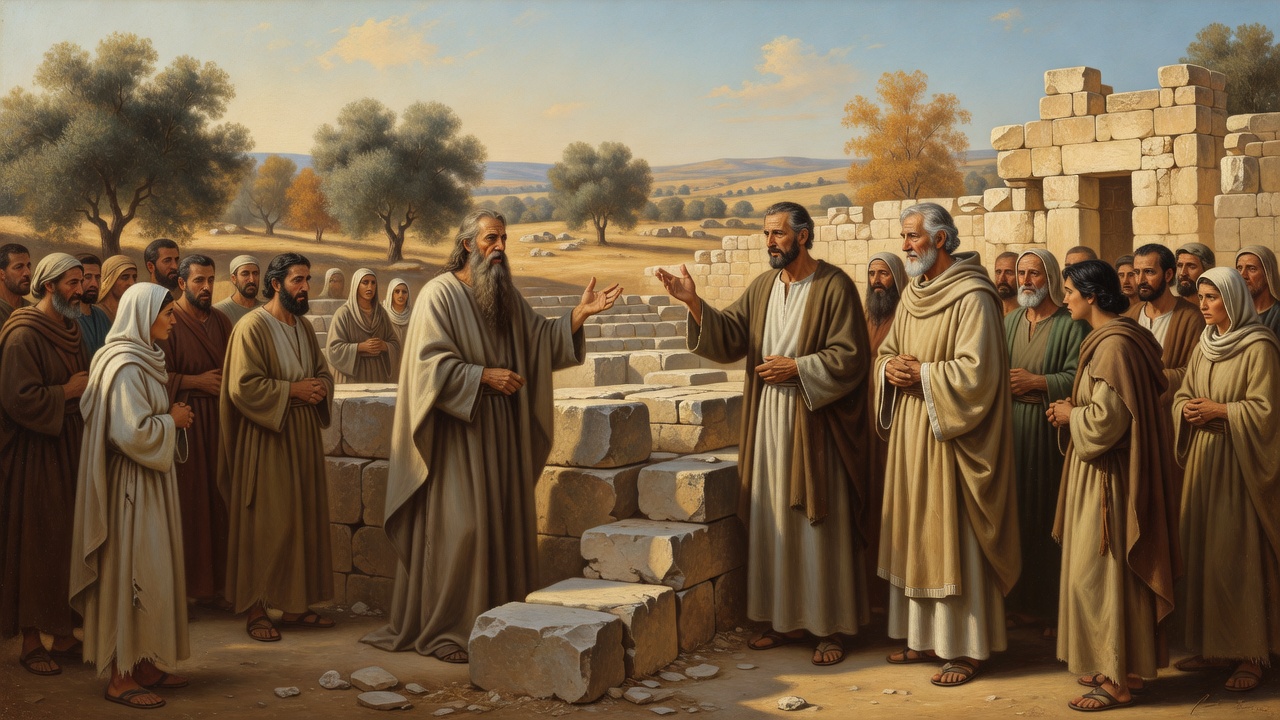
1I tzun bantz le junak cyaji'n k'ej tajlal yi juki'n xaw, nintzun jilon tzaj junt tir Kataj tetz yi elsanl stzi' i' yi Hageo, 2nin tal i' tetz tan tlol cobox xtxolbil scyetz Zorobabel tu Josué, yi wi'tz pale', nin scyetz cyakil yi e' wunak yi najlche'-tz. Je nin yol i'e'j: 3“Yi e' yi quilnak yi ẍe'n cu'n tane'n yi bajx templo yi cu'nak ch'uk, na lo' cyal jalu': Mas ba'nt cu'n yi antiw yi cu'nak ch'uk swutz yi junte'j. 4Poro aẍ jun c'oloj Zorobabel ¡quiwit te yi ak'un! Ej nin aẍ jun c'oloj Josué, yi aẍ yi wi'tz pale', ¡quiwit! Nin cyakil yi e' nim juy, ¡quiwit! na yi in wetz atin tzixo'l tan ich'eye'n te yi ak'un. Na ite'n nin yola'tz insuknak scyetz yi e' imam ite' yi cyele'n tzaj Egipto. Na je walnak scyetze'j: Stz'a'tok yi wetz inespíritu tzixo'l, chinch bantz scyetz. Qui tzun lcabej ic'u'ltz jalu' te yi ak'un. Na yi in wetz yi na walnin yi yole'j, in yi Ryos yi cya'l jun na xcye' quen swe'j.
6”Nin tz'opon chan yi tiemp yil chucan cyakil yi tcya'j tu wuxtx'otx' wa'n, tu yi mar tu e'chk ama'l, na in yi Ryos. 7Ẍchucank cyakil e'chk tnum wa'n, nin chu'l len yi e' wunaka'tz tan toye'n chime'bi'l tzone'j le intemplo. Nin sjalok wi'nin k'ej yi inca'la'tz. 8Tz'ul cyakil chime'bi'l, na wetz cyakil yi sakal tu yi oro, yi at bene'n tzi'n wi munt. 9Nin yi junt temploja'tz yi sbnixok chin yube'nt cunin sbne' swutz yi bajx yi xitnak. Sjalok tzun tzatzin paztz wa'n, tul yi tnume'j. Jun cu'n yi xtxolbile'j yi na wal nin tzitetz, na yi in wetz in Ryos,” chij Kataj.
Yi toque'n Ryos tan chiyajle'n yi e' yi qui e' oc c'ulutxum jak' ca'wl i'
10I tzun bantz le junak cyaji'n k'ej tajlal yi beluji'n xaw, te ite'n nin yoba'tz, yi na cawun tzaj yi rey Darío, nintzun ben tlol Kataj Ryos, yi xtxolbile'j tetz Hageo yi elsanl stzi' i'. 11Nintzun cawunintz Ryos tetz Hageo tan jakle'n scyetz yi e' pale' yi cyajske'n yi ley Moisés yi mbi'tz yi cyetz chitxumu'n te yi xtxolbile'j: 12“Ok tu'tz ka'n, yi at jun yi cy'a'n chi'baj ta'n yi xansa'nt, yi cho'n t'oli'n ta'n tul yi be'ch tetz. Ej nin yil noj quen yi ju' yi be'ch tetza'tz te'j jun piẍ pam, nka jun lak chi'baj yi txiquijt, nka te'j jun was win, nka te'j jun cu'lbil aceit, nka te'j alchok jilwutz cumir, ¿tz'ocpon quen pe' yi e'chk cumira'tz tetz xan?” “Qui', quil tz'oc yi e'chk cumira'tz tetz xan” che'ch yi e' pale' bantz.
13Jakol tzun Hageo junt xtxolbil scyetz: “Ma jalu', ok tu'tz ka'n, yi at jun yi ja oc lac'p il c'ol te'j, tan tu' yi nje' macol wankil jun alma'. Nin kol ben tan macle'n alchok cumir te yi ja wi't kal, ¿qui pelo' tz'oc lac'p yi il c'ola'tz te'j e'chk cumira'tz?” “Tz'ocpon lac'p te'j,” che'ch tzun yi e' pale' bantz.
14Ej, bene'n tzun tlol Hageo scyetz: “Bintzij yi chiyolu', na je na tal Kataj Ryose'j: ‘I cunin tzun i'a'tz quitane'n yi e' wunak yi najlche' tzone'j, cy'a'n len il c'ol cya'n. Cha'stzun te tircu'n yi e'chk takle'n yi na bnix cya'n, nin yi e'chk takle'n yi ja chisuk swetz at len il c'ol te'j.
Yi jale'n chibanl yi e' xonl Israel yi cyoque'n c'ulutxum jak' ca'wl Kataj Ryos
15’Ma jalu', txumwok yi xtxolbile'j te yi ntaxk tzaj cxe'tijwok tan je'se'n yi intemplo, 16¿mbi mbajij? Ko na a'lchij yi at junak liwr ixi'n colij, ma yi na oc ma'le'n, lajujte'n liwr na jal. Ncha'tz ni'cu'n na ban yi win. Na yi na el tzaj ticy'le'n nicy' cient ẍchok' win yi colij, junak te'n ẍchok' na ban yi na cu' molij. 17Na in nno'c tan po'tze'n cyakil yi wutz yi itujul, tan c'ub a'bal, nin tan e'chk ya'bil. Poro qui nin mmitx'ixpuj itajtza'kl tan itoque'n c'ulutxum jak' inca'wl. Juncu'n yi xtxolbile'j, na yi in wetz yi in iRyosil yi na chin tzan tan talche'n yi e'chk xtxolbila'tz. 18Poro yi jalu' i'tz junaklaj tajlal yi beluji'n xaw, nin yi ja wi't cu' xe' yi intemplo ita'n, apart sbne' tircu'n. 19Na sbne' opon tunintz sjalok yi ixi'n triw yi tajwe'n tzitetz. Ma sajle'n, qui'c mas lo'baj uva njal, nka lo'baj ibẍ, nka lo'baj granada, nka wutz oliw, qui nin njal wutz tan paj yi chin pajol inca'wl nin axwok. Poro yi jalu' apart sbne', tan paj yi ja cxo'c c'ulutxum jak' inca'wl, swak'e' tzun imbanl tzitibaj sbne' opon tunintz,’ stzun Kataj Ryos bantz.”
Yi tlol Kataj yi mbi cu'n sbne' i' tzantzaj scye'j e'chk nación nin yi mbi cu'n sbne' i' tan jale'n k'ej yi tetz ẍchakum
20Ej i tzun bantz le ite'n nin k'eja'tz, nintzun jilon junt tir Kataj Ryos tetz Hageo, i tzun taltz: 21“Jilon tetz Zorobabel nin alaj yi xtxolbile'j tetz: ‘Ẍchucank yi tcya'j wa'n tu yi wuxtx'otx', 22nin nocpon tan xite'n cyakil yi e'chk gobierum yi ate' bene'n tzi'n wi munt. Ẍche'lk cu'n yi e'chk chisanlar wa'n swutz. Ẍchilo'onk yi e'chk chicare't wa'n tetz oyintzi', nin ẍchiquimok yi e' yi ate' tul. Ẍchiquimok chichej scyuch' yi e' yi ate'e'n scye'jak, na e' te'n copon chibiyol quib squibil quib. 23Ej nin tul yi jun tiempa'tz, aẍ Zorobabel, yi aẍ inchakum, nocpon tan aq'uicy'le'n chi na no'c tan q'uicy'le'n yi inxmalk'ab yi na xcon wa'n tan tocse'n sey. Na txa'ijt quiẍ wa'n. Jun cu'n sbajok yi xtxolbile'j yi na wal nin tzatz, na yi in wetz in yi Ryos yi cya'l jun na xcye' quen swe'j.’ ”
¿Sabías que…?
La Promesa de Gloria Futura
- Cuando se colocaron los cimientos del segundo templo tras el regreso de Babilonia, los ancianos de la comunidad aún recordaban la magnificencia del templo original destruido por Nabucodonosor. Ante el desánimo por la modesta nueva estructura, Hageo proclamó que la gloria futura de esa casa superaría su antiguo esplendor.Fuentes: el propio texto bíblico · Zerubbabel · Haggai
- Hageo consultó a los sacerdotes sobre normas rituales para ilustrar una enseñanza moral. Según los dictámenes sacerdotales, la santidad no se transfería por contacto indirecto, mientras que la impureza ceremonial —como la contraída al tocar un cadáver— se transmitía de inmediato, reflejando cómo su descuido previo había afectado sus ofrendas y cosechas.Fuentes: el propio texto bíblico
- La reconstrucción comunitaria estuvo encabezada por dos líderes clave: Zorobabel hijo de Salatiel, gobernador civil, y Josué hijo de Josadac, el sumo sacerdote. Al final del capítulo, Hageo se dirige a Zorobabel con la figura de un anillo de sellar, emblema de autoridad y elección divina.Fuentes: el propio texto bíblico · Zerubbabel · Joshua
Notas escritas con ayuda de IA a partir de fuentes abiertas (Theographic Bible Metadata, CC BY-SA 4.0; Easton’s Bible Dictionary, dominio público) y revisadas antes de publicarse.
Lugares de este capítulo
- Egypt · 30.129, 31.308 · versículo 5
Solo aparecen lugares identificados con alta confianza (90 % o más según las fuentes académicas reunidas por OpenBible). Mapa de la época: DARE (Digital Atlas of the Roman Empire), CC BY 4.0; mapa actual: © colaboradores de OpenStreetMap; lugares: OpenBible.info (CC BY 4.0).
Créditos y licencia de esta traducción
Yi Antiw Bible / Yi Ac'aj Testament
Bible in Aguacateco (GT:agu:Aguacateco)
copyright © 2011 Wycliffe Bible Translators, Inc.
Language: Aguacateco
Translation by: Wycliffe Bible Translators, Inc.
Copyright Information
© 2011-02-18, Wycliffe Bible Translators, Inc. All rights reserved.
This translation text is made available to you under the
terms of the Creative Commons License: Attribution-Noncommercial-No Derivative Works.
( http://creativecommons.org/licenses/by-nc-nd/3.0/ )
In addition, you have permission to port the text to different file formats, as long as you
do not change any of the text or punctuation of the Bible.
You may share, copy, distribute, transmit, and extract portions
or quotations from this work, provided that you include the above copyright
information:
You must give Attribution to the work.
You do not sell this work for a profit.
You do not make any derivative works that change any of the actual words or punctuation of the Scriptures.
Permissions beyond the scope of this license may be
available if you contact
us with your request.
The Bible
in Aguacateco
© 2011-02-18, Wycliffe Bible Translators, Inc. All rights reserved.
This translation is made available to you under the terms of the
Creative Commons Attribution-Noncommercial-No Derivatives license 4.0.
You may share and redistribute this Bible translation or extracts from it in any format, provided that:
You include the above copyright and source information.
You do not sell this work for a profit.
You do not change any of the words or punctuation of the Scriptures.
Pictures included with Scriptures and other documents on this site are licensed just for use with those Scriptures and documents.
For other uses, please contact the respective copyright owners.
2014-04-21
Fuente: http://ebible.org/aguBl/ · eBible.org