Apocalipsis 11
I 'utz laj tzij re i dios · Toca un versículo para ver sus referencias cruzadas.
Wach ca ʼani chique i queb je ajbil u tzij i Dios
1Are ʼuri xyaʼ jun pajbal pin ʼab, pacha jun tani, y xbix chwe:
—Chat walijok, je a paja i rachoch i Dios, xak i altar, xak chawajlaj niʼpa i winak que tijin chu cojic u ʼij i Dios chila. 2Xui-ri, ma paj uwaja re i rachoch i Dios, man ile yatal chique i winak chi n-ta Dios cuʼ. Ique, oxib junab ruʼ nicʼaj quiqui kajsaj ni u ʼij i loʼlaj tinimit. 3Xui-ri, yin que in tak bi queb chi quetaʼam in wach, chu bixquil chique i winak wach in chʼobom. Ique, ʼek qui ʼuʼ pacha re i bis; quin qui lap na chique i winak oxib junab ruʼ nicʼaj. (Queje xu bij i Dios ile chwe.)
4I je queb ajbil u tzij i Dios-le, je are i pacha queb u cheʼlal olívo chi je ʼo chuwach i Dios, xak i queb taqʼuibal cantil chi xak ʼo chuwach Ire, chi Rajaw i jyub taʼaj. 5We ʼo jun craj cu ʼan cʼax chique, n-ca tiqui ta chu ʼonquil, man ʼo ni ʼaʼ quel piqui chiʼ ique, porobal-re pachin craj cu ʼan cʼax chique. Queje ni qui camsaxic ile quiqui ʼan chique niʼpa i je aj chʼoʼoj cuʼ. 6Xak ʼo piquiʼab quiqui ʼatij i jab, tzʼakat quiqui ʼan qui patan chu bixquil u tzij i Dios. Xak ʼo piquiʼab quiqui ʼan quicʼ che u wach i ya, xak quiqui coj itzel tak cʼax chuwach i jyub taʼaj xa niʼpa tak mul cacaj u ʼonquil. 7Xui-ri, are cutzin i qui patan, ʼo ni jun ca tiqui chique ique. Jun pacha nim laj itzel chicop quel na pa jyub chi jaktal canok; coʼon ni chʼoʼoj cuʼ, y ca tiqui na chique, y que u camsaj na. 8Teʼuri i qui chʼacul toʼ ca canaj can pa be chila pa nim laj tinimit Jerusalen, pa xcamsax wi i Kajwal. I tinimit-le, queʼel na lic mal; ca majaw na ʼuri che, ca bix “Sodóma” che, we xi ca bix “Egípto” che. 9Niʼpa i winak re ronojel tak tinimit, ronojel tak jyub, ronojel tak quijayil, ronojel tak chʼawbal, ique toʼ que qui takej i camnak je ʼo pa tak be; queje quiqui ʼan ni ile oxib ʼij ruʼ nicʼaj. N-quiqui ya taj chi que mukic. 10Niʼpa i je re u wach i jyub taʼaj lic que quicot na rumal i qui camic i queb-le. Rumal i qui quicotemal, quiqui ya qui sipon chiquiwach, man i winak re u wach i jyub taʼaj lic xe cʼachir na cumal i queb ajbil u tzij i Dios-le. 11Xui-ri, xwil pinwach chi are xicʼaw oxib ʼij ruʼ nicʼaj, i Dios xu cʼunsaj chic sak chiquiwach, y xe walij na; y niʼpa i xquil ile ʼis xqui xij na quib rumal. 12Teʼuri i queb ajbil u tzij i Dios-le, xqui ta ni jun nim laj chʼawbal chicaj chi ca bix chique:
—Chix ʼel na li chicaj —xbix chique.
Ique xe ʼel nubi chicaj pa sutzʼ. I je aj chʼoʼoj chiquij xe qui takej na, are xe ʼel bic. 13Are ʼuri juntir xpe jun nim laj ucabrakan; niʼpa i ja pa tinimit, xe wulij nubi jun tant che i lajuj. Je wukub mil i winak xe cam na rumal i ucabrakan-le. Niʼpa i winak xe canajic, lic xqui xij ni quib; teʼuri lic xqui coj ni u ʼij i Dios aj chicaj.
14Queje ile xqʼuis ni ucab cʼax chi u bim i ángel, xui-ri, juntir ca cʼun chic i urox cʼax.
Wach xa ʼiltajic are xchʼawsax i uwuk trompet
15Teʼuri i uwuk ángel xu chʼawsaj u trompet, y xtataj juban chʼawbal chila chicaj. Co xqui bij:
I ʼatbal tzij re ronojel i tinimit chuwach i jyub taʼaj ʼo chic puʼab i Kajwal Dios, xak puʼab i jun chi Tolke.
Ire coʼon ni ʼatbal tzij queʼe ʼij sak chirij.
(Queje ile xqui bij.)
16Teʼuri i veinticuátro nimak tak mamʼib chi je cul pa chom laj qui cubibal chuwach i Dios, ique xe xuqui chuwach i Dios; xqui kajsaj qui jolom cʼa chuwach ulew y xqui coj u ʼij. 17Xqui bij:
Yet, Kajwal Dios chi ʼatz a choʼab, yet, chi ʼax at ʼo wi, xak cʼa are at ʼo wi woʼor, y xak at are wi queʼe ʼij sak,
caka tioxij chawe man a majom i nim laj a ʼatbal tzij, xak a jekom u ʼonquil.
18I winak chuwach i jyub taʼaj, petnak coywal, xui-ri, n-ta coʼono man ya xu rik i ʼij chi ca petsaj i tojpen chiquij.
Ya xu rik i ʼij ca ʼat ni tzij piquiwi i je camnak, wach i qui ʼanom.
Ya xu rik i ʼij chi ca ya ni qui sipon i je aj ʼanol a chac,
ique chi qui bim a tzij chique i winak, ique chi qui jachom qui cʼaslemal chawe,
ique chi quiqui coj a ʼij, niʼpa i nimak, xak i chʼutik.
Ya xu rik i ʼij ca sach ni qui wach ique chi que tijin chu yojic u wach i jyub taʼaj.
(Queje ile xqui bij i nimak tak mamʼib chuwach i Dios.)
19Teʼuri, xin takej, y xwil i chom laj rachoch i Dios chila chicaj, jakal na; y chila paja, xwil wi i caxa ʼo u ʼij, chi ʼo i u trat i Dios chupam. Are ʼuri, xpe u rep ʼaʼ, xak xpe pacha u chʼawbal jab, xak juban chic chʼawbal, xak xpe jun ucabrakan, xak xpe jun nim laj jab, lic sakbach u pam.
¿Sabías que…?
Los dos testigos y la gran ciudad
- Apocalipsis 11 dice que los cuerpos de los dos testigos yacerán en la calle de la gran ciudad, llamada en sentido figurado Sodoma y Egipto, donde también fue crucificado su Señor. Una entrada de diccionario explica Sodoma como ardiente, o la amurallada, una ciudad destruida por fuego del cielo a causa de la maldad de sus habitantes, una destrucción que las Escrituras recuerdan con frecuencia. Egipto, la tierra del Nilo y de las pirámides, se describe igualmente como un lugar de gran importancia en las Escrituras.Fuentes: el propio texto bíblico
- A los dos testigos se les da poder para profetizar durante mil doscientos sesenta días, vestidos de cilicio. Son los dos olivos y los dos candeleros que están delante del Señor de la tierra, y tienen poder para cerrar el cielo de modo que no llueva, para convertir las aguas en sangre y para herir la tierra con toda clase de plagas.Fuentes: el propio texto bíblico
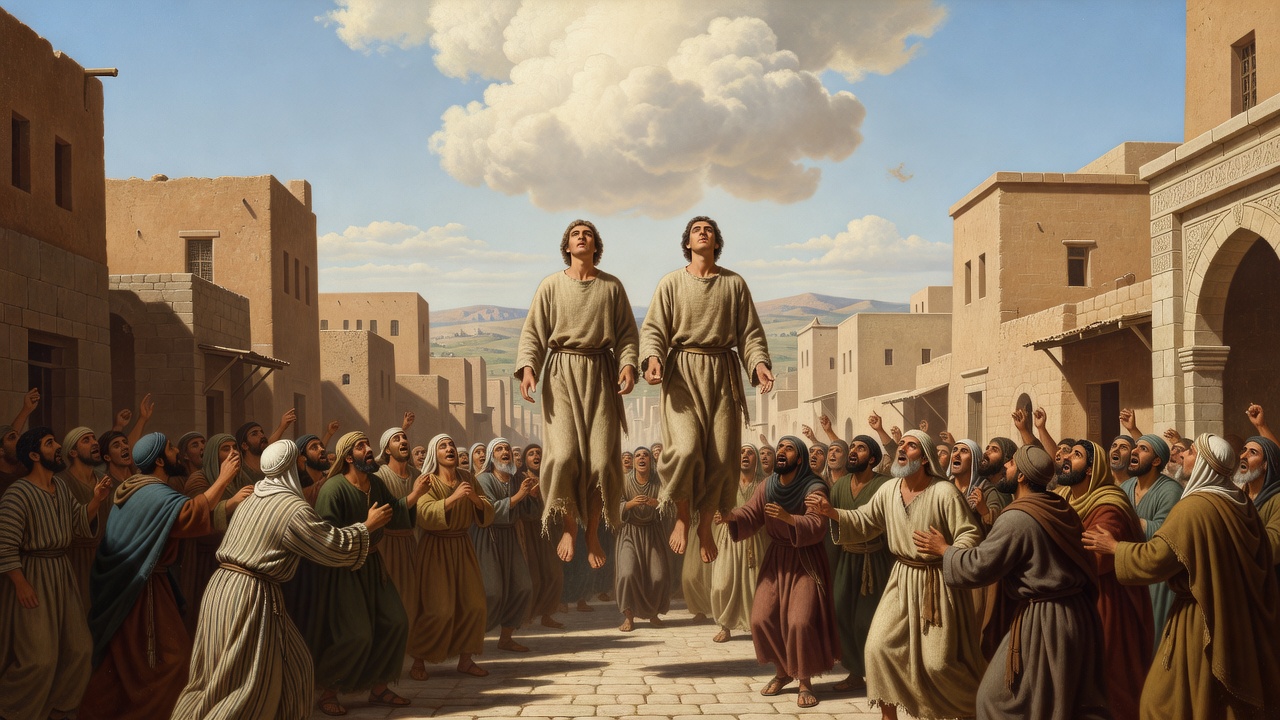
- Cuando los dos testigos terminan su testimonio, la bestia que sube del Abismo los vence y los mata. Durante tres días y medio, pueblos, tribus, lenguas y naciones ven sus cuerpos y no permiten que sean puestos en un sepulcro, mientras los habitantes de la tierra se burlan de ellos, celebran y se envían regalos, porque los dos profetas los habían atormentado. Después de eso, el aliento de vida que viene de Dios entra en ellos; se ponen de pie y suben al cielo en una nube, mientras sus enemigos los observan.Fuentes: el propio texto bíblico
Notas escritas con ayuda de IA a partir de fuentes abiertas (Theographic Bible Metadata, CC BY-SA 4.0; Easton’s Bible Dictionary, dominio público) y revisadas antes de publicarse.
Lugares de este capítulo
Solo aparecen lugares identificados con alta confianza (90 % o más según las fuentes académicas reunidas por OpenBible). Mapa de la época: DARE (Digital Atlas of the Roman Empire), CC BY 4.0; mapa actual: © colaboradores de OpenStreetMap; lugares: OpenBible.info (CC BY 4.0).
Créditos y licencia de esta traducción
I 'utz laj tzij re i dios
New Testament in Achi (I 'utz laj tzij re i dios)
copyright © 2009 Wycliffe Bible Translators, Inc.
Language: Achi
Dialect: Cubulco
Translation by: Wycliffe Bible Translators, Inc.
Achi, Cubulco
Achi' is a Mayan language very
closely related to K'iche' (Quiché in the older orthography). It is spoken by the
Achi people, primarily in the area of Baja Verapaz in Guatemala. There are two Achi'
dialects. Cubulco Achi' is spoken by approximately 48,000 people in the Cubulco area
west of Rabinal area. Rabinal Achi' is spoken by approximately 37,000 people in the
Rabinal area.
El Nuevo Testamento
en el idioma Achí de Cubulco de
Guatemala
Ediciones anteriores
Segunda edición
©2009, Wycliffe Bible
Translators
Primera edición
Publicado por
©1984, Sociedad Bíblica
Internacional
Copyright Information
© 2009, Wycliffe Inc. All rights reserved.
This translation text is made available to you under the terms of the Creative
Commons License: Attribution-Noncommercial-No Derivative Works. ( http://creativecommons.org/licenses/by-nc-nd/3.0/ ) In addition, you have
permission to port the text to different file formats, as long as you do not change
any of the text or punctuation of the Bible.
You may share, copy, distribute, transmit, and extract portions or quotations from
this work, provided that you include the above copyright information:
You must give Attribution to the work.
You do not sell this work for a profit.
You do not make any derivative works that change any of the actual words or
punctuation of the Scriptures.
Permissions beyond the scope of this license may be available if you contact us
with your request. If you want to revise a translation, use a translation in an
adaptation, or use a translation commercially, we will consider your request.
NT:segunda edición
The New Testament
in Achi
© 2009, Wycliffe Inc. All rights reserved.
This translation is made available to you under the terms of the
Creative Commons Attribution-Noncommercial-No Derivatives license 4.0.
You may share and redistribute this Bible translation or extracts from it in any format, provided that:
You include the above copyright and source information.
You do not sell this work for a profit.
You do not change any of the words or punctuation of the Scriptures.
Pictures included with Scriptures and other documents on this site are licensed just for use with those Scriptures and documents.
For other uses, please contact the respective copyright owners.
2013-01-05
Fuente: http://ebible.org/acr-acc/ · eBible.org