Gálatas 2
I 'utz laj tzij re i dios · Toca un versículo para ver sus referencias cruzadas.
Xqui bij i juban apostelab chi ʼutz u chac i ma Páblo
1Cʼa xicʼaw ni cajlajuj junab, teʼuri xin ʼe chic pa Jerusalen, junam ruʼ i ma Bernabe; xak xin cʼam bi i ma Títo kuʼ. 2Xoj ʼe chila man i Dios xu ʼalijinsaj pin nojbal chi ʼo u chac quin ʼec. Chila pa Jerusalen, xka mol kib xui cuʼ i qui nimakil i kachalal; chique ique xin ʼalijinsaj wach i tzij chi quin tijin chu cʼutic chique i ne te aj Israel winak, wach i ʼelbal-que chi sak. Xin bij ile chique man n-cwaj taj chi toʼ ca sach u wach niʼpa in ʼanom, xak niʼpa i quin tijin chu ʼonquil chiquixol i ne te aj Israel. 3ʼUtz xqui ta wach i xin bij, rumal-i n-xqui ʼan ta pen che i ma Títo chi wachiʼil, we coc i retal circuncision che u chʼacul. N-xa ʼan ta pen che, tupu ire n-ti retal-le che man n-aj Israel winak taj. 4Katzij je ʼo jujun chila chi cacaj ca ʼan i retal circuncision che i ma Títo. Ique n-mer ta je kachalal, xa je ocnak chakaxol aliʼal, ʼilbal re wach tak i caka ʼan yoj chi ka yom chic kib puʼab i Jesucrísto. Ique n-cu maj ta qui wach chi oj ʼelnak puʼab i ujer ʼatbal tzij. Cacaj ique coj qui min tan chic puʼab i ujer cʼutunic. 5Xui-ri, mi xa ta jubiʼ xka ya chique we quiqui ya quib pakawi. N-xka ya ta chique, man n-cakaj ti yoj we ca yojtaj i usucʼ i ʼutz laj tzij chi quix tijin yix chu cojic.
6Are xin utzin chu bixquil chique i ka nimakil, n-ta jun chic nojbal xqui bij chwe. Tupu nimak qui ʼij, xui-ri, n-ta we yin che ile; are i quin chʼob yin are wach i craj i Dios. Man i Dios, xak jun kilic cu ʼan chake. 7Ique ʼut, n-ta xqui bij, we ʼo u chac quin jalwachij wach i quin tijin chu cʼutic. N-ta xqui bij chwe, man xquilo chi i Dios u yom pinʼab quin cʼut i ʼelbal chi sak chique i ne te aj Israel winak. Queje u ʼanom i Dios chwe yin pacha u ʼanom che i ma Pédro; xui-ri i ma Pédro taktal bi chique i je aj Israel winak. 8I Dios xu ʼan chwe yin chi in apóstol, xak jun ruʼ pacha xu ʼan che i ma Pédro chi apóstol; xu ya u patan ire, chiquixol i aj Israel winak, xak queje xu ʼan chwe yin, xu ya in patan chiquixol i ne te aj Israel.
9Rumal-i, i ma Jacóbo, i ma Pédro, i ma Wan, chi lic are mer qui nimakil chila, xquilo chi lic are i Dios u yom i patan-le pinʼab. Rumal-i, xqui ya qui ʼab chake ruʼ i ma Bernabe, ʼalijinsabal-re chi oj ʼutz chakawach cuʼ ique. Xqui chʼob ique chi ʼutz coj ʼe yoj cuʼ i ne te aj Israel winak, tzʼakat que ʼe ique cuʼ i je aj Israel. 10Xui-ri, xqui bij chake chi que ka chajij i je nibaʼib. Ile ʼutz xin ta yin, man lic are in yom in cʼux chu ʼonquil ile.
I ma Páblo xu yaj i ma Pédro man n-ʼus ti xu ʼano
11Xoʼon panok, are xcʼun i ma Pédro pa tinimit Antioquía, xin yaj jubiʼ man ire n-usucʼ ti ca tijin chu ʼonquil. 12I xu ʼano are iri: i ma Pédro, are xcʼun tan, ʼutz i xu ʼano man xwa cuʼ conojel i kachalal, tupu je ʼo jujun chique ne te aj Israel winak. Queje ile ca tijin chu ʼonquil, xui-ri, are xe cʼun i jujun je taktal li rumal i ma Jacóbo, i ma Pédro xoc chu jeqʼuic rib chi waʼim cuʼ i ne te aj Israel. Xu xij rib cumal i xe cʼunic man ʼo jujun que binic chi ʼo u chac i retal circuncision chique i ne te aj Israel. 13Coqʼuilal i juban kachalal chi je aj Israel winak, xak xqui ya qui wach ruʼ i ma Pédro, xqui jecʼ quib che i waʼim cuʼ i kachalal chi ne te aj Israel, tupu quetaʼam chi n-sucʼul taj we quiqui jecʼ quib. Xui-ri, queje ile xqui ʼano, y xeʼelok chi xak i ma Bernabe xu ya u wach cuʼ chu ʼonquil ile. 14Xwil yin chi n-usucʼ ti que tijin chu ʼonquil, lic n-crucʼaj ta rib ruʼ i ʼutz laj tzij re i Dios. Xin bij ʼuri che i ma Pédro chiquiwach conojel i jutzobaj: “Yet, chi at aj Israel winak, ʼax cat tijin wi chu ʼanic pacha quiqui ʼan i ne te aj Israel, ¿wuchac ʼut cawaj ca ʼan pen chique ique chi quiqui ʼan pacha qui cʼutunic i aj Israel winak?” xin cha che.
Xak jun i quelbal chi sak i aj Israel cuʼ i ne te aj Israel
15Katzij yoj ruʼ i ma Pédro oj aj Israel winak chi kalaxic, n-oj ta queje pacha i ne te aj Israel chi n-ti Dios cuʼ. 16Tupu n-oj ta queje pacha ique, ile n-ta coʼono; ketaʼam chi yoj xak ʼo ni u chac caka cuba ka cʼux che i Jesucrísto. Xui queje ile coj eʼel ʼutz chuwach i Dios. We toʼ caka coj i ʼatbal tzij tzʼibtal can rumal i mam Moises, n-ta coʼon-re chake. Rumal-i, xak yoj ka cubam ka cʼux che i Jesucrísto, man coj eʼel na ʼutz chuwach i Dios. Are i u cubibal ka cʼux che i Crísto are i ca ʼanaw ʼutz chake; i u cojic i ujer ʼatbal tzij, mi jun winak queʼel ʼutz chuwach i Dios rumal. 17Yoj ʼut caka ʼan pen caka cuba ka cʼux che i Crísto, coʼonbej chake oj ʼutz chuwach i Dios. Are caka ʼan ile, ʼalaj ʼuri chi oj xak jun cuʼ i ne te aj Israel winak, xak oj ajmaquib pacha ique. ¿Xataba are i Crísto ca ʼanaw chake chi oj ajmaquib? N-are taj. 18Kilom chic chi i ujer ʼatbal tzij n-coj resaj ta chi sak, rumal-i yin xwoʼtaj canok. Xui-ri, we quin jek tan chic u cojic u ʼij pacha ʼelsabal-we chi sak, lic ʼo ni in mac ʼuri queʼelok. 19Yin xwoʼtaj can i ujer ʼatbal tzij; woʼor pacha in camnak chic chuwach. Mísmo are i ʼatbal tzij-le xa ʼanaw chwe; woʼor xeʼelok in cʼaslic ʼanbal-re wach craj i Dios. 20Are xcam i Crísto chuwach i cruz, xeʼel chwe pacha junam xin cam ruʼ ire; rumal-i, n-yin ta chic in cʼaslic, are chic i Crísto cʼas pin cʼux. I cʼaslemal chi ʼo che in chʼacul woʼor, are i u Cʼojol i Dios ca yaw chwe, rumal u cubibal in cʼux che ire. Ire, lic cʼax xin u naʼo, xak xu ya rib chi camic wumal yin. 21I Dios, rumal i rutzil u cʼux chake, xu tak li u Cʼojol tobal-ke; rumal-i n-quin xutuj ti rutzil u cʼux i Dios chi u sujum chake. Jun winak n-quel ta ʼutz chuwach i Dios we xa rumal u cojic i ujer ʼatbal tzij. We ta queje ile, queʼel ʼuri n-tu chac i camic xicʼaw wi i Crísto.
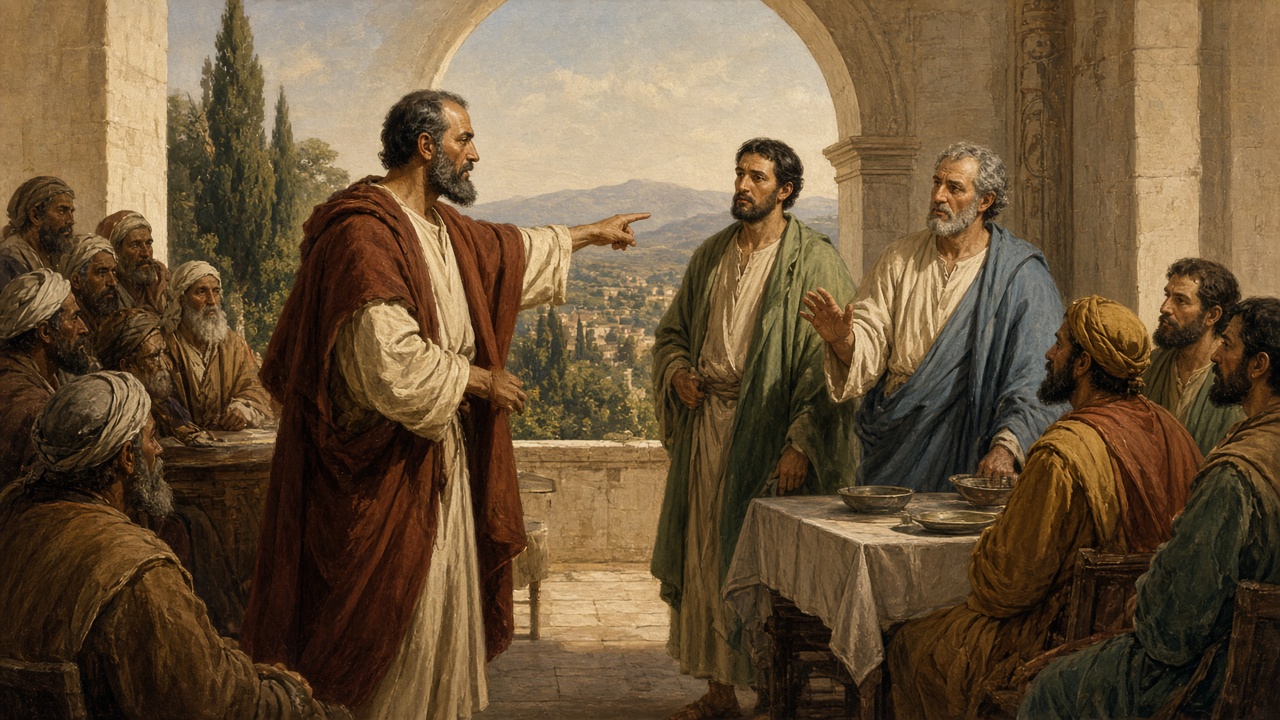
¿Sabías que…?
Gentiles, comunión y un enfrentamiento en Antioquía
- Tito fue con Pablo y Bernabé a Jerusalén. El Easton's Bible Dictionary (1897) dice que parece haber sido gentil y que su nombre no aparece en Hechos. Pablo escribe que Tito, aunque era griego, no fue obligado a circuncidarse.Fuentes: Titus · el propio texto bíblico
- El enfrentamiento posterior tuvo lugar en Antioquía de Siria, a orillas del Orontes, a unas trescientas millas al norte de Jerusalén. La ciudad ocupaba el tercer lugar entre las ciudades del Imperio romano, después de Roma y Alejandría, y fue allí donde a los creyentes se les llamó cristianos por primera vez.Fuentes: Antioch (Syria) · el propio texto bíblico
- El Easton's Bible Dictionary (1897) describe a Santiago, nombrado con Cefas y Juan como uno de los pilares, como cabeza de la iglesia en Jerusalén, donde presidió el concilio sobre los gentiles. Pablo dice que, antes de que llegaran ciertos hombres de parte de Santiago, Cefas solía comer con los gentiles, pero luego se apartó por temor al grupo de la circuncisión.Fuentes: James (Brother of Jesus) · el propio texto bíblico
Notas escritas con ayuda de IA a partir de fuentes abiertas (Theographic Bible Metadata, CC BY-SA 4.0; Easton’s Bible Dictionary, dominio público) y revisadas antes de publicarse.
Lugares de este capítulo
- Jerusalem · 31.777, 35.234 · versículo 1
- Antioch · Hoy: Antioch on the Orontes · 36.227, 36.172 · versículo 11
Solo aparecen lugares identificados con alta confianza (90 % o más según las fuentes académicas reunidas por OpenBible). Mapa de la época: DARE (Digital Atlas of the Roman Empire), CC BY 4.0; mapa actual: © colaboradores de OpenStreetMap; lugares: OpenBible.info (CC BY 4.0).
Créditos y licencia de esta traducción
I 'utz laj tzij re i dios
New Testament in Achi (I 'utz laj tzij re i dios)
copyright © 2009 Wycliffe Bible Translators, Inc.
Language: Achi
Dialect: Cubulco
Translation by: Wycliffe Bible Translators, Inc.
Achi, Cubulco
Achi' is a Mayan language very
closely related to K'iche' (Quiché in the older orthography). It is spoken by the
Achi people, primarily in the area of Baja Verapaz in Guatemala. There are two Achi'
dialects. Cubulco Achi' is spoken by approximately 48,000 people in the Cubulco area
west of Rabinal area. Rabinal Achi' is spoken by approximately 37,000 people in the
Rabinal area.
El Nuevo Testamento
en el idioma Achí de Cubulco de
Guatemala
Ediciones anteriores
Segunda edición
©2009, Wycliffe Bible
Translators
Primera edición
Publicado por
©1984, Sociedad Bíblica
Internacional
Copyright Information
© 2009, Wycliffe Inc. All rights reserved.
This translation text is made available to you under the terms of the Creative
Commons License: Attribution-Noncommercial-No Derivative Works. ( http://creativecommons.org/licenses/by-nc-nd/3.0/ ) In addition, you have
permission to port the text to different file formats, as long as you do not change
any of the text or punctuation of the Bible.
You may share, copy, distribute, transmit, and extract portions or quotations from
this work, provided that you include the above copyright information:
You must give Attribution to the work.
You do not sell this work for a profit.
You do not make any derivative works that change any of the actual words or
punctuation of the Scriptures.
Permissions beyond the scope of this license may be available if you contact us
with your request. If you want to revise a translation, use a translation in an
adaptation, or use a translation commercially, we will consider your request.
NT:segunda edición
The New Testament
in Achi
© 2009, Wycliffe Inc. All rights reserved.
This translation is made available to you under the terms of the
Creative Commons Attribution-Noncommercial-No Derivatives license 4.0.
You may share and redistribute this Bible translation or extracts from it in any format, provided that:
You include the above copyright and source information.
You do not sell this work for a profit.
You do not change any of the words or punctuation of the Scriptures.
Pictures included with Scriptures and other documents on this site are licensed just for use with those Scriptures and documents.
For other uses, please contact the respective copyright owners.
2013-01-05
Fuente: http://ebible.org/acr-acc/ · eBible.org