Hechos 8
I 'utz laj tzij re i dios · Toca un versículo para ver sus referencias cruzadas.
I a-Sáulo ca titat u pam chique i creyent; cu tzucuj chapbal-que
1I a-Sáulo le, junam u wach cuʼ ique chi xe camsaw i ma Estéban. Are xcamsax i ma Estéban, are ʼij wi xjekan i chʼoʼoj chiquij i creyent pa Jerusalen. Conojel i creyent xe quicher bi pa tak tinimit re i jyub Judéa, xak pa tak tinimit re i jyub Samária. Xui i apostelab n-xe ʼanmaj taj. 2Je ʼo jujun achiab qui yom quib chi terejic chirij i Dios. Ique xe ʼe qui muku i ma Estéban. Lic xe oʼ che. 3Xui-ri, i a-Sáulo craj cu sach qui wach i jutzobaj creyent pa Jerusalen. Are i xu ʼano, xoc chi tak ja, que u jucuquej li creyent, chi achiab, chi ixokib, y que u tzʼapij pa cárcel.
I ʼutz laj tzij re i Jesucrísto cupon pa Samária
4I juban creyent chi xe ʼanmaj Jerusalen, xa ipa xe ʼe wi, que tijin chu bixquil chique i winak wach i ʼutz laj tzij re i quelbal chupam i qui mac. 5ʼO jun chique, ma Felípe u bi, are xa ʼec, xoc che jun tinimit re i jyub Samária; xu jek u bixquil chique i winak chi Jesucrísto are i Tolque. 6I winak lic xqui mol quib ruʼ, lic xqui ya quib chu tayic u tzij i ma Felípe. Lic xqui coj retalil che wach i xbix chique, xak xquilo niʼpa tak i milágro xu ʼano. 7Je qʼui winak xelsax itzel tew chique rumal i ma Felípe. I itzel tew que siqʼuinic xe ʼelic. Xak je qʼui i clis, xak je qʼui i siquirnak xe utzirsaxic. 8Rumal ʼuri ʼis que quicot i winak pa tinimit Samária.
9Xak pa tinimit-le, ʼo jun achi, ma Simon u bi, chi aj ʼitz. Ire ʼax coʼon wi chi que u tʼor i aj Samária winak ruʼ nimak tak ʼil chi xu ʼano. Lic xu ʼan nim che rib chiquiwach. 10Conojel i winak, we ʼo i qui ʼij, o we n-ta qui ʼij, ʼis xqui coj retalil che u tzij i ma Simon. Xqui bij chiquiwach:
—I achi-le, mas ʼo u choʼab i Dios ruʼ —que cha.
11Lic xqui coj retalil che, man ʼo tan chi ʼij je u tʼorom ruʼ i u qʼuial tak ʼanic chi u ʼanom. 12Xui-ri, are xupon i ma Felípe, xqui coj ʼuri wach cu bij ire. Xu sakij chique wach i ʼutz laj tzij chirij i ʼatbal tzij re i Dios, xak chirij i Jesucrísto. Are xqui ta u tzij, je qʼui xqui cojo, xak xqui tzʼonoj u kajsaxic ya piquiwi, chi achiab, chi ixokib. 13Xak i ma Simon-le xu cojo y xu tzʼonoj u kajsaxic ya puwi. Teʼuri lic xterej chirij i ma Felípe. Lic xu bisoj are xril i nimak tak ʼanic, i nimak tak milágro xu ʼan i ma Felípe rumal u choʼab i Dios.
14I apostelab chi xe canaj can pa Jerusalen xqui ta rason chi ʼo chic i aj Samária que tijin chu cojic u tzij i Dios. Rumal-i xe qui tak bi i ma Pédro i ma Wan chila cuʼ. 15Are xe uponic, xqui tzʼonoj che i Dios chi coc u Tewal piqui cʼux i creyent aj Samária. 16Xqui ʼan ile man maja ca cʼun i u Tewal i Dios piquiwi; xui kajsam i ya piquiwi, cʼutbal-re chi je re chic i Kajwal Jesus. 17Are ʼuri i ma Pédro i ma Wan xqui ya qui ʼab piquiwi i creyent, teʼuri xoc li u Tewal i Dios piqui cʼux.
18I ma Simon, are xrilo chi xoc i u Tewal i Dios pa canima are xqui ya qui ʼab piquiwi, xu sujuj mer chique i apostelab. 19Xu bij chique:
—Chi ya na chwe yin wach u ʼonquil ile, man pachin jun quin ya in ʼab puwi, xak ca cʼun ni u Tewal i Dios ruʼ —coʼon chique.
20I ma Pédro xu laʼ u wach che:
—¡Cha porox ni a mer pa ʼaʼ junam awuʼ yet! Xa chʼob yet toʼ ruʼ mer ca loʼ ni u sipon i Dios. 21Yet n-ta awe che u chac i Dios, mi xa ta jubiʼ; n-awe ti yet u ʼonquil, man awanima n-sucʼul taj chuwach i Dios. 22Chawoʼtaj i n-ʼus taj-le chi a nojim pa cʼux. Cha tzʼonoj ʼuri che i Dios we cu cuy a mac, wach cat tijin chu chʼobic. 23Cwil yin mas at rayinel re u wach i n-awe taj, lic cʼa i a cʼux rumal; lic at ʼo puʼab i mac atzalal —xu bij i ma Pédro che.
24Are ʼuri i ma Simon xu bij:
—Chi tzʼonoj che i Kajwal pinwi, man n-quin cʼulmaj ti pacha i xi bij yix-le —coʼono.
25Teʼuri i ma Pédro i ma Wan xqui bij chique i aj Samária wach tak quilom ique chi u ʼanom i Kajwal Jesus, xak wach tak u bim canok. Teʼuri xqui maj chali qui be pa Jerusalen. Are que tijin chi be, xqui paxsaj i ʼutz laj tzij re i Jesucrísto chique i winak chupam u qʼuial aldéa re i jyub Samária. Teʼuri xe upon pa Jerusalen.
I ma Felípe cu bij usucʼ u tzij i Dios che jun aj Etiopía
26Xoʼon panok i ma Felípe, ʼo jun ángel re i Kajwal xupon ruʼ y xu bij che:
—Cha yijba awib y jat pa sur. Cha maja i be chi queʼel pa Jerusalen, chi ca ʼe kaj cʼa pa tinimit Gáza —coʼono.
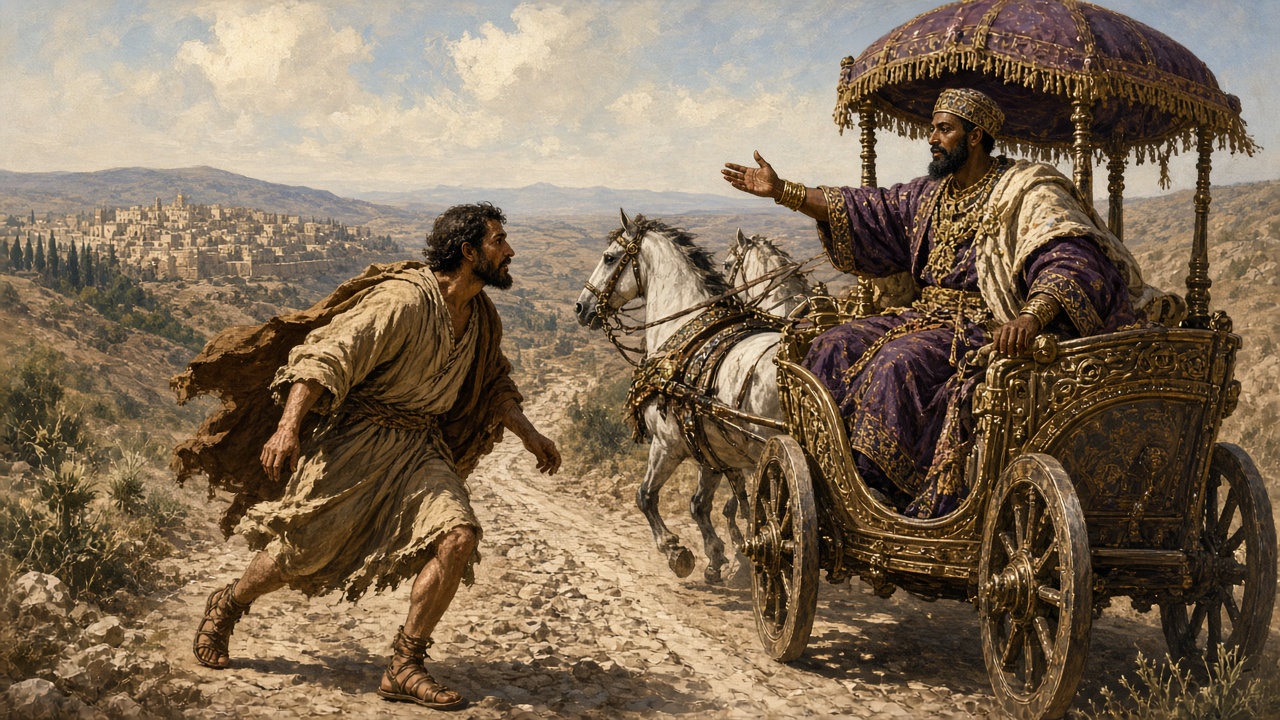
Are i be ile chi quicʼaw chakij jyub pa n-ta wi winak. 27I ma Felípe xu yijba rib y xu maj bi u be. Are ca tijin chi be xril pan jun achi aj naj re i jyub Etiopía. Ire-le, nim i u patan, aj chajinel re u mer i ixok chi qui ʼatol tzij i aj Etiopía. I achi-le, xupon chu cojic u ʼij i Dios pa Jerusalen; xutzin u ʼonquil ile, 28ya tzalijic chic re. Ire ca tijin chi be, cul chupam u careta, ca tijin u jeqʼuic cumal caway. Tzʼakat ca binic, crajlaj u wach i wuj u tzʼibam can i mam Isaías, ajbil u tzij i Dios ujer. 29Are ʼuri i u Tewal i Dios xu bij che i ma Felípe:
—Chat tejeb ruʼ i careta-le y chat bin pu tzal —coʼon che.
30I ma Felípe xa ʼe paʼanem; are xu riko, xu ta i achi crajlaj u wach i wuj chi u tzʼibam can i mam Isaías. Xu tzʼonoj che i achi:
—¿Ca ta u be wach i cawil chuwach i wuj? —coʼon che.
31—¿Wach u tayic u be quin ʼano we n-ta jun cu bij usucʼ chwe? —xu bij i achi che.
Are ʼuri xu bij che i ma Felípe chi ca ʼan chupam u careta, que cubi junam. 32Are u xak wuj chi cu takej, are i pa tzʼibtal wi i tzij-i:
Ire xcʼam bi che u camsaxic pacha jun chij.
Jun chij, are ca cʼatzix rismal, n-ca chʼaw taj.
Xak queje xu ʼan ire ile: n-ti xu bij; n-xu jak ti u chiʼ (are xqui ʼan cʼax che).
33Xkajsax u ʼij; mi jun xu ʼan ʼatbal tzij puwi pacha usucʼ.
Ire, mi jun u muk u xiquin xu canaj canok,
man i u cʼaslemal xelsax che, waral chuwach i jyub taʼaj.
Queje i tzij ile u tzʼibam can i mam Isaías.
34I achi, are xutzin chi rajlaxic u xak i wuj, xu tzʼonoj che i ma Felípe:
—Cha ʼana utzil chomal chwe: cha bij chwe, ¿are i tzʼibawnak iri, are ire xu bij rib? ¿O are jun chic xu lapo? —coʼono.
35Are ʼuri i ma Felípe xu jek u bixquil che wach i ʼutz laj tzij re i Jesus; xu jek u cʼutic che ruʼ i mer jupaj tzij-le pa i xrajlaj wi chuwach wuj. 36Teʼuri, are que tijin chi be, xe icʼaw pa ʼo wi i ya; are ʼuri i achi xu bij:
—Chi ʼo i ya. ¿ʼUtz nawi ca kajsax ni ya pinwi woʼor? ¿ʼO nawi ca ʼatiw u ʼonquil? —coʼon che.
37I ma Felípe xu bij che:
—N-taj; we lic cul a cʼux che i Jesucrísto —coʼono.
—Cul in cʼux che chi are i Jesucrísto are u Cʼojol i Dios —xu bij che i ma Felípe.
38Teʼuri xu tak u tacʼbaxic u careta. Xe kaj bi che queb, xe ʼe chi ya. Are ʼuri i ma Felípe xu kajsaj ya puwi i achi. 39Are xe ʼel chu chiʼ i ya, i u Tewal i Dios xu cʼam bi i ma Felípe. I achi n-xril ta chic u wach, xui-ri ca quicotic xu maj tan chic u be. 40I ma Felípe, xril ire chi ʼo pa tinimit Azóto. Are ʼuri xu maj u be che i tinimit Cesaréa. Are ca tijin chi be, xu paxsaj i ʼutz laj tzij re i Jesucrísto pa tak tinimit pa xicʼaw wi.
¿Sabías que…?
El mensaje se extiende más allá de Jerusalén
- Tras la muerte de Esteban, estalló una gran persecución contra la iglesia en Jerusalén, y todos, excepto los apóstoles, fueron dispersados por Judea y Samaria. Felipe, uno de los siete y más tarde llamado el evangelista, estaba entre ellos; fue primero a Samaria, donde las multitudes atendieron a su mensaje acerca del Cristo.Fuentes: el propio texto bíblico · Phillip the Evangelist
- Antes de que llegara Felipe, Simón había asombrado por mucho tiempo a Samaria con su hechicería, y la gente lo llamaba el poder divino conocido como el Gran Poder. Creyó y fue bautizado, y luego ofreció dinero por el poder de dar el Espíritu Santo mediante la imposición de manos; la palabra simonía, que designa la compra de un cargo espiritual, deriva de su nombre.Fuentes: el propio texto bíblico · Simon the Sorcerer
- Dos caminos unían Jerusalén con Gaza; Felipe fue enviado por el que pasaba por Hebrón y por un distrito poco habitado, llamado desierto. Allí se encontró con un eunuco etíope, tesorero de Candace, reina de los etíopes, que volvía de adorar en Jerusalén y leía al profeta Isaías en su carruaje. Candace era un título que llevaban reinas sucesivas de Meroe, en la Alta Nubia, un rico centro de comercio entre África y el sur de Asia.Fuentes: el propio texto bíblico · Phillip the Evangelist · Candace
Notas escritas con ayuda de IA a partir de fuentes abiertas (Theographic Bible Metadata, CC BY-SA 4.0; Easton’s Bible Dictionary, dominio público) y revisadas antes de publicarse.
Lugares de este capítulo
- Jerusalem · 31.777, 35.234 · versículos 1, 14, 25, 26, 27
- Judea · Hoy: Judea 1 · 31.777, 35.234 · versículo 1
- Samaria · Hoy: Samaria 2 · 32.276, 35.195 · versículos 1, 5, 9, 14, 25
- Gaza · Hoy: Tell Harube · 31.504, 34.464 · versículo 26
- Ethiopia · 16.935, 33.751 · versículo 27
- Ashdod · Hoy: Tel Ashdod · 31.757, 34.658 · versículo 40
- Caesarea · Hoy: Caesarea Maritima · 32.500, 34.892 · versículo 40
Solo aparecen lugares identificados con alta confianza (90 % o más según las fuentes académicas reunidas por OpenBible). Mapa de la época: DARE (Digital Atlas of the Roman Empire), CC BY 4.0; mapa actual: © colaboradores de OpenStreetMap; lugares: OpenBible.info (CC BY 4.0).
Créditos y licencia de esta traducción
I 'utz laj tzij re i dios
New Testament in Achi (I 'utz laj tzij re i dios)
copyright © 2009 Wycliffe Bible Translators, Inc.
Language: Achi
Dialect: Cubulco
Translation by: Wycliffe Bible Translators, Inc.
Achi, Cubulco
Achi' is a Mayan language very
closely related to K'iche' (Quiché in the older orthography). It is spoken by the
Achi people, primarily in the area of Baja Verapaz in Guatemala. There are two Achi'
dialects. Cubulco Achi' is spoken by approximately 48,000 people in the Cubulco area
west of Rabinal area. Rabinal Achi' is spoken by approximately 37,000 people in the
Rabinal area.
El Nuevo Testamento
en el idioma Achí de Cubulco de
Guatemala
Ediciones anteriores
Segunda edición
©2009, Wycliffe Bible
Translators
Primera edición
Publicado por
©1984, Sociedad Bíblica
Internacional
Copyright Information
© 2009, Wycliffe Inc. All rights reserved.
This translation text is made available to you under the terms of the Creative
Commons License: Attribution-Noncommercial-No Derivative Works. ( http://creativecommons.org/licenses/by-nc-nd/3.0/ ) In addition, you have
permission to port the text to different file formats, as long as you do not change
any of the text or punctuation of the Bible.
You may share, copy, distribute, transmit, and extract portions or quotations from
this work, provided that you include the above copyright information:
You must give Attribution to the work.
You do not sell this work for a profit.
You do not make any derivative works that change any of the actual words or
punctuation of the Scriptures.
Permissions beyond the scope of this license may be available if you contact us
with your request. If you want to revise a translation, use a translation in an
adaptation, or use a translation commercially, we will consider your request.
NT:segunda edición
The New Testament
in Achi
© 2009, Wycliffe Inc. All rights reserved.
This translation is made available to you under the terms of the
Creative Commons Attribution-Noncommercial-No Derivatives license 4.0.
You may share and redistribute this Bible translation or extracts from it in any format, provided that:
You include the above copyright and source information.
You do not sell this work for a profit.
You do not change any of the words or punctuation of the Scriptures.
Pictures included with Scriptures and other documents on this site are licensed just for use with those Scriptures and documents.
For other uses, please contact the respective copyright owners.
2013-01-05
Fuente: http://ebible.org/acr-acc/ · eBible.org