Hechos 6
I 'utz laj tzij re i dios · Toca un versículo para ver sus referencias cruzadas.
Xe qui cha wukub achiab je aj ʼanol opis chiquixol i creyent
1Pa tak ʼij-le, i creyent ca tijin qui qʼuiaric. Je ʼo juban ixokib malcanib chiquixol; ʼij ʼij, i creyent quiqui ya qui wa. Jujun chique i creyent que chʼaw pa qui chʼawbal i aj Griégo, xak ʼo jujun que chʼaw pa qui chʼawbal i aj Israel. I aj Griégo xe oc chu cojic qui mac i aj Israel; xqui bij chi i malcanib aj Israel mas que tzukic, xui-ri, i malcanib aj Griégo xa jubiʼ i qui wa ca yaʼic, que cha. 2I cablajuj apostelab xe qui siqʼuij ʼuri conojel i creyent. Xqui bij chique:
—N-ca majaw taj we cakoʼtaj ni u bixquil u tzij i Dios rumal u jachic qui wa i winak. 3Ix kachalal, che i cha ʼuri wukub achiab chixol, chi iwilom yix je ʼutz laj tak achiab. ʼO u chac lic ʼo u Tewal i Dios cuʼ, xak lic ʼo i qui noʼoj. Chi ya ʼuri chique que qui chajij i malcanib-le. 4Teʼuri yoj caka ya na kib chu tzʼonoxic che i Dios, xak chu cʼutic u tzij. (Queje ile xqui bij i apostelab.)
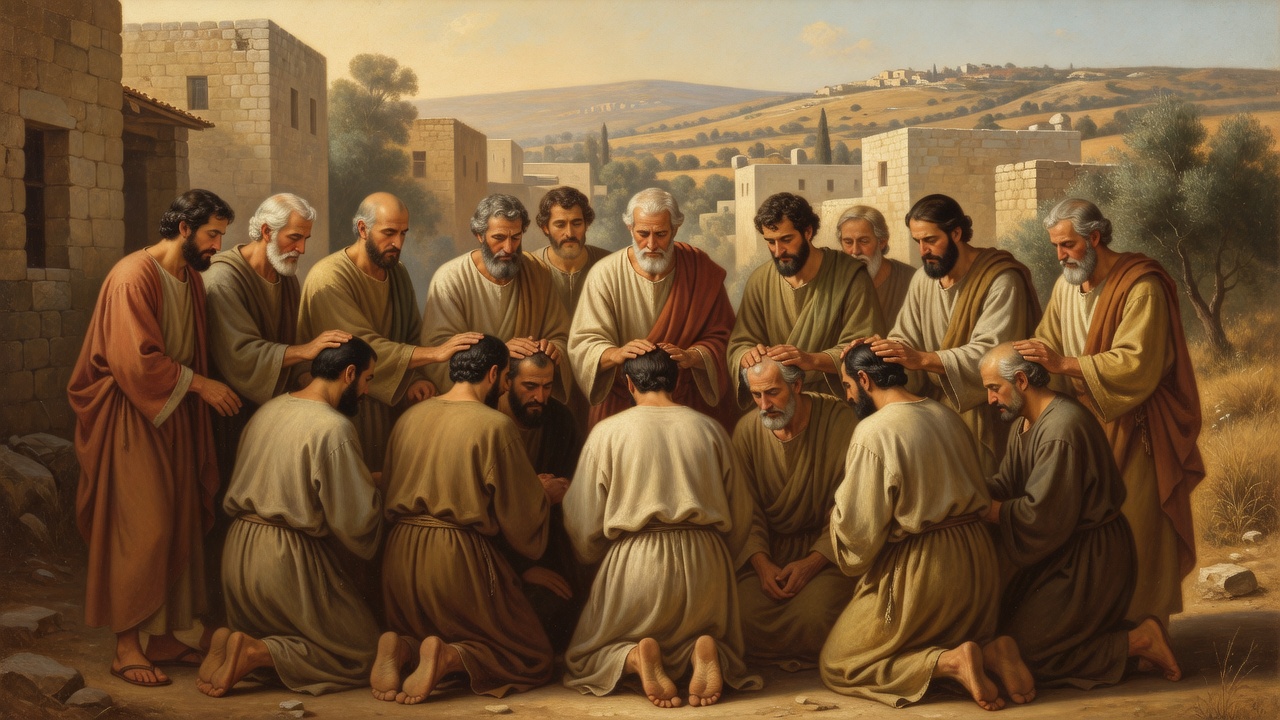
5Conojel i creyent ʼutz xqui ta ile. Are ʼuri xqui cha i ma Estéban; ire lic cul u cʼux che i Dios, xak mas ʼo i u Tewal i Dios ruʼ. Xak xqui cha i ma Felípe, i ma Prócoro, i ma Nicanor, xak i ma Timon, i ma Parménas, xak i ma Nicolas chi aj pa tinimit Antioquía. Ire u yom u wach cuʼ i aj Israel wach u cojic u ʼij i Dios quiqui ʼano. 6Are xe utzin chi qui chayic i je wukub, xe qui cʼam bi cuʼ i apostelab. Ique xqui tzʼonoj che i Dios piquiwi, xak xqui ya qui ʼab piquiwi.
7I u tzij i Dios ca tijin u paxic u wach. Pa Jerusalen mas je qʼui i winak xe oc cuʼ i creyent; xak je qʼui i sacerdóte xqui cuba qui cʼux che i Jesus.
Xqui chap i ma Estéban y xqui cʼam bi chiquiwach i nucʼbal tʼisbal
8I ma Estéban lic ʼo u choʼab i Dios ruʼ, lic ʼo utzil chomal i Dios puwi. Rumal-i, mas i milágro, mas i nim laj ʼanic xu ʼan chiquiwach i winak. 9Xui-ri, ʼo juban achiab xe oc chu toʼtaxic chi tzij. Ique je re i molbalʼib que i aj Israel chi “Achiab n-ta chic cajaw” ca bix chique. Ique junam cuʼ i je aj pa tinimit Ciréne, xak i je aj pa tinimit Alejandría, xak i je aj pa Cilícia, xak i je aj pa Asia, ʼis xe oc chu chapic quib chi tzij ruʼ i ma Estéban. 10Xui-ri, n-que tiqui ta che i ma Estéban man ire, are ca chʼawic, are i u Tewal i Dios ca yaw u nojbal che. 11Ique xe qui tzucuj ʼuri juban aj nucʼul tzij chirij i ma Estéban. Xe qui toj na chi quiqui bij: “Yoj xka ta i achi-le cu bij itzel tzij chirij i ka mam, mam Moises, xak chirij i Dios,” que cha. 12Ruʼ i tzij-le, xe qui chʼujersaj i winak, xe qui petsaj coywal i nimak tak mamʼib, xak i tijonel re i ujer ʼatbal tzij. Xe ʼe chirij i ma Estéban, xqui chapo, y xqui cʼam bi chuwach i nucʼbal tʼisbal. 13Xak xe qui coj juban aj tzucul u mac i ma Estéban chi xqui bij:
—I achi-ri nic are wi cu bij itzel tzij chirij i loʼlaj rachoch i Dios, xak chirij i ʼatbal tzij tzʼibtal can rumal i mam Moises —que cha—. 14Ka tom ni ire cu bij chi Jesus aj Nazaret cu wulijsaj ni rachoch i Dios, xak cu jalwachij ni ka costúmbre chi u yom can i ka mam, mam Moises. (Queje ile xqui bij i aj tzucul tzij.)
15Are ʼuri i nimak tak mamʼib, xak niʼpa i je cul chila, xqui tzu pan i ma Estéban y xquil u palaj pacha u chomal u palaj jun ángel.
¿Sabías que…?
La Elección de los Siete y el Juicio de Esteban
- Surgieron tensiones entre los judíos de habla griega y los hebraicos por la distribución diaria de alimentos a las viudas, lo que llevó a los apóstoles a designar a siete hombres respetados para esta tarea. Notablemente, los siete nombrados—incluyendo a Nicolás, un prosélito de Antioquía—llevaban nombres griegos.Fuentes: el propio texto bíblico · Nicolas
- Judíos de distintas regiones del mundo romano contaban con sus propias sinagogas en Jerusalén, como la Sinagoga de los Libertos y reuniones para personas de Cirene, Alejandría, Cilicia y la provincia de Asia. Miembros de estos grupos regionales fueron los primeros en debatir formalmente con Esteban sobre sus enseñanzas.Fuentes: el propio texto bíblico · Cilicia · Asia
- Cuando los opositores no pudieron refutar los argumentos de Esteban, lo llevaron ante el Sanedrín acusándolo de hablar contra el templo y la ley de Moisés. Mientras los miembros del concilio lo observaban durante estas acusaciones, vieron que su rostro parecía el de un ángel.Fuentes: el propio texto bíblico · Stephen
Notas escritas con ayuda de IA a partir de fuentes abiertas (Theographic Bible Metadata, CC BY-SA 4.0; Easton’s Bible Dictionary, dominio público) y revisadas antes de publicarse.
Lugares de este capítulo
- Antioch · Hoy: Antioch on the Orontes · 36.227, 36.172 · versículo 5
- Jerusalem · 31.777, 35.234 · versículo 7
- Alexandria · 31.183, 29.896 · versículo 9
- Asia · 38.400, 28.300 · versículo 9
- Cilicia · 36.913, 34.892 · versículo 9
- Cyrene · 32.821, 21.851 · versículo 9
- Nazareth · 32.702, 35.298 · versículo 14
Solo aparecen lugares identificados con alta confianza (90 % o más según las fuentes académicas reunidas por OpenBible). Mapa de la época: DARE (Digital Atlas of the Roman Empire), CC BY 4.0; mapa actual: © colaboradores de OpenStreetMap; lugares: OpenBible.info (CC BY 4.0).
Créditos y licencia de esta traducción
I 'utz laj tzij re i dios
New Testament in Achi (I 'utz laj tzij re i dios)
copyright © 2009 Wycliffe Bible Translators, Inc.
Language: Achi
Dialect: Cubulco
Translation by: Wycliffe Bible Translators, Inc.
Achi, Cubulco
Achi' is a Mayan language very
closely related to K'iche' (Quiché in the older orthography). It is spoken by the
Achi people, primarily in the area of Baja Verapaz in Guatemala. There are two Achi'
dialects. Cubulco Achi' is spoken by approximately 48,000 people in the Cubulco area
west of Rabinal area. Rabinal Achi' is spoken by approximately 37,000 people in the
Rabinal area.
El Nuevo Testamento
en el idioma Achí de Cubulco de
Guatemala
Ediciones anteriores
Segunda edición
©2009, Wycliffe Bible
Translators
Primera edición
Publicado por
©1984, Sociedad Bíblica
Internacional
Copyright Information
© 2009, Wycliffe Inc. All rights reserved.
This translation text is made available to you under the terms of the Creative
Commons License: Attribution-Noncommercial-No Derivative Works. ( http://creativecommons.org/licenses/by-nc-nd/3.0/ ) In addition, you have
permission to port the text to different file formats, as long as you do not change
any of the text or punctuation of the Bible.
You may share, copy, distribute, transmit, and extract portions or quotations from
this work, provided that you include the above copyright information:
You must give Attribution to the work.
You do not sell this work for a profit.
You do not make any derivative works that change any of the actual words or
punctuation of the Scriptures.
Permissions beyond the scope of this license may be available if you contact us
with your request. If you want to revise a translation, use a translation in an
adaptation, or use a translation commercially, we will consider your request.
NT:segunda edición
The New Testament
in Achi
© 2009, Wycliffe Inc. All rights reserved.
This translation is made available to you under the terms of the
Creative Commons Attribution-Noncommercial-No Derivatives license 4.0.
You may share and redistribute this Bible translation or extracts from it in any format, provided that:
You include the above copyright and source information.
You do not sell this work for a profit.
You do not change any of the words or punctuation of the Scriptures.
Pictures included with Scriptures and other documents on this site are licensed just for use with those Scriptures and documents.
For other uses, please contact the respective copyright owners.
2013-01-05
Fuente: http://ebible.org/acr-acc/ · eBible.org