2 Timoteo 4
I 'utz laj tzij re i dios · Toca un versículo para ver sus referencias cruzadas.
1Woʼor ʼo jun chac quin ya chakul chuwach i Dios xak chuwach i Jesucrísto chi coʼon panok coʼon ni ʼatbal tzij piquiwi i je cʼaslic xak i je camnak, chirij wach tak i qui ʼanom. Rumal u cʼunic i Jesucrísto, xak rumal u ʼatbal tzij ire, lic quin bij chawe: 2cha paxsaj u tzij i Dios; cha ʼana che awib at sicʼaj chu bixquil; we cʼax ca tzijoxic, cha ʼana pen u bixquil; we xak n-cʼax taj, xak cha bij. Cha yuʼuj qui xiquin i winak; che a jecʼa, xak che a pixbaj. Queje cha ʼana ile, ma baʼcrij a cʼux chu cʼutic i sak laj tzij chique. 3Queje cha ʼana ile, man ca cʼun ni ʼij chi i winak lic n-cacaj ta chic u tayic i ʼutz laj cʼutunic; xa are quiqui tzucuj na wach i kus quiqui ta ique. Xa que oc chu tzucuxic u qʼuial tak tijonel chi quiqui cʼut tak ile chi chom cu ta i qui jolom. 4Quiqui tzʼapij ni qui xiquin chu tayic i sak laj tzij; xa are i quiqui coj retalil i tzij chi toʼ qui nojim i winak. 5Xui-ri yet, wach i ca cʼulmaj, ma sach a noʼoj rumal; cha chʼija niʼpa uyej ca pe pawi; cha ya awib chu paxsaxic i ʼutz laj tzij re i ʼelbal chi sak; ʼutz u ʼonquil cha ʼana che i chac yatal chawe rumal i Dios.
6Y yin, ya ca pe i ʼij re in camic, in cʼaslemal ya ca yaʼ chuwach i Dios pacha jun sipon che ire. 7Lic in yom in choʼab chu ʼonquil u chac i Kajwal; xin qʼuis u ʼanic ronojel pacha u chʼobom i Dios chwe chi quin ʼan na; y n-in sachom ti u cubibal in cʼux che i sak laj tzij re i Dios. 8Rumal-i, i sipon chi ca yaʼ chique i je sucʼulic chuwach i Dios, i we yin ya yij chic; ca yaʼ na chwe rumal i Kajwal are cu rik ni i ʼij chi cu ʼat tzij puwi i ka chac. Ire lic sucʼul i ʼatbal tzij coʼon pakawi. N-xui ti chwe yin cu yaʼo, xak cu ya que conojel niʼpa i lic quiqui rayij u cʼunic i Kajwal.
I ma Páblo cu tak u siqʼuixic i a-Timotéo
9Cha ʼana pen weʼ col in awila na. 10I ma Démas xin u canaj canok, man ire xa cʼax cu na wach tak re u wach i jyub taʼaj; rumal-i ʼenak pa Tesalónica. I ma Crecénte in takom bi pa jyub Galácia, i ma Títo ʼenak pa jyub Dalmácia (chu ʼonquil u chac i Dios). 11Xui i ma Lúcas ʼo chi wuʼ. Cha tzucuj i ma Márcos, y cha cʼama li waral, col u tobej na we che in chac. 12I ma Tíquico, in takom bi pa Efeso. 13Yet, are cat petic cha cʼama li in chaquet, chi xin canaj can pa Tróas pa rachoch i ma Cárpo; xak cha cʼama li tak in líbro, chilam in wuj chi lic ʼo u chac chwe.
14Cha ʼana cwent che i ma Alejándro chi aj chʼayol chʼichʼ. Lic nim i mal u ʼanom chwe; i Kajwal cu tzalij nu wach che wach i u ʼanom. 15Cha ʼana cwent awib che ire-le, man lic cu tzucuj chʼoʼoj chirij i tzij chi coj tijin yoj chu paxsaxic.
16Are nabe tan xin to wib chuwach i ʼatbal tzij, mi jun xu ya u wach wuʼ chu ʼanic; conojel xin qui canaj canok. Cwaj chi ca cuytaj ni qui mac-le rumal i Dios. 17Xui-ri, i Kajwal xin u to na, xak xu ya in choʼab chu bixquil u tzij. Rumal-i, ʼis tzʼakat u wach ronojel niʼpa i xin bij chique; ʼis xqui ta u tzij i Dios conojel i ne te aj Israel. Queje ile xin u to i Kajwal chuwach i cʼax, 18xak wetaʼam chi quin resaj na puʼab ronojel tak i mal, xak quin u chajij na cʼa quin oc na ruʼ pa cu ʼat wi tzij chila chicaj. ¡Chocsax u ʼij ire queʼe ʼij sak chirij! Amen (queje ile cwaj).
I qʼuisbal tak rutzil qui wach i creyent pa Efeso
19Cha ya rutzil qui wach i ati Prísca i ma Aquíla, xak che i ma Onesíforo y rixokil ralcʼwal. 20I ma Erásto xcanaj can pa Corínto. I ma Trófimo, xin canaj can pa tinimit Miléto man iwab. 21Cha bisoj na li a petic chuxeʼ i ʼalaj. I ma Eubúlo, i ma Pudénte, i ma Líno, i ati Cláudia xak conojel i kachalal quiqui tak pan rutzil a wach.
22I Kajwal Jesucrísto cha qʼuiji awuʼ, xak i Dios chu ya ni ʼutz piwi yix iwonojel. Amen (queje ile cwaj).
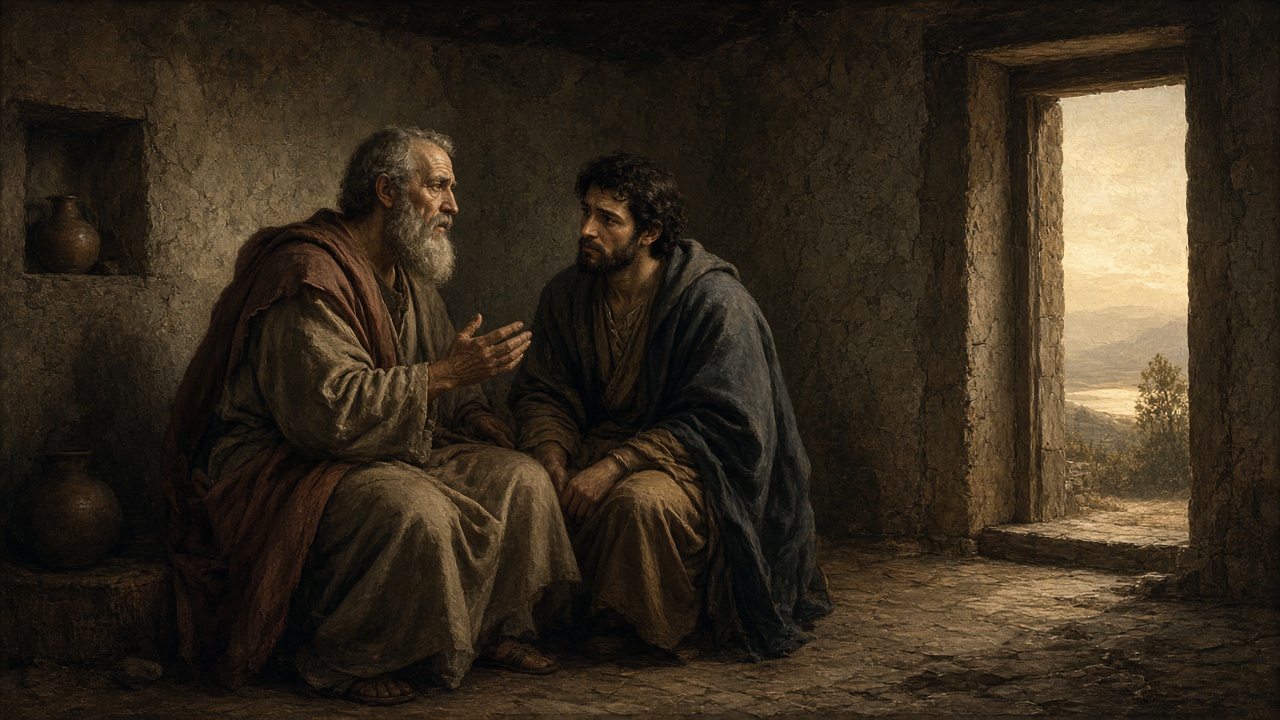
¿Sabías que…?
La exhortación final y la despedida de Pablo
- Pablo urge a Timoteo a venir pronto. Demas, a quien el Diccionario Bíblico de Easton (1897) describe como compañero y colaborador de Pablo durante su primera prisión en Roma, lo ha abandonado por amor a este mundo y se ha ido a Tesalónica, una gran ciudad en el golfo Termaico y capital de uno de los cuatro distritos romanos de Macedonia. Crescente se ha ido a Galacia y Tito a Dalmacia, un país montañoso en la costa oriental del Adriático y parte de la provincia romana de Ilírico; Pablo ha enviado a Tíquico a Éfeso, y solo Lucas permanece con él.Fuentes: Demas · Thessalonica · Dalmatia · el propio texto bíblico
- El Diccionario Bíblico de Easton (1897) identifica a Alejandro el calderero como un hombre que, con Himeneo y otros, enseñaba ciertas ideas sobre la resurrección, y dice que Pablo lo excomulgó. En este capítulo Pablo escribe que Alejandro le hizo un gran daño, advierte a Timoteo que se cuide de él porque se opuso con vigor a nuestro mensaje, y dice que el Señor le pagará conforme a sus obras.Fuentes: Alexander · el propio texto bíblico
- Pablo pide a Timoteo que traiga la capa que dejó con Carpo en Troas, junto con los rollos, especialmente los pergaminos, y que llegue antes del invierno. Troas era una ciudad en la costa de Misia, al noroeste de Asia Menor, llamada así por la antigua Troya, que quedaba unas cuatro millas al norte.Fuentes: Troas · el propio texto bíblico
Notas escritas con ayuda de IA a partir de fuentes abiertas (Theographic Bible Metadata, CC BY-SA 4.0; Easton’s Bible Dictionary, dominio público) y revisadas antes de publicarse.
Lugares de este capítulo
- Dalmatia · 43.813, 16.219 · versículo 10
- Galatia · 39.267, 32.983 · versículo 10
- Thessalonica · Hoy: Thessaloniki · 40.638, 22.946 · versículo 10
- Ephesus · 37.939, 27.341 · versículo 12
- Troas · Hoy: Alexandria Troas · 39.752, 26.159 · versículo 13
- Corinth · 37.906, 22.879 · versículo 20
- Miletus · 37.531, 27.276 · versículo 20
Solo aparecen lugares identificados con alta confianza (90 % o más según las fuentes académicas reunidas por OpenBible). Mapa de la época: DARE (Digital Atlas of the Roman Empire), CC BY 4.0; mapa actual: © colaboradores de OpenStreetMap; lugares: OpenBible.info (CC BY 4.0).
Créditos y licencia de esta traducción
I 'utz laj tzij re i dios
New Testament in Achi (I 'utz laj tzij re i dios)
copyright © 2009 Wycliffe Bible Translators, Inc.
Language: Achi
Dialect: Cubulco
Translation by: Wycliffe Bible Translators, Inc.
Achi, Cubulco
Achi' is a Mayan language very
closely related to K'iche' (Quiché in the older orthography). It is spoken by the
Achi people, primarily in the area of Baja Verapaz in Guatemala. There are two Achi'
dialects. Cubulco Achi' is spoken by approximately 48,000 people in the Cubulco area
west of Rabinal area. Rabinal Achi' is spoken by approximately 37,000 people in the
Rabinal area.
El Nuevo Testamento
en el idioma Achí de Cubulco de
Guatemala
Ediciones anteriores
Segunda edición
©2009, Wycliffe Bible
Translators
Primera edición
Publicado por
©1984, Sociedad Bíblica
Internacional
Copyright Information
© 2009, Wycliffe Inc. All rights reserved.
This translation text is made available to you under the terms of the Creative
Commons License: Attribution-Noncommercial-No Derivative Works. ( http://creativecommons.org/licenses/by-nc-nd/3.0/ ) In addition, you have
permission to port the text to different file formats, as long as you do not change
any of the text or punctuation of the Bible.
You may share, copy, distribute, transmit, and extract portions or quotations from
this work, provided that you include the above copyright information:
You must give Attribution to the work.
You do not sell this work for a profit.
You do not make any derivative works that change any of the actual words or
punctuation of the Scriptures.
Permissions beyond the scope of this license may be available if you contact us
with your request. If you want to revise a translation, use a translation in an
adaptation, or use a translation commercially, we will consider your request.
NT:segunda edición
The New Testament
in Achi
© 2009, Wycliffe Inc. All rights reserved.
This translation is made available to you under the terms of the
Creative Commons Attribution-Noncommercial-No Derivatives license 4.0.
You may share and redistribute this Bible translation or extracts from it in any format, provided that:
You include the above copyright and source information.
You do not sell this work for a profit.
You do not change any of the words or punctuation of the Scriptures.
Pictures included with Scriptures and other documents on this site are licensed just for use with those Scriptures and documents.
For other uses, please contact the respective copyright owners.
2013-01-05
Fuente: http://ebible.org/acr-acc/ · eBible.org