1 Timoteo 4
I 'utz laj tzij re i dios · Toca un versículo para ver sus referencias cruzadas.
ʼO jujun que sach na man xa que terej chiquij i je aj tʼoronel
1I u Tewal i Dios lic u sakim chake chi are ca cʼun i qʼuisbal tak ʼij, je ʼo ni jujun cacoʼtaj can u cubibal qui cʼux che i Jesucrísto. Xa que oc chu cojic qui tzij i mal laj tak tew chi je tʼoronel; xa que terej chirij i cʼutunic chi petnak cuʼ itzel tak tew. 2I cʼutunic-le, ca pe na cuʼ i winak chi xa queb qui palaj, xa je aj tʼoronel; n-quiqui na ta chic we ʼo qui mac man i piqui cʼux lic pacha siquirnak chic. 3N-quiqui ya ta chique niʼpa i je teren chiquij we que culiʼic, xak quiqui bij na chi ʼo tak i tiʼbalil qui wa chi n-ʼus taj ca tijawic. I cʼutunic quiqui bij-le, n-katzij taj, man i Dios ʼis xu yijba ile tzukbal kib yoj chi oj re chic i Crísto, xak ketaʼam chic i sak laj tzij. Ire u yom chake caka tijo, xui-ri, caka tioxij na che rumal. 4Queje ile caka ʼano man ronojel niʼpa u yijbam i Dios ʼis ʼutz, n-ʼus taj we caka xutuj; xui-ri, chaka tija y chaka tioxij che. 5(N-ca majaw taj caka xutuj, man i Dios u bim chi ʼis ʼutz, xak caka tzʼonoj che ire puwi, are caka tijo.) I u tzij i Dios, junam ruʼ i ka tzʼonoxic che, coʼonbej ʼutz che.
Wach coʼon jun ʼutz laj rajchac i Jesucrísto
6Yet, we queje ca cʼut ile chique i kachalal, at ʼutz laj ajchac ʼuri re i Jesucrísto, xak ca qʼuiji a choʼab rumal i tzij chi a cubam a cʼux che, chi xak are i ʼutz laj tzij chi at terejnak chirij. 7Xui-ri, ma ʼan cas che tak i tzij chi n-ti usucʼ, chi xa cuʼ i winak petnak wi chi n-ta Dios cuʼ. Cha tija a ʼij chu nimarsaxic a choʼab che a cʼaslemal chuwach i Dios. 8Queje ile cha ʼana, man jun, we cu nimarsaj u choʼab che u chʼacul, ʼutz queʼel che, xui-ri, mas ʼutz queʼel che we cu nimarsaj u choʼab che u cʼaslemal chuwach i Dios. Man ile cu rik u chac che, n-xui ta waral chuwach i jyub taʼaj, xak cu rik u chac che u cʼaslemal chi ca petic. 9I xin bij-le, lic katzij; lic ca majawic conojel quiqui coj na. 10Are rumal ile chi yoj caka tij ka ʼij chu ʼanic i chac, xak caka chʼij i ka yoʼyaxic cumal i winak. Caka chʼij ronojel ile man cul ka cʼux che i Dios cʼaslic. Are ire, Tolque conojel i winak, ʼe te le chic-i niʼpa i qui cubam qui cʼux che i Crísto.
11Niʼpa tak in bim-le, cha cʼutu chique i jutzobaj re i Dios, xak cha bij chique chi ʼo u chac que cojon na che. 12Yet cʼa at ala, xui-ri, ʼutz cha ʼana che awib, mokxa ʼo i quiqui bij chi n-at ta ʼutz laj tijonel man xa cʼa at acʼal, mok quiqui bij. Xui-ri cha ʼana che awib chi at aj cʼutul ʼutz chique i je re i Dios. Ronojel wach i ca bij, ronojel wach i ca ʼano, xui i ʼutz, xui i chom cha ʼana; cʼax che a na i winak, y ma baʼcrij a cʼux chu ʼonquil. Ronojel wach i ca ʼano, cha ʼana chi lic cʼutbal re u cubibal a cʼux che i Kajwal, xak cha ʼana che awib chi lic chʼam a cʼaslemal. Cha ʼana niʼpa tak ile, cʼutbal re i ʼutz chique i kachalal. 13Tzʼakat quin upon iwuʼ, chawajlaj ni u tzij i Dios chique i kachalal are je ʼo pa molbalʼib; xak cha ya u cowil qui cʼux, xak che a nawsaj. 14Mawoʼtaj can tak ile chi siptal chawe rumal i Dios, tobal awe che a chac. Niʼpa ile, i Dios xu ya chawe are xqui coj qui ʼab i mamʼib pawi, chi je re i jutzobaj re i Dios pa at petnak wi. Are xqui ʼan ile, xqui bij chawe wach i chac ca ʼan na coʼon panok.
15Cha ʼana i xin bij-le, lic cha ya awib chu ʼonquil, teʼuri ʼis quiquil conojel chi yet coqʼuil mas ʼutz cat tijin chu ʼonquil che a chac. 16Cha ʼana cwent che awib, wach i ca ʼano, xak wach i cat tijin chu cʼutic chique i kachalal; ma mayij u ʼonquil. We queje ca ʼan ile, cat totaj na ʼuri, xak queje ique chi que taw a tzij, xak que totaj na.
¿Sabías que…?
Falsa enseñanza y entrenamiento en la piedad
- El capítulo dice que el Espíritu declara expresamente que, en tiempos posteriores, algunos abandonarán la fe para seguir espíritus engañosos y enseñanzas de demonios. Estarán influidos por la hipocresía de mentirosos, cuya conciencia ha sido cauterizada con un hierro candente, y prohibirán el matrimonio y exigirán abstenerse de ciertos alimentos.Fuentes: el propio texto bíblico
- La carta responde a esas exigencias diciendo que Dios creó esos alimentos para que los reciban con acción de gracias quienes creen y conocen la verdad. Toda creación de Dios es buena, y nada de lo que se recibe con acción de gracias debe rechazarse, porque es santificado por la palabra de Dios y la oración.Fuentes: el propio texto bíblico
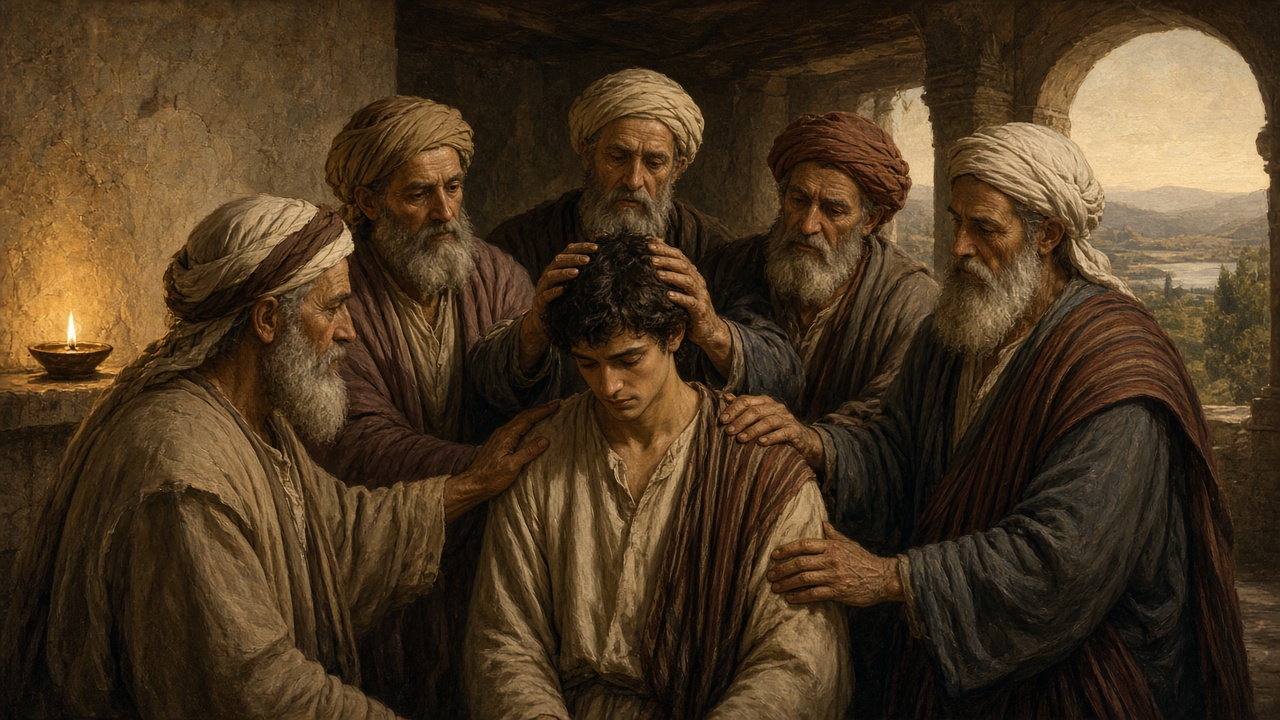
- El autor exhorta al joven a quien se dirige a no dejar que nadie menosprecie su juventud, sino a ser ejemplo en el habla, en la conducta, en el amor, en la fe y en la pureza. Hasta que el autor llegue, debe dedicarse a la lectura pública de las Escrituras, a la exhortación y a la enseñanza, y no descuidar el don que le fue dado mediante profecía, cuando los ancianos le impusieron las manos. El ejercicio físico, añade la carta, tiene un valor limitado, mientras que la piedad es valiosa en todo sentido y encierra promesa para la vida presente y para la venidera, un dicho que la carta llama digno de confianza y de plena aceptación.Fuentes: el propio texto bíblico
Notas escritas con ayuda de IA a partir de fuentes abiertas (Theographic Bible Metadata, CC BY-SA 4.0; Easton’s Bible Dictionary, dominio público) y revisadas antes de publicarse.
Créditos y licencia de esta traducción
I 'utz laj tzij re i dios
New Testament in Achi (I 'utz laj tzij re i dios)
copyright © 2009 Wycliffe Bible Translators, Inc.
Language: Achi
Dialect: Cubulco
Translation by: Wycliffe Bible Translators, Inc.
Achi, Cubulco
Achi' is a Mayan language very
closely related to K'iche' (Quiché in the older orthography). It is spoken by the
Achi people, primarily in the area of Baja Verapaz in Guatemala. There are two Achi'
dialects. Cubulco Achi' is spoken by approximately 48,000 people in the Cubulco area
west of Rabinal area. Rabinal Achi' is spoken by approximately 37,000 people in the
Rabinal area.
El Nuevo Testamento
en el idioma Achí de Cubulco de
Guatemala
Ediciones anteriores
Segunda edición
©2009, Wycliffe Bible
Translators
Primera edición
Publicado por
©1984, Sociedad Bíblica
Internacional
Copyright Information
© 2009, Wycliffe Inc. All rights reserved.
This translation text is made available to you under the terms of the Creative
Commons License: Attribution-Noncommercial-No Derivative Works. ( http://creativecommons.org/licenses/by-nc-nd/3.0/ ) In addition, you have
permission to port the text to different file formats, as long as you do not change
any of the text or punctuation of the Bible.
You may share, copy, distribute, transmit, and extract portions or quotations from
this work, provided that you include the above copyright information:
You must give Attribution to the work.
You do not sell this work for a profit.
You do not make any derivative works that change any of the actual words or
punctuation of the Scriptures.
Permissions beyond the scope of this license may be available if you contact us
with your request. If you want to revise a translation, use a translation in an
adaptation, or use a translation commercially, we will consider your request.
NT:segunda edición
The New Testament
in Achi
© 2009, Wycliffe Inc. All rights reserved.
This translation is made available to you under the terms of the
Creative Commons Attribution-Noncommercial-No Derivatives license 4.0.
You may share and redistribute this Bible translation or extracts from it in any format, provided that:
You include the above copyright and source information.
You do not sell this work for a profit.
You do not change any of the words or punctuation of the Scriptures.
Pictures included with Scriptures and other documents on this site are licensed just for use with those Scriptures and documents.
For other uses, please contact the respective copyright owners.
2013-01-05
Fuente: http://ebible.org/acr-acc/ · eBible.org