Apocalipsis 10
Uisneno In Kabin ma Prenat: Rais Manba'an Fe'u nok Reta' Ahun-hunut · Toca un versículo para ver sus referencias cruzadas.
Ameput neno tunan nok suur manunuꞌ aan es
1Rarit au ꞌiit Uisneno In ameput tuaf es, reꞌ maꞌtaniꞌ, ansaun naꞌko sonaf neno tunan. In aon naan anꞌaum naan ee nok nope. Anmuiꞌ enous reꞌ anfuun naan in aꞌnakan. In human masnaaf on reꞌ manas, ma in haen, anpiin on reꞌ ai. 2In nnaaꞌ suur manunuꞌ aan es, reꞌ natfeꞌi nrair. In haen aꞌneꞌu nahaek ee nbi tasi, ma haen aꞌrii je nbi auf metoꞌ. 3Rarit in nhunun naher-heer, nahuum on reꞌ singa in hanan. In nhunun anrair on naan ate, aꞌroots ein antaur goe nfain no hiut. 4Oras aꞌroots ein nataah anrarin ate, au he ꞌtui sin uabk ein. Mes au ꞌneen haanf es naꞌko sonaf neno tunan nak, “Hae! Ho kais mutoon meu tuaf, aꞌrotos hiut sin uabk ein naan, joo! Kais amtui saaꞌ-saaꞌ.”
5Rarit ameput reꞌ anhaek nok haen bian ee nbi tasi ma bian ee nbi auf metoꞌ naan, nait in aꞌniman aꞌneꞌu neu neno, 6ma ansuup am nak, “Au uabak reꞌ ia, ro batuur! Au ꞌsuup aꞌpaek Uisneno In kanan, natuin In kuun nabar-baar! In kuun es amoꞌet ma apakaet neno tunan ma pah-pinan, nok nain in afan ma in nesan. Onaim amneen mirek-rekoꞌ! Oras eti reꞌ hit tpa-pao goe naan, anpaumaak een. 7Fin karu Uisneno In ameput no hiutn ii anfuu in toꞌis, of Uisneno anmoeꞌ natuin in soꞌit ma reonaꞌ un-unuꞌ, reꞌ mansian ii ka nahiin je fa feꞌ. Mes soꞌit ma reon naan, In natoon ee neu In mafefa kniunꞌ ein reꞌ antuthae Je. Onaim amneen mirek-rekoꞌ, fin saaꞌ reꞌ au uꞌuab ee ji, ro batuur!”
8Rarit hanaf reꞌ au ꞌneen ee naꞌko neon goe tnanan naan, naꞌuab antein nok kau mnak, “Yohanis, amnao nai meu ameput neno tunan reꞌ anhaek neik in haen es et tasi, ma es et auf metoꞌ. Amtoup suur manunuꞌ aanꞌ-anaꞌ reꞌ anfei nrair je et in aꞌniman.”
9Rarit au ꞌnao ꞌeu reꞌ ameput naan, he ꞌtoit suur aanꞌ-anaꞌ naan. Onaim in natoon kau mnak, “Mait je ma mbukae nai! Anbi ho feefm aan, mainoniꞌ on reꞌ oin hau, mes in of anmoeꞌ ho taim aan annaben menuꞌ.”
10Naꞌuab anrair on naan ate, au ꞌtoup suur aanꞌ-anaꞌ naan. Onaim au ꞌeku. Anbi au fefak, au ꞌnaben ate mainoniꞌ on reꞌ oin hau. Mes oras au ꞌoro, au ꞌnaben menuꞌ anbi au taik.
11Rarit anmuiꞌ hanaf anreek kau mnak, “Ho ro he mfani mteniꞌ he mutoon main saaꞌ reꞌ Uisneno he nmoeꞌ je nbi pah-pinan. Mutoon anmatoom saaꞌ reꞌ of he anjair anbi areꞌ kanan usif pah-pinan, ma mansian naꞌko areꞌ kanan uuf ma pah, ma areꞌ kanan uab.”
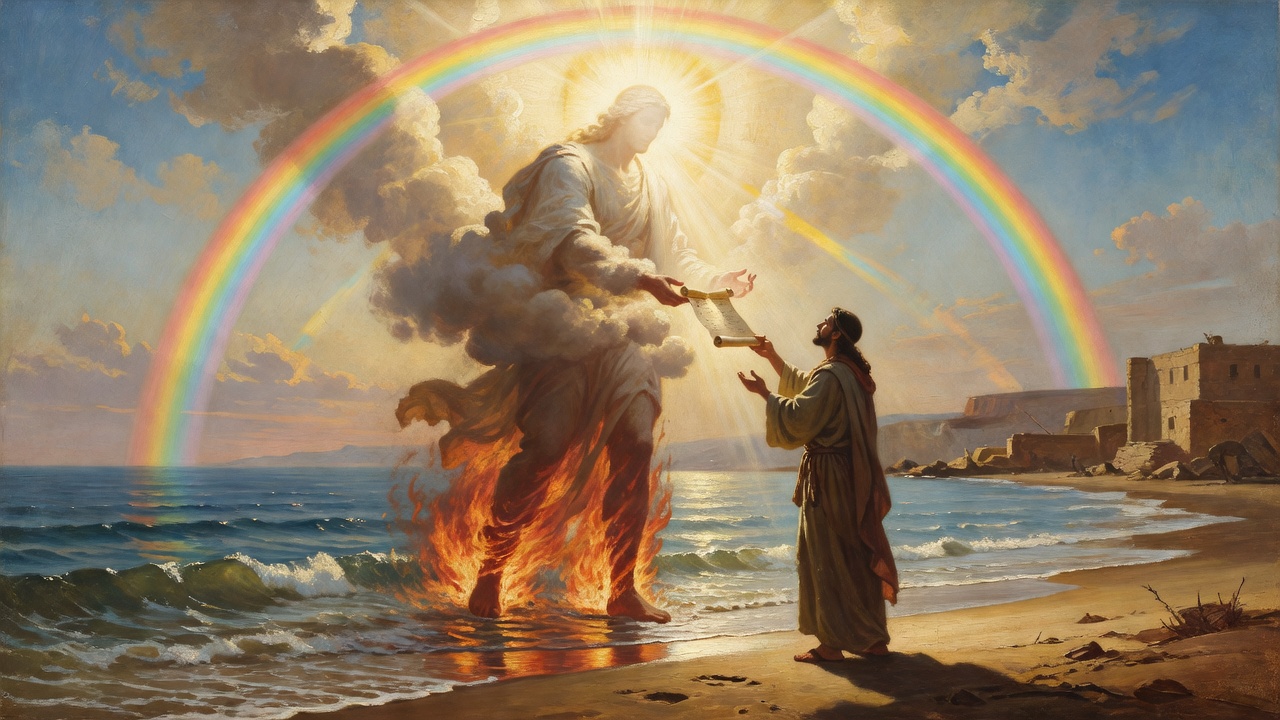
¿Sabías que…?
El ángel, los truenos sellados y el rollo
- Un ángel fuerte desciende del cielo, envuelto en una nube, con un arcoíris sobre la cabeza, el rostro como el sol y las piernas como columnas de fuego. Lleva en la mano un pequeño rollo abierto y pone el pie derecho sobre el mar y el pie izquierdo sobre la tierra.Fuentes: el propio texto bíblico
- Cuando el ángel clama como un león que ruge, siete truenos hacen oír su voz. El narrador está a punto de escribir lo que dijeron, pero una voz del cielo ordena que eso quede sellado y no se escriba. De pie sobre el mar y sobre la tierra, el ángel levanta la mano derecha al cielo y jura por quien vive por los siglos de los siglos, que creó el cielo y todo lo que hay en él, la tierra y todo lo que hay en ella, y el mar y todo lo que hay en él, que ya no habrá más demora, pero que en los días en que el séptimo ángel esté a punto de tocar la trompeta el misterio de Dios se cumplirá, tal como él lo anunció a sus siervos los profetas.Fuentes: el propio texto bíblico
- Una voz del cielo manda al narrador tomar de la mano del ángel el pequeño rollo abierto. El ángel dice que lo coma y advierte que será dulce como miel en la boca, pero amargo en el estómago. El narrador lo come y así lo experimenta, y después le dicen que debe profetizar otra vez sobre muchos pueblos, naciones, lenguas y reyes.Fuentes: el propio texto bíblico
Notas escritas con ayuda de IA a partir de fuentes abiertas (Theographic Bible Metadata, CC BY-SA 4.0; Easton’s Bible Dictionary, dominio público) y revisadas antes de publicarse.
Créditos y licencia de esta traducción
Uisneno In Kabin ma Prenat: Rais Manba'an Fe'u nok Reta' Ahun-hunut
Genesis and the New Testament in the Amarasi language of Indonesia
Kejadian dan Perjanjian Baru dalam bahasa Amarasi dari
copyright © 1999-2014 Unit Bahasa dan Budaya, Kupang NTT, Indonesia
Language: Amarasi
Translation by: Wycliffe Bible Translators
This translation is made available to you under the terms of the
Creative Commons Attribution-No Derivatives license 4.0.
You may share and redistribute this Bible translation or extracts from it in any format, provided that:
You include the above copyright and source information.
You do not make any derivative works that change any of the actual words or punctuation of the Scriptures.
Pictures included with Scriptures and other documents on this site are licensed just for use with those Scriptures and documents.
For other uses, please contact the respective copyright owners.
2022-03-11
Fuente: http://ebible.org/aaz/ · eBible.org