Génesis 16
Uisneno In Kabin ma Prenat: Rais Manba'an Fe'u nok Reta' Ahun-hunut · Toca un versículo para ver sus referencias cruzadas.
Ain Hagar ma in anah naiꞌ Ismaꞌel
1Oras naan, naiꞌ Abram anfain neem een naꞌko pah Masir, ma natua naan toon boꞌes een anbi pah Kanaꞌan. In fee bi Sarai, ka nahoniꞌ fa feꞌ. Bi Sarai nmuiꞌ aet bifee jes, naꞌko pah Masir, in kaan ee, bi Hagar.
Neot es, bi Sarai nak in moen je mnak, “Aam! UISNENO nꞌeek au apuk. Reko nneis, ho mtuup mok au ate bi Hagar, maut he au ꞌmuiꞌ anah.”
Onaim naiꞌ Abram natuin in fee je hanan. Rarit bi Sarai nfee bi Hagar he naiꞌ Abram anpanaꞌ sin. 4Rarit naiꞌ Abram antuup nok bi Hagar. Ma bi Hagar naꞌapuꞌ. Mes oras bi Hagar nahiin neu in naꞌapuꞌ te, in nabeoꞌ. In ka naꞌpaarn on fa neu ain Sarai.
5Onaim ain Sarai naꞌuab nok in moen je mnak, “Au es aꞌfee ko ate naan he njair ho fee. Mes oras in ntaiboko te, in ka nkisu ntoom kau fa. Ia ho ras-rasim! Anbain he UISNENO es nafeek hit rasi. Maut henaꞌ ho muhiin!”
6Rarit naiꞌ Abram nataah am nak, “On nai! Au ꞌsao ko nahuun. In namuin. Onaim ho es reꞌ he mupreent ee. Es naan ate, ho he mmoeꞌ saaꞌ-saaꞌ meu ne te, es reꞌ ho!” Rarit ain Sarai nmurai nhaꞌmuiꞌ bi Hagar, tar antea bi Hagar naen nasaitn ee.
7In naen antea baer ruumn es. Onaim UISNENO In ameput neno tunan es neem nateef ee nbi bare reꞌ npaumaak oe mataꞌ nbi ranan he nnao neu Sur. 8Rarit in nak, “Hoe! Hagar, ain Sarai in ate! Nansaaꞌ am es ho es ia? Ho muꞌko mee, ma he mnao meu mee?”
Onaim bi Hagar nataah am nak, “Au ꞌaen usaitan au ain usiꞌ.”
9Rarit UISNENO In ameput naan naꞌuab nok ne rek-reko mnak, “On nai! Reko nneis ho mfain meu ho ain usiꞌ. In nmoeꞌ ko on mee msaꞌ, mtoup goe. 10Kais mumtau. Au of aꞌmoeꞌ ho sufam-kauꞌm ein amfau-rutu, tar antea ka masoꞌik fa. 11Oras ia, ho muꞌapuꞌ. Ka ꞌroo fa te, ho of muhoniꞌ riꞌaan moen jes. Ho ro he mukaanb ee, naiꞌ Ismaꞌel (reꞌ he noi namnees nok kata es, reꞌ in aꞌmoufn ii nak ‘Uisneno nneen’), natuin UISNENO nahini nrair ho susat ma nanaꞌrenat. 12Mes oras riꞌanaꞌ naan naꞌnae, in of anmoin naꞌroo naꞌko in orif-tataf sin. Natuin in on reꞌ bikaes fui, reꞌ ka nroim fa he natuin aprenat. Sekau-sekau msaꞌ, in nraban sin. Ma areꞌ atoin ein of anraban nafainꞌ ee okeꞌ.”
13Anneen anrair on naan ate, bi Hagar natenab anbi in nekan, nak, “Au ꞌiit aꞌrair UISNENO, reꞌ In niit ma npanat kau.” Rarit in nmurai nteek Uisneno npaek kanaf, “Usiꞌ reꞌ nfairoir kau.” 14Etun atoniꞌ nakanab oe mataꞌ naan, Beer Lahai Roi, (reꞌ in aꞌmoufn ii, “Oe mataꞌ naꞌko Usiꞌ Amonit, reꞌ anfairoir kau.”) In baern ee et kuan Kades ma kuan Beret sin atnaank ein. Oras ia, oe mataꞌ naan feꞌ etan.
15Rarit bi Hagar antebi nfain. Onaim in nahoniꞌ riꞌaan moen jes. Naiꞌ Abram nakanab riꞌanaꞌ naan, naiꞌ Ismaꞌel. 16Oras bi Hagar nahoniꞌ naiꞌ Ismaꞌel, naiꞌ Abram anmoin naan toon boꞌ fanu mnee (86).
¿Sabías que…?
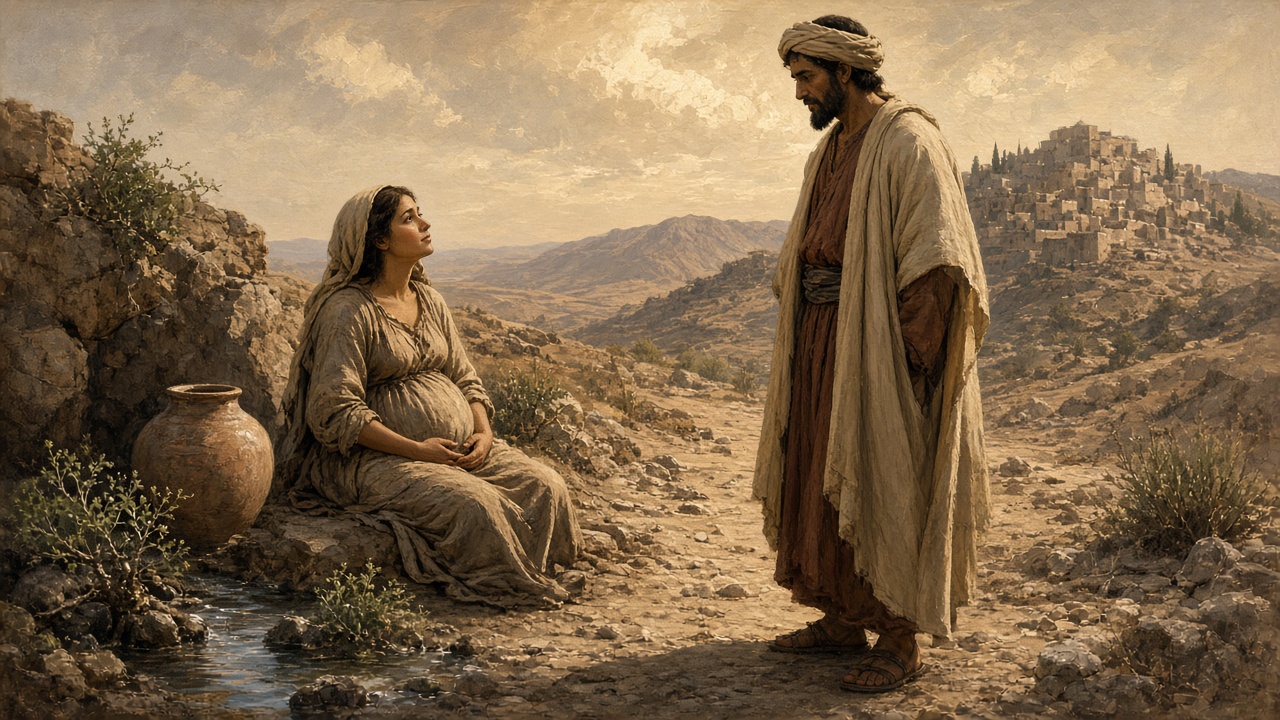
La huida de Agar y el nacimiento de Ismael
- Agar, sierva egipcia de Sarai, lleva un nombre que se entiende como “huida” o, según otros, “extranjera”. Después de que Abram vivió diez años en Canaán, Sarai se la entregó como esposa secundaria, con la esperanza de formar una familia por medio de ella.Fuentes: Hagar · el propio texto bíblico
- Cuando Sarai la trató con dureza, Agar huyó por el camino de Shur, a través del desierto que quedaba entre ella y Egipto, al parecer con la intención de volver con sus parientes. El ángel del Señor la encontró junto a un manantial. Shur, que significa “muro”, era un desierto en la frontera noreste de Egipto, probablemente llamado así por unas fortificaciones fronterizas que iban de Pelusio a Heliópolis.Fuentes: el propio texto bíblico · Hagar · Shur
- Agar llamó al Señor que le habló “el Dios que me ve”, y el pozo recibió el nombre de Beer-lahai-roi, “el pozo del Dios visible”, entre Cades y Bered, una ciudad en el sur de Palestina, en el desierto de Shur. Ella regresó a la tienda de Abram, e Ismael, su hijo mayor, nació en Mamre cuando Abram tenía ochenta y seis años; Abram le puso el nombre que el ángel había anunciado, porque el Señor había oído su aflicción.Fuentes: el propio texto bíblico · Hagar · Bered · Ishmael (Son of Hagar)
Notas escritas con ayuda de IA a partir de fuentes abiertas (Theographic Bible Metadata, CC BY-SA 4.0; Easton’s Bible Dictionary, dominio público) y revisadas antes de publicarse.
Lugares de este capítulo
- Canaan · 32.767, 35.333 · versículo 3
Solo aparecen lugares identificados con alta confianza (90 % o más según las fuentes académicas reunidas por OpenBible). Mapa de la época: DARE (Digital Atlas of the Roman Empire), CC BY 4.0; mapa actual: © colaboradores de OpenStreetMap; lugares: OpenBible.info (CC BY 4.0).
Créditos y licencia de esta traducción
Uisneno In Kabin ma Prenat: Rais Manba'an Fe'u nok Reta' Ahun-hunut
Genesis and the New Testament in the Amarasi language of Indonesia
Kejadian dan Perjanjian Baru dalam bahasa Amarasi dari
copyright © 1999-2014 Unit Bahasa dan Budaya, Kupang NTT, Indonesia
Language: Amarasi
Translation by: Wycliffe Bible Translators
This translation is made available to you under the terms of the
Creative Commons Attribution-No Derivatives license 4.0.
You may share and redistribute this Bible translation or extracts from it in any format, provided that:
You include the above copyright and source information.
You do not make any derivative works that change any of the actual words or punctuation of the Scriptures.
Pictures included with Scriptures and other documents on this site are licensed just for use with those Scriptures and documents.
For other uses, please contact the respective copyright owners.
2022-03-11
Fuente: http://ebible.org/aaz/ · eBible.org