Mark 2
Bu New Testament · Tap a verse to see its cross-references.
Yesu Ndokǝl Mul ki Tle' ki Mi'gatli.
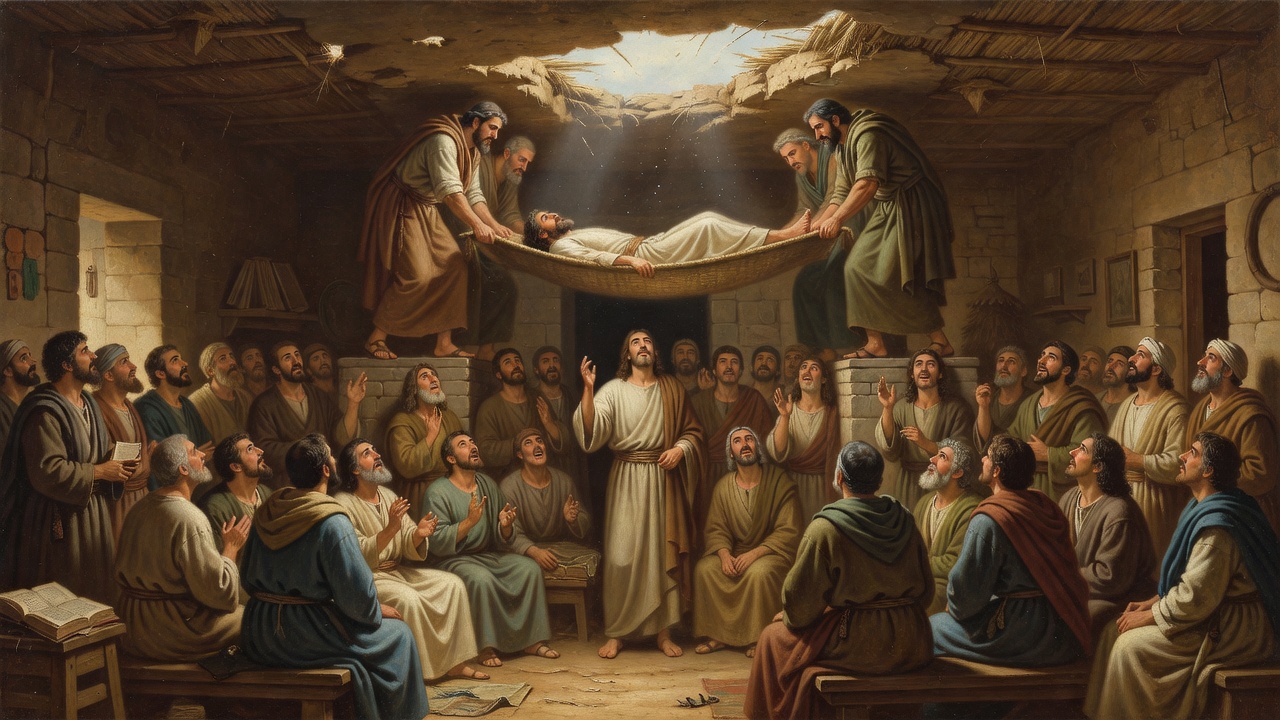
1Kal ki mutti ten, nǝ palte' Kapalnahum, is kummi ti a libi. 2I' mbalǝn dom ga diɓǝlli, lu zǝ' a sǝn ma ɗawai, abi dlabi ma. A Yesu ɗǝ pi'si shilǝn ki Lya. 3Mbalǝn upsi is mbǝ, is kam Mulǝn tyai ki tle ki mi'gatli. 4Saman tǝla'ti ma Yesu wai tǝngaki diɓǝtl ki mbalǝn, is mbulǝn gabini tu' malu u nǝ Yesu ɗa u nǝs mbul gabini u, is shim muli suɗi, nǝ lu muttuwasi.
5Nǝ Yesu en lati mbatluwasǝn u i' ulmul ki tle ki mi'gatlisu, “Yakuyini a paci bazǝn lǝɓa wagi.” 6Mbalǝn mi' lashti zhil ki Musa siki dǝmi a lǝbi, a si shilǝn a mbadli, 7A si ussu, “Ya lakiɗa mulu ɗǝ shilǝn nǝgu? Pǝli' Lya bezǝn lǝɓa ti ɗa! Wokǝn ma' wokǝli yakǝn mbalǝn bezǝn lǝɓa wasi ǝnbǝ Lya kǝn nǝmmwai u?” 8Alǝbi alǝbi i Yesu man ulnǝ si dlǝmti a mbadlu, i Yesu ulsisu, “Yakǝn laki ɗa ki unndi shilǝn u a mbadlwakǝn? 9Gukǝn ngǝtli nǝ mbǝlǝ, ti ulmul ki tle usu, ‘A wokǝli bezǝn lǝɓa wagi’ nǝ ta usu, ‘Hilya kam lumuttwagi ki zǝgaya?’ 10Ami lyamti ki manini Yakǝn mbalǝn ti nǝ ndǝtl ki wokǝl bezǝn lǝɓa a dǝplaɓa.” I' ul mul ki tle ki mi'gatli su 11“A ulkisu, hilya kam lumuttuwagi ki zǝga libi.” 12I Alǝbi alǝbi tǝ hilya, i' kam lumuttuwa si, i' peki a kum mbalǝn ɗǝ yetti, a si kup gagashinti, a si natl Lya asi ussu, “Ma en ulǝn nǝgu gason wai.”
Taki' Lawi bi
13Yesu peki i' lǝ bi Dlǝlka ki Galili ɗa ɗanu, Mbalǝn diɓǝli is domga a malgǝn wasi, ati kulcisi. 14A ti beuti, i' en Lawi yakǝn ki Halpa ki dǝmi ati kyautǝn ki ka' upki ban. I Yesu ultisu, “Bǝlǝn kali.” I' hilya i' bǝlti kali. 15Gason Yesu ɗǝ ɗap ulki ɗami a libi ki Lawi, mul ka' upki ban ne mi'bezǝn lǝɓa nǝ mbalǝn diɓǝli si ɗamti ne'ti ne mil kushti wasi, tǝn gaki mil diɓǝlti gesi mi' bǝtlti ni; 16Nǝ mi' lashti zhil ki Musa si palisiyawani is enti ɗǝ ɗamti nesi, nǝ mi'bezǝn lǝɓa nǝ mi' ka' upki ban u, is ul mi' kushti wasisu, “Ya laki ti ɗamti nǝ tleti ne' mi' kap upki ban nǝ mi'bezǝn lǝɓa ɗa?” 17Nǝ Yesu kumi nǝgu u, i' ulsisu, “Mi' ginǝ bǝ ɗa gontwai u sikǝn lǝ' mamul pǝtl igǝn wai, mi' gonti si ɗǝ ngau mul igǝn. Tǝn gaki mi' pǝtl ze kautǝnkǝn a mbǝɗawai, tǝn gagi mi' bezǝn lǝɓa ni.”
Gyemti a Tǝn pǝtl Kuzǝn Mali
18Mi' kushti ki Yahaya mul baptisma nǝ ki palisiyawa si pǝtl kuzǝn mali. Mbalǝn en ngem Yesu is usu, “Yalaki ɗa mi' kushti ki Yahaya nǝ ki palisiyawa si kuzǝn mali gwaɓo si ɗa pǝtl ti wai?” 19I Yesu ulsisu, “Yelǝnsi ki mul kutleti sǝn pǝtl kuzǝn mali a mul kutleti nesiya? Tunnǝ mul kutleti nesi u sǝkǝn pǝtl kuzǝn malilwai, 20Cin ɗǝ mbǝti sinkap mul kutletiyi taka ɗǝ masi. Cinisini sǝn pǝtl kuzǝn mali. 21Kǝn ca'ti mbulǝn gǝsi nǝ pyal lulutwai. In a caki nǝ nali u, pyal luluti nǝn kyeshti gus lulutisi, nǝn ngǝtlti ki kal nǝ kyeshti. 22Kǝn bǝna pyal mal ki mil pǝ' ki annabi ge gus kal ki bati wai. Mun nǝ a bine u, mali si nǝn tatlti kal ki bati si, a hol kal nǝ mal innabi isi. Pyal mal ki mil pǝ' ki innabi, sai nǝ pyal kal ki bati.”
Mi' Kushti Ki Yesu Go' Cotlti Alkama Cin shuti
23Gason cin shuti, Yesu ne mil kustiwasi si ɓeuti ge' gu ki alkama. Sige ɓeuti i mil kusti ki Yesu is go' catl ga alkama en. 24I palisiyawa ultisu, “En ulnǝ mil kushtiwa ɗǝ pǝlti u. Ya laki ɗa si pǝtl ulnǝ zhil ki Musa a ndigi ti pǝlti cin ki shutwai u?” 25I Yesu njesi shilǝn nisi i' ulsisu, ka kummǝn shilǝn ki ulnǝ Dawuda pǝli u waiya, cin u nǝ kuzǝn gopti, ti ne' yelǝnsi lǝtwaswaiya? 26Hwon u nǝ Abiyatal tiki bal lǝɓa, Dauda tege' Libi ki Lya, i' ɗam biledi gunǝ zǝdli u iki bǝl yalǝnsiwasi ginǝ ne'tu, ki ɗami ki lǝɓasi ni nǝgwasǝn mulǝn kǝn ɗamtwai. 27I Yesu ulsisu, “Pǝlǝn cin shuti tǝngaki mbalǝn, ba pǝlǝn mbalǝn gaki cin shutuwai. 28Yakǝn mbalǝn kǝnki mulban ki shuti nǝ ki cin shuti.”
Did you know?
Forgiveness, a Tax Collector, and the Sabbath
- Capernaum, “Nahum’s town,” was a Galilean city not mentioned in the Old Testament. Easton's Bible Dictionary (1897) says that after Jesus was expelled from Nazareth it became his “own city,” which fits Mark’s report that people heard he was home and packed the house until there was no room even outside the door. Four men then uncovered the roof, made an opening, and lowered a paralyzed man on his mat.Sources: Capernaum · the Bible text itself
- The man at the tax booth was Levi, son of Alphaeus, a tax collector in Capernaum. Easton's Bible Dictionary (1897) says he had been known as Levi and took the name Matthew—a common Jewish name after the Exile, meaning “gift of God”—possibly in grateful memory of his call. The same day, it says, he gave a great farewell feast for Jesus and his disciples, and probably for many former associates, the gathering Mark describes with tax collectors and sinners.Sources: Matthew · Alphaeus · the Bible text itself
- Challenged because his disciples picked heads of grain on the Sabbath, Jesus spoke of David entering the house of God and eating the consecrated bread, lawful only for the priests, “during the high priesthood of Abiathar,” and sharing it with his hungry companions. Easton's Bible Dictionary (1897) identifies Abiathar as the son of the high priest Ahimelech, who escaped when his father and the priests of Nob were killed, carried away the ephod, and joined David in the cave of Adullam.Sources: Abiathar · the Bible text itself
Notes written with AI assistance from open sources (Theographic Bible Metadata, CC BY-SA 4.0; Easton’s Bible Dictionary, public domain) and reviewed before publishing.
Credits and license for this translation
Bu New Testament
The New Testament in the Bu language of Bauchi State, Nigeria
copyright © 2025 The Seed Company in collaboration with Language Developers and Bible Translators Association
Language: (Bu (Bauchi State))
Contributor: Language Developers and Bible Translators
This translation is made available to you under the terms of the
Creative Commons Attribution Share-Alike license 4.0.
You have permission to share and redistribute this Bible translation in any format and to make reasonable revisions and adaptations of this translation, provided that:
You include the above copyright and source information.
If you make any changes to the text, you must indicate that you did so in a way that makes it clear that the original licensor is not necessarily endorsing your changes.
If you redistribute this text, you must distribute your contributions under the same license as the original.
Pictures included with Scriptures and other documents on this site are licensed just for use with those Scriptures and documents.
For other uses, please contact the respective copyright owners.
Note that in addition to the rules above, revising and adapting God's Word involves a great responsibility to be true to God's Word. See Revelation 22:18-19.
2025-07-10
Source: http://ebible.org/zbu/ · eBible.org